
Tallinn, the elegant capital of Estonia, is a city that instantly captures the imagination. With its peaceful atmosphere, vibrant creativity, and layers of historical richness, this Baltic gem is anything but grey. It’s a city of contrast – where medieval towers stand alongside sleek design studios, and cobblestone lanes lead to buzzing cafés, tech hubs, and green spaces.
At the heart of it all is Tallinn’s Old Town, a UNESCO World Heritage site and one of Europe’s best-preserved medieval quarters. Winding alleys, centuries-old churches, merchant houses, and fortified walls transport visitors straight into a storybook – yet beyond the historical postcard, Tallinn pulses with contemporary energy.
Forget any notion of gloom: this is a capital filled with optimism, forward-thinking spirit, and a deep-rooted desire to preserve authentic Estonian identity. Locals are proud of their traditions, but also fiercely innovative – Tallinn is, after all, one of the most digitally advanced cities in the world.
Whether you’re here for cultural festivals, cutting-edge design, nature walks, culinary exploration, or simply to wander and wonder, Tallinn delivers. It’s compact and walkable, brimming with soul, and always ready to surprise you.
So if you haven’t added Tallinn to your wish list yet – now’s the time.
Here’s exactly why this enchanting capital deserves a spot on your travel radar…

Tallinn’s Old Town – A fairytale brought to life
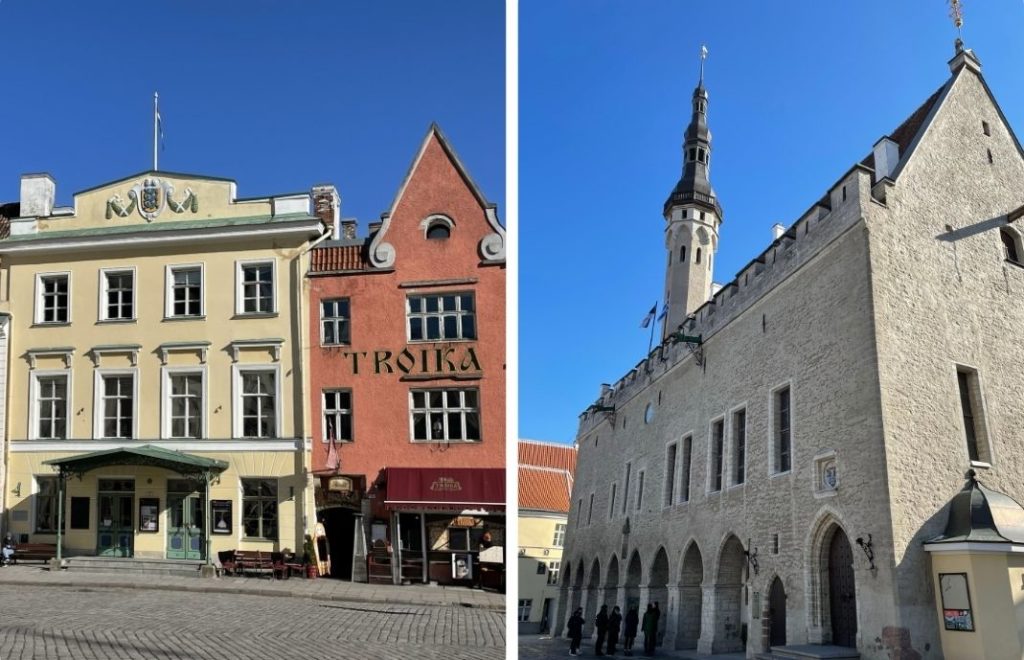
Step through the city gates of Tallinn’s Old Town, and you step straight into a medieval dream. This is the heart of Estonia’s capital – vibrant, historic, and irresistibly charming. With its sky-piercing church spires, timeworn towers, and winding cobblestone streets, Old Town Tallinn is a masterpiece of preserved history that feels both enchanting and alive.
Surrounded by towering stone walls and a ring of fairytale-like watchtowers, the Old Town is dotted with hidden courtyards, artisan boutiques, museums, galleries, and inviting cafés tucked behind ivy-covered walls. Here, every corner whispers a story, and every step feels like time travel.
Tallinn’s past is as complex as its beauty. Conquered by the Danes in 1219, sold to the Teutonic Order in 1346, captured by the Swedes during the Livonian War, and taken by the Russians in 1710 during the Great Northern War – this city has changed hands many times. It served as the capital of independent Estonia from 1918 until Soviet occupation, and triumphantly reclaimed that title in 1991, when Estonia regained its independence.
And yet, through wars, sieges, and bombings, this former Hanseatic trading hub has miraculously retained its medieval soul. It’s widely considered one of Europe’s best-preserved old towns, and rightly so.
Wander the 700-year-old cobblestones of the pedestrian-only inner district, where time slows and imagination stirs. By day, the square hums with street musicians, market stalls, and the scent of roasted almonds. By night, the lantern-lit alleys echo with mystery and romance.
Tallinn’s Old Town is not just a place to see – it’s a place to feel. And once you do, it’s impossible not to fall under its spell.
The Town Hall Pharmacy – Europe’s oldest, and still in business
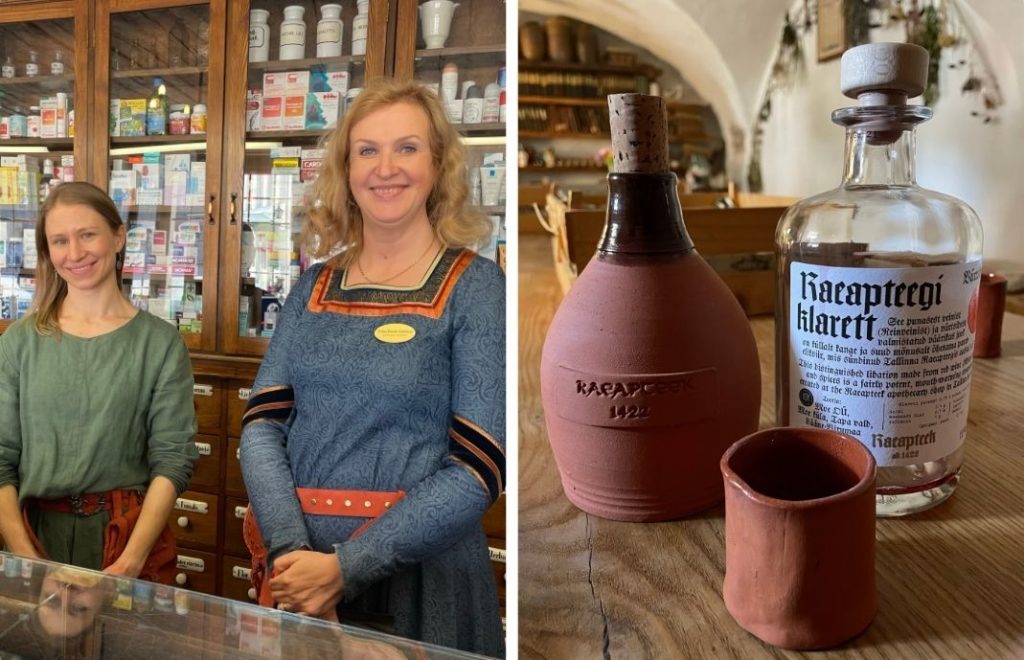
In the heart of Tallinn’s Old Town, just steps from the main square, you’ll find a place where history, healing, and a hint of indulgence come together under one roof. Raeapteek – the Town Hall Pharmacy – is said to be the oldest pharmacy in Europe still in continuous operation, with records of its existence dating all the way back to 1422.
From 1582 to 1911, Raeapteek was run by the Burchart family, spanning ten generations of apothecaries. It gained such renown that even the Russian Tsar ordered his medicines from here. But in medieval Tallinn, Raeapteek was more than just a dispensary – it was also a social salon, where the city’s elite gathered not only to seek remedies, but to sip claret wine, nibble on marsipan, and seal business deals.
Today, Raeapteek still carries this sense of old-world charm. Visitors can purchase modern medicines, yes, but also claret and hand-rolled marzipan – the latter still rumored to cure a broken heart.
Don’t be fooled by its unassuming exterior – the pharmacy also houses a fascinating museum, displaying a trove of historical medical curiosities from the 18th to the 20th century: dried frogs, powdered unicorn horn (really!), leeches, and apothecary tools that speak to centuries of belief, superstition, and science.
For an even richer experience, join a guided tour or hands-on workshop, where you can taste the deep ruby claret, sample silky marzipan, and hear tales of the remedies and rituals that once shaped daily life in Tallinn.
Whether you’re a history lover, a curious traveler, or simply in need of a sweet treat, Raeapteek is an extraordinary blend of medieval mystique and living tradition – a stop in Tallinn you truly shouldn’t miss.
Feast like it’s 1475 – A medieval culinary experience in Tallinn
When you find yourself wandering the storybook streets of medieval Tallinn, it only makes sense to dine like a 15th-century noble. In this city where history lives and breathes, a meal is not just about food. It’s about stepping into the past with all your senses.
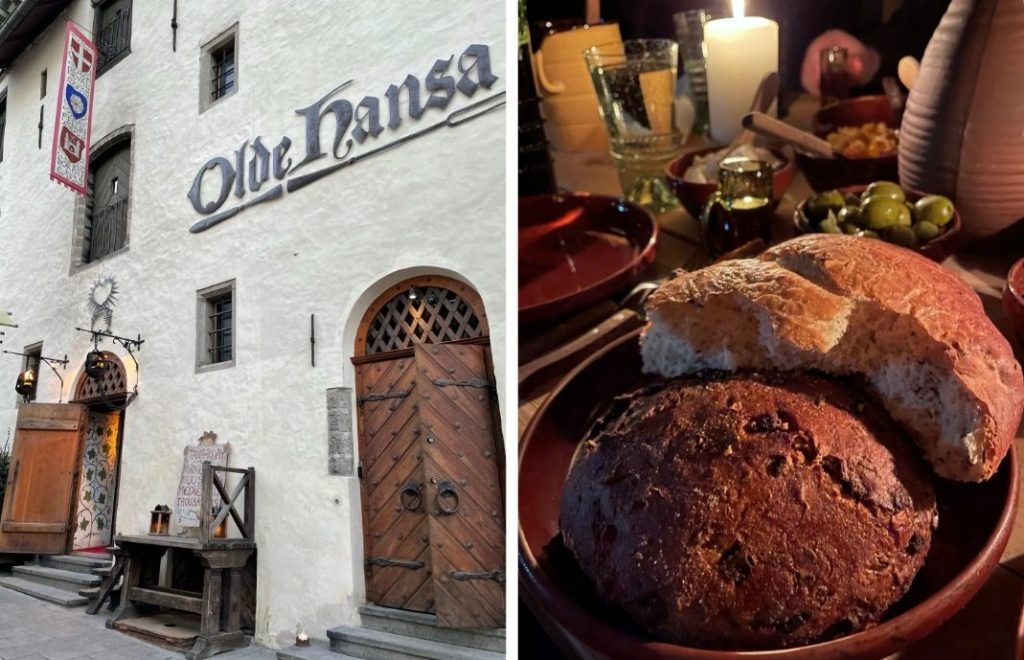
Enter Olde Hansa, Tallinn’s most legendary medieval restaurant, where the year is always 1475 and the dining experience is a celebration of the city’s Hanseatic golden age. Set within a grand merchant’s house dating back to 1370, Olde Hansa brings the flavors, sounds, and rituals of the Middle Ages vividly to life.
Every dish is crafted from authentic recipes found in medieval manuscripts, reflecting the lavish fare of a wealthy 16th-century household. Forget about tomatoes or potatoes – they hadn’t reached Europe yet. Instead, expect a feast built around game meats, legumes, root vegetables, and an opulent array of spices like cardamom, cinnamon, saffron, black pepper, ginger, and cloves – once so rare they were worth more than gold.
Diners are greeted by a charming staff in full medieval costume, and from the moment you’re seated, it’s a journey through sweet, salty, sour, and bitter – flavors carefully layered in accordance with the culinary wisdom of the age. You’ll be served generous portions, presented with time-honored rituals, and encouraged to toast, cheer, and truly revel.
For the full experience, come in the evening, when the flicker of candlelight and the sound of live music on fiddles, bagpipes, and flutes transform the hall into a medieval banquet. The melodies, composed by 16th-century Estonian musicians, add an authentic – and magical – soundtrack to your meal.
Looking for more medieval flavor? Try III Draakon, tucked into the Town Hall, where elk soup is served by candlelight in rustic clay cups. Or visit Peppersack, where swordfights break out between courses, and the food is as bold as the setting.
In Tallinn, dining medieval-style is more than a novelty – it’s a full-bodied return to another time. Come hungry. Leave enchanted.
Step into sacred spaces – Tallinn’s timeless churches
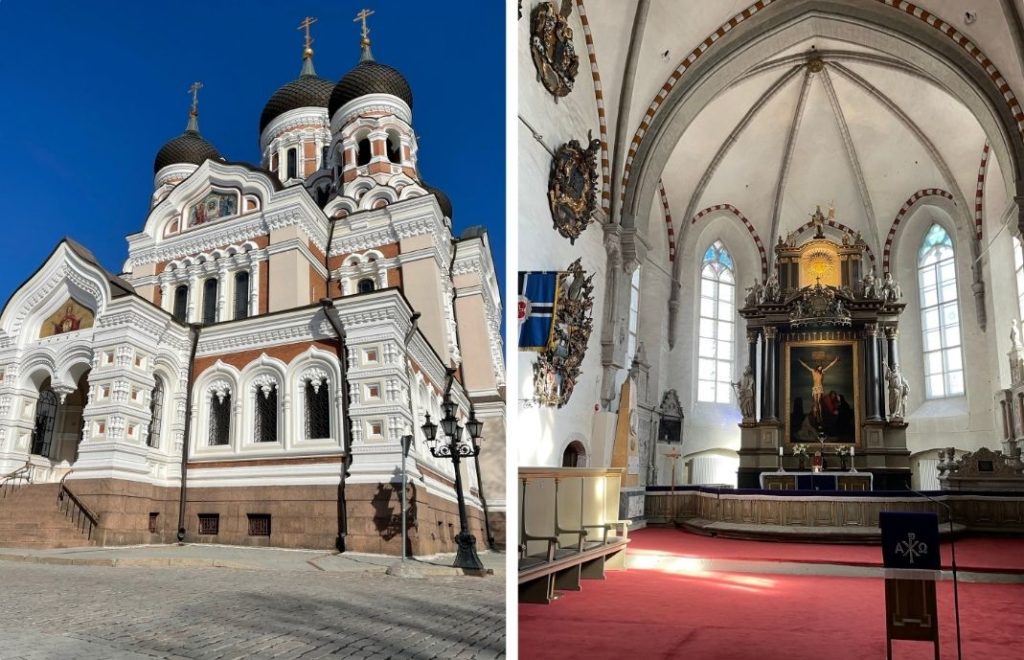
While Estonia is often cited as one of the world’s least religious nations, its capital is home to a stunning collection of churches that speak volumes about its layered past – from medieval trade routes to imperial grandeur and Cold War espionage. In Tallinn, even for the non-religious, a visit to these architectural masterpieces is a journey through history, art, and quiet reflection.
Alexander Nevsky Cathedral
With its dramatic onion domes and intricate neo-Russian detailing, this Orthodox cathedral is one of the most striking landmarks in Tallinn. Built between 1894 and 1900, during the era of the Russian Empire, the Alexander Nevsky Cathedral crowns Toompea Hill like a royal jewel. Its grand interiors, adorned with mosaics and gilded icons, provide a powerful contrast to Estonia’s largely secular identity – a reminder of the city’s deep ties to Eastern Orthodoxy and Russian influence.
St. Olaf’s Church
Tallinn’s most legendary church for Scandinavian visitors, St. Olav’s Church (Oleviste kirik) dates back to 1267, and is said to have been built to serve Scandinavian merchants who had settled in the city. At its peak, the church’s spire soared to 159 meters, briefly earning it the title of the tallest building in the world. Today, it stands at 124 meters – and still impresses.
Over the centuries, the church has been struck by lightning and burned down three times, and during the Soviet era, the KGB allegedly installed surveillance antennas in the spire.
From April to October, visitors can climb the tower for panoramic views of Tallinn’s Old Town, Toompea Hill, and the shimmering Baltic Sea.
St. Mary’s Cathedral (Dome Church)
One of the city’s oldest and most historically rich places of worship, St. Mary’s Cathedral, also known as the Dome Church, was begun before 1233 and expanded over the centuries, resulting in a fascinating blend of architectural styles, from Gothic to Baroque.
This was the church of the nobility, and it shows. Inside, you’ll find ornate coats of arms, memorial plaques, and tombstones from the 13th to the 18th centuries.
Among those buried here are:
- Pontus de la Gardie, Swedish commander during the Great Northern War
- Adam Johann von Krusenstern, Baltic-German admiral and leader of Russia’s first circumnavigation
- Admiral Samuel Greig of Fife, a Scottish-born naval hero said to be a lover of Catherine the Great
Visitors can also ascend the 69-meter baroque tower for yet another breathtaking viewpoint over Tallinn.
Each of these churches offers more than just religious context – they’re portals into Estonia’s complex cultural, political, and artistic heritage. Whether you come for the views, the craftsmanship, or the stories carved into stone, a visit to Tallinn’s sacred spaces is sure to elevate your perspective – literally and figuratively.
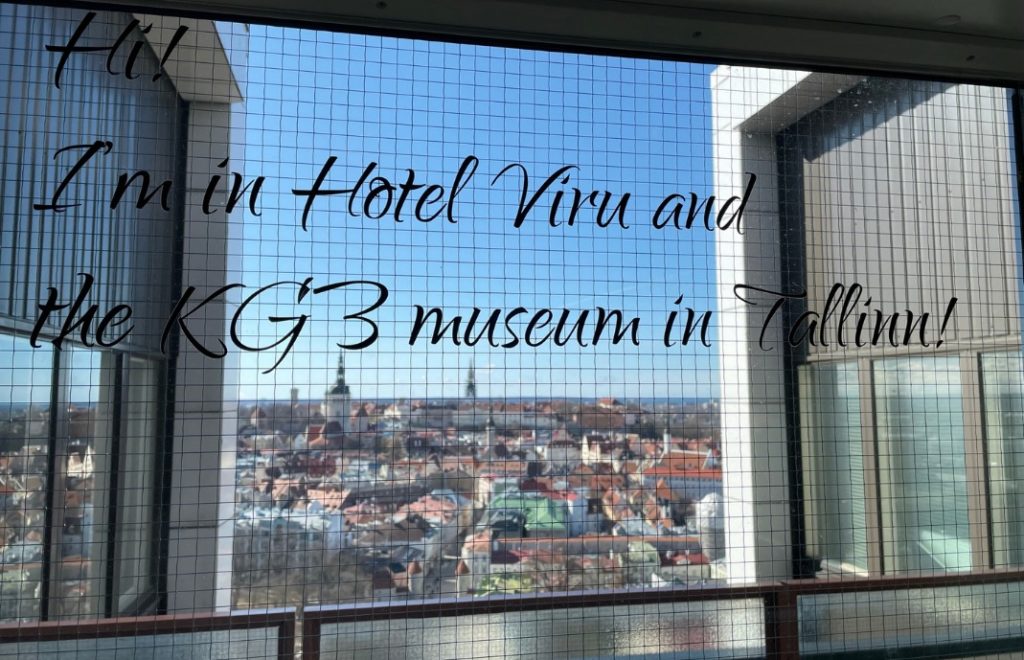
Hotel Viru & the KGB Museum – Secrets hidden in plain sight
If you’re intrigued by Cold War intrigue, Soviet surveillance, and stories that were once too dangerous to tell, then a visit to Hotel Viru and the KGB Museum is an absolute must while in Tallinn.
Built in 1972, during Estonia’s Soviet era, Hotel Viru wasn’t just Tallinn’s most luxurious hotel at the time – it was a carefully constructed tool of state surveillance, designed specifically to monitor foreign guests visiting the Soviet Union.
What many didn’t know then (but now makes for one of the city’s most fascinating tours) is that the hotel once housed a secret 23rd floor – a floor that officially didn’t exist.
Today, this hidden floor has been transformed into the KGB Museum, and a witty, knowledgeable guide will lead you through the original rooms once used by Soviet agents. You’ll learn how the KGB bugged rooms, listened through walls, tapped phones, and even monitored typewriters to track what guests were writing.
The museum is small but packed with insight, and the guided tour (around one hour) offers both chilling facts and dark humor, giving a vivid window into the mindset and methods of the Soviet surveillance state.
And if you want to keep the retro vibes going, head down to the hotel’s Currency Bar on the second floor, where 1980s nostalgia lives on in the décor, drinks, and music. It’s the perfect place to toast to freedom – with a dash of Soviet kitsch.
Hotel Viru and its ghostly 23rd floor are a reminder that even the most ordinary places can hold extraordinary secrets.
More inspiration: The hotel the KGB never left
The taste of freshly baked happiness – Tallinn’s sweetest tradition
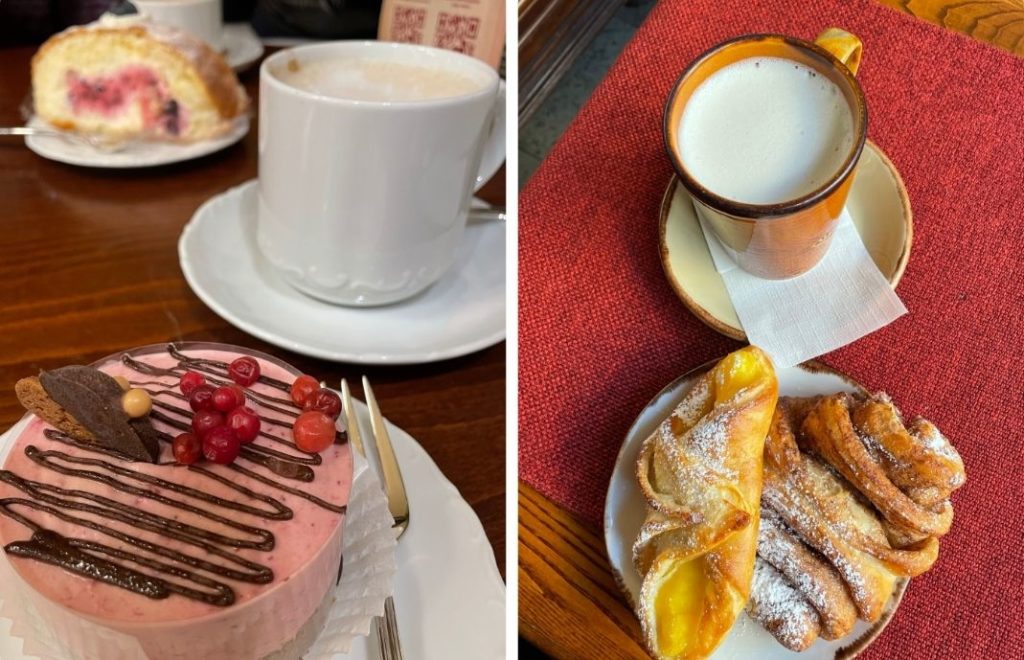
Mmm… is there anything more comforting than resting your feet after a stroll through cobbled streets, with a warm cup of coffee and a plate full of freshly baked pastries? In Tallinn, this simple pleasure is elevated to an art form – a delicious tradition rooted in centuries of café culture.
The city’s love affair with baked goods dates back to 1702, when the very first café opened on the main square of the Old Town. It laid the foundation for a café scene that continues to thrive – welcoming locals and visitors alike with the scent of cinnamon, cardamom, and sweet nostalgia.
Begin your pastry pilgrimage at Maiasmokk Café, Tallinn’s oldest, with a legacy stretching back to 1864. Tucked away in the charming Master’s Courtyard, this timeless gem is known for its elegant interior, delicate cakes, and hand-crafted marzipan. It’s a step into the past – and a true taste of Estonian tradition.
But the city offers far more than just nostalgia. In Tallinn, cafés come in every flavor imaginable – some specialize in pillowy pancakes, others in homemade pies, donuts, chocolates, ice cream, or decadent cupcakes. And nearly every café will have a selection of traditional Estonian cakes, often passed down through generations.
Another must-visit is Peppersack, housed in a historic 16th-century building. Its pastry counter is a feast for the senses – so tempting, in fact, that choosing just one treat is nearly impossible. A plate stacked with a cinnamon roll, vanilla custard bun, and buttery croissant is not only understandable – it’s encouraged.
Whether you’re seeking a cozy hideaway on a chilly afternoon or a sunny terrace to enjoy your sweets al fresco, Tallinn’s café culture invites you to slow down and savor the moment – one freshly baked bite at a time.
More inspiration: Estonia’s marzipan tradition lives on
Kadriorg – In the footsteps of the Tsar
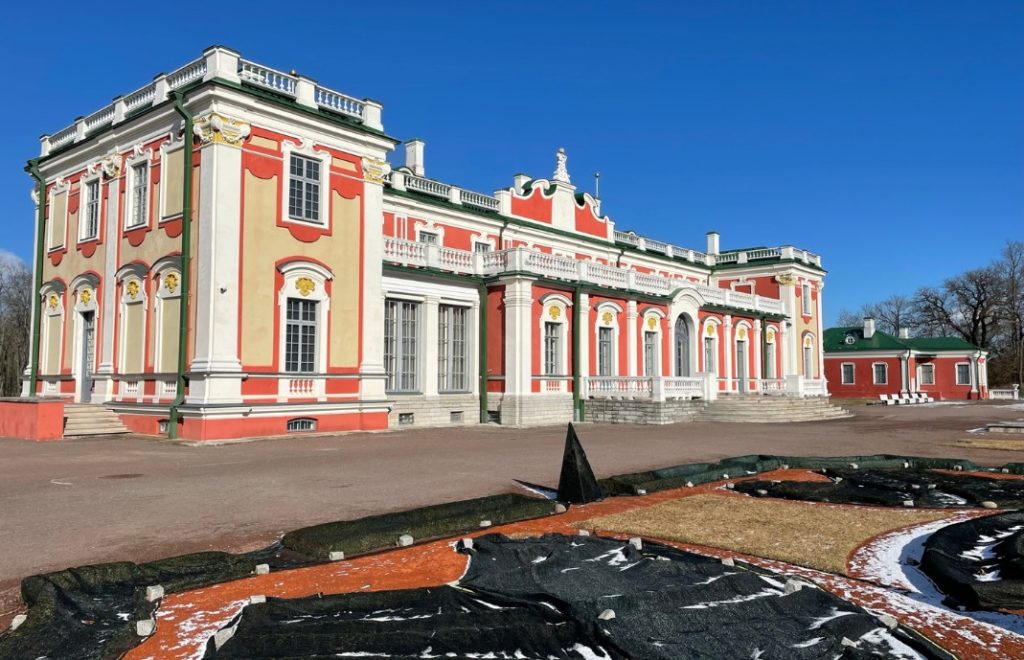
Just a short walk from Tallinn’s Old Town lies Kadriorg, a peaceful and refined district where lush gardens, imperial elegance, and world-class art meet in perfect harmony. Named after Catherine I of Russia – “Kadriorg” meaning “Catherine’s Valley” in Estonian – this is where Tsar Peter the Great left his most romantic mark on Estonia.
In the early 18th century, after claiming the Baltics during his military campaigns, Peter built a magnificent Baroque palace and landscaped park in honor of his beloved wife. Completed in 1723, Kadriorg Palace was designed to rival the summer estates of Europe’s royal courts – and it still stuns with its ornate façade, lavish interiors, and perfectly symmetrical gardens.
Today, the palace houses an elegant branch of the Art Museum of Estonia, showcasing an impressive collection of European and Russian paintings from the 16th to 20th centuries. The setting is as much a masterpiece as the art itself – ceiling frescoes, chandeliers, and painted stucco walls evoke the imperial lifestyle of centuries past.
Just a few minutes away, modern art lovers will find Kumu, the main building of the Estonian Art Museum, an award-winning contemporary space offering a fascinating look at Estonian art through the ages – from classical works to bold, modern expressions.
Of course, you don’t need a ticket to enjoy Kadriorg’s greatest gift: its tranquil park. Do as the locals do – stroll through manicured alleys, admire the flower beds, feed the ducks by the swan pond, or simply find a bench and watch the world slow down.
Whether you’re an art enthusiast, a history lover, or simply someone seeking serenity, Kadriorg is a regal retreat in the heart of the capital – where the spirit of the tsar still lingers among the trees and fountains.
Tallinn Song Festival Grounds – Where a nation sang itself free
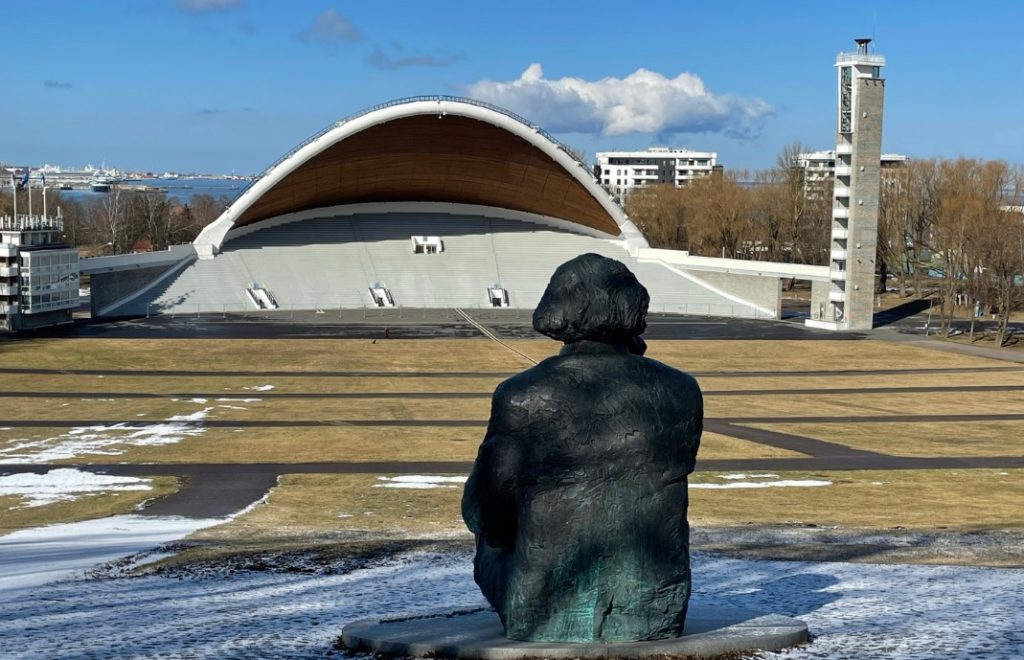
In Estonia, music isn’t just a form of entertainment – it’s a powerful force of unity, identity, and resistance. Nowhere is that more evident than at the Tallinn Song Festival Grounds (Lauluväljak), the symbolic heart of what became known as “The Singing Revolution.”
It was here, in 1988, that tens of thousands of Estonians gathered in peaceful defiance of Soviet rule. Not with weapons, but with song. Their voices rose in unison, filling the air with patriotic hymns and forbidden folk tunes. Three years later, in 1991, Estonia regained its independence without a drop of blood spilled. Many say the Estonian people quite literally sang themselves free.
The stage itself was completed in 1959, marking the first modern structure built in Tallinn after World War II. Its arcing design blends beautifully into the natural amphitheater, allowing audiences to sit – or stand – on the grassy hillside surrounding the open-air stage in a sweeping semicircle. It’s an architectural marvel, built with both acoustics and the landscape in mind.
Today, the grounds remain a beloved venue for major concerts and cultural events. From Michael Jackson to Metallica, and even Madonna, global stars have performed here, yet no event matches the emotional power of the Estonian Song and Dance Celebration, held every five years. During this extraordinary gathering, over 34,000 performers take the stage before more than 200,000 spectators – a breathtaking spectacle of tradition, pride, and unity.
At the base of the amphitheater stands the statue of Gustav Ernesaks, known as the “Father of Song”. A revered composer and conductor, his music became anthems of resilience and hope. Take a seat on the nearby “Singing Bench,” and you’ll hear a few of his beloved melodies gently playing – reminders of a time when a nation’s voice was its greatest weapon.
Visiting the Tallinn Song Festival Grounds is more than seeing a concert venue – it’s standing on the sacred soil of a peaceful revolution, and feeling the echoes of freedom in the wind.
Telliskivi Creative City – Tallinn’s bohemian soul
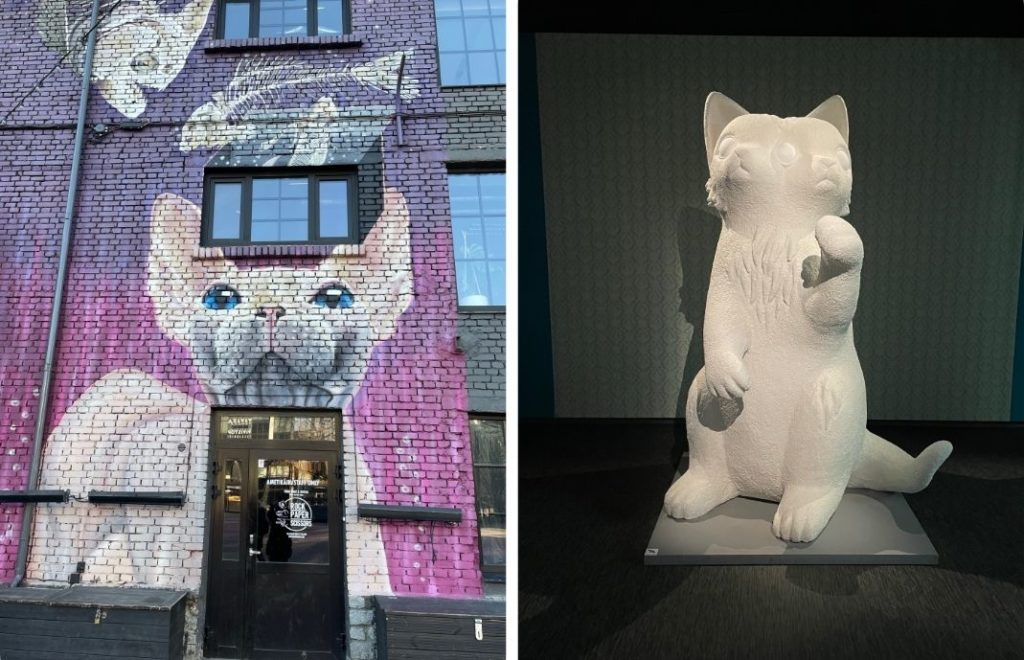
Once a Soviet-era industrial complex, Telliskivi Creative City has blossomed into one of Tallinn’s most dynamic and beloved neighborhoods. With its gritty charm, bold street art, and forward-thinking spirit, this is where creativity lives and breathes – a buzzing hub of design, culture, food, and innovation that invites you to linger, explore, and be inspired.
Wander through the area’s repurposed warehouses and red-brick buildings, now home to an ever-evolving mix of independent boutiques, artisan studios, edgy galleries, and experimental restaurants. It’s a favorite haunt for locals and travelers alike – those in search of the authentic pulse of modern Tallinn.
At the heart of it all lies Fotografiska Tallinn, the Estonian outpost of the world-renowned Stockholm-based photography center. This is not your typical art gallery – Fotografiska uses photography to provoke thought, foster connection, and ignite change. Its rotating exhibitions feature global icons and rising stars, sharing stories that are as beautiful and soul-stirring as they are unflinchingly raw.
From the human condition to the climate crisis, from love and longing to injustice and resilience, the themes are as diverse as the artists themselves. It’s a place that asks you to pause, reflect, and feel.
Don’t leave without heading to the rooftop restaurant, a beacon of sustainability with its zero-waste policy and seasonal menus crafted from local ingredients. Pair your meal with a view – the terrace offers a fantastic vantage point over the vibrant creative district below.
Whether you’re here to shop local, taste something new, admire the street art, or simply soak in the atmosphere, Telliskivi Creative City is Tallinn at its most innovative, artistic, and alive.
A big thank you to Visit Estonia who covered flights, accommodation, experiences and food. There are no requirements from the supplier for posting or promoting on social media. Opinions and photos are, as always, my own.
More inspiration to visit Estonia:
Winter adventures in and around Tallinn
9 good reasons to visit Tartu
