
Marzipan is one of Estonia’s oldest sweet traditions – beloved since the Middle Ages, when it was crafted from simple yet luxurious ingredients: almonds and sugar.
The historic Hanseatic cities of Reval (now Tallinn) and Lübeck in Germany both proudly claim to be the birthplace of marzipan. The true origin has been lost to time, but that hardly matters. What endures is the unmistakable flavor and timeless affection for this almond delicacy.
In Tallinn, the legacy lives on at Maiasmokk, the city’s oldest operating café and a shrine to all things marzipan. Here, the confection is still made just as it was over a hundred years ago – by hand, with care, and with the same classic recipe that has delighted generations.
Step inside and you’re stepping into a piece of edible history, where tradition is not just remembered – it’s lovingly recreated, one sweet bite at a time.
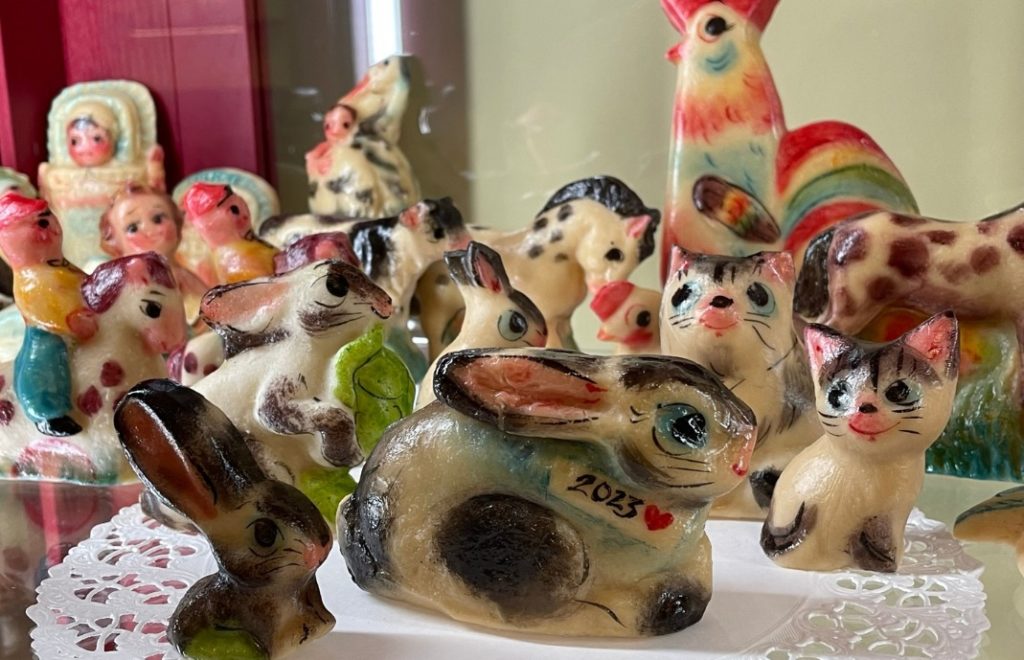
The sweet origins of marzipan: From medieval medicine to timeless treat
The first known almond paste in the world was created in Tallinn’s legendary Town Hall Pharmacy, believed to be Europe’s oldest continuously operating pharmacy – its existence traced back to at least 1422. According to a well-regarded local legend, marzipan was invented by a merchant right here, within the apothecary’s historic walls.
In the Middle Ages, marzipan was considered to have medicinal properties and was originally crafted by pharmacists, not pastry chefs. By the 17th century, almond paste was described as a remedy for sleeplessness – a sweet miracle permitted only in small quantities and entrusted to the hands of skilled apothecaries.
Historical price lists from 1695 show marzipan sold under names like Panis Martius and Marci Panis. A fascinating 17th-century order from Town Hall Pharmacy reveals that marzipan molds were commissioned from the Dutch artisan Arent Passer. One surviving stone mold, beautifully carved with Tallinn’s lion-crested coat of arms and noble insignias, was used to craft edible gifts for aristocrats.
During the Hanseatic period, marzipan production gradually passed from pharmacists to sugar bakers, who, by the 19th century, had become known as confectioners.
One such confectioner – Gild Lorenz Cavietzel III, a Swiss pastry chef – made history when he purchased a building on Pikk Street in Tallinn and opened Maiasmokk (“Sweet Tooth”). It was here that marzipan made its delicious transition from medicine to delicacy, earning a permanent place in Estonia’s culinary heritage.
Today, every handcrafted marzipan figure tells a story – one that began in the quiet halls of a medieval pharmacy and continues to enchant sweet tooths around the world.
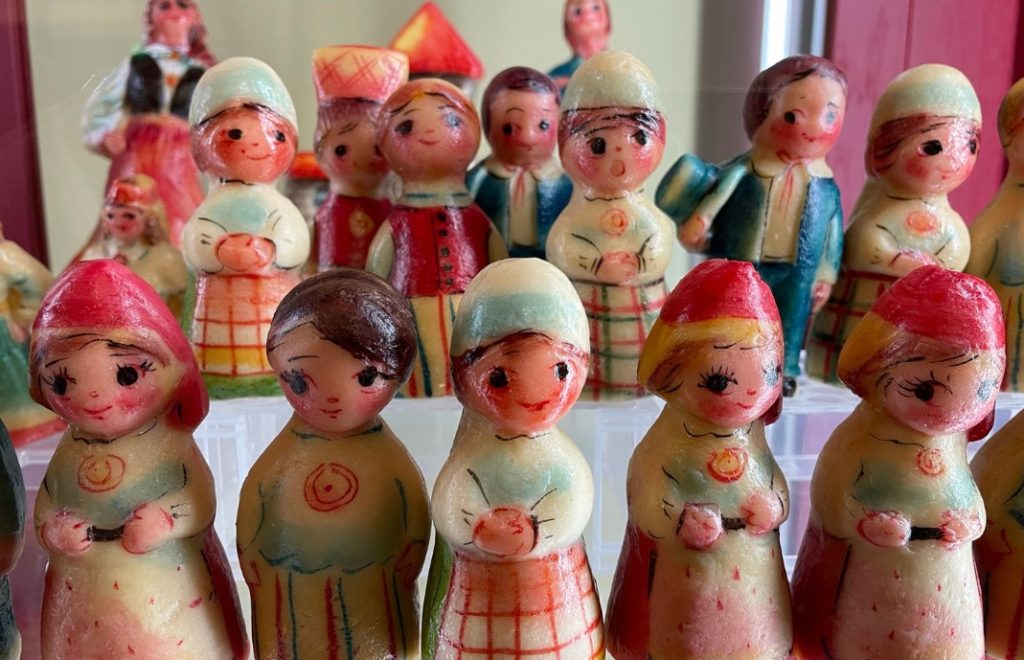
Love in every detail: The art of marzipan at Maiasmokk
Maiasmokk rose to even greater fame in the late 19th century when entrepreneur Georg Stude took the reins. He bought the café, renovated it, expanded the surrounding district, and launched a full-scale confectionery and chocolate business from its heart.
Stude’s marzipan quickly gained renown – not just in Estonia, but far beyond. Even the Russian Tsar in St. Petersburg became a devoted customer, ordering sweets from Maiasmokk to grace imperial tables.
When the factory was nationalized in 1940, Estonia’s marzipan-making tradition could have faded. But instead, it was carried forward by Kalev, the country’s premier confectionery company. Under Soviet rule, marzipan continued to charm even the highest ranks – Kremlin officials were known to fall for the delicately molded creations, shaped like vegetables, birds, animals, and ornate cakes. The demand was so high, marzipan artisans often worked overtime just to keep up with orders from Moscow.
Today, Maiasmokk’s marzipan is still made the old-fashioned way – using the very same techniques, tools, and molds from Stude’s original factory. Each figure is sculpted and hand-painted with edible colors, using only a brush and the skilled hands of a marzipan artist.
No two pieces are ever the same. Every curve, every detail, every brushstroke reflects the passion and craftsmanship poured into these tiny works of edible art – each one a sweet expression of tradition, heritage, and love.

Paint your own marzipan masterpiece at Maiasmokk
At Maiasmokk, Estonia’s most historic café, the sweet tradition of marzipan-making comes to life – not just behind the counter, but in a hands-on experience you won’t want to miss.
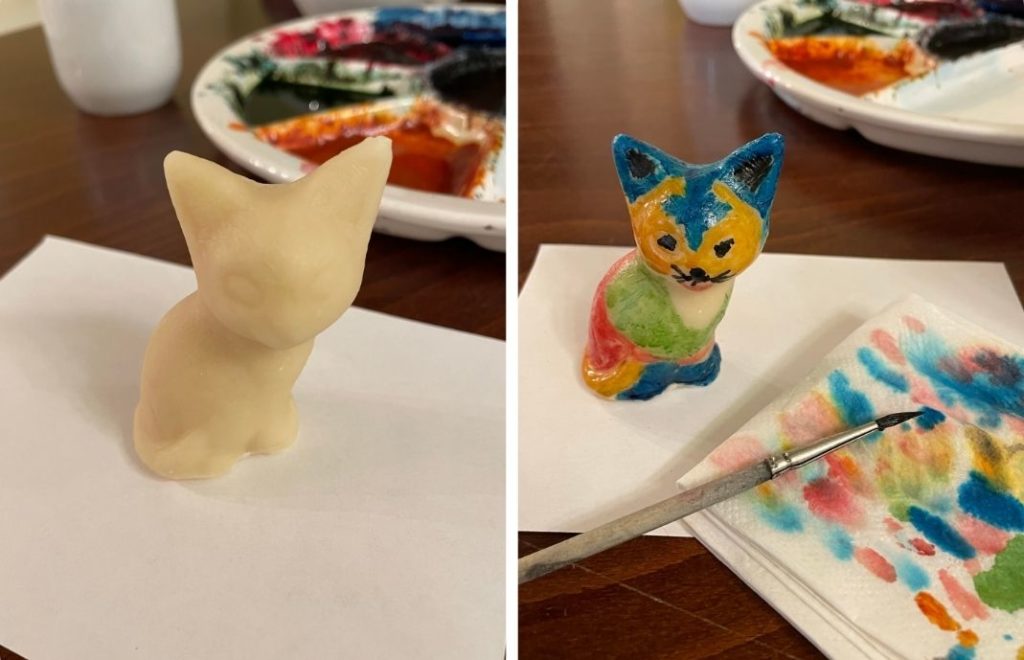
Step into the Marzipan Room, where you’ll have the chance to create your own edible artwork. Choose from a variety of pre-molded marzipan figures, then – guided by a skilled marzipan painter – bring it to life with brush and edible paint.
The workshop lasts between 30 to 60 minutes and is ideal for groups of 10 to 25 people.
Whether you’re painting a bird, a vegetable, or a whimsical creature, the result will be entirely your own – unique, colorful, and deliciously handcrafted.
A creative, calming, and memorable way to dive into Estonia’s sweetest tradition.
The Marzipan room at Maiasmokk: Where sweet history comes to life
Inside Maiasmokk, Tallinn’s oldest and most charming café, you’ll find a treasure trove of tradition nestled in its cozy Marzipan Room – a place where the air is thick with the scent of almonds, sugar, and stories.
Here, you can buy beautifully handcrafted marzipan figures, perfect as edible souvenirs or heartfelt gifts. The café’s quaint little shop, with its creaky wooden floors and irresistible glass display, is brimming with marzipan treats and other confections. Friendly staff – often described as “sweet as the marzipan itself”- greet you with a smile that makes the whole experience even more delightful.
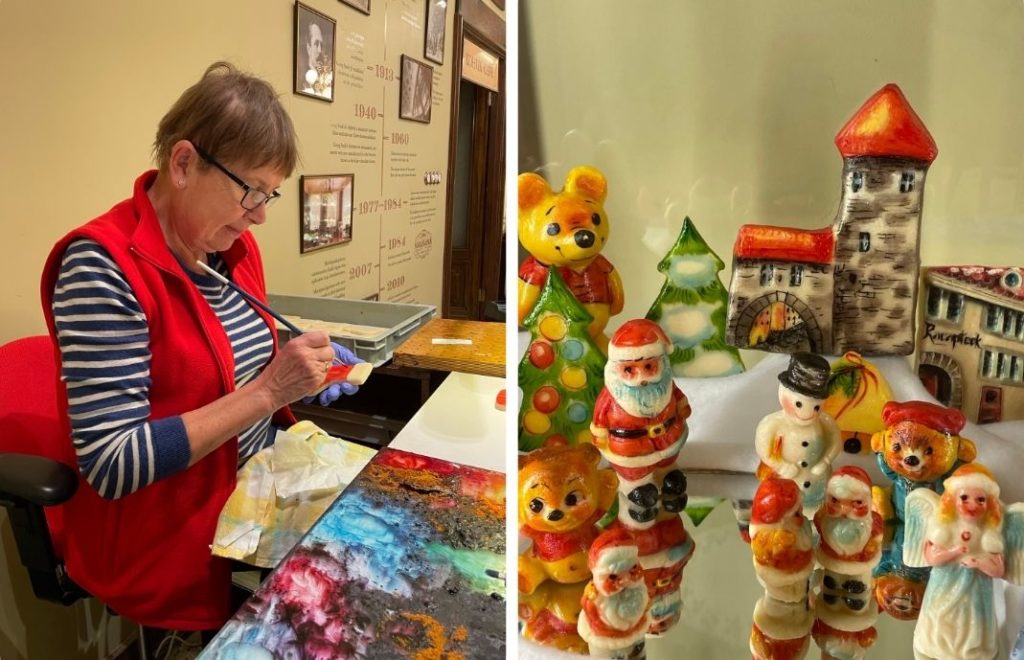
In one corner, you’ll see a live painting station, where professional marzipan artists work with swift, practiced hands – adding delicate color to hearts, rabbits, gnomes, angels, and more. Watching them in action is part performance, part inspiration.
Don’t miss the marzipan figure exhibition – a gallery of edible masterpieces that will leave you in awe of just how creative almond paste can be.
Grab a seat at one of the five intimate tables, indulge in your favorite treat, and soak up the atmosphere. On the wall, a timeline of marzipan history invites you deeper into its origins, and a short film playing on a nearby screen offers a behind-the-scenes look at how these beloved sweets are made.
Whether you’re nibbling on a freshly painted angel or marveling at a lion-shaped masterpiece, the Marzipan Room at Maiasmokk is a delicious immersion into one of Estonia’s most treasured traditions.
Maiasmokk Café: A taste of history in the heart of Tallinn
After indulging in marzipan delights, don’t miss the chance to step further into the elegant world of Maiasmokk Café – a place where time seems to stand still. Established in 1864, this is Tallinn’s oldest (and quite possibly Estonia’s oldest) café, and it wears its heritage with pride.
The moment you walk in, you’re transported to another era. The richly decorated interior, with its antique mirrors, carved woodwork, and chandeliers, tells a story of grand old Europe. The café is often buzzing, and for good reason – seats are coveted, and the display counter is a feast for the eyes, offering everything from decadent cakes to delicate sandwiches.
Here, you’re not just enjoying a treat – you’re partaking in a tradition. The same pastries that once delighted Russian tsars, poets, and artists over a century ago are still being served today, with the same care and timeless charm.
Whether you stop in for a coffee and a slice of something sweet, or simply to soak up the atmosphere, Maiasmokk Café is a must-visit. It’s more than just a café – it’s a beautifully preserved window into Estonia’s flavorful past.
A big thank you to Visit Estonia who covered flights, accommodation, experiences and food. There are no requirements from the supplier for posting or promoting on social media. Opinions and photos are, as always, my own.
More inspiration to visit Tallinn:
Why you should visit Tallinn
Winter adventures in and around Tallinn
