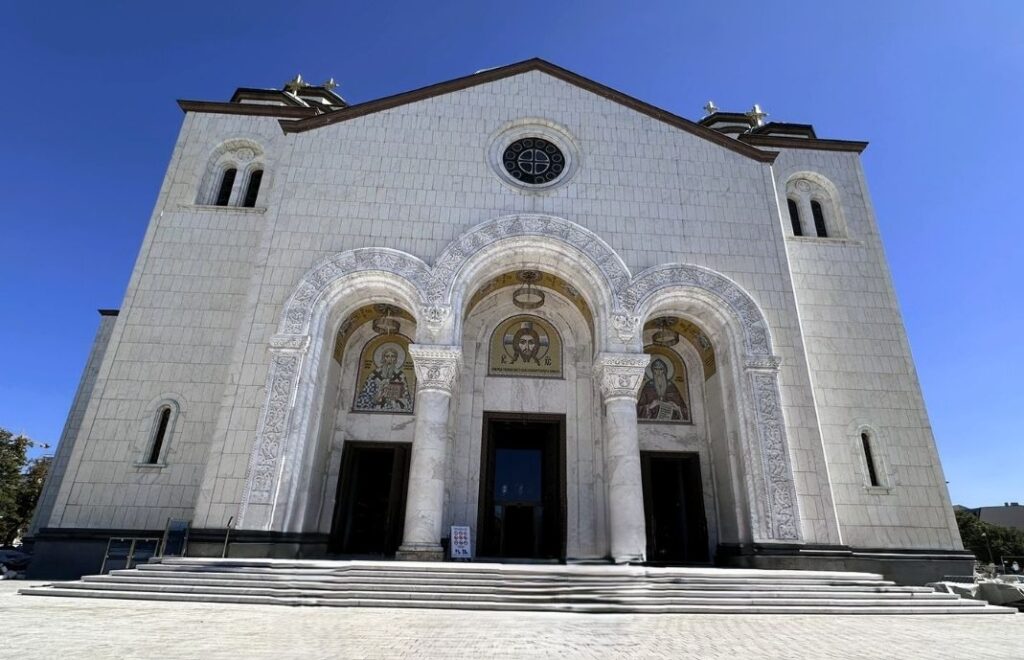
Rising above Belgrade with striking white marble walls and a gleaming central dome, the Temple of Saint Sava is one of the most impressive religious buildings in Europe. As the largest Orthodox church in the Balkans and a powerful symbol of Serbian identity, it dominates the skyline not just by size, but by meaning.
Built on the site where the relics of Saint Sava – the founder of the Serbian Orthodox Church – were burned in the 16th century, the temple carries deep historical and spiritual significance. Today, its vast interior of golden mosaics, soaring arches, and hushed grandeur offers visitors a moment of calm and reflection, whether they come for faith, architecture, or simple curiosity. More than a place of worship, the Temple of Saint Sava is a defining landmark of modern Belgrade.
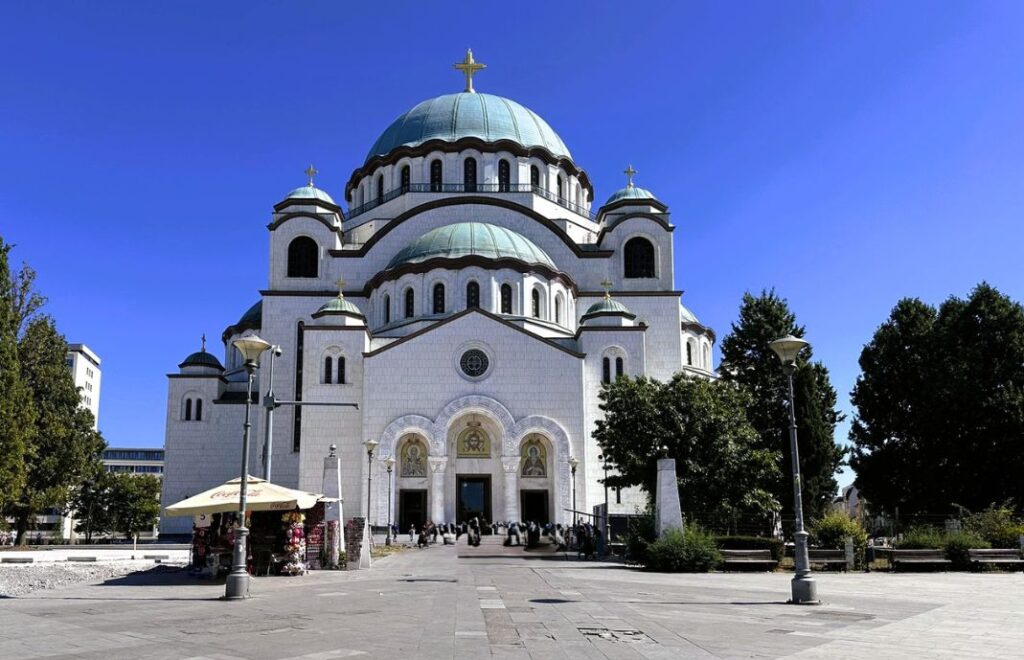
A brief history of the Temple of Saint Sava
The story of the Temple of Saint Sava begins in the late 16th century, when Ottoman authorities burned the relics of Saint Sava on this very hill in an attempt to suppress Serbian identity and Orthodox Christianity. Over time, the site became a powerful symbol of faith, resistance, and national memory.
Plans to build a monumental church here emerged in the late 19th century, but wars, political upheaval, and changing regimes repeatedly delayed construction. Work on the temple finally began in 1935, only to be halted again during World War II and later under Yugoslavia’s communist government.
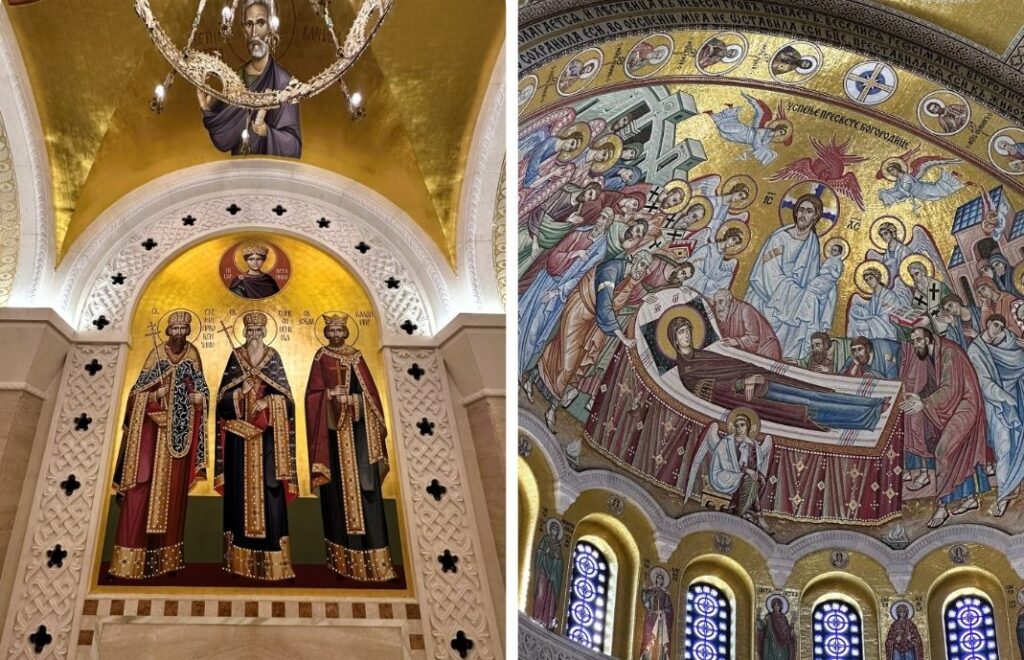
Construction resumed in the 1980s, and the massive structure gradually took shape over the following decades. While the exterior was largely completed by the early 2000s, the interior decoration – especially the vast mosaic program – has continued into the present day. These mosaics, among the largest of their kind in the world, reflect both traditional Byzantine artistry and modern craftsmanship.
Today, the Temple of Saint Sava stands not just as a place of worship, but as a testament to endurance. Its long construction history mirroring Serbia’s own complex journey through centuries of change.
What to see inside the Temple
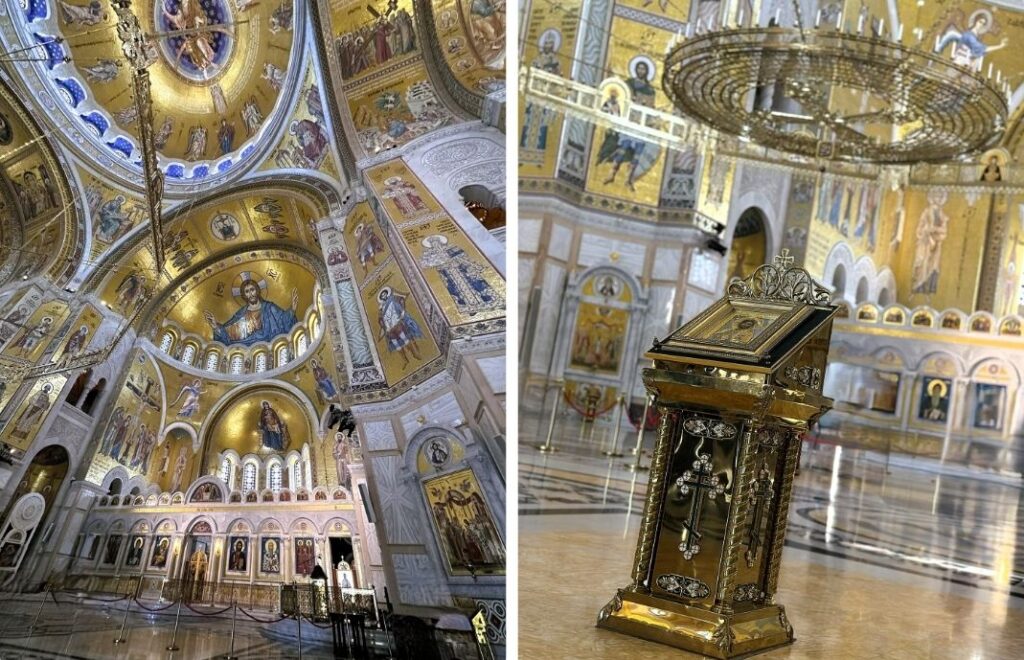
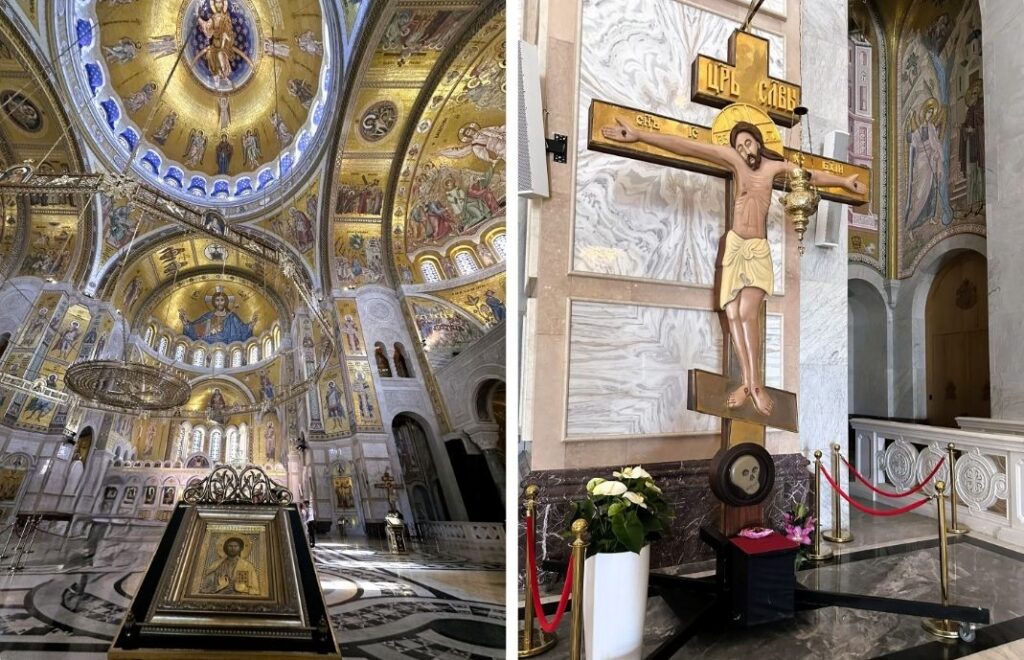
Stepping inside the Temple of Saint Sava is a breathtaking experience. The vast interior feels both monumental and serene, designed to inspire awe while encouraging quiet reflection. Every element – from the mosaics to the lighting – has been crafted to emphasize scale, symbolism, and spiritual beauty.
The golden mosaics
The temple’s interior is adorned with shimmering Byzantine-style mosaics, making it one of the largest mosaic-covered religious spaces in the world. Gold dominates the color palette, catching and reflecting light in a way that feels almost celestial. Scenes from the life of Christ, saints, and Orthodox tradition unfold across walls and ceilings in extraordinary detail.
The central dome
Look up, and you’ll see one of the temple’s most striking features: the massive Christ Pantocrator mosaic in the central dome. Suspended high above the floor, the image appears to float, reinforcing the sense of verticality and spiritual elevation. The sheer scale of the dome is difficult to grasp until you stand beneath it.
The Crypt (lower church)
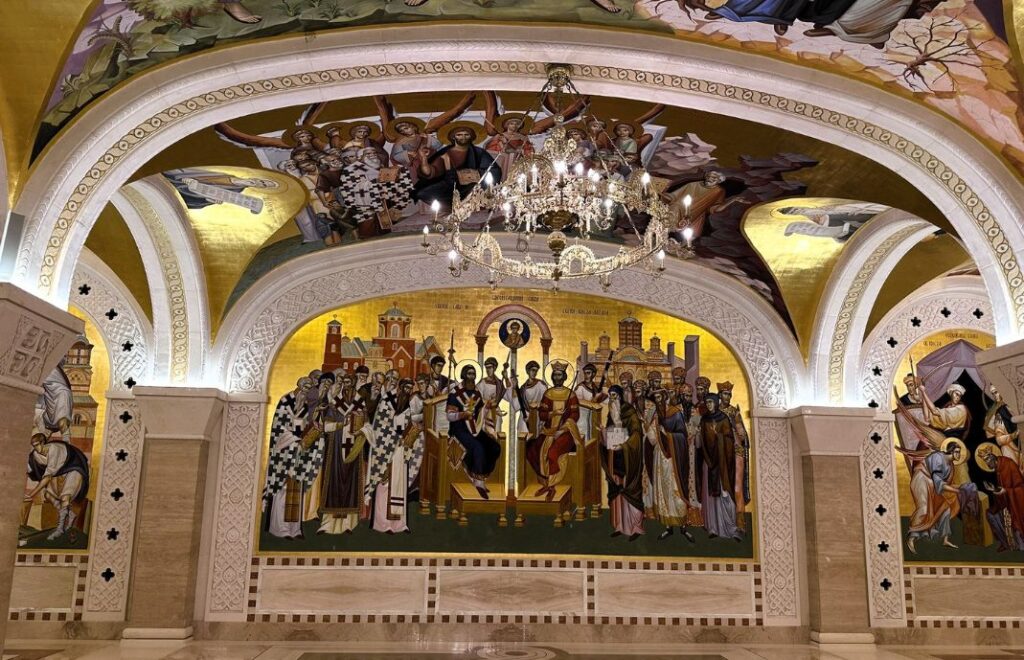
Often quieter and more intimate than the main hall, the crypt beneath the temple is richly decorated with darker tones, intricate patterns, and detailed iconography. Many visitors find this space especially moving, as it contrasts beautifully with the brightness and openness above.
Chandeliers and architectural details
Massive chandeliers hang from the ceiling, adding warmth and grandeur without overpowering the space. Pay attention to the marble columns, carved stonework, and subtle symmetry throughout the interior – details that reveal the immense craftsmanship behind the temple’s construction.
Atmosphere and silence
Beyond specific features, one of the most powerful aspects of the temple’s interior is its atmosphere. Despite its size, the space feels calm and contemplative. Visitors often lower their voices instinctively, allowing the building itself to guide the experience.
Practical visitor information
Location
The Temple of Saint Sava is located in the Vračar district, one of Belgrade’s most pleasant and central neighborhoods, easily reached from anywhere in the city.
Opening hours
The temple is generally open daily, from morning until early evening.
Hours may vary slightly depending on religious services, holidays, or special events.
Tip: If you want a quieter visit, arrive early in the morning or later in the afternoon.
Entrance fee
Free entry.
Donations are welcome and help support ongoing interior work and maintenance.
Dress code
As an active place of worship, visitors are expected to dress respectfully:
- Shoulders and knees covered
- Hats removed indoors
Light scarves are useful in summer.
Photography rules
Photography is usually allowed without flash, but policies may change depending on services or security restrictions.
Be respectful of worshippers and avoid photographing people at prayer.
How to get there
- Tram: Several tram lines stop directly near the temple
- Bus: Multiple bus routes serve the Vračar area
- On foot: Easily walkable from Slavija Square
- Taxi/Ride-share: Widely available and affordable in Belgrade
Accessibility
The main entrance and interior are generally accessible, though some areas – particularly the crypt – may have limited access depending on conditions.
Best time to visit
- Early morning or late afternoon offers the most peaceful atmosphere.
- Visit near sunset to see the exterior glow softly against the Belgrade skyline.
Key facts about the Temple of Sava
Beyond its spiritual significance, the Temple of Saint Sava is an extraordinary feat of architecture and engineering. These key facts highlight the sheer scale and ambition behind Belgrade’s most iconic landmark.
- Construction began: 1935
- Major construction resumed: 1985
- Status: Active place of worship (interior mosaics still being completed)
Size & structure
- Total height (with cross): 79 meters (259 feet)
- Dome height: 70 meters (230 feet)
- Dome diameter: 30 meters (98 feet)
- Weight of the central dome: 4,000 tons
- Cross on top: 12 meters (39 feet) tall
- There are 49 bells in the Bell Tower
- Over 18 gold plated crosses on its dome
Interior highlights
- One of the largest mosaic-covered interiors in the world
- Interior mosaics cover tens of thousands of square meters
- Dominant style: Byzantine-inspired mosaics with extensive use of gold
- Central dome features Christ Pantocrator, one of the largest depictions of its kind
Capacity
- Can accommodate several thousand worshippers at once
- Designed to serve both religious ceremonies and major national events
Global significance
- One of the largest Orthodox churches in the world
- A major symbol of Serbian Orthodox Christianity
- Visible from large parts of Belgrade, making it a defining element of the city’s skyline
Why the Temple is so important to Belgrade
The Temple of Saint Sava is far more than Belgrade’s largest church – it is one of the city’s most powerful symbols. Its importance lies not only in its monumental scale, but in what it represents to Belgrade and to Serbia as a whole.
First and foremost, the temple is a spiritual anchor. Dedicated to Saint Sava, the founder of the Serbian Orthodox Church, it stands on sacred ground deeply tied to national identity, faith, and historical memory. For many Belgraders, it represents continuity – linking medieval Serbia with the modern city.
The temple also reflects Belgrade’s resilience. Its long, interrupted construction mirrors the country’s turbulent past, shaped by wars, occupation, political change, and rebuilding. That the temple was eventually completed speaks to a collective determination to preserve cultural and spiritual heritage despite adversity.
Visually, the temple has become one of Belgrade’s defining landmarks. Its white stone exterior and vast dome dominate the skyline, visible from across the city, acting as both a literal and symbolic point of orientation. It anchors the Vračar district and gives Belgrade a sense of monumentality that balances its more raw, urban character.
Finally, the Temple of Saint Sava serves as a place of gathering – not just for worship, but for quiet reflection. Locals visit to light candles, pause during daily routines, or simply experience a moment of calm. For travelers, it offers insight into the soul of the city, revealing a side of Belgrade that is deeply rooted, reflective, and proud of its heritage.