
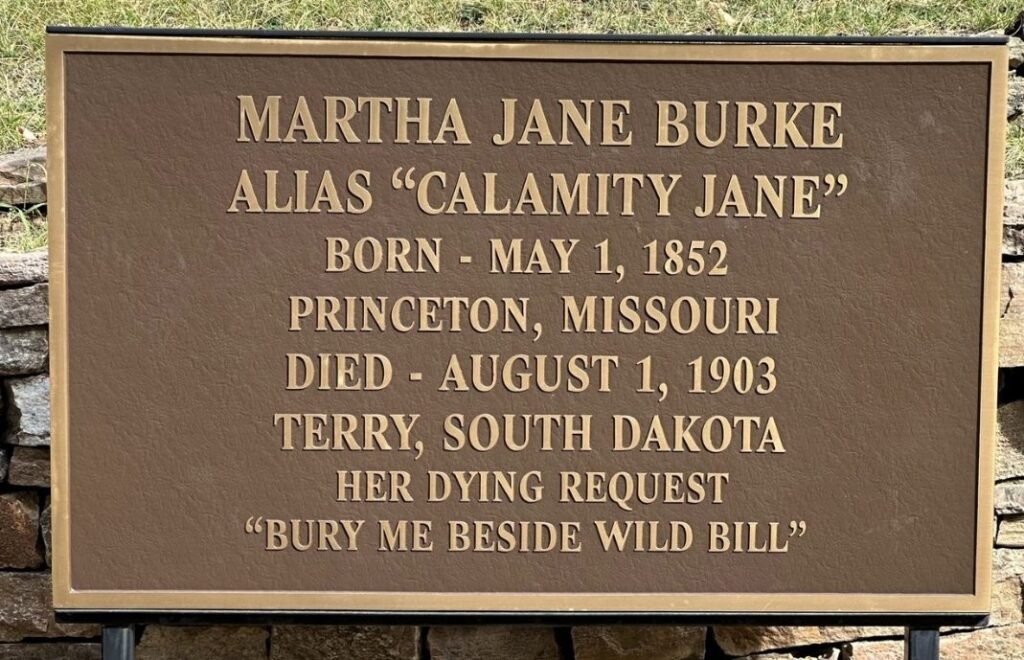
Standing at their graves in Deadwood, the noise of the town fades away. The slope is quiet, the air still, and the Black Hills stretch outward in every direction. Looking down at the two names carved into stone, Wild Bill Hicock and Calamity feel less like legends and more like people who once walked where you are now.
There is something disarming about this moment. These are figures so often reduced to stories, symbols, and exaggeration, yet their final resting place is modest, human, and undeniably real. In this quiet space, the distance between myth and reality narrows. What remains is curiosity. About whom they truly were and how their lives became entwined with Deadwood.
Maybe most of all: why do their stories continue to linger long after the gunfire, bravado, and frontier chaos have faded.
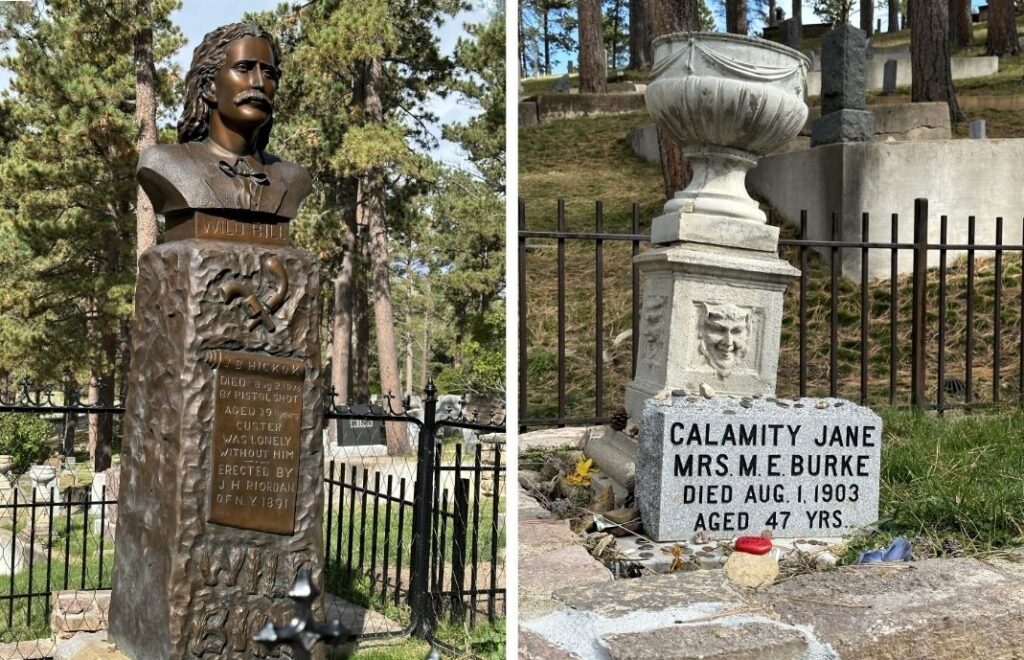
When history becomes myth
Wild Bill Hickok and Calamity Jane occupy a rare space in American history, where documented lives and exaggerated stories exist side by side. They were real people, shaped by circumstance, survival, and reputation. Yet over time their identities were stretched and reshaped by rumor, storytelling, and public fascination. The frontier had a way of turning individuals into symbols, and both Hickok and Calamity Jane became larger than themselves long before their lives came to an end.
Deadwood is where this transformation solidified. It was here that Hickok’s life ended abruptly, fixing his image in the public imagination, and where Calamity Jane’s story became inseparable from his. In this rough, fast-growing town, stories traveled quickly and facts blurred easily. What began as lived experience slowly hardened into legend. It was carried forward through retellings, performances, and popular culture – until the line between who they were and who they were believed to be became almost impossible to separate.
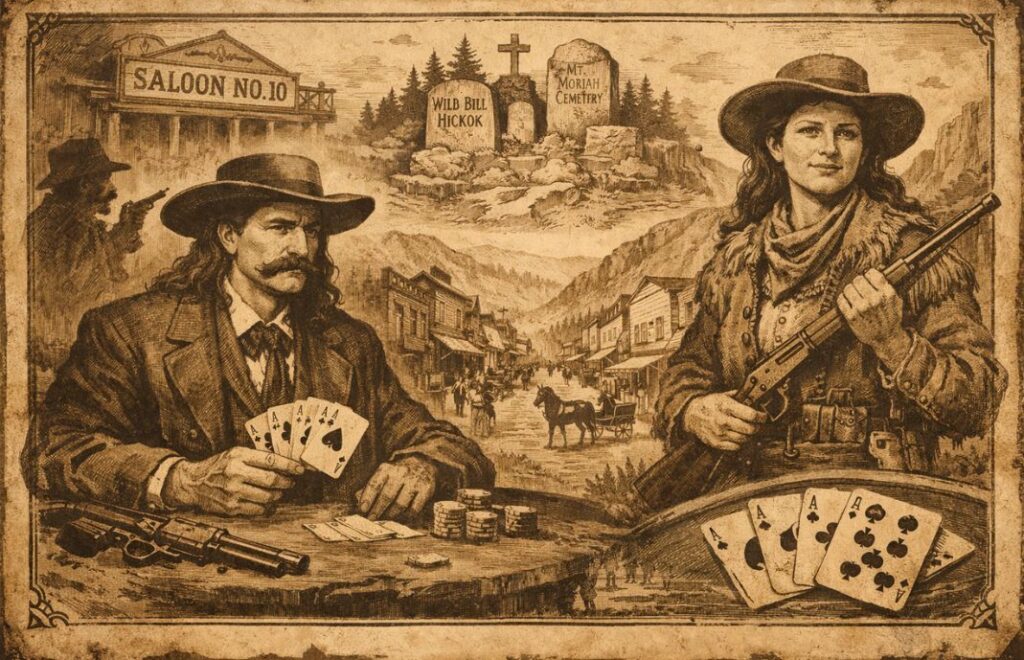
Wild Bill Hickok: Fame before Deadwood
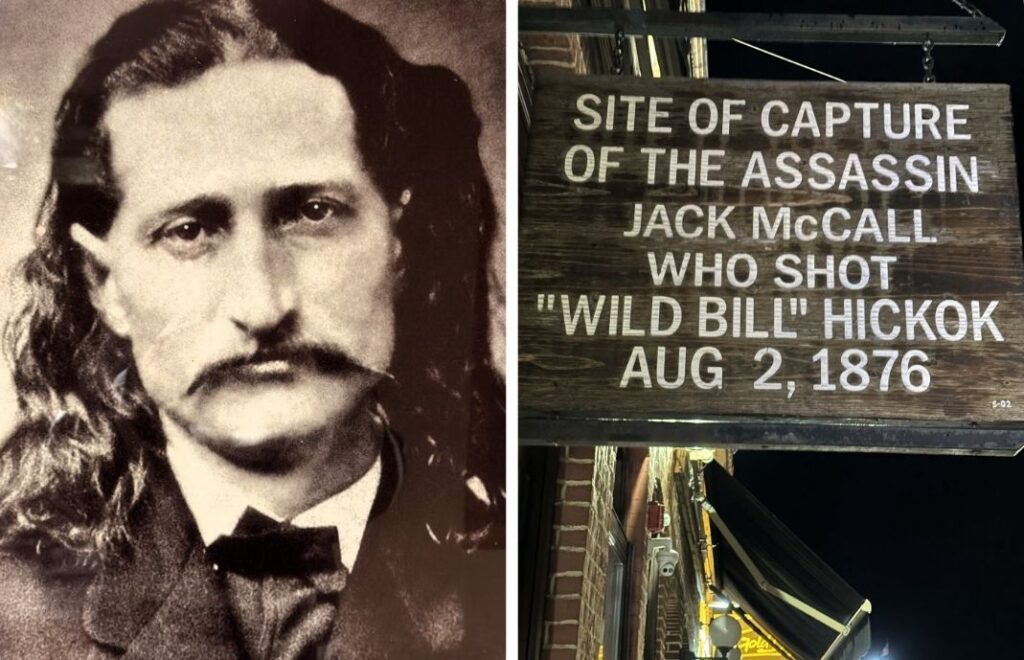
By the time Wild Bill Hickok arrived in Deadwood, his reputation had already traveled far ahead of him. He was known as a lawman, a gunfighter, a scout, and a gambler. Roles that blended easily on the frontier, where survival often depended on both skill and nerve. Stories of his marksmanship and cool composure had circulated for years, turning him into a figure people recognized on sight, even if they had never met him.
That fame came at a cost. Hickok lived under the weight of expectation, aware that his name carried power but also danger. In Deadwood, he was no longer just a man trying his luck at the card table; he was a legend everyone watched. Age, failing eyesight, and exhaustion had begun to slow him, yet the myth surrounding him allowed little room for vulnerability. His final days in Deadwood were shaped by this tension – between who he was becoming and who the world believed him to be – highlighting the quiet burden of living as a legend in a place that thrived on reputation.
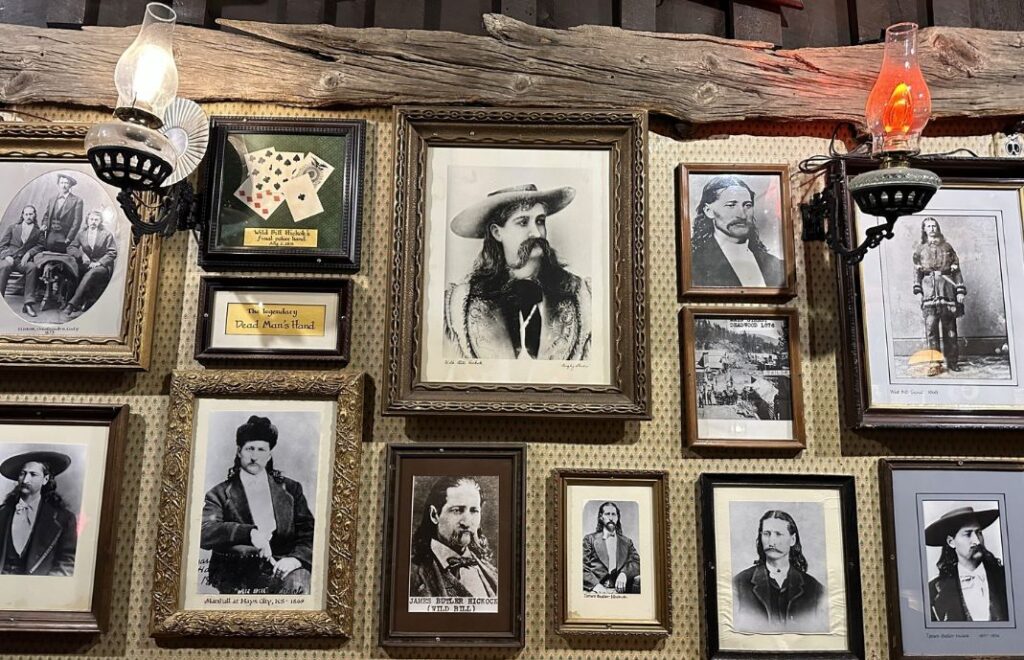
Calamity Jane: A life that defied expectations
Calamity Jane resists simple definition. Often portrayed as reckless or exaggerated, her life was in fact shaped by independence, adaptability, and a relentless instinct to survive in a world that offered women few accepted roles. She moved easily across boundaries. Between genders, professions, and social norms – at a time when doing so came at a high personal cost.
Much of Calamity Jane’s story was self-crafted. She understood the power of narrative and used storytelling as both protection and currency. This shaped her public image long before others began to profit from it. Over time, her life was retold, romanticized, and exploited, often stripping away nuance in favor of spectacle. Yet beneath the layers of myth lies a figure defined by resilience and agency. She was a woman who refused to be confined by expectation and who, in many ways, controlled her own legend long before history attempted to define it for her.
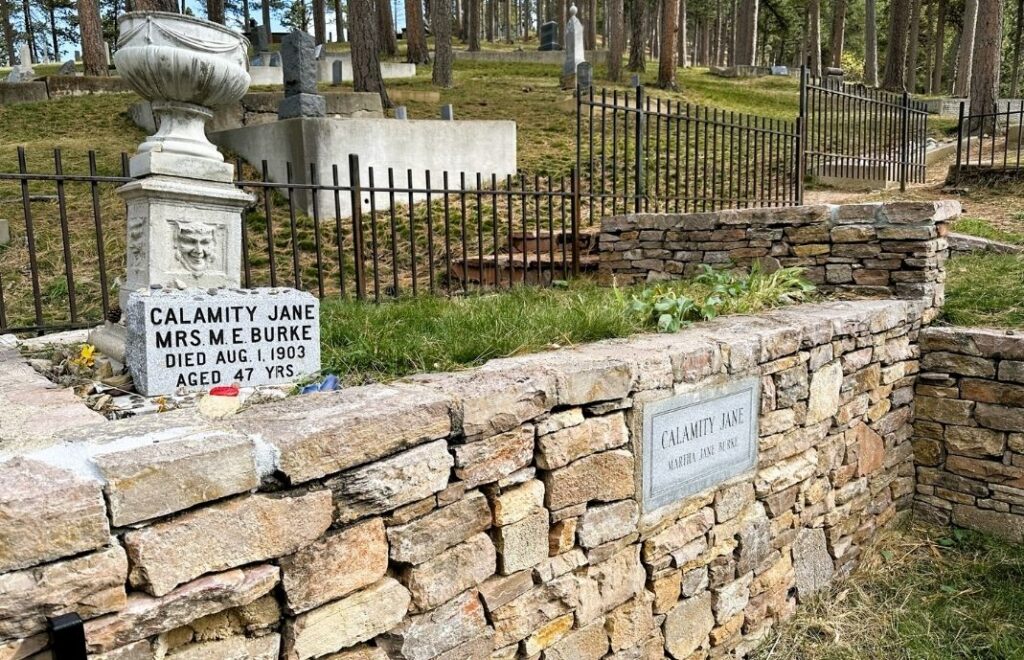
Deadwood: Where their stories intersected
Deadwood is where the paths of Wild Bill Hickok and Calamity Jane converged, and where their stories became permanently entwined. For Hickok, the town marked an abrupt ending. His death here froze him in time, fixing his image as a frontier legend and turning Deadwood into the place where his reputation became immortalized.
For Calamity Jane, Deadwood became something different. A place of return, identity, and belonging. While she traveled widely, it was Deadwood that absorbed her story most fully, shaping how she would be remembered and where her legend would ultimately settle. In this town, life and myth collided with unusual intensity.
Deadwood did not simply witness their stories; it absorbed them, transforming individual lives into shared memories and making this place the emotional and historical heart of both their legacies.
The relationship: Fact, fiction, and fascination
The supposed relationship between Wild Bill Hickok and Calamity Jane is one of the most enduring stories to emerge from Deadwood. And one of the hardest to pin down with certainty. What is documented suggests they knew each other and moved within overlapping frontier circles. Many of the most romantic claims surrounding their bond come from later retellings rather than solid contemporary evidence.
Much of the fascination stems from what Calamity Jane herself later claimed. Over time, she spoke of deep affection and connection, and these assertions became part of her public identity. Whether those claims reflect lived truth, personal longing, or strategic storytelling is difficult to determine. What matters just as much as the answer is the reason the story persists: frontier America was built on narrative as much as it was built on land and labor. In places like Deadwood, reputation could shape a life, and stories could outlast facts.
The idea of Hickok and Calamity Jane together endures not only because it is compelling, but because it reveals how desperately people want legends to contain something human – love, loyalty, and meaning – beneath the myth.
Death, memory, and mythmaking
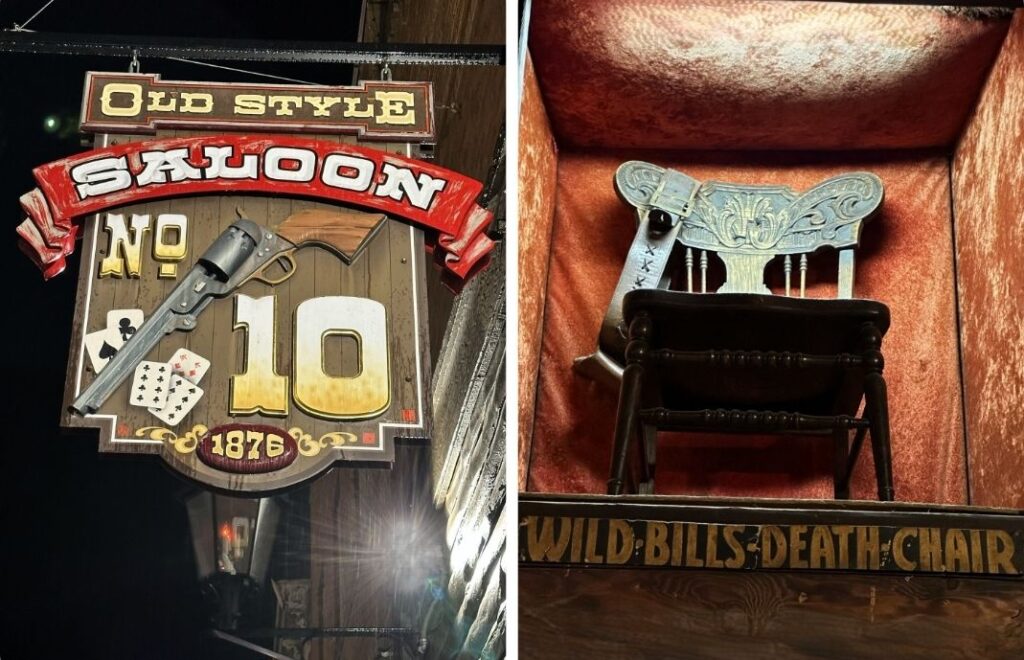
Wild Bill Hickok’s death in Deadwood was sudden and final, and it sealed his place in history in a way life never could. Killed while playing cards, his story ended mid-sentence, leaving no room for decline, reinvention, or contradiction. That abrupt ending allowed his legend to remain intact. Forever framed by confidence, skill, and the drama of the moment. In death, Hickok became fixed, his reputation preserved exactly as people remembered it, untouched by time.
Calamity Jane’s path was far less contained. She lived on, aging in public, navigating poverty, illness, and shifting relevance. Unlike Hickok, she did not have the luxury of a single defining moment. Instead, she actively shaped her own myth through stories, performances, and appearances, using narrative as a means of survival.
Where Hickok’s legend was cemented by silence, Calamity Jane’s was built through voice. Together, their legacies reveal two very different ways myth is made. One through sudden absence, the other through persistent self-creation.
Why their stories still matter
Wild Bill Hickok and Calamity Jane continue to captivate because their lives speak to questions that still resonate today. They navigated identity in a world that rewarded reputation but offered little stability, constantly balancing who they were with who others believed them to be. In many ways, their stories are about reinvention – about shaping oneself in response to circumstance, expectation, and survival.
They also reflect an early version of fame; one built not on distance but in proximity. On the frontier, stories traveled fast, reputations mattered, and myth could take hold while a person was still alive. The thin line between truth and legend that defines Hickok and Calamity Jane feels especially relevant now, in an age equally shaped by narrative and image. Their enduring appeal lies not in perfection or heroism, but in their complexity. Human lives lived under the weight of story, remembered not just for what happened, but for what people needed those stories to mean.
Seeing their legacy in Deadwood
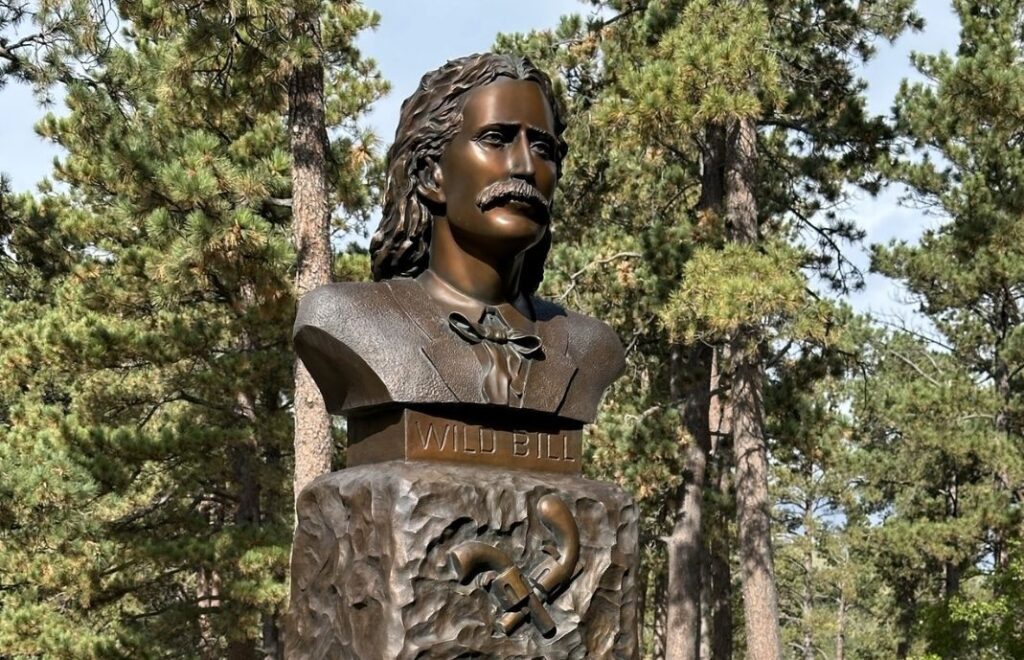
In Deadwood, the legacy of Wild Bill Hickok and Calamity Jane is not confined to history books or distant myth. It exists in physical space. In quiet hillsides where names are carved into stone, in streets that still follow their original lines, and in a town that remembers its past without trying to polish it away.
Standing here, it becomes clear that Deadwood doesn’t just tell their stories; it holds them. The landscape, the town, and the memory are inseparable. Their lives feel closer not because everything is explained, but because not everything is resolved. Deadwood allows their contradictions to remain intact, offering a place where history and legend coexist. Unfinished, human, and still deeply felt.
Places connected to Wild Bill Hickok and Calamity Jane
Mount Moriah Cemetery
The final resting place of both Wild Bill Hickok and Calamity Jane. The hillside setting adds quiet gravity, offering a reflective space rather than a dramatic one.
Saloon No. 10
The location traditionally associated with Hickok’s death, long embedded in Deadwood’s collective memory as the moment his legend was sealed.
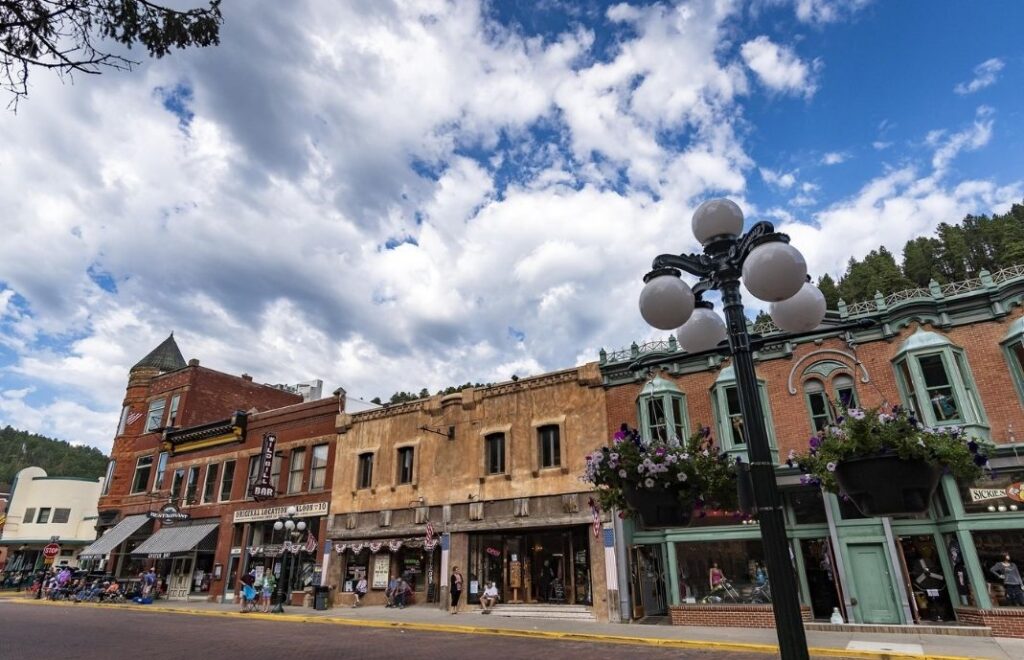
Main Street Deadwood
The historic heart of the town, where the frontier atmosphere still lingers and where both figures would have walked among miners, gamblers, and storytellers.
Adams Museum
A place where documented history provides balance to myth, offering context to lives often overshadowed by legend.
Dead man’s hand
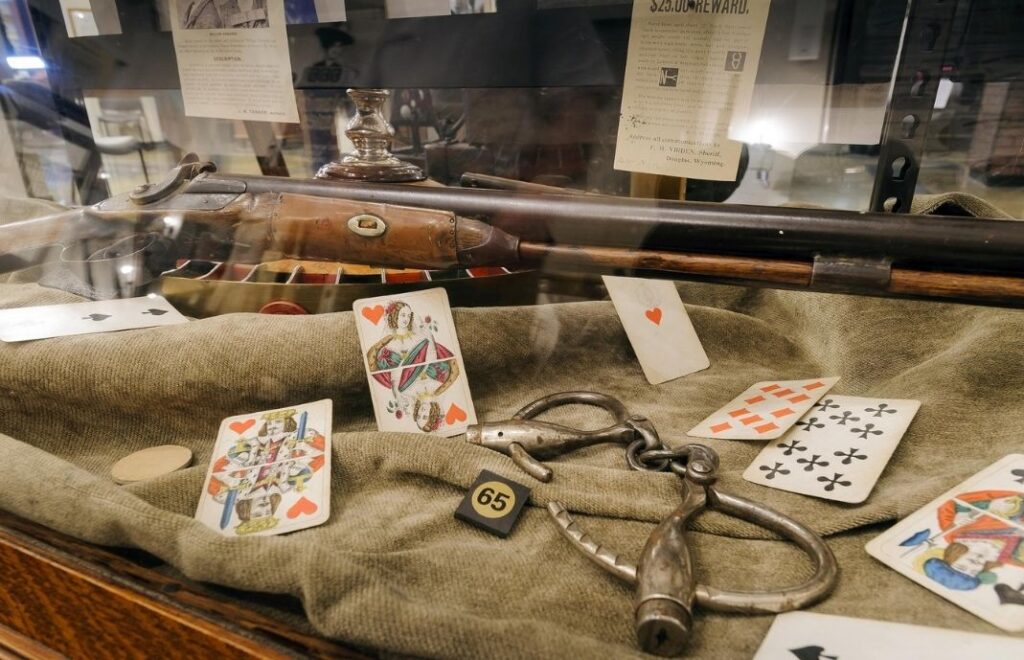
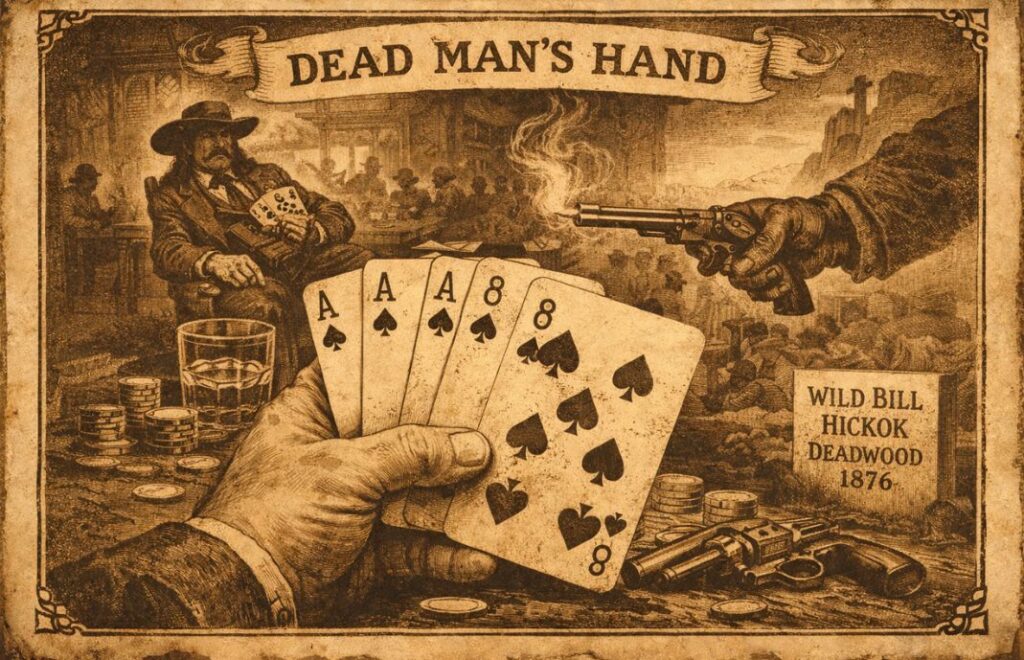
The expression “dead man’s hand” is inseparable from the story of Wild Bill Hickok. It refers to the poker hand he was holding at the moment of his death in Deadwood. Two pairs, aces and eights -forever linking a simple combination of cards to one of the most famous moments in frontier history. The fifth card has never been definitively confirmed, adding yet another layer of uncertainty to an already myth-laden story.
What gives the phrase its power is not the hand itself, but the way it captures the fragility of reputation and life on the frontier. Hickok’s death transformed an ordinary poker game into a symbol, turning chance into legend in a matter of seconds. Over time, dead man’s hand became shorthand for risk, fate, and the thin line between control and vulnerability.
In many ways, the phrase mirrors Hickok’s life. A man known for precision and composure was ultimately undone by circumstance, reminding us that legends are not immune to randomness. The hand he held did not just end a life – it sealed a story. And like so much about Deadwood’s history, it lingers not because every detail is known, but because the unanswered questions continue to resonate.
This post is a collaboration with Travel South Dakota. I am grateful for their cooperation.
