
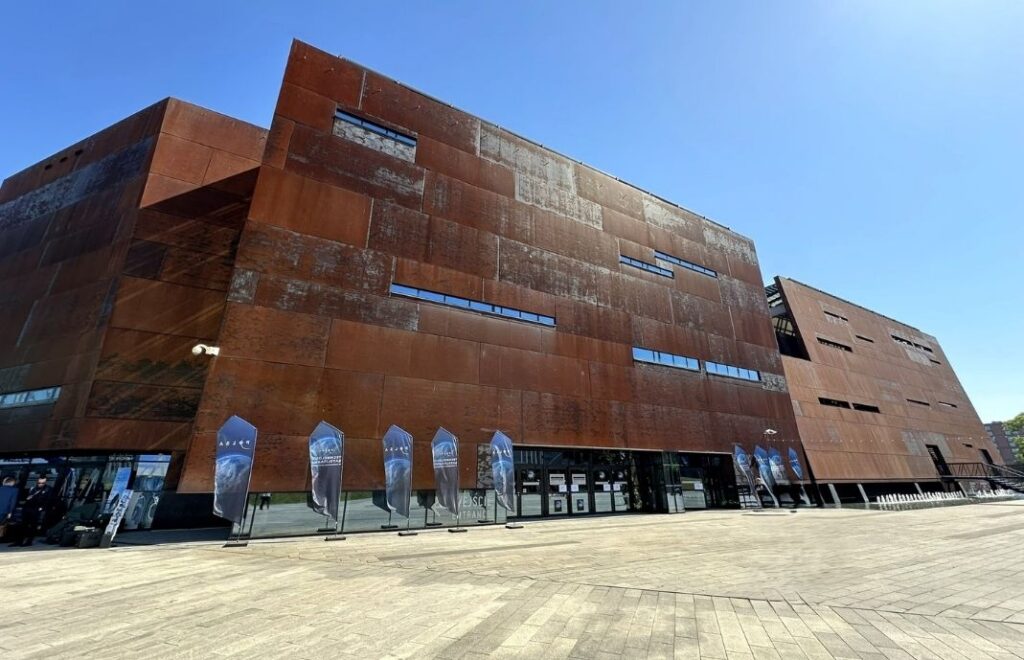
Rising from Gdansk’s former shipyard district, the European Solidarity Centre is both a museum and a living civic space. It tells the story of how ordinary workers helped spark a movement that reshaped Poland and, ultimately, Europe, without dramatization, but with clarity and depth.
Visiting the center feels less like walking through a timeline and more like stepping into a moment when ideas, courage, and collective action converged. It offers context to Gdansk’s modern identity and invites reflection on solidarity as a force that extends far beyond borders and generations.
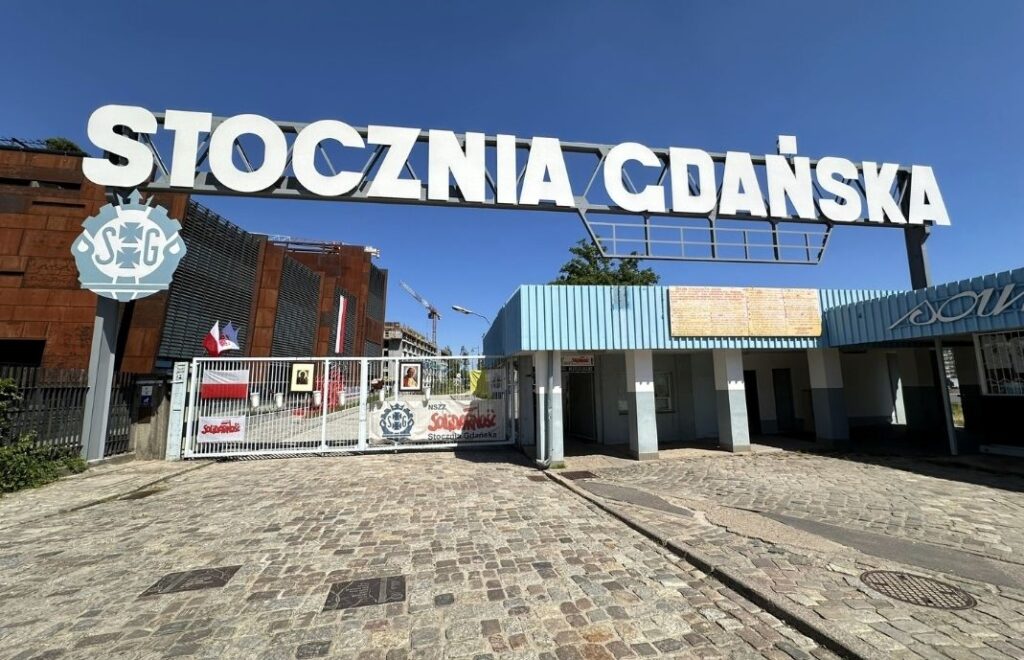
The history behind the European Solidarity Center
The European Solidarity Center was created to preserve and interpret the story of the Solidarity movement, which emerged in the Gdańsk Shipyard in the 1980s. What began as a labor strike led by shipyard workers quickly grew into a nationwide movement demanding workers’ rights, freedom of expression, and political reform. At its core was the belief that collective action, rooted in nonviolence, could bring meaningful change.
The center opened as both a museum and a public institution, built on the very grounds where the movement took shape. Its purpose extends beyond documenting events. It aims to explore the broader idea of solidarity as a social and political force. By situating the story within its original setting, the center connects historical struggle with contemporary questions about democracy, civil rights, and civic responsibility.
Today, the European Solidarity Center stands as a reminder that large-scale change often begins with ordinary people. Its history is inseparable from Gdansk’s identity and from a pivotal moment in European history, when solidarity proved powerful enough to challenge an entire system.
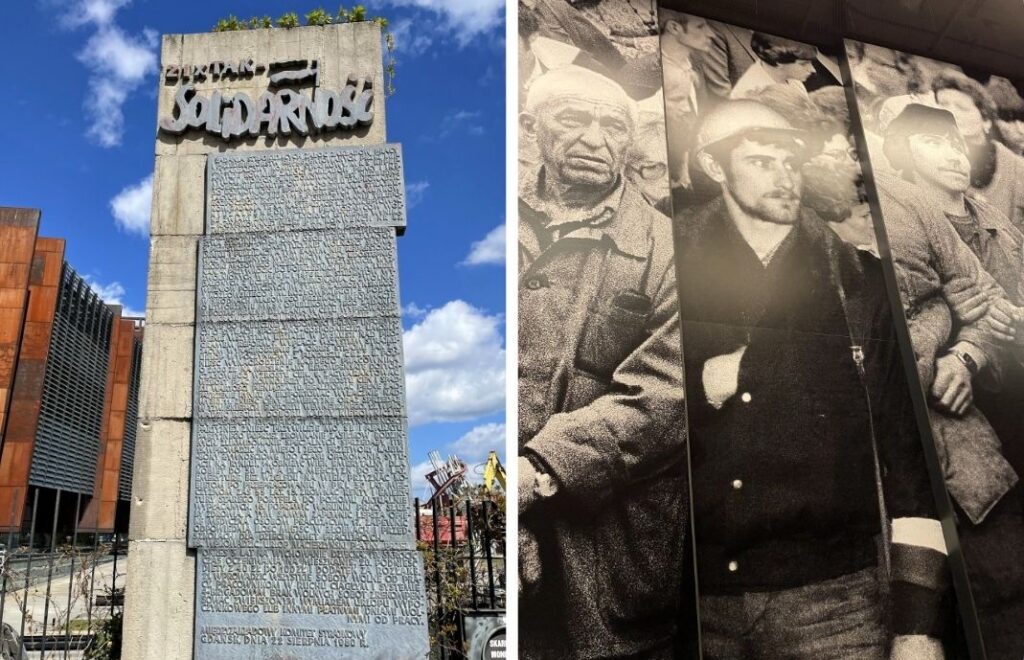
Permanent exhibitions
The permanent exhibitions form the heart of the European Solidarity Center, guiding visitors through the origins, growth, and impact of the Solidarity movement. Using a mix of original artifacts, photographs, documents, and immersive installations, the exhibitions place personal stories alongside broader political change.
Rather than presenting history as distant or abstract, the displays focus on lived experience – workplaces, daily life, resistance, and the consequences of collective action. The narrative unfolds chronologically but allows space for reflection, making it easy to engage at your own pace.
Each exhibition is designed to stand on its own while contributing to a larger story. Together, they offer a clear foundation for understanding why Solidarity mattered then – and why its ideas continue to resonate today.
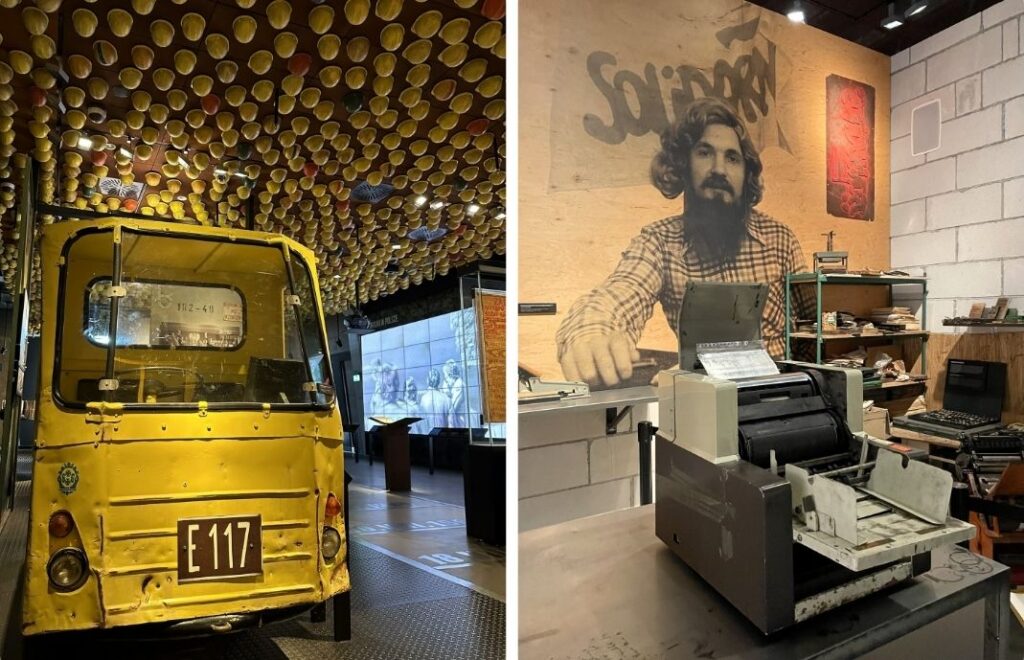
The Birthplace of Solidarity
This exhibition focuses on the Gdańsk Shipyard, where the Solidarity movement first took shape. It situates visitors in the working environment of the shipyard, highlighting the conditions, tensions, and everyday realities that led workers to organize and demand change.
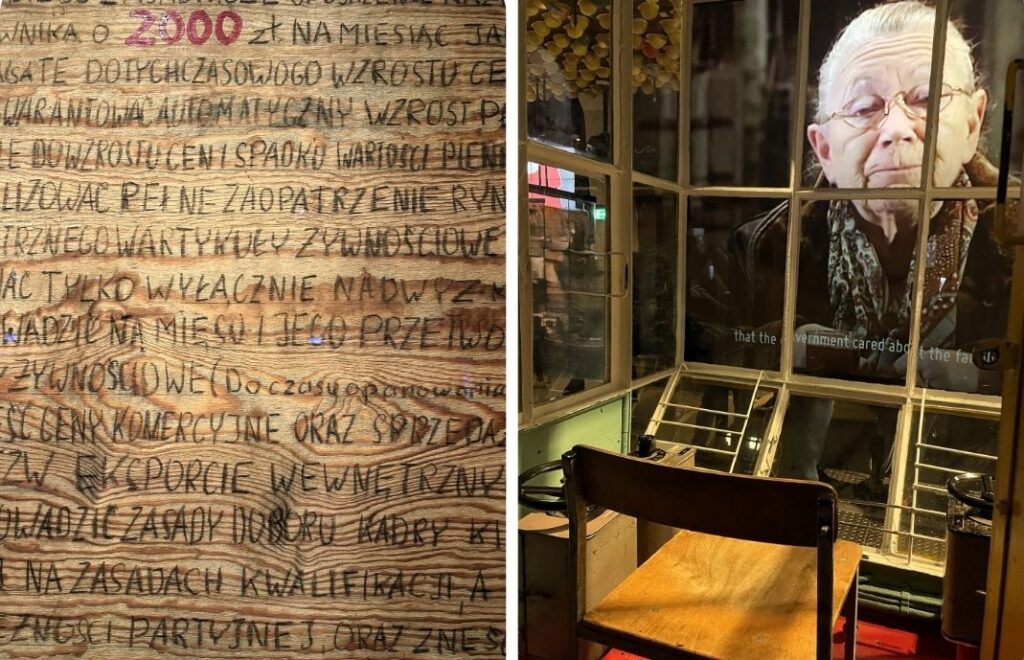
Here you can see the Boards with the 21 demands, which contain the most valuable documents of global significance. On 17 August 1980, the workers who occupied the Gdansk Lenin Shipyard wrote down their key demands to the government authorities and displayed them on the Shipyard’s Gate.
The Solidarność Trade Union emerged as a result of this strike.
Visitors will also see an original map of the Shipyard as an active illustration of how the workers’ protest developed, an electric trolley and a rostrum. Then there is the overhead crane, the workplace of Anna Walentynowicz, whose dismissal was one of the reasons for the outbreak of the strike.
The power of The Powerless
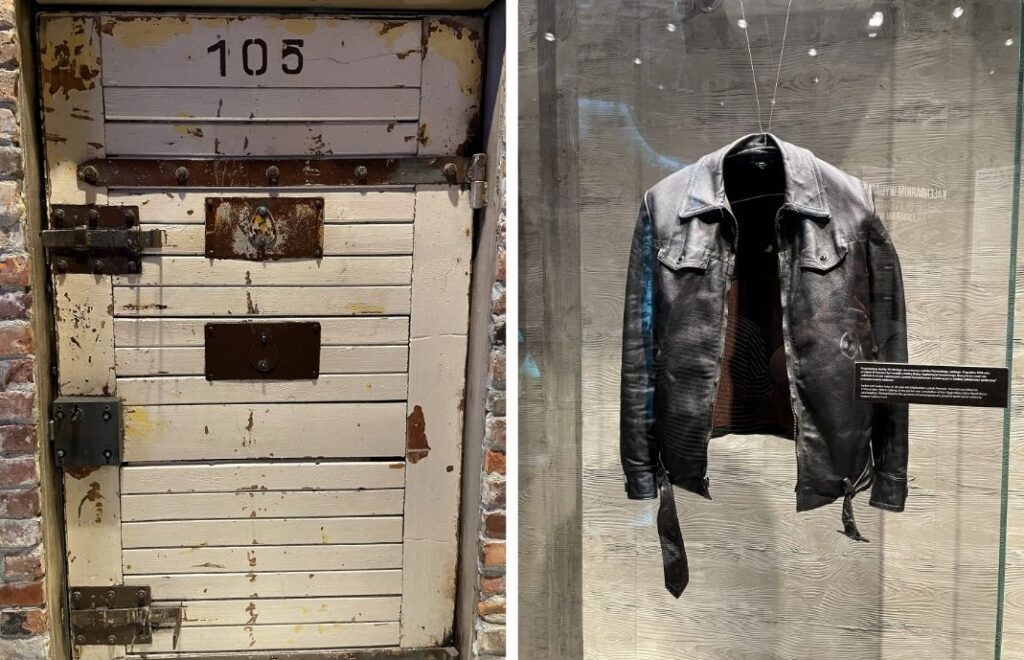
Many paid with their lives for their desire for freedom. In December 1970, four people were killed by the police. The event went down in history, and so did the image of workers carrying their murdered colleague on a door along the streets of Gdynia.
This exhibition features a bullet-ridden jacket that belonged to Ludwik Piernicki, a 20-year-old plumber at Gdynia Shipyard and a victim of the December 1970 Massacre. There is also a room dedicated to the Polish opposition intelligentsia.
At war with society
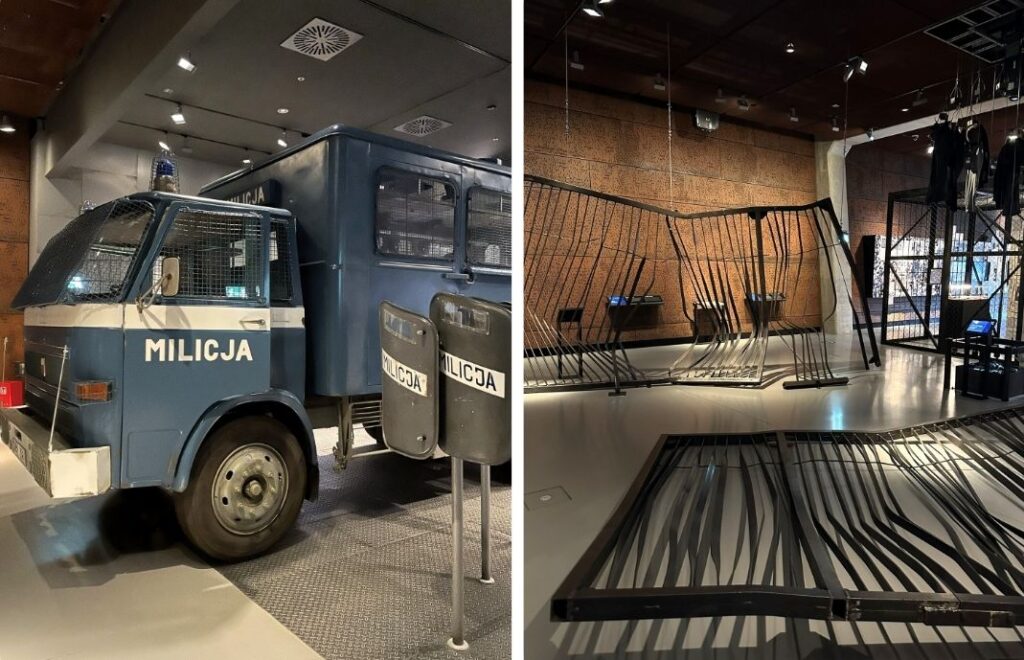
Martial law was introduced in Poland on 13 December 1980. This resulted in mass arrests, brutally crushed strikes and demonstrations and the illegalization of Solidarity. The authorities trampled the post-August hopes, but the spirit survived among the Polish people. To continue the fight, the movement went underground.
This exhibition features a police truck which was used to transport the arrested oppositionists and a rendition of Gdansk Shipyard Gate nr. 2 crushed by army tanks.
The road to democracy
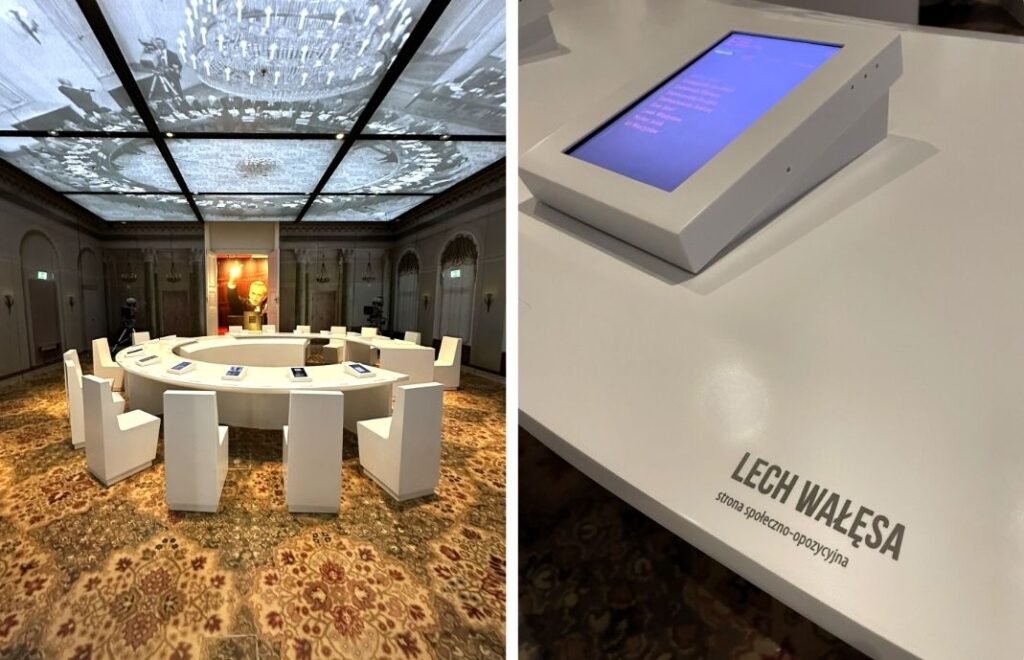
It wasn’t just trade unions, political organizations and dissident groups that fought against the communist regime. It is estimated that at least 400 organizations, groups, movements and communities created by young people, operated in Poland in the 1980s.
Forced to accept a compromise, the authorities sat down at the Round Table to talk to the opposition. As a result, Poland’s first partially free elections were announced, and the process of dissembling the communist system began.
The triumph of freedom
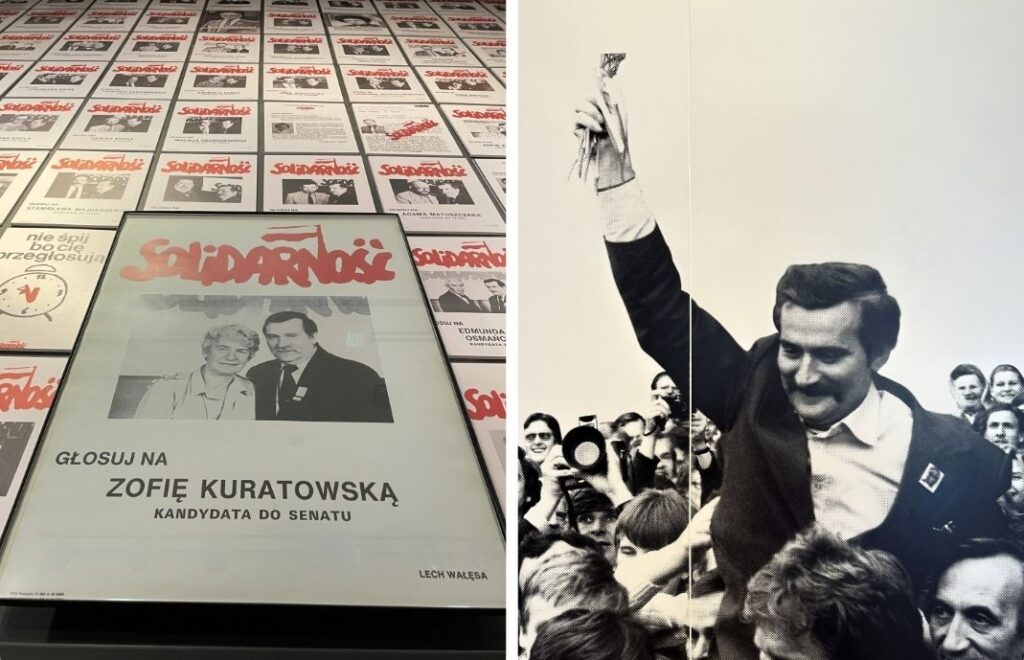
The disintegration of the Soviet Union was one of the most important events in the late 20th century. The bloodless revolution in Poland led to the fall of the Berlin Wall and to the collapse of dictatorships in one country after another in Central and Eastern Europe. The process of building Europe’s new political and economic order began.
Messages from the center’s visitors make up a giant Solidarity logo. Here you can read messages of tears, hope and prayers for a better world.
Practical visitor guide
For those planning a visit, a few practical details help make the experience smoother and more rewarding.
Location
The European Solidarity Center is located in the former Gdansk Shipyard area, close to the historic city center and adjacent to the iconic shipyard gates where the Solidarity movement began.
Getting there
The center is easily reached on foot from central Gdansk and is well connected by public transport, including trams and buses. The surrounding area is flat and pedestrian-friendly, making access straightforward from nearby neighborhoods.
Tickets
Entry to the permanent exhibition requires a ticket. Prices vary depending on age and eligibility for discounts, with reduced rates typically available for students and seniors. Temporary exhibitions and certain public areas of the building may be accessible without a ticket.
This is one of Gdansk’s most popular attractions, and it is advisable to pre-book your ticket.
Opening hours
The center is generally open year-round, though opening hours vary by day and season. It is common for museums in Poland to close one day per week, so checking the current schedule in advance is recommended.
How much time do you need
Allow at least two to three hours to experience the permanent exhibition at a comfortable pace. Visitors interested in reading, listening, and reflecting more deeply may wish to spend longer.
Accessibility
The European Solidarity Center is designed with accessibility in mind. Elevators, ramps, and accessible restrooms are available, and exhibitions are arranged to accommodate visitors with limited mobility. Seating areas throughout the museum provide opportunities to rest.
Facilities
The building includes restrooms, a café, and a bookstore focused on history, social movements, and Polish culture. Lockers are typically available for coats and small bags.
Parking
Parking is available in the vicinity of the center, including designated parking areas nearby. Availability can vary during busy periods, so public transport or walking may be the easiest option during peak times.
What to expect
The visit is immersive and thoughtful rather than fast-paced. The exhibitions invite reading, listening, and reflection, making the experience best suited to visitors who appreciate context and narrative over quick highlights.
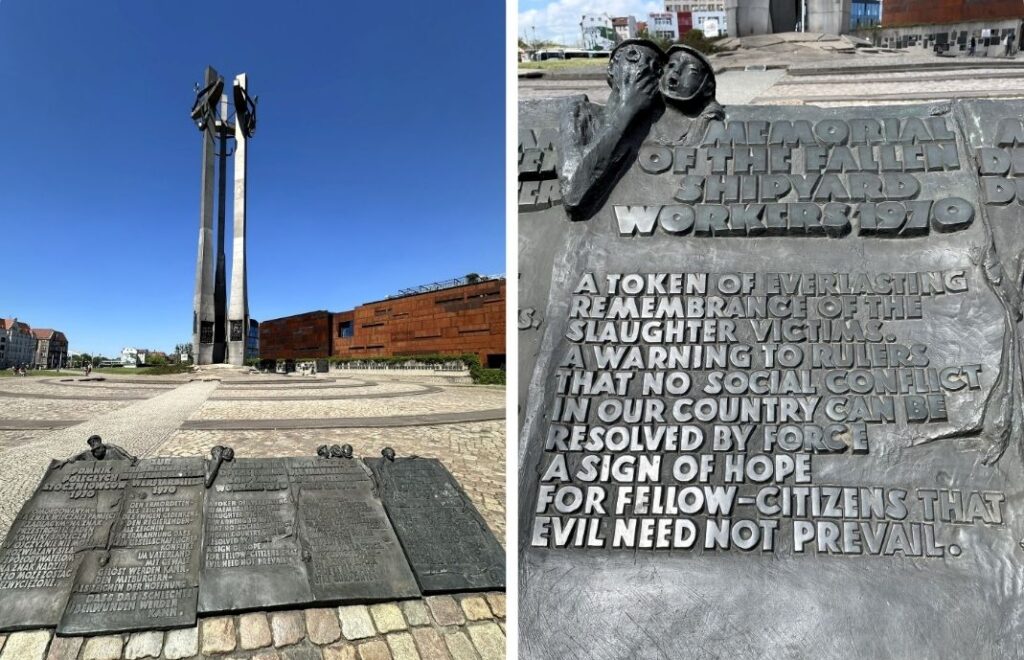
Monument to the Fallen Shipyard Workers of 1970
Just outside the European Solidarity Center stands the Monument to the Fallen Shipyard Workers of 1970, a stark and powerful reminder of the human cost that preceded the Solidarity movement. The three towering crosses commemorate shipyard workers who lost their lives during protests in December 1970, years before Solidarity formally emerged.
The memorial’s scale and simplicity give it a quiet gravity. Positioned at the historic shipyard gates, it anchors the story of Solidarity in loss as well as resistance. It reminds visitors that the freedoms later achieved were built on sacrifice. Pausing here before or after visiting the center adds depth and perspective, grounding the exhibitions inside in the reality of lives affected beyond museum walls.
More historic sites in Gdansk:
A guide to the Museum of the Second World War
Westerplatte – Where the Second World War began
