
Flaky croissants that melt on your tongue, headbutting goats in the town square, a cryptic time machine, artisanal chocolate, Poland’s oldest cathedral, dinner in pitch darkness, and workers who etched their legacy into history – Poznań offers all this and more.
One of Poland’s oldest cities and a former capital, Poznań is a captivating destination bursting with culture, character, and surprises around every corner.
While it may still linger in the shadow of more renowned Polish gems like Kraków and Gdańsk, Poznań is steadily climbing the travel ranks – emerging as a rising star for those in search of authenticity, charm, and rich storytelling.
Here are 18 reasons why this Polish treasure deserves a top spot on your travel list – and why Poznań might just steal your heart.
Stary Rynek – The timeless heart of Poznań
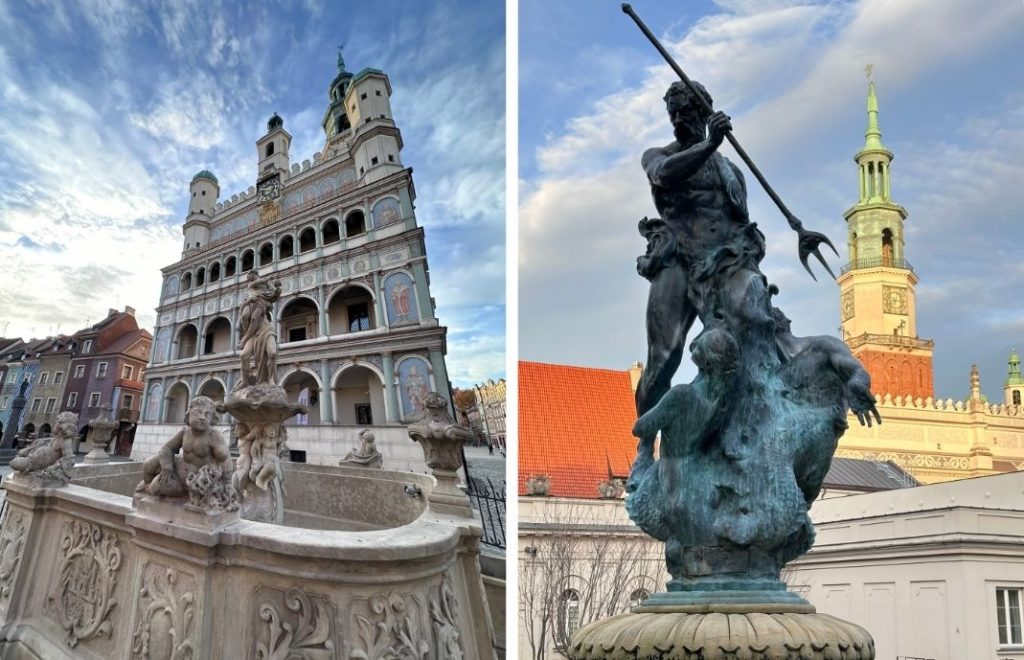
At the very soul of Poznań lies Stary Rynek, the city’s Old Market Square – a living tapestry where history, romance, and urban life beautifully intertwine. Dominating the square is the exquisite Town Hall, a 16th-century masterpiece of Italian Renaissance architecture that provides a stately backdrop to the city’s vibrant pulse.
All around, cafés, restaurants, and bars buzz with conversation and clinking glasses, offering a front-row seat to Poznań’s daily theatre. Step into the side streets and you’ll discover elegant old townhouses and churches, each adding their own chapter to the story, blending nostalgia with a dash of modern flair.
Wander down Franciszkańska Street, which spills onto a secluded little square behind the Rynek. Here, a golden-hued Baroque church stands framed by chestnut trees and park benches – an enchanting, romantic haven with views across the square.
Stary Rynek has been the beating heart of Poznań since 1253, and few places in Poland can match its charm. Tourists are drawn not only by the colorful facades and lively energy, but also by the irresistible sense of history that hangs in the air.
The undisputed king of the square is the Town Hall itself, widely considered the finest Renaissance building north of the Alps. Every day at noon, two mechanical goats emerge from its clocktower and clash horns twelve times. This is one of the city’s most beloved and whimsical traditions.
Right next door you’ll find The Builders’ House, one of the most photographed and Instagrammable corners of Poznań – because here, every angle is a postcard waiting to happen.
The Town Hall – Museum of the History of Poznań
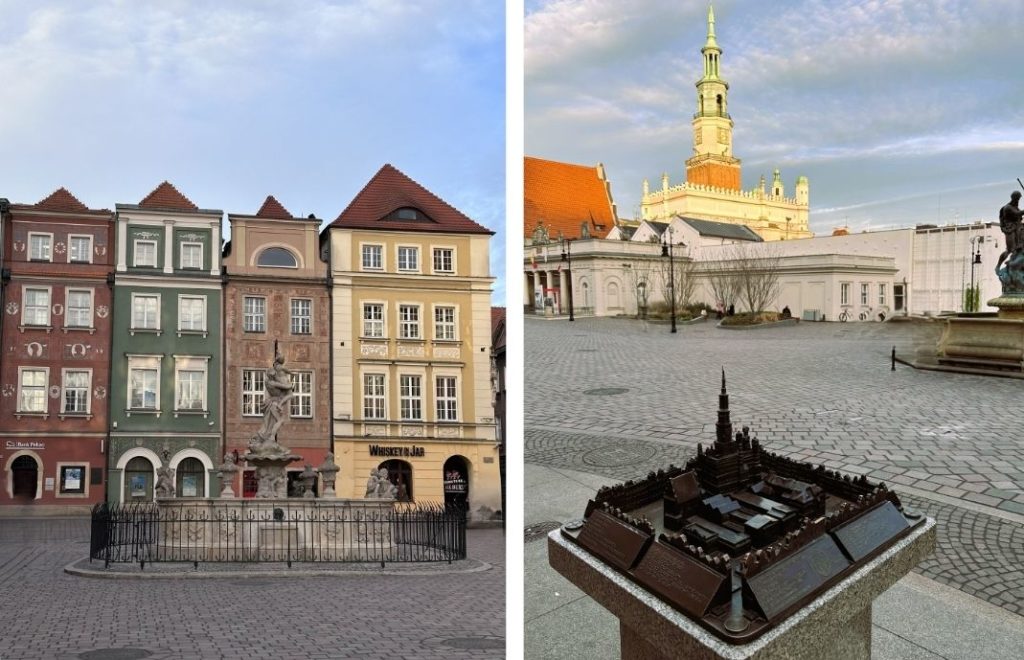
A shining jewel in Poznań’s architectural crown, the Town Hall is not just one of the city’s most stunning buildings, it’s also one of its most photographed. Every visitor to the city eventually finds their way to this Renaissance marvel, camera in hand, ready to capture its elegance.
The building was originally designed by Giovanni Battista Quadro, an Italian architect whose artistic vision left an enduring mark on Poznań. But the Town Hall’s journey has been anything but smooth. It has weathered centuries of destruction and rebirth, including the collapse of its tower and a devastating fire in 1945. What you see today is the result of a painstaking restoration, completed in 2000, that brought the building back to its former glory.
The facade is richly adorned with Latin inscriptions extolling justice, alongside intricate depictions of Polish kings from the Jagiellonian and Piast dynasties. Every detail tells a story – and hints at the city’s deep-rooted pride in its heritage.
Inside, the Town Hall houses the Museum of the History of the City of Poznań, where the story of Poznań unfolds across centuries. From its early beginnings in the 10th century to the vibrant modern city it is today, the museum offers a captivating journey through time. You’ll also get a deeper understanding of the Town Hall itself – its evolution, symbolism, and the pivotal role it’s played in Poznań’s history.
Stary Browar – Where heritage meets Haute Couture
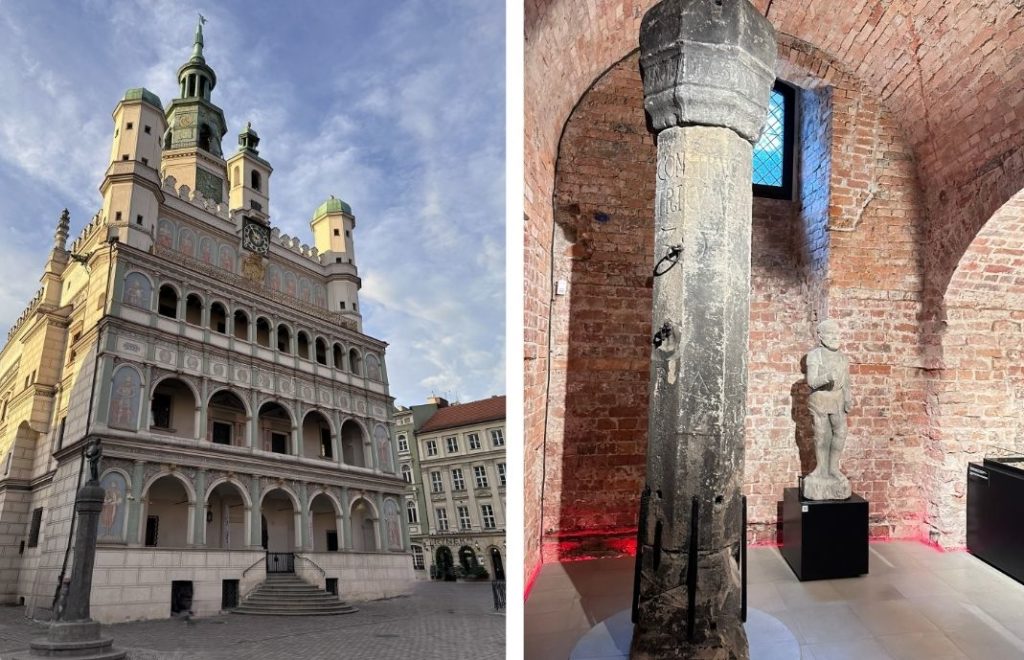
Everyone’s talking about Stary Browar – and for good reason. This former brewery, originally built in 1844, has been transformed into one of Poznań’s most iconic cultural and commercial landmarks. A seamless blend of historic charm and contemporary elegance, Stary Browar is more than just a shopping center – it’s a modern-day citadel of creativity, fashion, and design.
Behind its red-brick industrial façade lies a vibrant hub where art and commerce intertwine. Think boutiques, galleries, cinemas, and restaurants, all curated within a space that celebrates both the past and the present. The soul of the old brewery still lingers in the exposed beams and brickwork, while cutting-edge architecture and sleek interiors elevate the experience to new heights.
Stary Browar feels like a city within the city – a place where you can browse high-end shops, catch an art exhibition, enjoy a film, and sip craft cocktails – all under one beautifully restored roof. It’s where heritage meets high fashion, and every corner tells a story of reinvention and style.
Poznań Croissant Museum & Experience – A slice of local culture
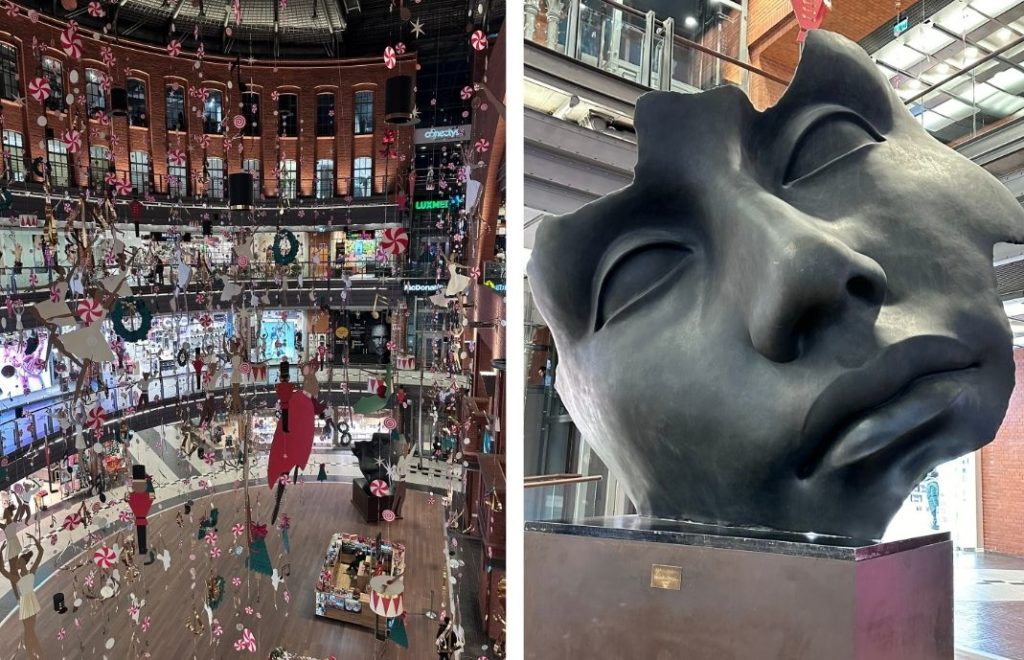
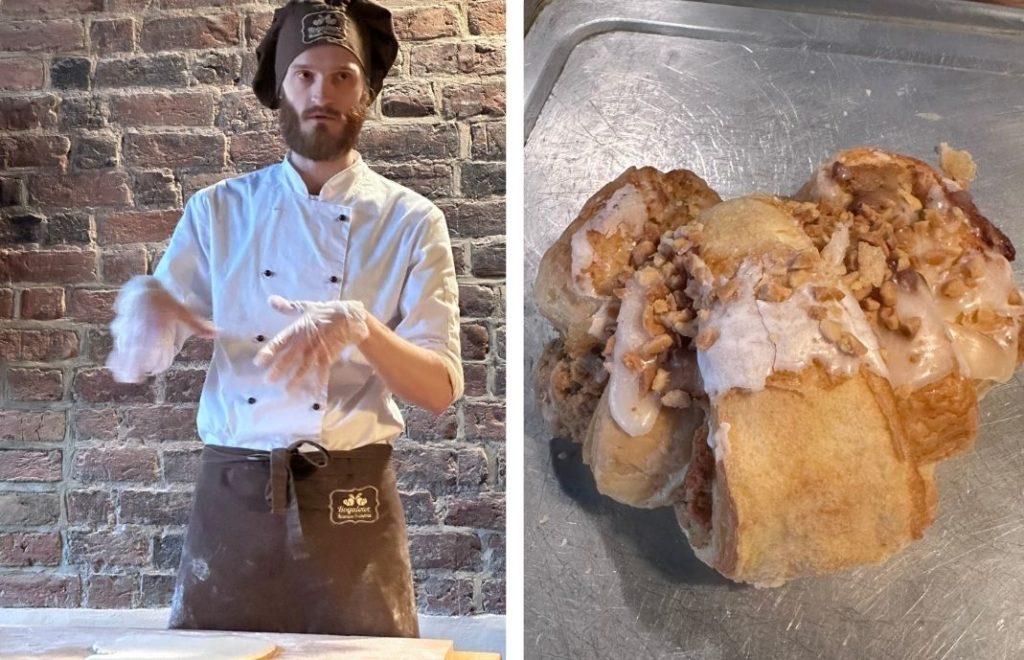
The St. Martin’s Croissant (rogal świętomarciński) isn’t just a pastry – it’s a sacred symbol of Poznań’s culinary heritage. Protected by an EU Geographical Indication, this flaky, nutty, poppy seed-filled delicacy can only be made in Poznań – and naturally, it has its very own museum.
Set in a beautiful Renaissance building right next to the Town Hall, the Poznań Croissant Museum & Experience is where history, humor, and heavenly aromas collide. It’s an immersive tribute to local traditions and the city’s sweet tooth, perfect for food lovers and curious travelers alike.
During your visit, you’ll be guided by a Croissant Master and Binio, a true Poznań local, who reveals the secrets behind this legendary pastry. With lively storytelling, hands-on demonstrations, and a touch of theatrical flair, this experience is as entertaining as it is delicious.
The highlight? A tasting of the real St. Martin’s croissant, fresh and warm from the oven – a buttery reward that makes the journey all the more memorable.
Note: English-language shows are limited, so be sure to book ahead to secure your spot in this flavorful slice of Poznań’s identity.
Poznań’s Famous Goats – A tale of time, tradition, and tender rebellion
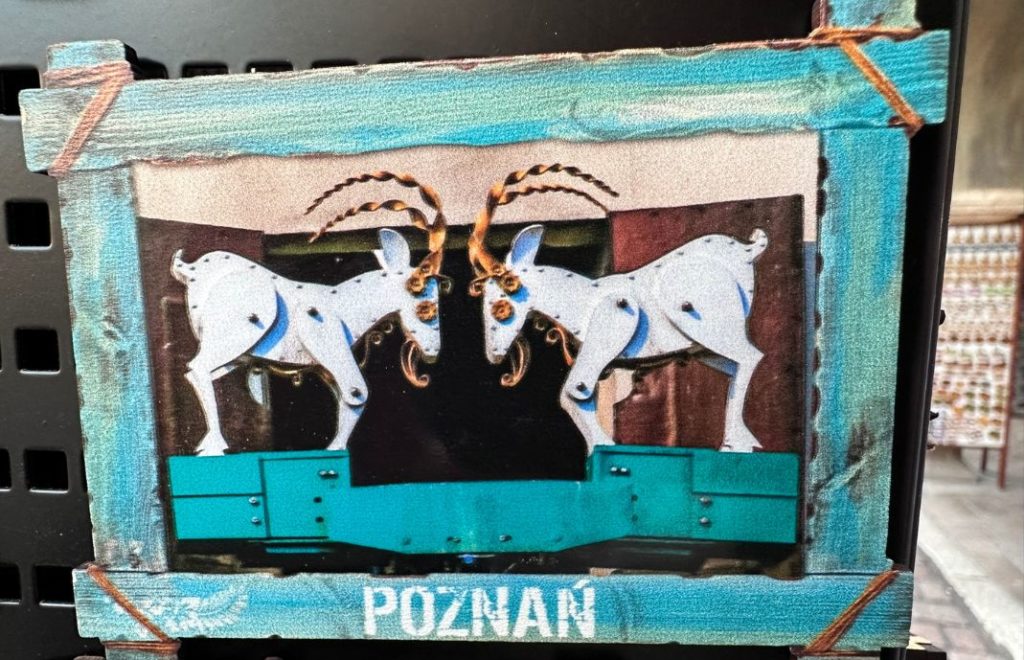
Every day at exactly noon, crowds gather beneath the ornate Town Hall in Poznań’s Old Market Square, their eyes fixed on the clock tower. As the bells chime, two white mechanical goats emerge from a small door, lower their heads – and begin to butt heads twelve times, much to the delight of onlookers. This whimsical ritual is more than just a tourist attraction – it’s a beloved symbol of the city, rooted in legend and laughter.
According to local lore, when the Town Hall was being restored after a devastating fire, the city commissioned clockmaker Bartholomew from Gubin to create a spectacular timepiece. In celebration, the city council planned a feast. A young and eager cook named Pietrek was tasked with preparing the main dish – roasted venison leg.
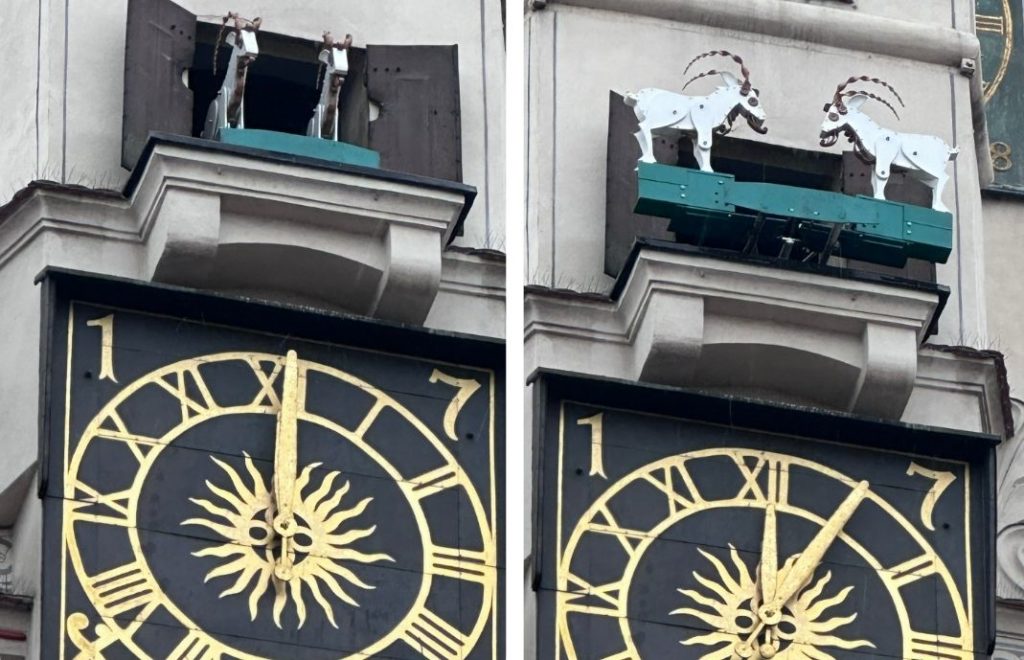
Curious about the newly installed clockwork, Pietrek left the kitchen to sneak a peek. While he was gone, the roast caught fire. Panicked and desperate to save the day, Pietrek ran to a nearby meadow, “borrowed” two goats, and brought them back to the kitchen. But the goats had no intention of becoming dinner. They broke free, scampered into the Town Hall tower, and began to butt heads in front of the astonished crowd.
Rather than punish the young cook, the mayor found the spectacle so amusing that he forgave him – and ordered the clockmaker to immortalize the moment by building a mechanism that would bring the goats out every day at noon.
The two goats stolen by the young cook managed to escape the dinner plate and were graciously returned to their rightful owner – a poor widow who had raised them.
The original tower and mechanism were destroyed in 1945 during World War II, but they were lovingly restored by 1954. In 1993, local entrepreneur Marian Marcinkowski donated a new pair of mechanical goats, powered by a modern mechanism, ensuring this charming tradition lives on for generations.
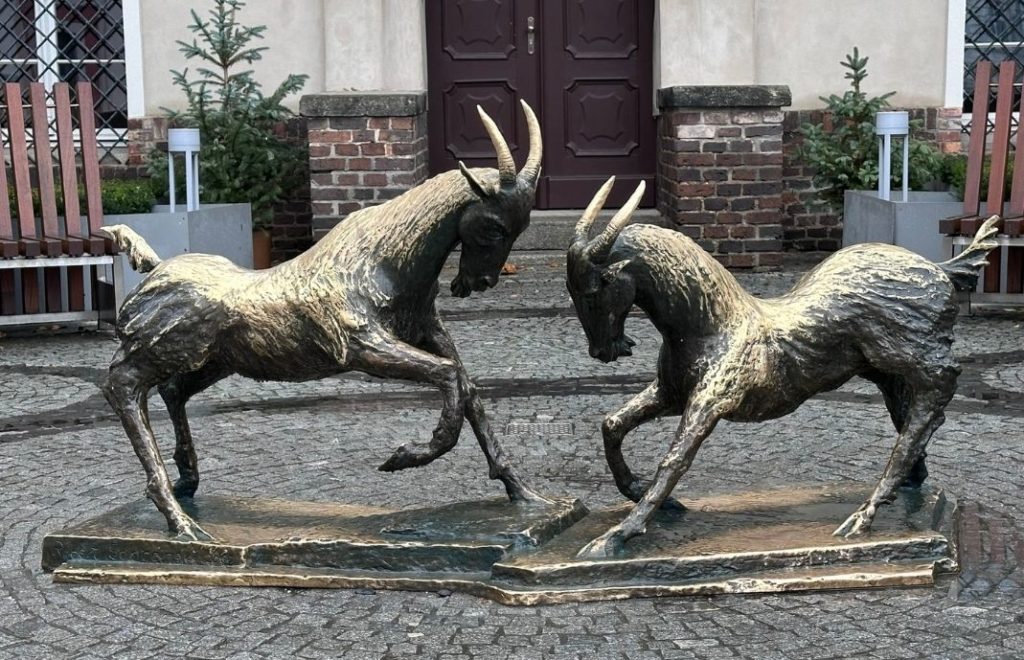
If you can’t get enough of Poznań’s iconic goats, make your way to Chopin Park, where a life-size sculpture by Robert Sobociński features the two standoffish goats in mid-clash. Visitors – especially kids – love climbing onto their backs for playful photos, making this statue one of the city’s most Instagrammable stops.
Whether you’re a first-time visitor or a returning traveler, the Poznań goats are sure to headbutt their way into your heart.
Fara Poznańska Church
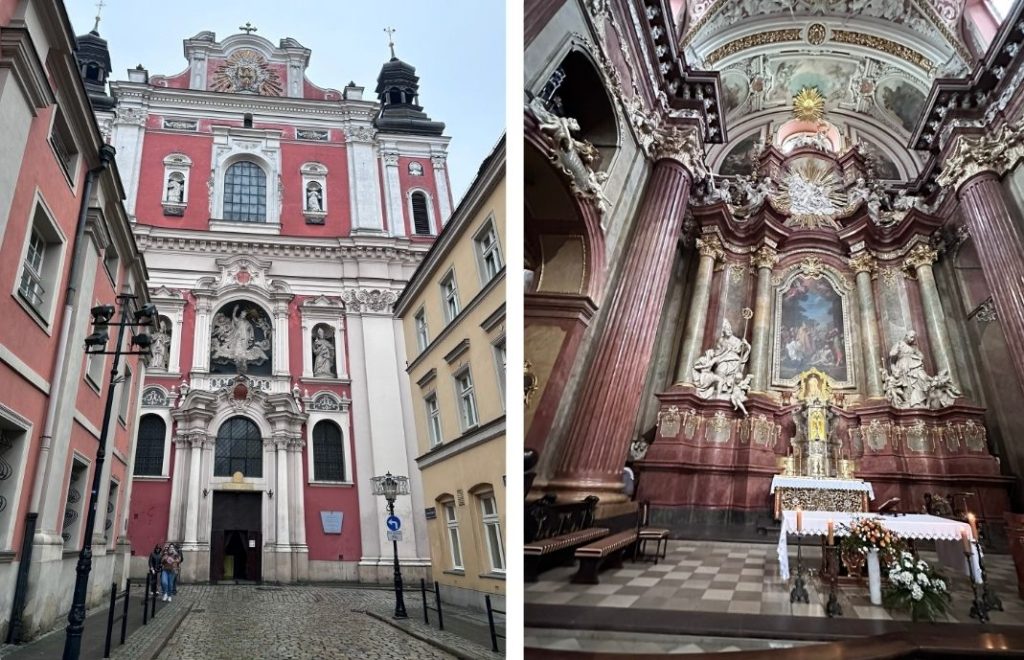
The majestic Baroque church dazzles in hues of red, white, and gold beneath its verdigris-topped towers – a true architectural gem in the heart of Poznań.
Stepping inside, it’s nearly impossible not to be overcome by a sense of awe. Towering red and black marble columns rise toward a ceiling adorned with heavenly frescoes. Golden ornaments gleam from every angle, while the interplay of light streaming through high windows bathes the space in a celestial glow. Saints carved in stone stand watch as silent guardians of faith.
Built in the 17th century as part of a Jesuit monastery complex, Fara Poznańska dominates Golebia Street with its grand presence and spiritual gravitas – a masterpiece of sacred architecture that continues to inspire reverence and wonder.
Museum of the Poznań Uprising – June 1956
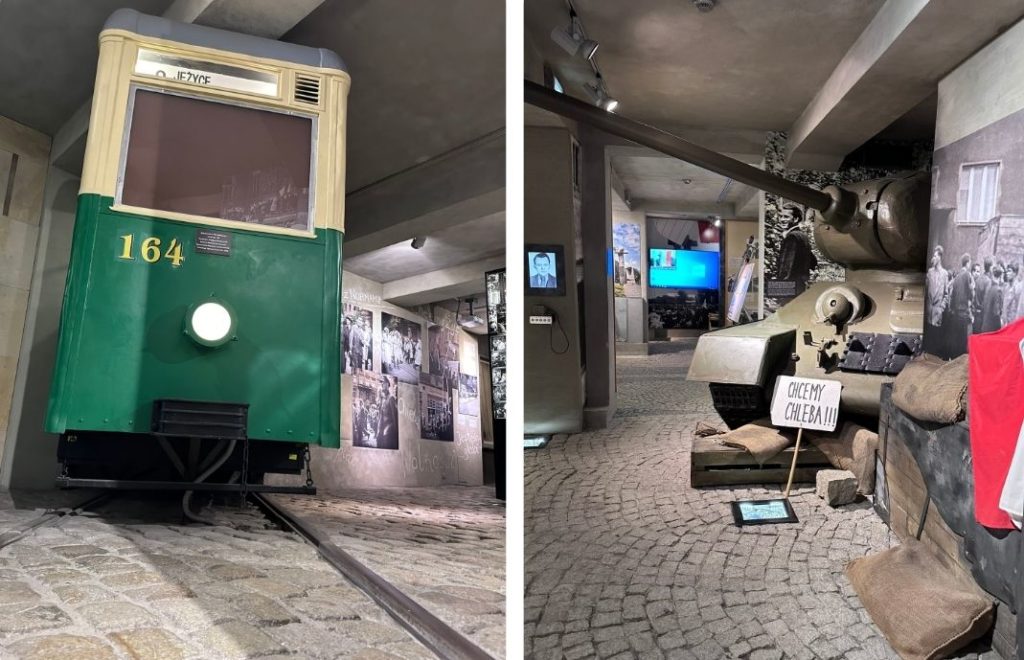
Step into a moment frozen in time – a powerful tribute to the brave workers of Poznań who, in June 1956, dared to rise against the iron grip of communism. Demanding “bread and freedom,” their voices ignited the first mass protest against the regime in post-war Poland. The revolt was met with brutal force, but it marked a pivotal moment in Polish history.
The museum is located in the atmospheric basement of the Imperial Castle, built between 1904 and 1910 in a neo-Romanesque style commissioned by Kaiser Wilhelm II.
Your journey begins aboard a life-sized vintage tram. Inside, black-and-white footage flickers across the screen: somber-faced workers emerging from factory gates, some carrying signs.
Tanks soon roll in. Then – gunfire. Panic. The crowd scatters in fear.
The tram becomes more than just a set piece – it’s a visceral portal into the chaos of the uprising. Throughout the exhibit, evocative soundscapes and personal testimonies envelop you. Press your ear to embedded cobblestones, and you’ll hear haunting accounts from eyewitnesses. It’s an immersive, emotional experience that resurrects the tension and courage of that fateful June.
A historic flashpoint
The foundations of the communist world trembled in 1956.
It all began when Soviet leader Nikita Khrushchev delivered his now-famous “secret speech” at the Communist Party Congress in Moscow, denouncing several of Stalin’s crimes.
The revelation sent shockwaves across the Eastern Bloc, emboldening people to demand political reform and better living conditions.
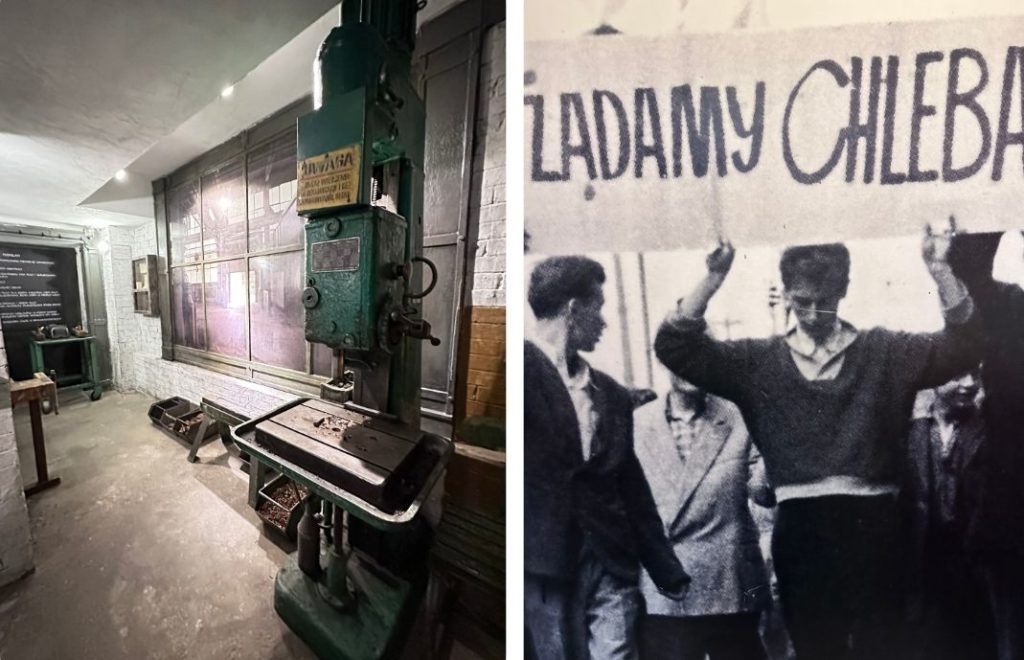
On June 28th, 1956, workers at the Cegielski locomotive factory in Poznań didn’t show up for work. Instead, they marched out of the gates holding signs that read “Bread and Freedom.” Their cry resonated—and soon, over 100,000 people had joined the swelling demonstration.
The confrontation was inevitable. Before long, gunfire echoed through the city. The secret police and military forces were deployed, with T-34 tanks rumbling through Poznań’s streets. The uprising was crushed with brutal efficiency.
The toll: 57 dead and 450 wounded.
Many protestors were imprisoned and subjected to harsh treatment, though most were released by the end of October.
This was the first – but by no means the last – time the Polish people rose up against the communist regime. It was a powerful foreshadowing of the resilience that would eventually shape the nation’s path to freedom.
Enigma Cipher Center
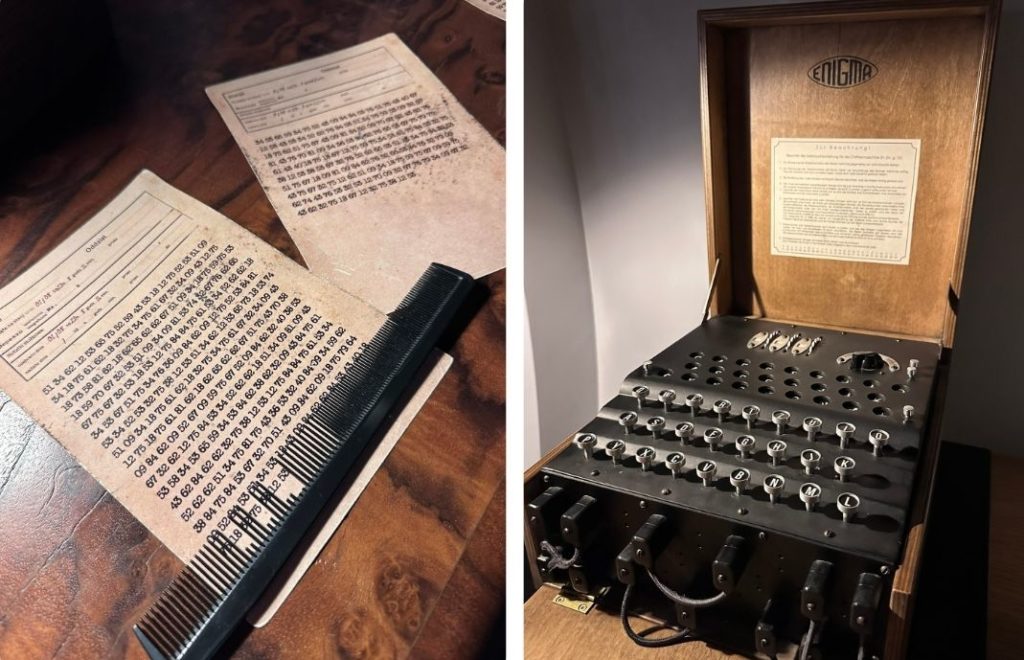
Tucked away in the heart of Poznań lies an extraordinary museum that tells one of the most remarkable stories of World War II: how a team of brilliant Polish mathematicians cracked the code of the German Enigma machine – an achievement that would help turn the tide of the war.
Named after the Greek word for “riddle,” the Enigma was an electromechanical encryption device used extensively by the German military to encode and decode secret communications. Its complexity made it seem unbreakable to the Nazis. But they were wrong.
This chapter of history began in Poznań, where three Polish mathematicians – Marian Rejewski, Henryk Zygalski, and Jerzy Różycki – made a groundbreaking breakthrough. Their efforts laid the foundation for the later work of British codebreakers at Bletchley Park and significantly shortened the war.
At the Enigma Cipher Center, you’re taken on a journey through the science and secrecy of codebreaking, guided by a captivating audio tour. Along the way, you’ll get the chance to crack your own codes, decipher hidden messages, and solve mind-bending puzzles – an immersive tribute to the silent heroes of wartime cryptology.
Poznań Cathedral
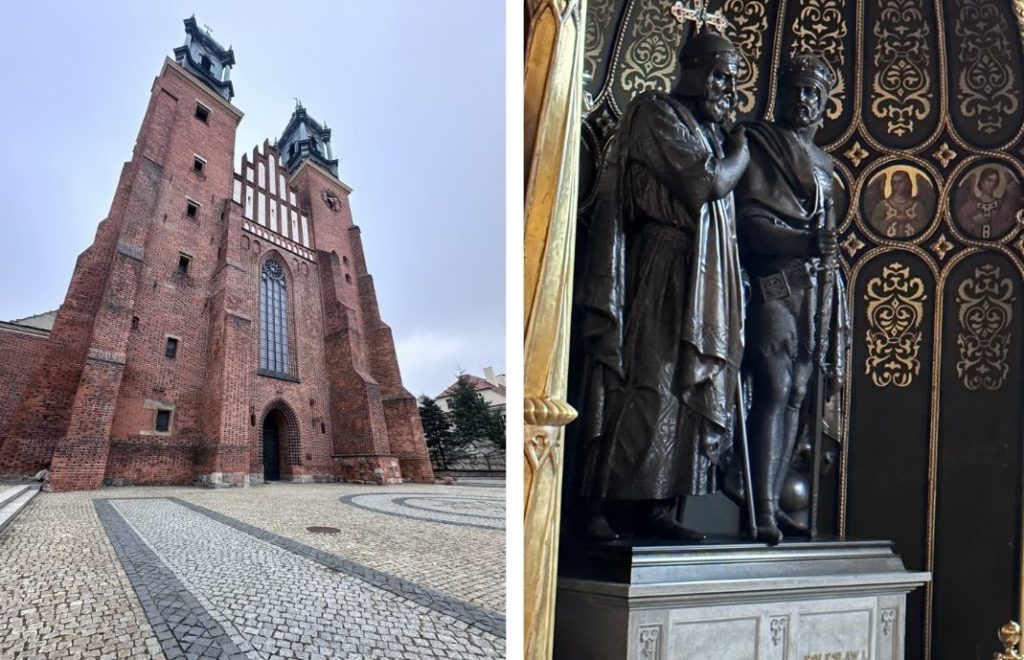
Standing proudly on the island of Ostrów Tumski, Poznań Cathedral – officially known as the Archcathedral Basilica of St. Peter and St. Paul – is Poland’s oldest cathedral, dating back to the 10th century. Yet despite its age and national importance, its aesthetic leans far from traditional Polish design.
Instead, the Golden Chapel stuns with its rich Byzantine-inspired mosaics, vivid colors, and lavish gilded ornamentation, evoking the grandeur of Russian Orthodox monasteries. It’s a sacred space truly fit for royalty.
Beneath its golden dome lie the remains of Mieszko I, Poland’s first historic ruler, and his son Bolesław the Brave, the nation’s first crowned king. Above them, saintly icons gaze down in silent vigil, bearing witness to a thousand years of Polish statehood.
Together with the cathedral in Gniezno, Poznań Cathedral stands as a profound symbol of Poland’s earliest political and spiritual identity – when Poznań was not just a cultural jewel, but the very heart of a rising nation, long before Kraków claimed the title of capital in 1038.
Chocolate Museum
A delicious detour for anyone with a sweet tooth, Poznań’s Chocolate Museum is a delightful treat for curious kids and chocolate-loving adults alike. Here, the world of cocoa unfolds in all its rich and velvety detail – from tropical plantations to ancient chocolate rituals and modern-day confectionery techniques.
The guided tour, which lasts about 50 minutes, whisks you through the tantalizing history of chocolate while offering plenty of tasting opportunities along the way.
The highlight? A hands-on workshop where you’ll craft your very own chocolate creation – an edible masterpiece you can take home (if you can resist eating it on the spot). Whether you’re a casual snacker or a devoted chocophile, this sweet experience is bound to leave a lasting impression.

Zamek Culture Center
When Kaiser Wilhelm II set out to build his residence in Poznań, he didn’t hold back. Constructed between 1904 and 1910 in grand neo-Romanesque style, the Imperial Castle – or Zamek, as it’s now known – is one of the city’s most imposing landmarks.
Ironically, despite its name, it’s more palace than castle.
Kaiser Wilhelm II only stayed here twice: once for the official opening in 1910 and again in 1913. Over the years, the castle served a variety of purposes – from housing the Polish president to hosting Poznań University.
During the Nazi occupation in 1939, Hitler’s favorite architect, Albert Speer, repurposed parts of the castle. The chapel tower was turned into Hitler’s office (though Hitler never actually visited), and the second floor became the official residence of Arthur Greiser, the Nazi governor of Poznań. The Germans also built a new, grand entrance on Święty Marcin Street.
Today, Zamek stands as a powerful reminder of Poznań’s layered history, but also as a beacon of cultural rebirth – a place where art now triumphs over the past.
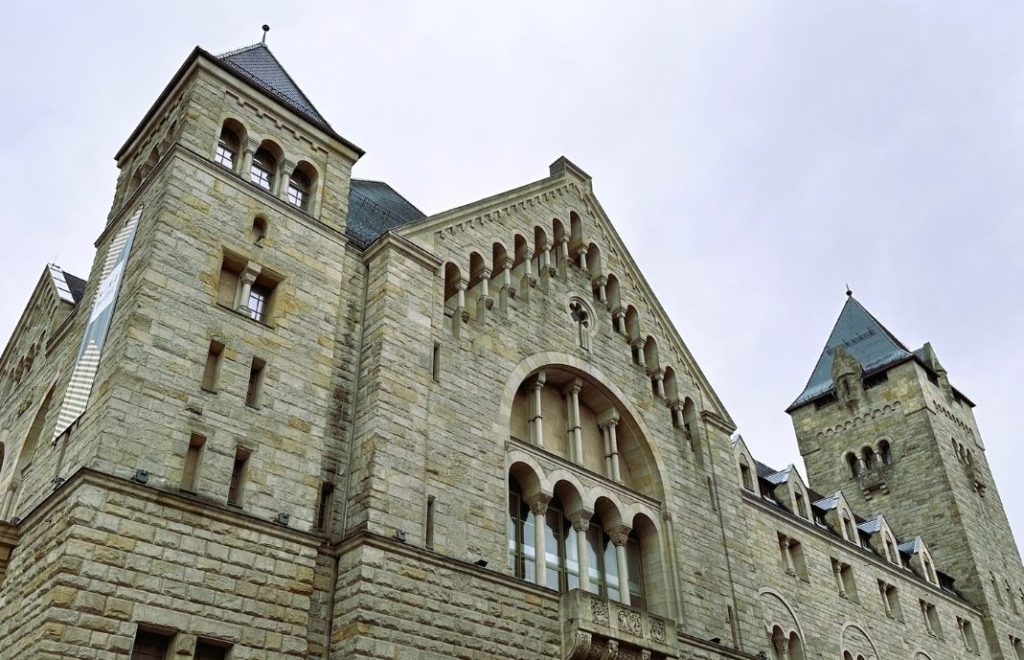
Since 1962, the Imperial Castle has been home to the Zamek Culture Center, a vibrant institution that hosts an array of concerts, exhibitions, film screenings, and live performances throughout the year. Within its storied walls, you’ll also find a puppet theater, a cinema, and a cozy café – making it a lively cultural nexus in the heart of Poznań.
In the basement lies the 1956 Uprising Museum, a powerful and immersive tribute to the workers’ revolt against the communist regime, a must-visit for history enthusiasts.
Among the castle’s many highlights is the Throne Room, where visitors can sit on the very throne once used by Wilhelm II. The garden, inspired by the Court of the Lions at the Alhambra in Spain, offers a tranquil escape, blending imperial grandeur with Moorish elegance.
One of the most hauntingly unique features of the castle is that it houses the only surviving office ever built for Adolf Hitler. While Hitler himself never set foot in Poznań, the room remains – a solemn and chilling relic of the past.
You can explore this historic residence, once the seat of Europe’s youngest monarch, at your own pace with an audio tour, or join a guided visit for deeper insight into its fascinating legacy.
Museum of the Applied Art
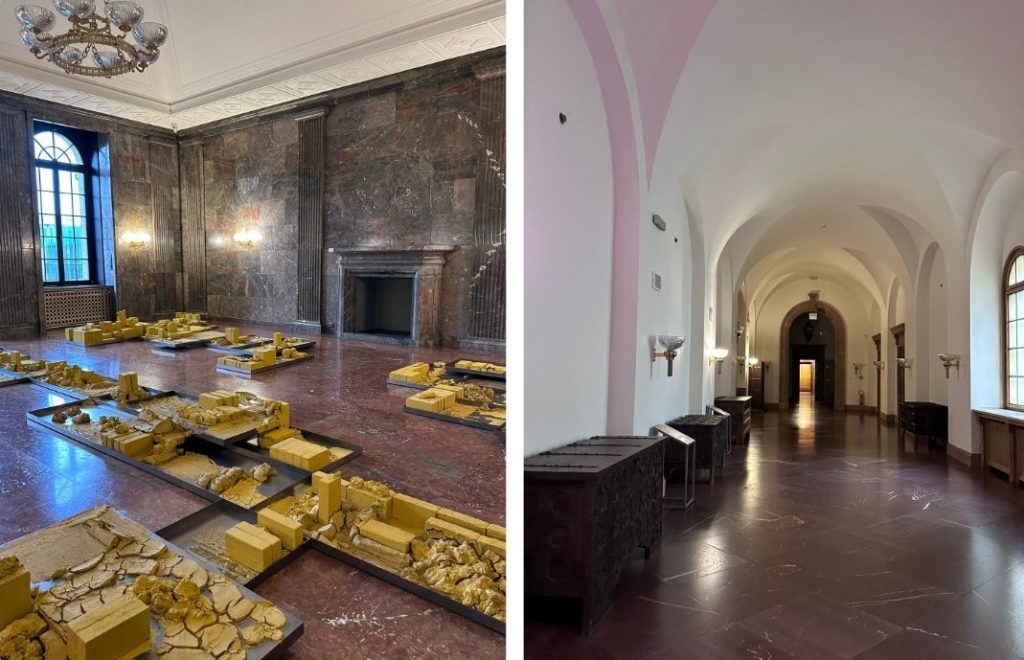
In the heart of Poznań, perched on Przemysł Hill, stands the Royal Castle, home to the Museum of the Applied Art. This is a true treasure trove for lovers of design, craftsmanship, and history.
Just a short stroll from the main square, this castle-turned-museum offers not only a rich artistic journey but also some of the finest panoramic views of the city from its 43-meter tower.
As Poland’s only museum dedicated solely to applied arts, it takes visitors on a captivating time-traveling adventure from the Middle Ages to modern times.
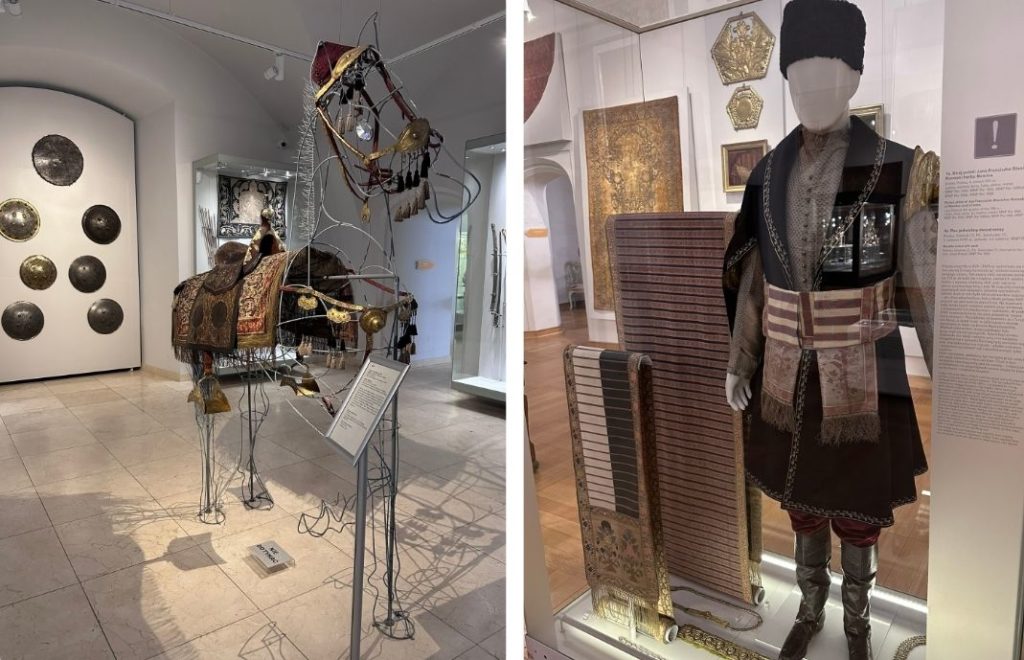
The collection boasts over 2,000 artifacts, elegantly displayed and thoughtfully curated. You’ll discover intricately crafted furniture, ceramics, glassware, weapons, jewelry, textiles, costumes, and accessories. Each object telling its own story of daily life, culture, and aesthetics through the centuries.
The ground floor exhibition focuses on the history of the Royal Castle itself and pays tribute to Przemysł II – Duke of Poznań (1257-1279) and later King of Poland (1295-1296). His legacy lingers in the very stones of this historic building.
Before you leave, don’t miss the climb to the castle’s tower. You are reward is a breathtaking, bird’s-eye view of Poznań that will etch itself into your memory.
Museum of Armoured Weapons
Museum of Armoured Weapons is a must-visit destination for anyone fascinated by military history, armored vehicles, and Poland’s turbulent past.
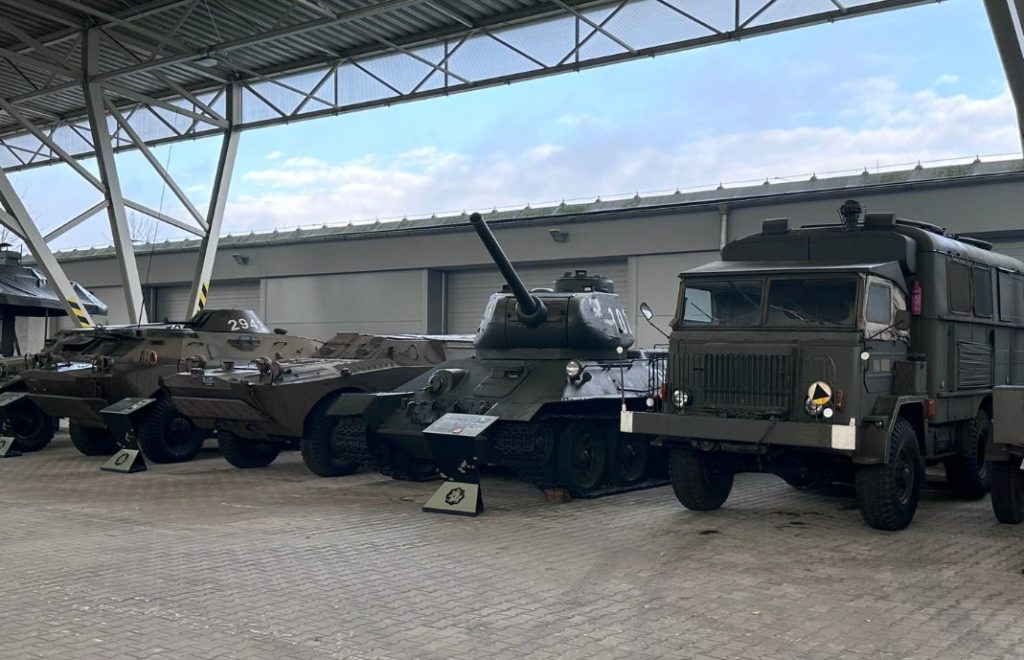
Step into four expansive exhibition halls, where the smell of oil and metal blends with the weight of history. This is no ordinary museum of replicas – here, authenticity reigns supreme. The vehicles on display are the real deal, each steeped in its own unique wartime narrative, and impressively, every single one is in working condition.
Home to the largest collection of armored military vehicles in Poland, the museum boasts over 60 historic machines, including tanks, personnel carriers, and other mechanized marvels, offering a raw and riveting look into the machinery of war.
Founded in 1963, the museum began as a modest assembly of vehicles used for training at the local military academy. During the communist era, only Soviet-made vehicles were permitted on display. But after the fall of communism in 1989, the museum’s collection expanded to include a wider array of international vehicles, painting a broader picture of military evolution.
Whether you’re a history buff, a military enthusiast, or simply curious, this museum offers a powerful, immersive journey into the armored heart of warfare
Behind this remarkable museum stands Lieutenant Tomasz Ogrodniczuk, a true driving force and passionate visionary. More than just a curator, he’s a hands-on enthusiast who actively searches for, excavates, and restores vehicles from various eras of conflict – breathing new life into the steel giants of history.
The museum’s four exhibition halls are cleverly organized by historical period:
- World War I
- World War II
- The Cold War
- Modern Times
Each section features detailed bilingual information panels (in English and Polish), archival photos, military equipment, including personal artifacts, and engaging video presentations that bring the machinery – and the stories behind them – to life.
One of the museum’s crown jewels is a T-55 tank signed by legendary filmmaker Steven Spielberg. This particular tank was featured in the 2015 film Bridge of Spies, starring Tom Hanks, and carries with it both cinematic and historical weight.
The Museum of Armoured Weapons is located just outside central Poznań, near Ławica Airport. It is easily reachable and absolutely worth the detour for any visitor seeking an unforgettable, full-throttle dive into history.

Porta Posnania Heritage Center
Porta Posnania Heritage Center is a striking blend of modern design and deep historical storytelling, creating a gateway – both literally and figuratively – between Poznań’s ancient districts of Ostrów Tumski and Śródka.
A sleek, covered skywalk bridge links the center’s futuristic main building with Cathedral Lock, a beautifully restored part of the former Prussian fortress. This architectural feature symbolizes the connection between past and present, history and innovation.
Inside, the center offers an immersive journey through the origins and evolution of Poznań, from the early Middle Ages to contemporary times. Expect cutting-edge multimedia displays, interactive exhibits, and thoughtful storytelling designed to engage all ages. Children, especially, will enjoy the hands-on activities scattered throughout.
Multilingual audio guides are available and provide rich context as you wander through the exhibitions at your own pace.
After completing your tour of the heritage center, you can stroll across the skywalk straight into Ostrów Tumski, Poznań’s oldest quarter and a captivating place to explore further.
Don’t miss the rooftop terrace in summer, offering charming views toward the Poznań Cathedral. There is also a souvenir shop, where you can pick up locally inspired gifts to remember your journey through Poland’s cultural heart.
Poznan Potato Museum
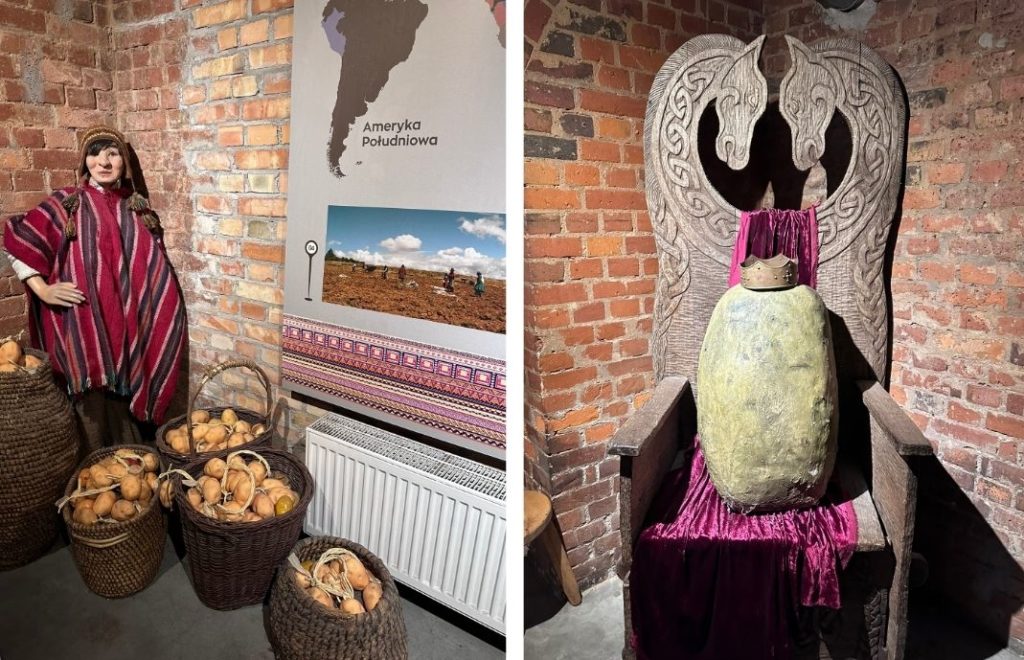
Poznań Potato Museum is a quirky, one-of-a-kind tribute to the humble potato – known locally as pyra – and an unexpectedly delightful highlight for anyone visiting Greater Poland.
You might be wondering just how exciting a museum dedicated to potatoes can be, but prepare to be pleasantly surprised. This interactive experience is as entertaining as it is educational, blending history, humor, and sensory delights into a fun-filled journey through time.
The adventure begins by choosing your own potato and toppings, which will be waiting for you at the end of the tour. From there, a costumed guide whisks you away on a whimsical voyage that starts in exotic Peru, the potato’s ancestral homeland. Along the way, you’ll:
Join Francisco Pizarro in his conquest of the Inca Empire,
Visit the royal residence of King Jan III Sobieski,
Dig into archaeological mysteries, and
Learn how Poland tackled the invasion of the Colorado beetle.
The museum’s storytelling is immersive and theatrical, with dramatic lighting, atmospheric music tailored to each era, and even the aroma of roasting potatoes wafting through the air.
And yes – there’s even a potato throne, where you can reign supreme as the king or queen of pyry.
The guides are dressed in charming themed costumes, adding a playful touch to the experience. As you wander through the cozy museum, carefully curated music enhances each historical scene – sweeping you from the Andean highlands to the Polish countryside. All the while, the warm and earthy aroma of potatoes fills the air, immersing you fully in the story of this beloved vegetable.
As your journey wraps up, your chosen spud is served warm, dressed with your preferred toppings – a delicious farewell from Poznań’s most down-to-earth museum.
Quirky, heartfelt, and full of flavor, the Poznań Potato Museum is the only one of its kind in Poland. It’s a must for curious minds and hungry travelers alike.
Citadel Park
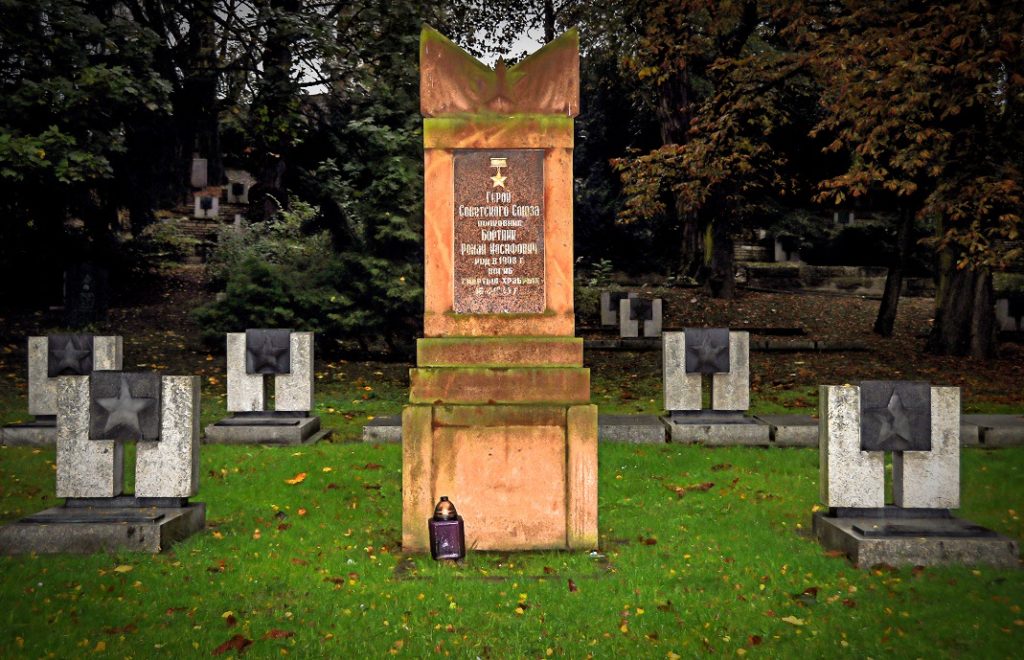
Just a 15-minute walk from Poznań’s central square lies the city’s largest and most solemn green space: Citadel Park.
A broad, monumental staircase leads you upward toward a towering column crowned by a weathered red star. At its base rest rows upon rows of graves. Some marked only by a star, others bearing names, and some left unnamed. In the surrounding sections lie English, Russian, and Polish soldiers from both World Wars, civilians lost to concentration camps, and those who fell during the 1956 Poznań Uprising.
The most poignant site for many visitors is the British Military Cemetery, where several men involved in the legendary “Great Escape” are laid to rest. This daring 1944 escape from a German POW camp involved over 250 Allied officers – only 76 made it out, and most were later captured, executed by the Nazis, and initially buried in Sagan. Their remains were eventually moved to Poznań. Among them lies Squadron Leader Roger Bushell, the mastermind behind the plan.
The park also houses the Museum of Armaments, a small but powerful exhibition space featuring tanks and warplanes stationed just outside. Inside, wartime weapons, propaganda posters, and photographs tell the gripping story of those who defended the citadel in a final, desperate stand against the Red Army in 1945.
This park is more than just a peaceful place to stroll – it’s a living memorial, steeped in sacrifice and remembrance.
The Dark Restaurant
If you’re looking to dine somewhere truly out of the ordinary, The Dark Restaurant in Poznań delivers an unforgettable experience – though couples hoping to gaze lovingly into each other’s eyes might want to look elsewhere. Because here, everything happens in complete darkness.
Upon arrival, you’ll consult with a waiter to select your culinary path. Choose between three menus: Normal, Unusual, or Totally Bizarre. If you opt for the latter, prepare to surrender all expectations—this menu is not for the faint of heart.
The twist? You won’t know what you’re eating or drinking. In the absence of sight, your senses of taste, smell, and hearing heighten, making the meal an immersive journey of discovery. With no visual cues, each bite becomes a mystery – and a challenge to identify.
Led single-file by a waiter wearing night-vision goggles, you’ll be gently guided to your table – hands resting on the shoulders of the person ahead. Mobile phones must be silenced and tucked away; any source of light is strictly forbidden.
The atmosphere inside is electric with anticipation. In the enveloping darkness, you feel every rustle, every note of soft ambient music drifting through the air.
Your three-course meal arrives, and you quickly learn that utensils are more hindrance than help – fingers are fair game. No one can see, so you might as well embrace it.
After the final course, your guide escorts you back into the light, where the fun continues – you get to guess what you’ve just eaten. The results are often hilarious, surprising, and humbling.
Dining at The Dark Restaurant is more than a meal – it’s a sensory adventure that challenges your perceptions, stirs your curiosity, and leaves a lasting impression.

Poznań Christmas Market
One of the year’s most anticipated events, the Poznań Christmas Market is nothing short of magical. As the festive season descends, the city comes alive with the scent of mulled wine and freshly baked treats, infusing the historic streets with heartwarming holiday cheer.
The main festivities unfold at the historic Plac Wolności (Freedom Square), but in recent years the market has grown, spreading its charm to other parts of the city including the Poznań International Fairgrounds and Wolności Square.
What truly sets Poznań apart from other Christmas markets in Poland is its spectacular Ice Sculpture Festival. Watch in awe as skilled sculptors transform massive blocks of ice into fantastical creatures and intricate statues. These glistening masterpieces remain on display until they surrender to the winter sun—so there’s no rush, only wonder.
Visitors are welcomed into a sparkling fairytale world of over 43,000 LED lights, a towering 16-meter Christmas tree, Poznań’s only outdoor ice rink, Santa’s house, and a 30-meter-high Ferris wheel offering breathtaking views over the glowing cityscape.
And of course, the heart of the market lies in its charming wooden stalls, where you can sip hot mulled wine, sample traditional baked goods, and pick up handcrafted gifts and holiday décor.
The market opens in mid-November and continues through the last week of December, making it the perfect pre-Christmas escape to get into the holiday spirit.
More inspiration: Poznan Christmas Market

TRAVEL TIP
Explore Poznań the smart and budget-friendly way with the Poznań City Card – your passport to unlocking the best of the city without breaking the bank.
This handy pass gives you free access to public transportation, free or discounted entry to a wide range of museums and attractions, and exclusive discounts at selected restaurants and cultural venues.
Available in 1-, 2-, or 3-day options, the Poznań City Card is the perfect companion for curious explorers eager to make the most of their time in this vibrant Polish city.
Whether you’re diving into history, savoring sweet treats, or simply soaking up the charm of Old Town, the Poznań City Card ensures your adventure is as smooth as it is memorable.
A heartfelt thank you to the Polish State Tourist Office and the Poznańska Lokalna Organizacja Turystyczna / Poznań Tourism Organisation (DMO) for the generous invitation to Poznań. My flights, accommodation, meals, local transport, and activities were kindly covered.
There was no obligation from the hosts to post or promote on social media. As always, all opinions and photos are entirely my own.
More inspiration to Poland’s amazing cities:
Polish cities worth discovering
11 reasons Wrocław is Poland’s best-kept secret
7 very good reasons to visit Wroclaw
8 great reasons to visit Kraków
Everything you need to know about Szczecin
14 things you don’t want to miss in Gdańsk
12 great reasons to visit Warsaw
