Far out in the Pacific Ocean, thousands of kilometers from the nearest continent, lies one of the most mysterious islands on Earth. Easter Island, known locally as Rapa Nui, is a place where history, legend, and isolation meet beneath wide open skies.
The island is best known for its giant stone statues, the moai, which stand with silent faces turned toward the land. They have watched over Rapa Nui for centuries, raising questions that still capture the imagination today.
But Easter Island is more than its famous statues. It is a volcanic island shaped by ancient traditions, dramatic landscapes, sacred sites, and a culture that has survived against remarkable odds. It is a place that feels like it belongs as much to myth as to geography.
To explore Easter Island is to step into one of the world’s great enigmas. Every crater, coastline, stone platform, and weathered face seems to whisper a story from the past. And the more you learn about this remote island, the more fascinating it becomes.
1. Easter Island has many different names
Easter Island is the name most travelers know, but it is only one part of the island’s identity.
When Dutch admiral Jacob Roggeveen became the first European to land on this remote island on Easter Sunday in 1722, he named it ‘Paasch-Eyland’ (Dutch for ‘Easter Island’) in tribute.
The island is called Rapa Nui (Great Rapa) by the indigenous people, and the locals are known as the Rapa Nui. There is a theory that the name Rapa Nui was conceived in the mid-19th century when Peruvian slave raiders compared the island to the Rapa islands in French Polynesia.
Its Spanish name is Isla de Pascua, meaning Easter Island and there is also an older name for the island, ‘Te Pito O Te Henua’ (The World’s Navel).
Today, many people use the name Rapa Nui to honor the island’s Polynesian heritage and living culture.
No matter what name you use, Easter Island is a fascinating place. Each name tells a different part of the island’s story. One is shaped by European exploration, one by Chilean history, and one by the people who have called this remote island home for generations.
2. Easter Island is the world’s most secluded inhabited island
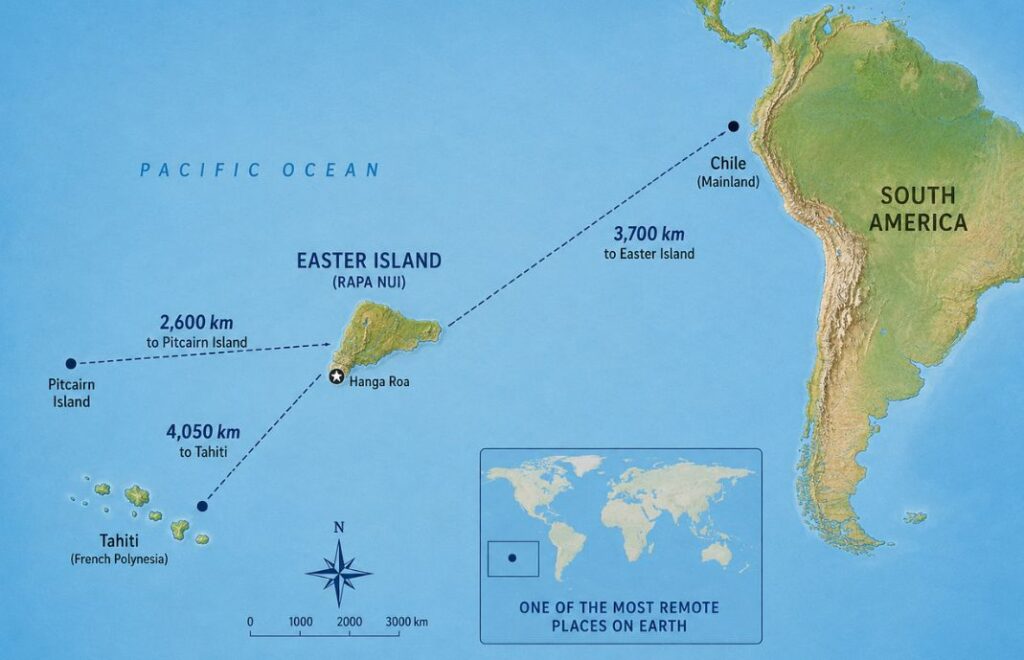
Part of Easter Island’s mystery comes from its extraordinary isolation. Rapa Nui lies far out in the southeastern Pacific Ocean, 3,800 kilometers from mainland Chile and it takes at least five hours by plane to get there.
This remoteness is one of the reasons Easter Island feels so fascinating. It is not a place you simply pass through; you must deliberately go there. Surrounded by endless ocean, the island feels like a small world of its own, shaped by volcanic landscapes, powerful traditions, and centuries of human resilience.
The isolation also makes the story of the Rapa Nui people even more remarkable. That a complex culture developed here, with monumental stone statues, sacred sites, and a distinct identity, is part of what gives Easter Island its almost mythical atmosphere.
3. A Polynesian chief first settled the island hundreds of years ago
According to Rapa Nui oral tradition, the island’s first settlers arrived under the leadership of a Polynesian chief named Hotu Matuʻa. He is said to have sailed across the vast Pacific with his people and founded the first community on the island, beginning the story of Rapa Nui civilization.
According to legend, this happened anywhere from 800 to 1,700 years ago. The chief and his people were from the mythological Polynesian island of Hiwa (now believed to be the Marquesas Island) and came in large canoes. Considering the island’s extreme isolation, their journey across the open ocean was an extraordinary achievement.
These early settlers brought with them language, customs, beliefs, farming knowledge, and seafaring traditions. Over time, they developed a unique culture that would become famous for its sacred sites, ceremonies, and the mysterious moai statues.
Scientists and historians believe there was a thriving population of a few thousand people living on the island for many years. However, after devastating civil wars, epidemics, slave raids, famine, and deforestation, there were just 111 people remaining by 1877.
Today there are around 8,000 people living on the island, and almost half consider themselves indigenous Rapa Nui.
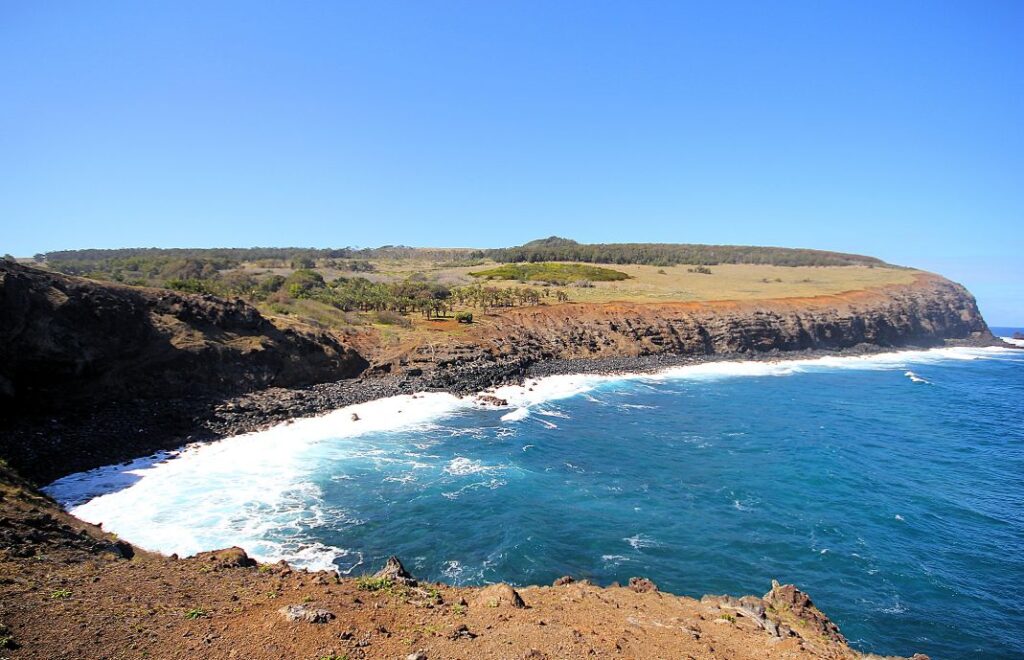
4. The moai are believed to represent Rapa Nui ancestors
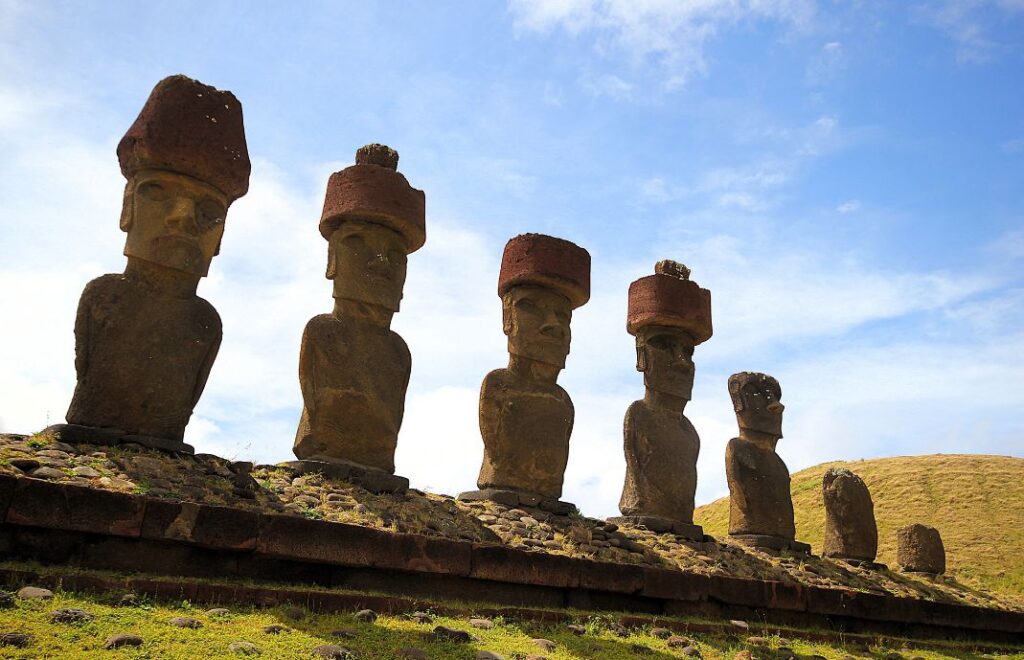
The moai are the most famous symbols of Easter Island, but they were not created simply as decoration. These massive stone figures are believed to represent important Rapa Nui ancestors – leaders, chiefs, or people of high status whose presence continued to protect and guide the community after death.
Most moai were placed on stone platforms called ahu, often facing inland rather than out to sea. This is one of the details that make them so fascinating. Instead of watching the ocean, they appear to watch over the villages and the people who lived there.
Carved from volcanic stone, the moai carry a powerful sense of authority and mystery. Their long faces, heavy brows, and solemn expressions seem almost alive, as if they still hold the memory of the island’s past.
The moai were originally known as ‘Easter Island heads’, but in 1914 the archeologists discovered the statues have bodies, which are buried.
For the Rapa Nui people, the moai were connected to ancestry, identity, and spiritual power. Standing before them today, it is easy to understand why they have become one of the world’s most unforgettable archaeological wonders.
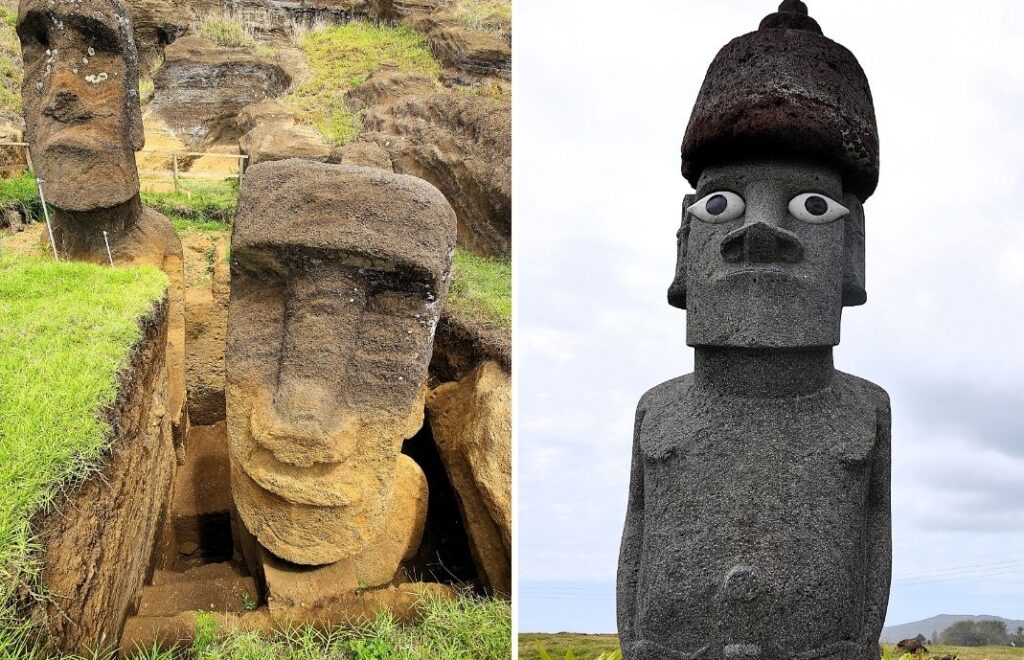
5. How did the Rapa Nui move the moai up to 18 kilometers?
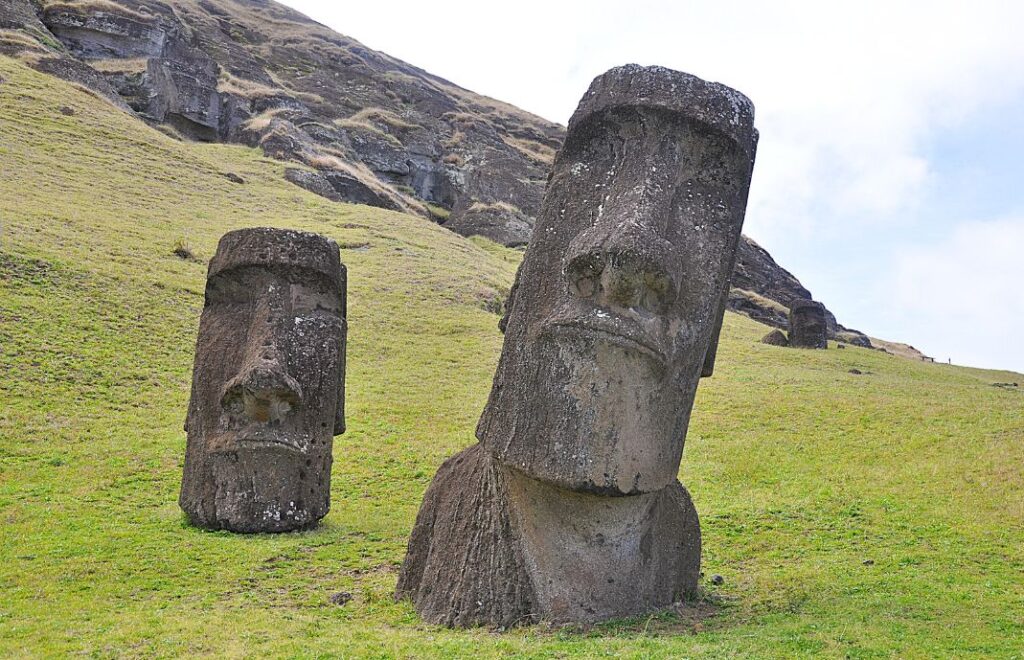
One of Easter Island’s greatest mysteries is how the Rapa Nui people managed to move enormous moai from the quarry at Rano Raraku to ceremonial platforms across the island – sometimes many kilometers away.
For years, theories suggested the statues may have been dragged on wooden sledges or rolled over logs. But one of the most fascinating ideas is that the moai were moved upright, almost as if they were “walking.” According to this theory, teams used ropes to rock the statues carefully from side to side, gradually moving them forward. Experiments with replicas have shown that this method may have been possible with surprisingly small teams.
The idea is especially powerful because it connects with Rapa Nui oral tradition, which says that the statues “walked” to their places. Whether every moai was moved this way is still debated, but the theory adds another layer to the island’s mystery.
However they did it, the achievement remains extraordinary.
6. Tukuturi is Easter Island’s most unusual moai
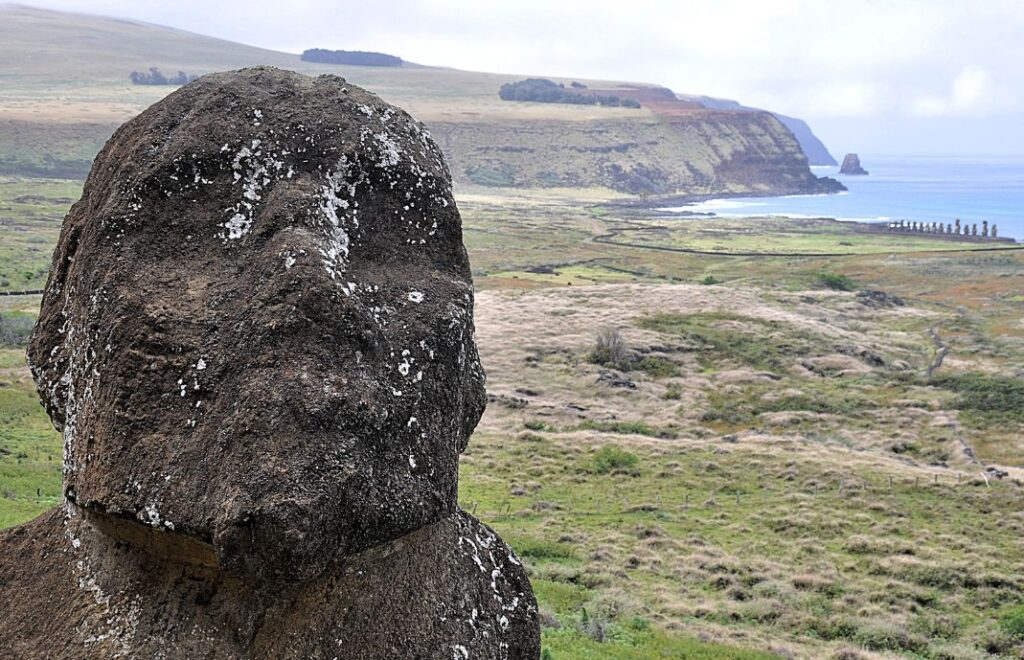
Among the many moai on Easter Island, Tukuturi stands out immediately. Unlike the tall, solemn statues most people associate with Rapa Nui, Tukuturi is like the ugly duckling. He is shown in a kneeling or squatting position, with a rounded head, raised face, and a small beard-like feature. This makes it one of the island’s most unusual and easily recognizable statues.
Tukuturi is found at Rano Raraku, the volcanic quarry where most of the island’s moai were carved. While many moai appear upright, elongated, and formal, Tukuturi has a more human and expressive quality. Its posture is thought to be connected to traditional chanting or ceremonial positions, adding another layer of mystery to its meaning.
Some researchers have suggested that Tukuturi may belong to a later period in Rapa Nui history, possibly connected to the Tangata Manu, or Birdman, cult. Whether this is certain or not, the statue reminds us that the moai tradition was not completely uniform.
Easter Island’s stone figures were varied, symbolic, and deeply connected to a culture far more complex than their silent faces first reveal.
7. Easter Island holds the Tapati Rapa Nui Festival every year
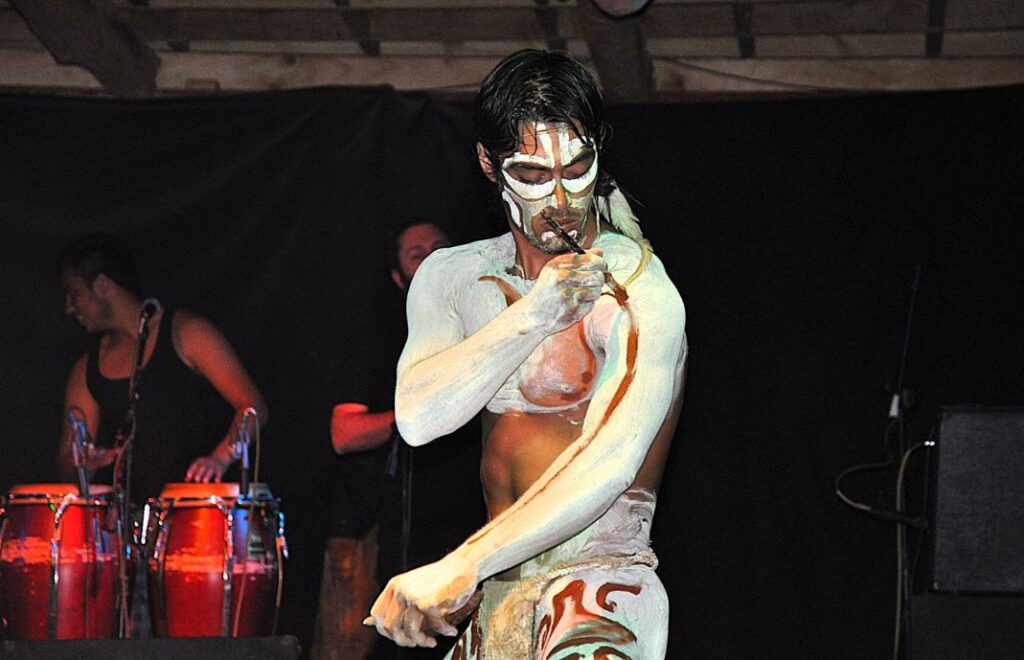
One of the most important cultural events is the Tapati Rapa Nui Festival, which is held every year. For several days, the people of Rapa Nui celebrate their heritage through music, dance, sports, storytelling, traditional dress, body painting, and competitions rooted in Polynesian culture.
The festival is more than a performance for visitors. It is a proud celebration of identity, community, and ancestral traditions. Families and teams take part in different events, from canoe races and horse riding to singing, dancing, and traditional strength contests. The atmosphere is colorful, energetic, and deeply meaningful.
For travelers, Tapati Rapa Nui offers a rare chance to experience the island beyond its famous moai. It shows that Easter Island is also a living culture with rhythm, pride, creativity, and a powerful connection to the past.
8. A Finnish tourist stole a piece of a moai ear
Not all facts about Easter Island are ancient mysteries. Some are more modern – and more shocking.
In 2008, a Finnish tourist was accused of breaking off part of the ear from a moai at Anakena Beach. A local Rapa Nui woman witnessed the act and alerted the authorities. The tourist was later detained and faced serious consequences for damaging one of the island’s sacred archaeological treasures.
The incident became an international reminder that the moai are not just famous statues or photo opportunities. They are deeply meaningful cultural and spiritual symbols connected to Rapa Nui ancestry, identity, and heritage.
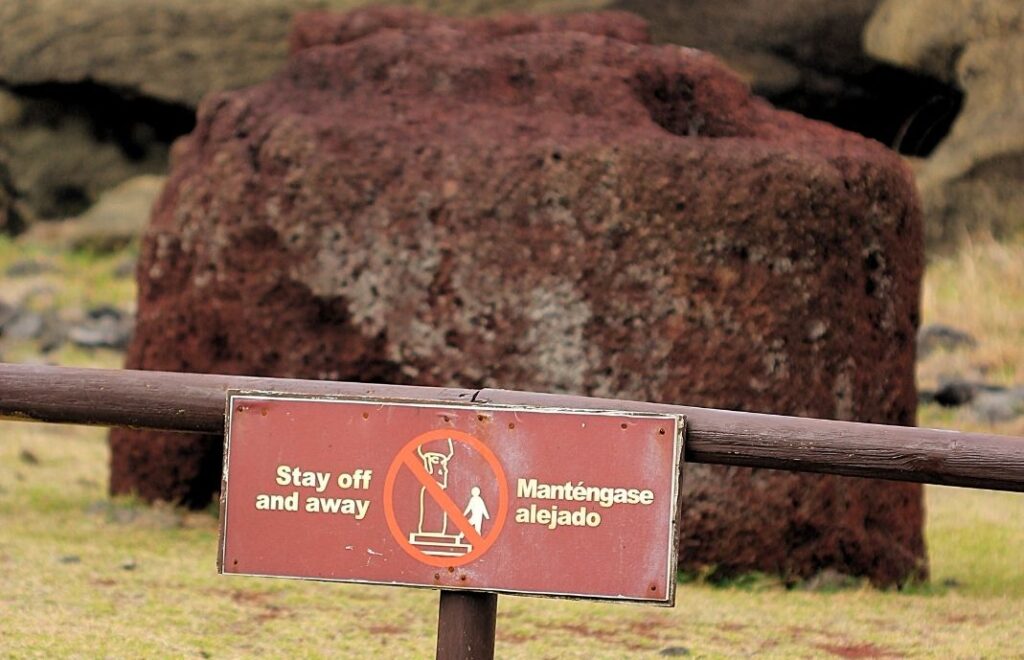
For visitors, the lesson is simple but important: admire the moai, photograph them, learn about them – but never touch, climb, damage, or take anything from these protected sites. On Easter Island, every stone carries a story and respecting that story is part of the journey.