Thor Heyerdahl was an experimental archaeologist, author, and legendary adventurer – and one of Norway’s most iconic figures.
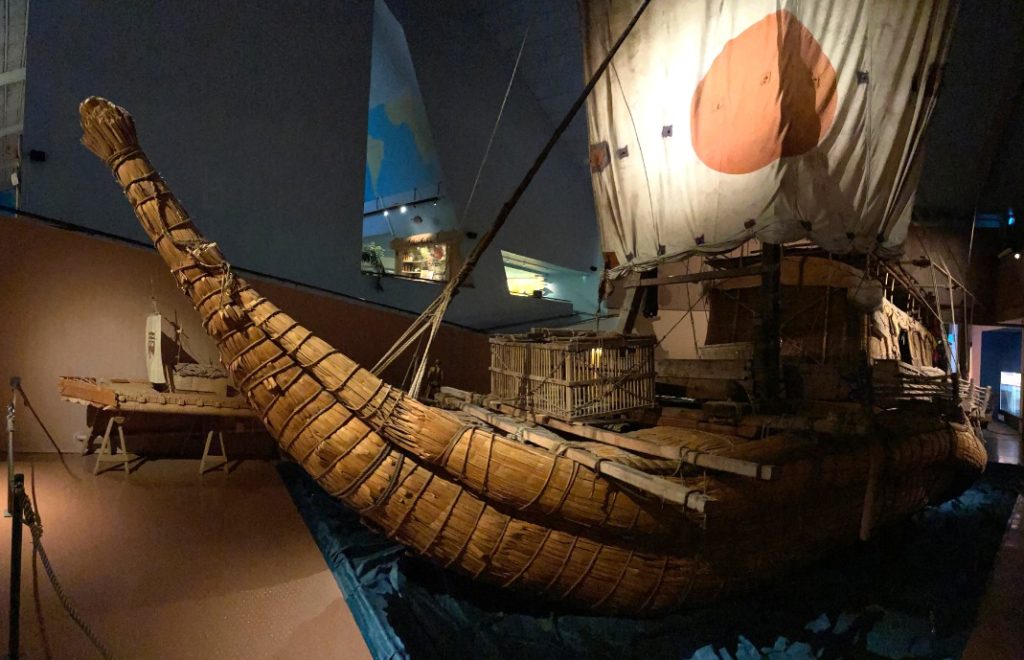
He rose to global fame in 1947, when he crossed the vast Pacific Ocean on a hand-built balsa wood raft named Kon-Tiki. But Heyerdahl didn’t stop there. The fearless explorer went on to lead two more extraordinary voyages aboard reed boats: Ra, Ra II, and later, Tigris. Each expedition pushing the boundaries of what was thought possible.
If you want to dive into the world of Heyerdahl’s daring journeys, the Kon-Tiki Museum is the perfect place. Here, visitors can see the original Kon-Tiki raft, explore fascinating exhibitions, and learn about the incredible missions that captured the world’s imagination.
Step into a world of bold ideas, ancient seafaring, and modern adventure – where the ocean was both challenge and canvas. Welcome to one of the most awe-inspiring maritime stories of our time.
The Kon-Tiki Expedition
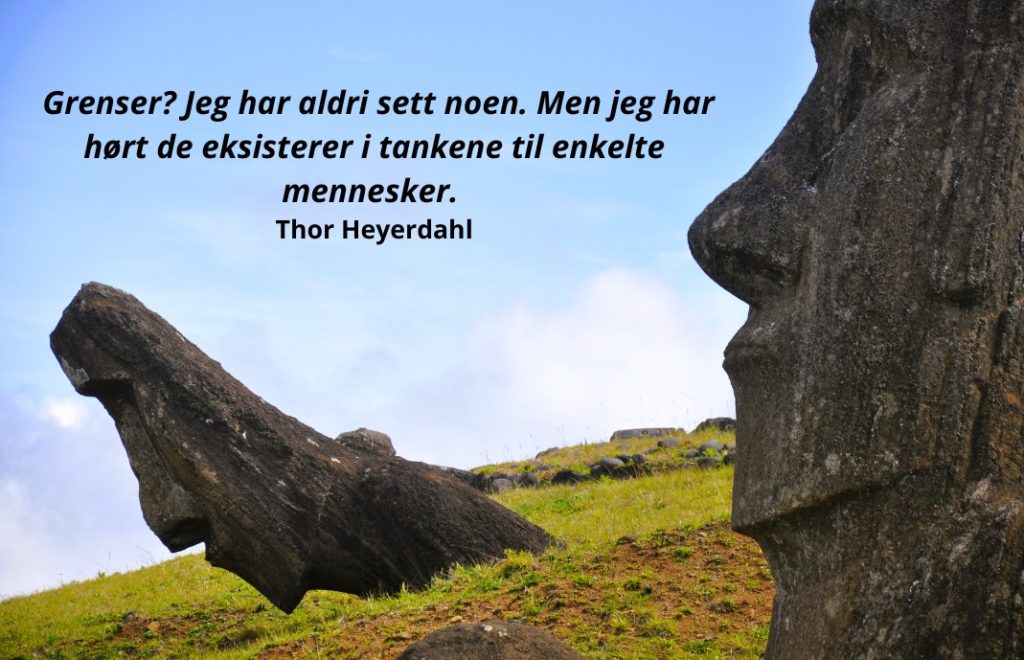
At a time when the scientific community dismissed the idea that ancient South Americans could have reached Polynesia by sea, Thor Heyerdahl believed otherwise.
To prove it was possible, he did something extraordinary: he built a raft – and sailed it himself.
On April 28, 1947, Heyerdahl and five crew members set off from Callao, Peru, aboard a simple balsa wood raft named Kon-Tiki, built using only materials and techniques available to pre-Columbian peoples.
Their goal: Polynesia.
After 101 days on the open ocean, battling storms, sharks, and uncertainty, the raft drifted ashore on Raroia Atoll in the Tuamotu Archipelago. Against all odds, Heyerdahl had succeeded. Not only in surviving the voyage but in challenging and redefining accepted theories about ancient sea travel.
The Kon-Tiki expedition became a landmark in modern exploration: a bold demonstration that the spirit of adventure, when paired with determination and vision, could rewrite history.
Where is the Kon-Tiki Museum?
The Kon-Tiki Museum is located at Bygdøynes in Oslo, a scenic peninsula known for its cluster of top-tier museums.
You can reach the museum easily by car or public transport:
- Bus 30 departs every 10 minutes from Jernbanetorget, City Hall (Rådhuset), and Solli Plass.
- Ferry from Rådhuskaien runs every 20 minutes and operates from April to October. Disembark at stop 2 (Bygdøynes) – just a 200-meter walk from the museum.
The Kon-Tiki Museum is open daily, all year round, though opening hours vary by season, so it’s best to check their website before your visit.
Plan to spend around one hour exploring the museum’s fascinating exhibitions, including the original Kon-Tiki raft and artifacts from some of the greatest sea voyages of the 20th century.
The Kon-Tiki Museum
In 1947, Thor Heyerdahl set out on what would become one of the most sensational and world-renowned expeditions of the 20th century.
As global curiosity soared and the world clamored to see the primitive balsa raft that had crossed the Pacific, the idea for a museum was born. It was Heyerdahl himself – together with Knut Haugland, a fellow Kon-Tiki crew member – who took the initiative to bring it to life.
The Kon-Tiki Museum opened its doors on May 15, 1950, and since then, nearly 20 million visitors have walked through its exhibits.
Here, guests not only witness the iconic Kon-Tiki raft up close, but also step into the legacy of a man who made it his mission to explore the world on its own terms – with courage, imagination, and a deep curiosity about our past.
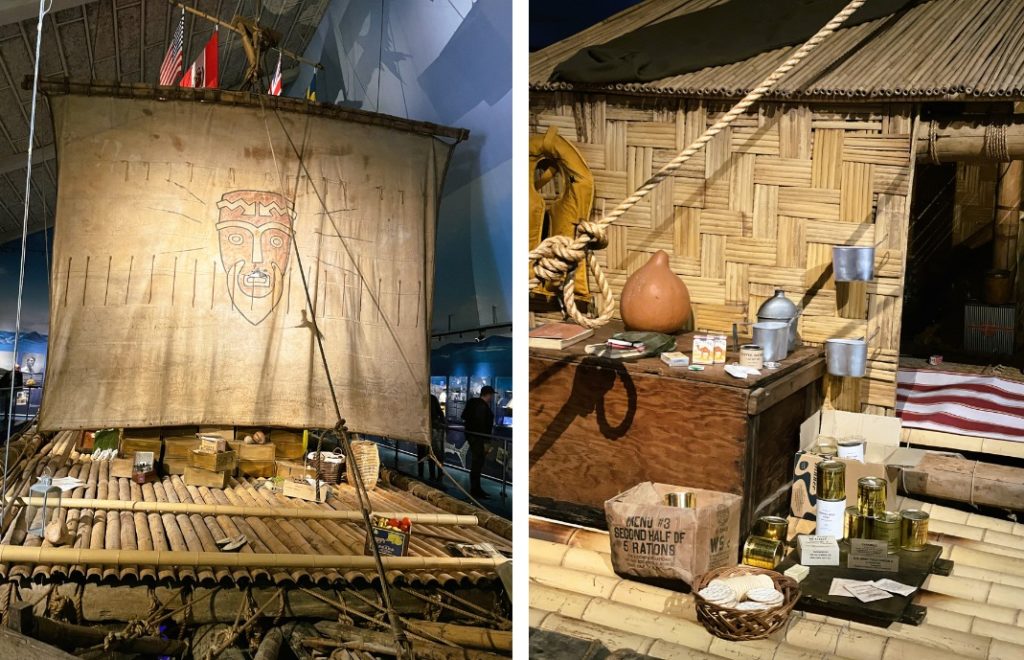
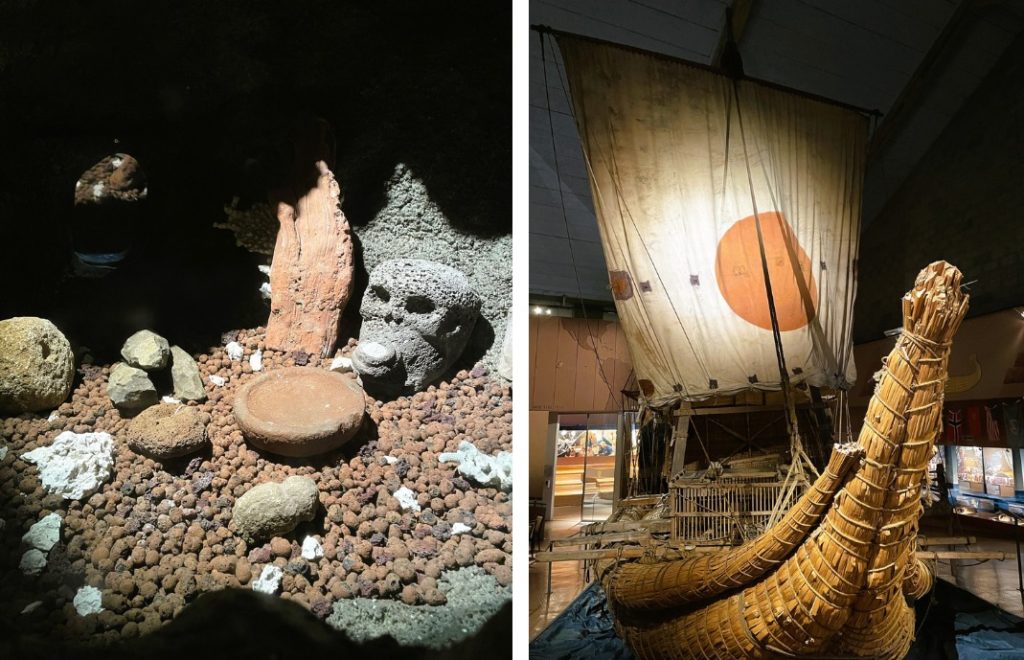
The undisputed highlight is the original Kon-Tiki raft, dramatically displayed to create the feeling that it’s drifting once again across the Pacific. Visitors can walk all around it, taking in every handcrafted detail – each one a testament to human ingenuity, boldness, and the thrill of exploration.
A visit to the Kon-Tiki Museum is more than a look back – it’s an invitation to dream forward.
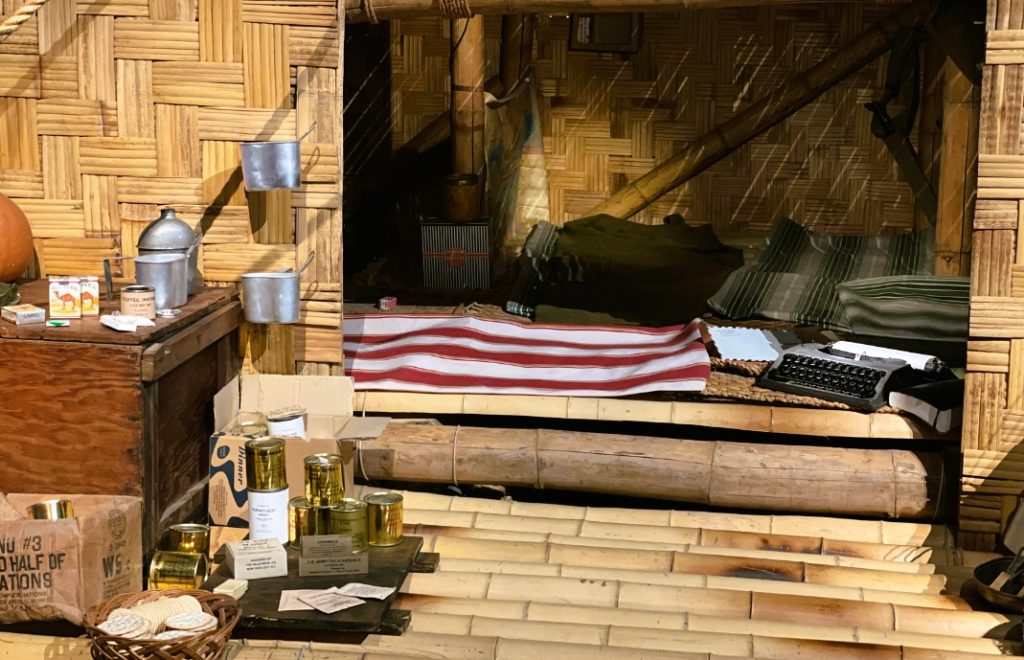
Exhibitions at the Kon-Tiki Museum
The Kon-Tiki Museum features a wide range of engaging, multilingual exhibitions that chronicle the extraordinary life and adventures of Thor Heyerdahl – from his earliest journey to Fatu Hiva, to his legendary expeditions on Kon-Tiki, Ra, Ra II, and Tigris.
Visitors can also dive into his lesser-known, but equally fascinating explorations of the Galápagos Islands, Easter Island, and Túcume in Peru, where Heyerdahl pursued his bold theories about ancient civilizations and global connections.
Beneath the original Kon-Tiki raft, the “Underwater” exhibition showcases life beneath the waves, with detailed models of sharks and tropical fish that spark the imagination – especially for younger guests.
Other highlights include:
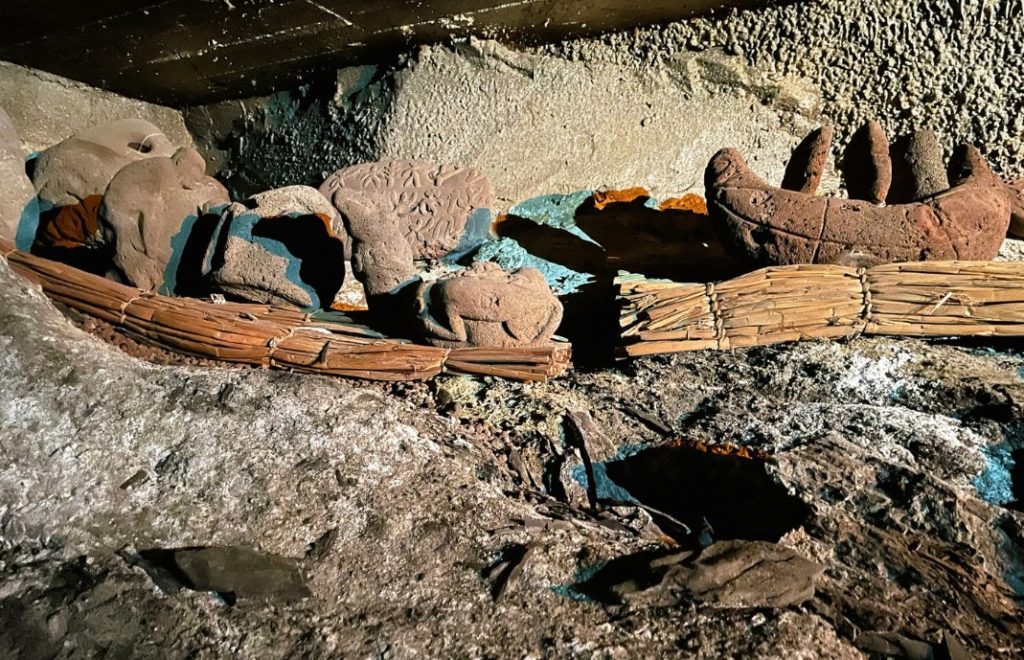
- A 30-meter replica of an Easter Island cave
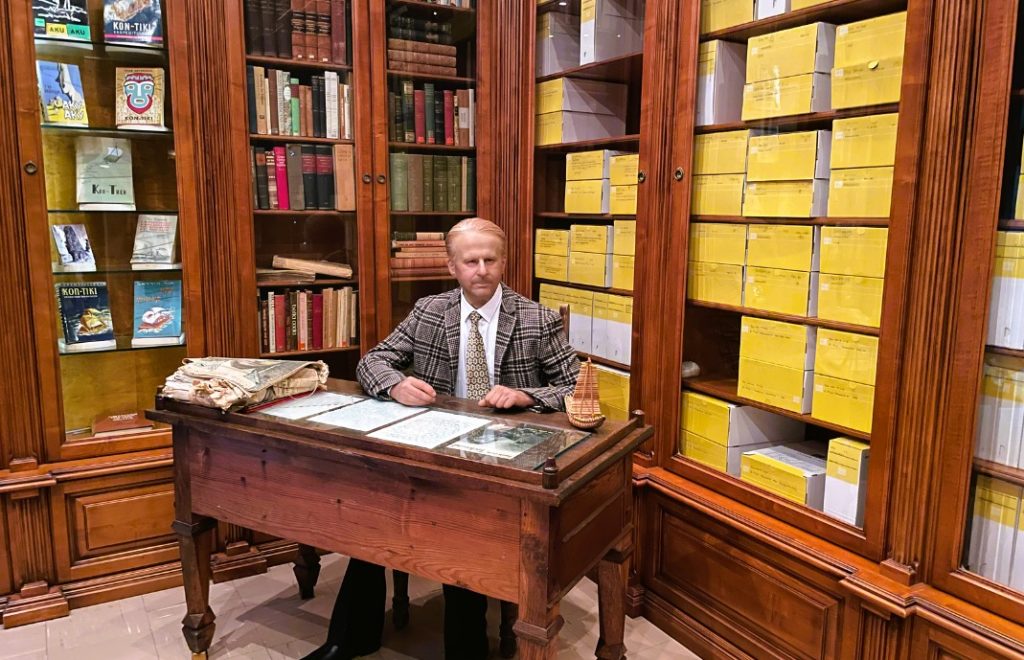
- Heyerdahl’s extensive personal library
- Exhibits that give insight into Heyerdahl as a person, not just an adventurer
The museum journey culminates with the striking display of the reed boat Ra, beautifully presented to reflect its historic voyage across the Atlantic.
For younger visitors, the adventures of Johannes the Crab and Safi the Monkey offer whimsical storytelling that complements the main exhibits. The core displays also feature child-friendly narratives, making the experience fun and educational for all ages.
Don’t miss the daily screening of the Oscar-winning documentary Kon-Tiki (1950), shown at 12:00 PM – a cinematic time capsule that captures the raw spirit of one of the most daring sea voyages in modern history.
Thor Heyerdahl
Thor Heyerdahl (1914-2002) stands among the most legendary adventurers in modern history. A visionary who dared to challenge conventional thinking and cross oceans on ancient vessels to prove his theories.
Born and raised in Larvik, Norway, Heyerdahl’s fascination with nature and human history began early, inspired by his mother Alison, a passionate museum director who nurtured his curiosity for zoology and anthropology.
In 1933, he moved to Oslo to study zoology at the University of Oslo. But his intellectual appetite extended far beyond the classroom – he was deeply drawn to biology, oceanography, and anthropology, with a particular obsession for the cultures and mysteries of the Pacific Ocean.
During World War II, Heyerdahl trained at Little Norway in Canada and later joined the parachute company of the Norwegian brigade in Scotland. In the harsh winter of 1944-45, he served as a lieutenant in northern Norway, taking part in the liberation of Finnmark.
Thor Heyerdahl passed away on April 18, 2002, from a brain tumor. His ashes were interred on the family estate in Colla Micheri, Italy – a peaceful resting place for a man who spent his life seeking the farthest shores.
Today, his legacy lives on through his books, his daring expeditions, and the timeless message that bold questions and brave journeys can reshape the way we understand our world.
Thor Heyerdahl’s expeditions
Throughout his life, Thor Heyerdahl embarked on a series of bold and groundbreaking expeditions. Each one challenging accepted theories and expanding the boundaries of exploration. Here’s a timeline of his most significant journeys:
1937-38: Polynesia
Heyerdahl’s first major journey, living on the island of Fatu Hiva, sparked his lifelong passion for understanding ancient sea routes and cultural connections.
1939-40: Northwest America
Research into indigenous cultures and their maritime traditions, laying groundwork for future theories.
1947: Kon-Tiki Expedition
A 101-day voyage across the Pacific Ocean on a balsa wood raft, proving it was possible for pre-Columbian South Americans to reach Polynesia by sea.
1952: Galápagos Islands
An archaeological expedition that uncovered pre-Columbian artifacts, suggesting early transoceanic contact.
1955-56: Easter Island (Rapa Nui)
Extensive excavations and studies of the island’s statues and cultural history, seeking clues to ancient navigation and migration.
1969: Ra Expedition
First attempt to cross the Atlantic on a papyrus reed boat, inspired by ancient Egyptian shipbuilding techniques.
1970: Ra II
A successful transatlantic voyage from Morocco to the Caribbean, demonstrating the possibility of contact between ancient civilizations across oceans.
1977: Tigris Expedition
A reed boat journey from the Tigris River through the Persian Gulf and Indian Ocean, intended to trace early trade and migration routes between Mesopotamia and the Indus Valley.
1988-92: Excavations in Túcume, Peru
Archaeological research uncovering the remains of ancient civilizations, further supporting his theories on pre-Columbian transoceanic travel.
Each expedition was a daring blend of science, seafaring, and story – making Thor Heyerdahl not just an adventurer, but a pioneer who reimagined our understanding of the ancient world.