
Even before we pull into the farmyard, excited squeals erupt from the back seat:
“I see them! I see the animals! They’re so cute!”
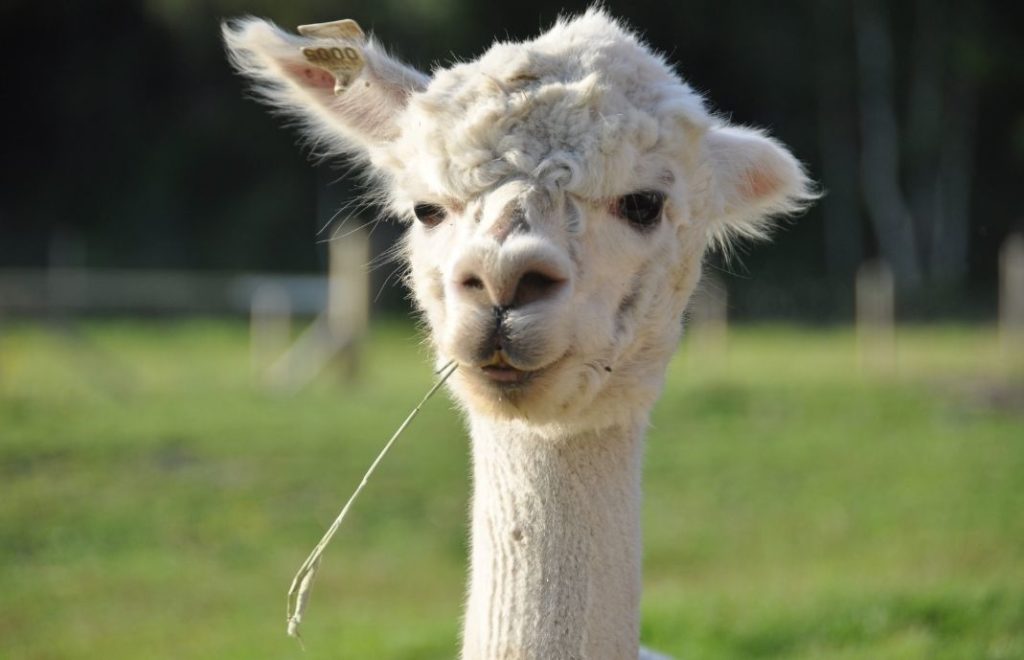
The four-year-old spotter couldn’t be more right. These alpacas are simply irresistible – with their luxuriously soft fleece you long to bury your face in, those impossibly long lashes any model would envy, and soulful eyes that could melt the iciest of hearts.
We’ve arrived at Østre Kjærnes Gård in Våler, Østfold – a charming farm nestled amid rolling fields and whispering forests. The sun is shining, the air is crisp, and everything is perfectly set for an unforgettable alpaca trek.
Because honestly – what could be more magical than a walk in nature with these gentle, curious creatures by your side?
How the alpaca adventure began
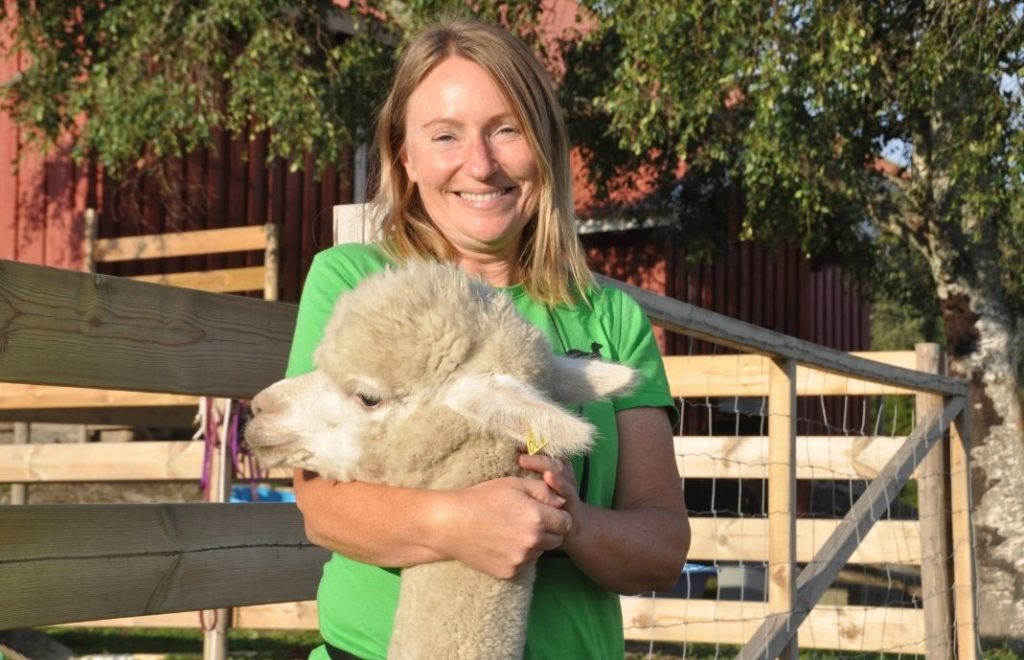
Owners Linda and Erik Tegneby greet us with warm smiles as we arrive. Today, a group of twelve animal lovers – children and adults alike – are here for one unforgettable experience: taking alpacas for a stroll. The excitement is palpable; you can feel it in the laughter and eager chatter.
Before we meet our woolly walking companions, farmer Erik gives us a fascinating introduction to the alpaca’s world – its origins, quirks, and why these gentle creatures have captured so many hearts. He also walks us through how the trek will unfold.
The story of Østre Kjærnes Gård’s alpacas began in 2016, when five elegant females arrived from a farm in Hallingdal to start a new life in Østfold. Fast-forward to last summer, and the farm had a baby boom – six cria (that’s the Spanish term for alpaca offspring, a nod to their Peruvian roots) joined the herd.
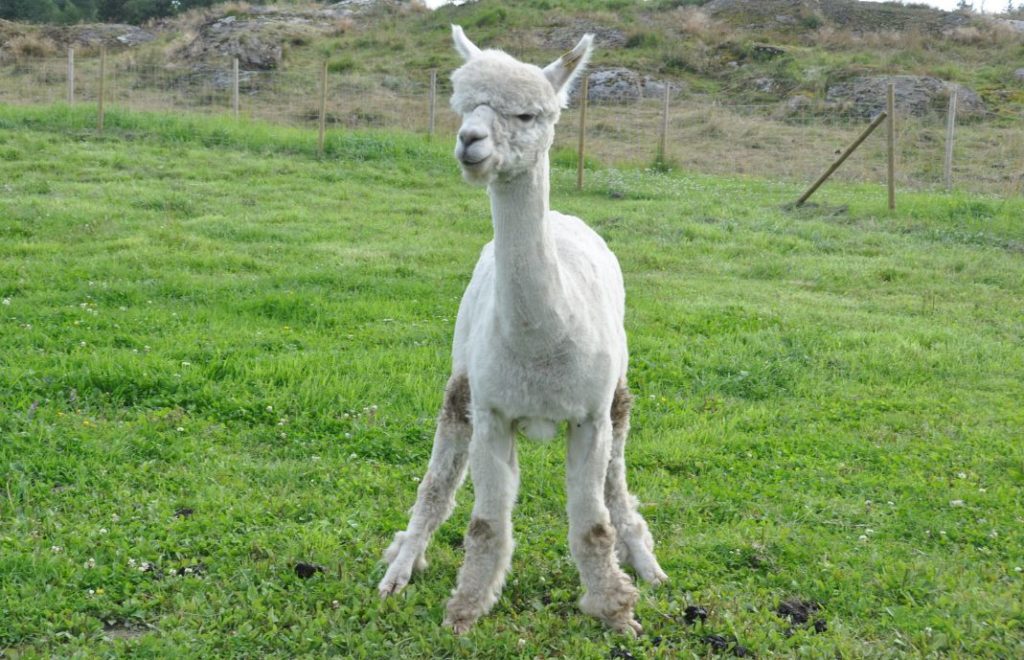
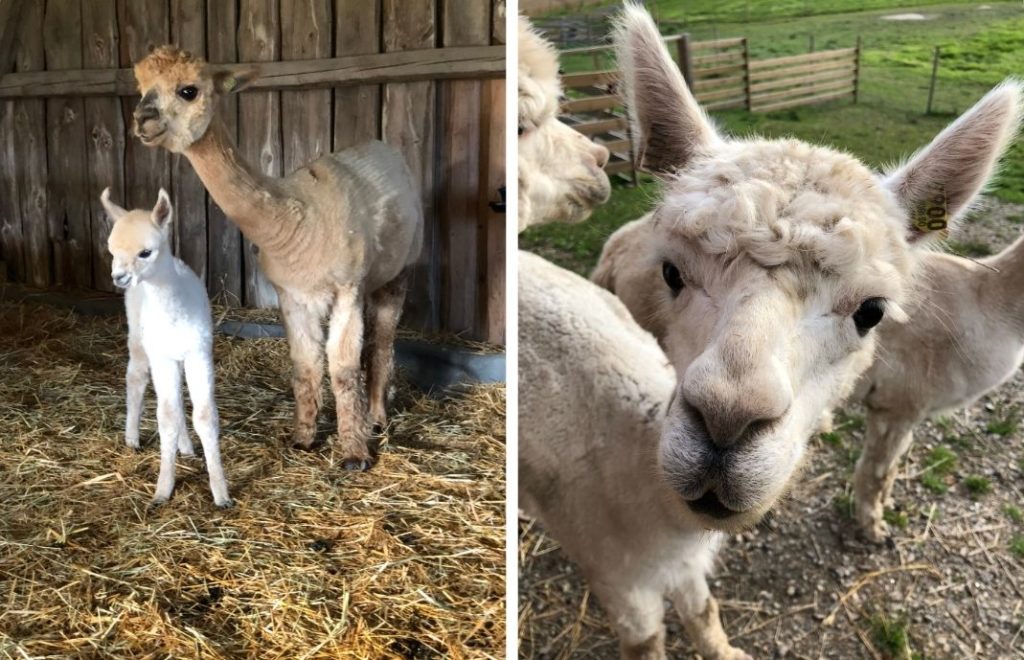
And there’s more: Erik shares a piece of delightful news. Just yesterday, the farm welcomed a brand-new member – a tiny, wobbly-legged bundle of fluff, barely 24 hours old. Our anticipation soars – we can’t wait to meet this little heartbreaker.
From five pioneering alpacas to a thriving herd, this is a love story between people, animals, and the simple joys of life on the farm.
A walk with the heartbreakers
It’s time to meet our fluffy companions. Each alpaca is fitted with a halter and lead, ready for their afternoon stroll. With two little ones – ages four and six – we’re curious to see how they’ll take to their new friends, Einar and Eugene, inseparable buddies who prefer walking side by side.
Astrid, the fearless four-year-old, grabs Einar’s lead with unbridled enthusiasm. Big sister Solveig, however, isn’t quite as charmed by Eugene. The handover of the rope brings tears, sobs, and a full-blown protest. Meanwhile, Einar uses the pause to nibble on grass, blissfully oblivious to the drama.
A few soothing words and gentle coaxing later, Solveig gathers her courage and accepts the rope.
Linda reassures her: “Walk just a little ahead of Eugene and give a slight tug – he’ll follow.”
Solveig tries, only to sigh in exasperation:
“He doesn’t want to come!”
Alpacas, we quickly learn, are not animals prone to haste or high stress. Linda explains that the first few hundred meters are all about adjustment, even for alpacas well accustomed to human walks – and the inevitable photo shoots.
True to form, our woolly friends take their time, pausing to graze and exchange soft, throaty sounds – half wheeze, half flute – endearingly odd and utterly charming.
Eventually, Eugene decides it’s time to move on. With a leisurely, almost regal stride, he leads the way, Einar and the rest of the herd falling in behind. Alpacas are herd animals, but just like people, each has a distinct personality – some bold, some bashful, all impossibly lovable.
Walking with these gentle creatures isn’t just an activity – it’s a slow, soulful experience that tugs at the heartstrings and makes time stand still.
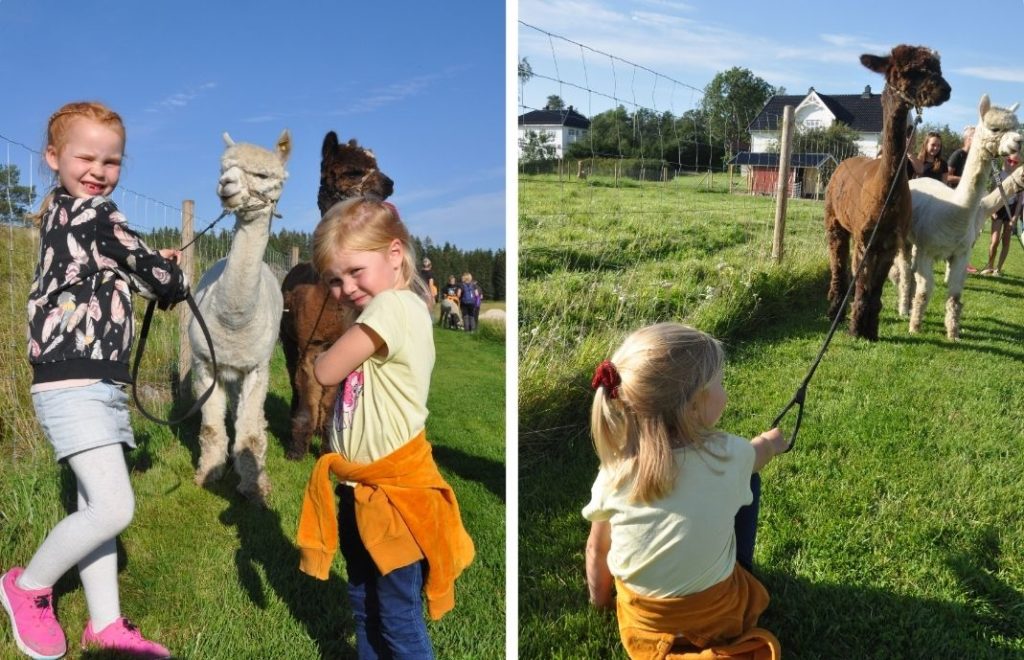
Photo models extraordinaire
We wander down the farm road, and Eugene is now fully on board with the adventure. He follows a beaming Solveig, who proudly demonstrates her newfound skill at getting him to move along.
Gone are the tears and hesitation – replaced by a grin so wide it lights up her face. That grin grows even bigger when Erik tells her she can hold the lead all by herself. I get a firm warning: “Let go. I can do this.” And indeed, she can.
The rule is that children under 12 must be accompanied by an adult when leading an alpaca, but Erik says they judge based on the child’s confidence – and Solveig clearly passes the test.
The stroll is peppered with plenty of pauses. The alpacas like to snack when they please, and of course, there are countless photo stops. Cameras click, phones flash, and every “aww, so cute!” is soon followed by “This one’s perfect!”
It’s easy to see why. These animals are living, breathing supermodels: soft, plush coats framing the sweetest faces, adorned with enviably long lashes and those big, soulful eyes that seem to hold ancient secrets.
Walking with alpacas isn’t just a nature experience – it’s like starring in your own heart-melting photo shoot, with the most photogenic co-stars imaginable.
A well-earned reward
Our alpaca trek winds its way through the forest, across open meadows, and finally back toward the farm. By now, one determined alpaca has decided he’s due for a serious break. He is sinking gracefully to the ground for a well-deserved rest – while a few others happily graze their way home.
As we approach the final stretch, there’s a hint of melancholy in the air. These last few meters mark the end of a magical walk, but the alpacas know what comes next: treat time.
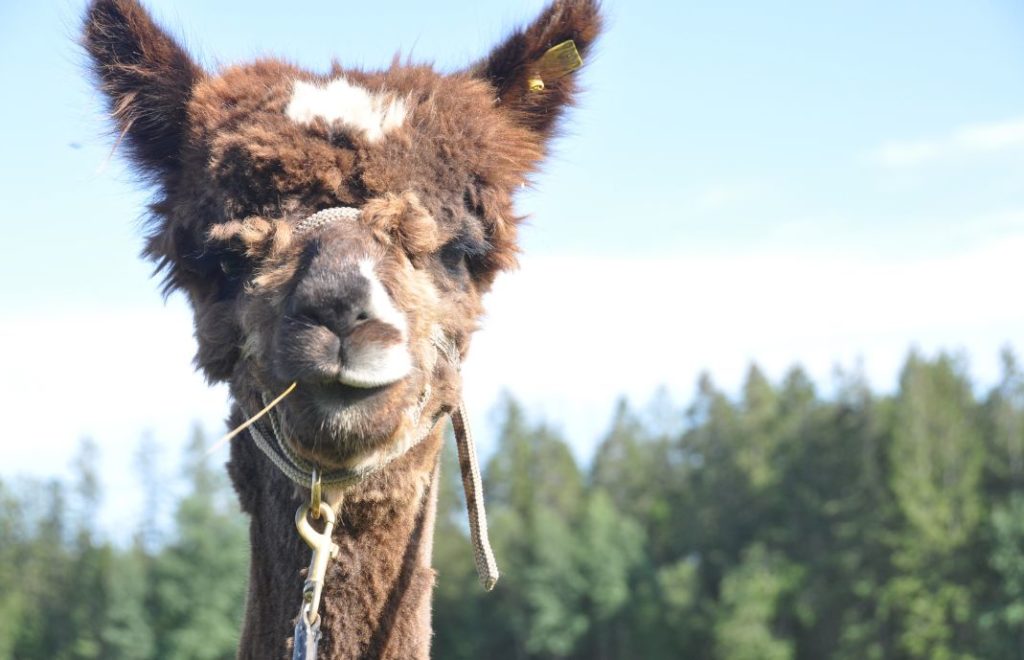
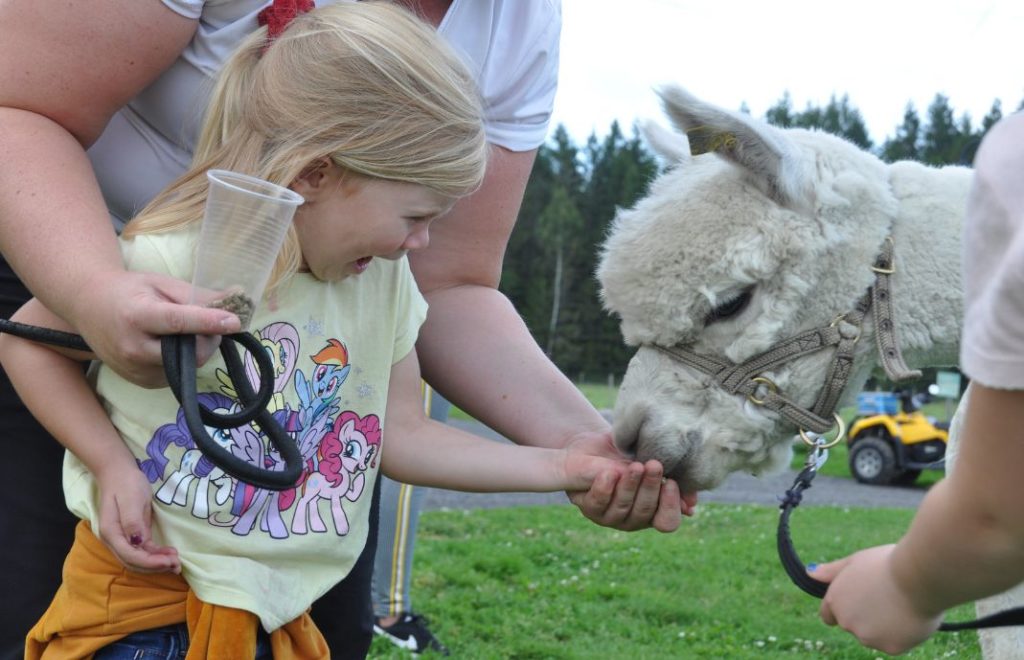
Each handler is handed a small cup of alpaca feed – a gesture these gentle creatures appreciate immensely. I pour a little into my palm, and Eugene wastes no time, delicately nibbling the pellets before fixing me with those big, pleading eyes: “Just a little more?”
Moments later, the cups are empty, and our soft-footed companions are led back to their enclosure. Halters come off, and they melt into their familiar world of pasture and quiet contentment.
For us, the reward isn’t just the feed in our hands. It’s the memory of an afternoon spent in the company of creatures so tender, so serene, they leave an imprint on your heart long after the walk is done.
Sweet enough to eat
But the adventure isn’t over just yet.
Erik and Linda invite us into the alpaca farm, where we finally meet the tiny cria born just the day before – a bundle of softness that looks too precious for this world. Nearby, a couple of slightly older cria frolic and nudge each other playfully, while the females lounge in quiet contentment. Alpacas are, after all, creatures of calm – and here in the stable, that serenity is palpable.
We learn that a female alpaca carries her baby for 11 and a half months and can give birth to around 15 cria during her lifetime, which typically spans 20 to 25 years.
After more than two enchanting hours on Østre Kjærnes Gård, it’s time to say goodbye.
Astrid, however, is having none of it. She declares in no uncertain terms that she’s perfectly happy here and would very much like to stay with the alpacas a little longer.
And honestly? I understand her completely.
This is an experience I’ll do again!
Practical information:
Where
Alpaca trekking takes place at Østre Kjærnes Gård in Våler, Østfold – about a 50-minute drive from Oslo.
Duration
The experience lasts around 1.5 hours, during which each participant gets to lead their own alpaca.
Age limit
You must be 12 years or older to handle an alpaca on your own. Children under 12 can still join but must be accompanied by a parent or guardian.
Guidance
A knowledgeable staff member from the farm accompanies every trek.
After the walk
The adventure continues with a visit to the alpaca garden, where you can meet the rest of the herd -including the adorable cria (babies).
Who can join
Alpaca trekking is suitable for everyone. The walk is done at a slow, easy pace over flat terrain.
Booking
This is a highly popular (and utterly magical) experience, so advance booking is essential.
The charm
Each alpaca has its own personality – and name. Spending time with them offers a rare sense of peace, calm, and harmony.
In short
Alpaca trekking isn’t just an activity – it’s an experience that touches the soul.
Get to know the alpaca
Family
The alpaca belongs to the camelid family.
Origin
Native to South America, primarily Peru, but also found in Bolivia and Chile.
Famous for
Their luxurious fiber, prized since the Inca Empire, when only societal leaders were allowed to wear alpaca textiles.
History
The Spanish conquest nearly drove alpacas to extinction, but they survived by retreating to remote mountain regions.
Global spread
The first alpacas were exported in the 1980s to the USA, Canada, Australia, and New Zealand.
Types
There are two breeds:
- Huacaya – 80-90% of the population, with fluffy, wool-like fleece.
- Suri – rarer, with silky, dreadlock-like fiber.
Size
Weighs 50-70 kg, with an average shoulder height of 1 meter, and stands about 1.5 meters tall.
Breeding
- Gestation lasts 11.5 months.
- A female can produce about 15 cria (offspring) in her lifetime.
- Cria weigh 5-9 kg at birth and nurse for 5-6 months.
- Females can breed again as early as 14 days after birth.
Lifespan
Around 20–25 years.
Fun fact
Like their cousin, the llama, alpacas can spit – but they rarely spit at humans.
With their gentle nature, expressive eyes, and silky fleece, alpacas aren’t just adorable – they’re living heritage from the Andes, thriving in a new world.
More inspiration to visit Østfold county:
Cruising the Halden Canal
Oldtidsruta – A journey back to the Iron Age
