Tucked away in the heart of Transylvania, Viscri is a living postcard. It’s a village where time seems to stand still. While the region is dotted with charming Saxon settlements and scenic backroads, Viscri stands out as one of Romania’s most celebrated villages.
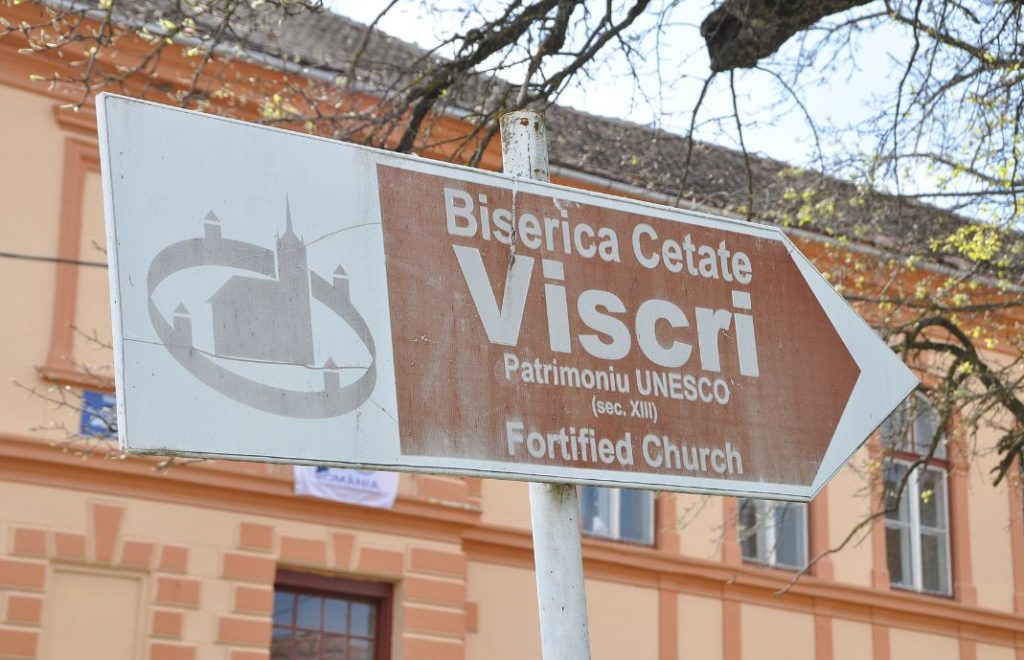
As you turn off the main road, smooth asphalt gives way to gravel paths, and with each passing kilometer, the modern world fades behind you. Even your GPS seems hesitant, recalculating as if it knows you’re entering a different era. A weathered wooden sign, clinging to an old post, reassures you: Viscri is just a few kilometers away.
What awaits you?
Cobblestone streets, pastel-colored Saxon houses, horse-drawn carts, and a rhythm of life unchanged for centuries. Add to that a UNESCO-listed fortified church and a community proud of its heritage, and you’ll see why this village is a must on any Romanian itinerary.
Where is Viscri?
Nestled between the legendary towns of Sighișoara and Bran, Viscri lies in the heart of Transylvania – a region famously shrouded in tales of vampires, Dracula, and werewolves. But when you arrive in Viscri, you’ll find none of those eerie legends. Instead, the village exudes tranquility and rustic charm, where sheep graze peacefully on rolling green hills and locals go about their daily chores at an unhurried pace.
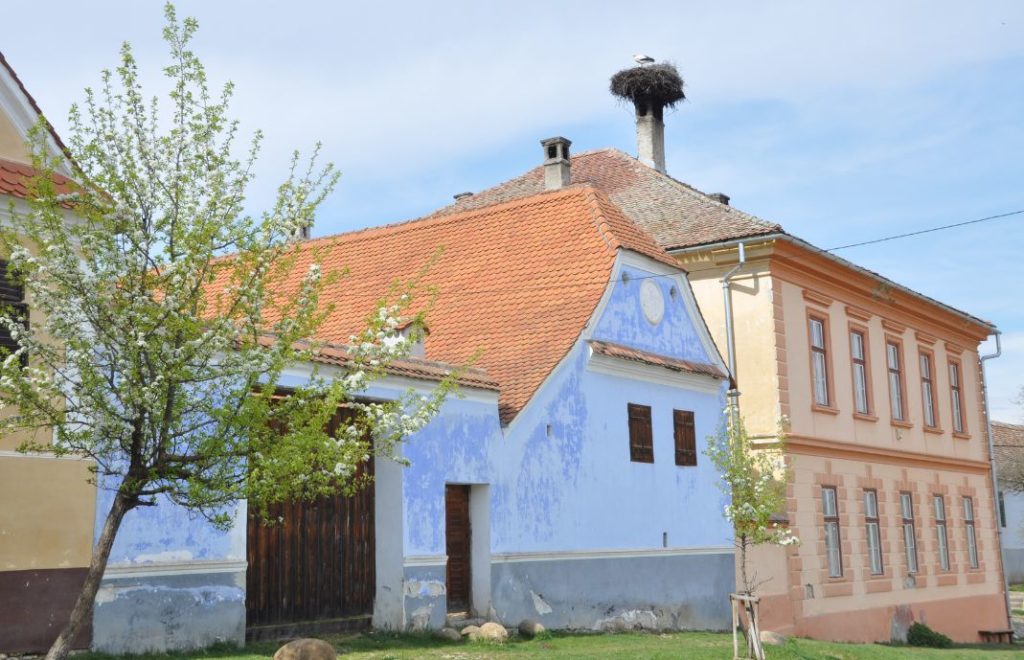
The village’s main street – if you can call it that – is a simple cobblestone lane, flanked by rows of colorful Saxon houses with tiled roofs and carved wooden gates. It’s a scene frozen in time, offering a rare glimpse into an authentic rural lifestyle that has changed little over centuries.
The story of Viscri
Viscri is one of Transylvania’s many Saxon villages, its roots stretching back to the 12th century. In 1152, Hungary’s King Géza II invited numerous Saxon families to settle in Transylvania as colonists. These families established a series of villages that shaped the cultural and architectural identity of the region – an influence still visible today.
At the heart of Viscri stands its crown jewel: the fortified church, a masterpiece of medieval architecture that earned the village a place on the UNESCO World Heritage list. Its whitewashed walls and imposing towers dominate the skyline like an ancient fortress. The foundations date back to the 13th century, while the massive defensive walls were added two centuries later as protection against invading forces.
According to historical records, Viscri was founded by the Saxons as a free community, never part of any noble estate. By 1500, it consisted of just a handful of households, three shepherds, a schoolteacher, and two paupers. Today, the population hovers around 500, with only 27 remaining Saxons.
In recent years, Viscri has been the focus of an ambitious cultural revival project aimed at preserving and showcasing its traditions. Visitors can now witness local artisans at work – blacksmiths at their forges, weavers at their looms – breathing new life into crafts nearly lost to time.
Exploring Viscri by horse and cart
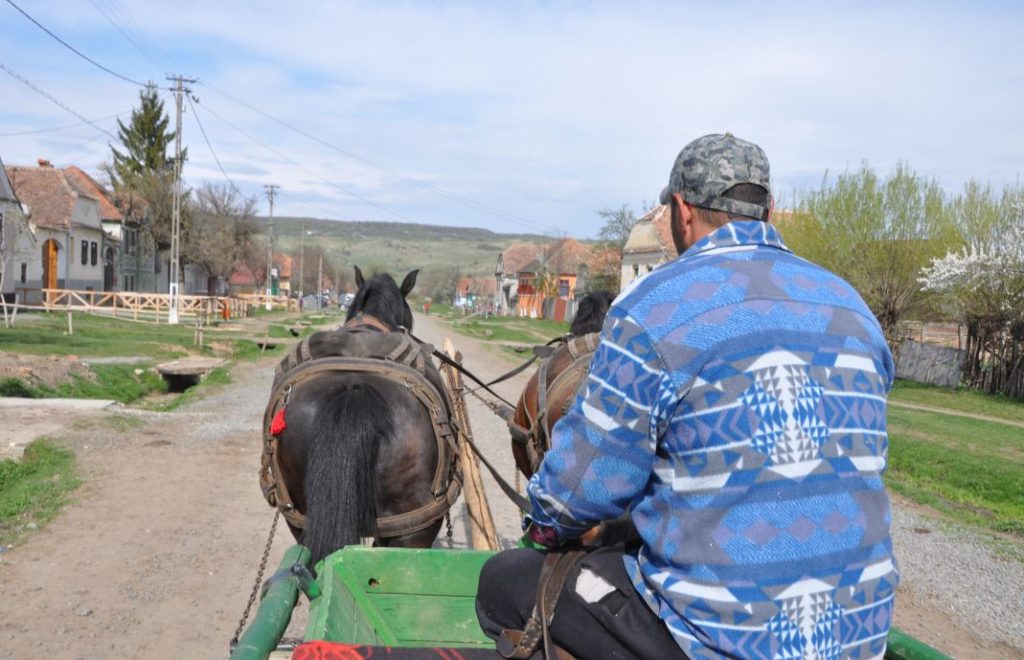
One of the most authentic – and unforgettable – ways to experience Viscri is by booking a horse-drawn carriage ride.
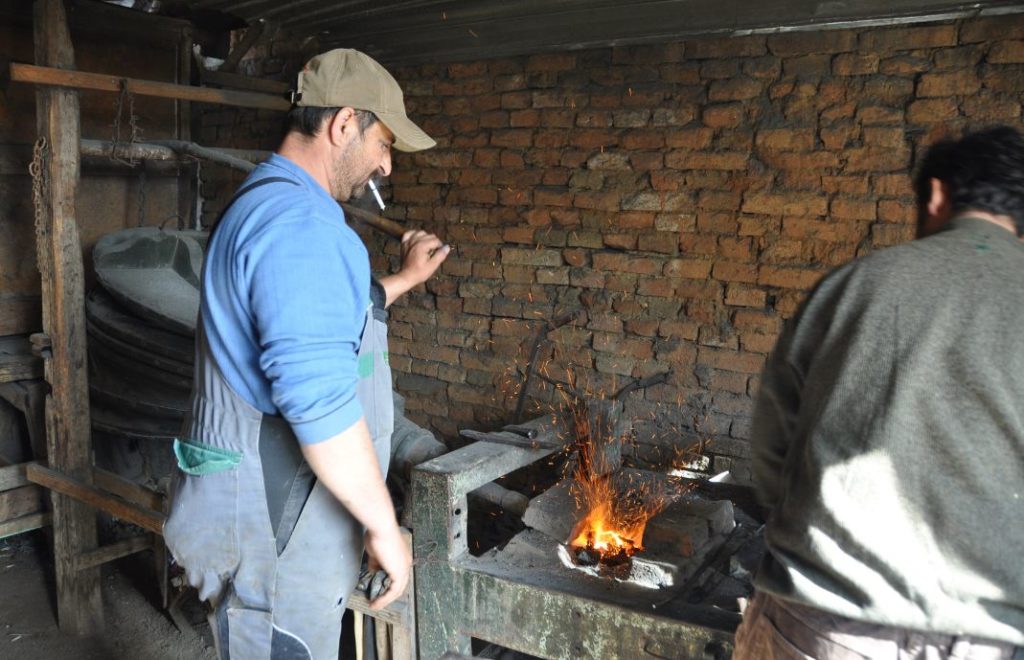
Just like the locals, the horse is in no rush. At a leisurely pace, it pulls us down the cobblestone main street, past the pastel-colored Saxon houses that make this village so photogenic. Soon, we turn onto a narrow lane and stop outside a small, timeworn blacksmith’s workshop.
Inside, two brothers welcome us with warm smiles. The forge is small, smoky, and hot, its air thick with the scent of iron. The blacksmith, a cigarette dangling from the corner of his mouth, heats a piece of metal until it glows a fiery red. Then, with rhythmic blows on the anvil, he transforms it into a perfect horseshoe, just as generations before him have done.
With evident pride, he hands us the finished piece – a gift to bring us luck and a lasting memory of Viscri.
Outside, three elderly women, each well into their 80s, greet us with handmade wool products – mostly socks, each pair a unique piece of craftsmanship. We happily buy two pairs before climbing back onto the cart.
The ride continues through idyllic countryside, past rolling meadows and into a wooded path that jolts us in every direction. After about 30 minutes, we’re back in the main street, our hearts – and camera – full of rural Transylvanian charm.
Word of advice: those wooden planks aren’t the most comfortable seats.
Lunch with the locals in Viscri
As we wait for the owner of a small eatery to return, the village offers its own entertainment: a herd of cows ambling casually up the cobblestone street, completely unaccompanied, yet perfectly aware of where they’re going – even turning right at the junction like seasoned locals.
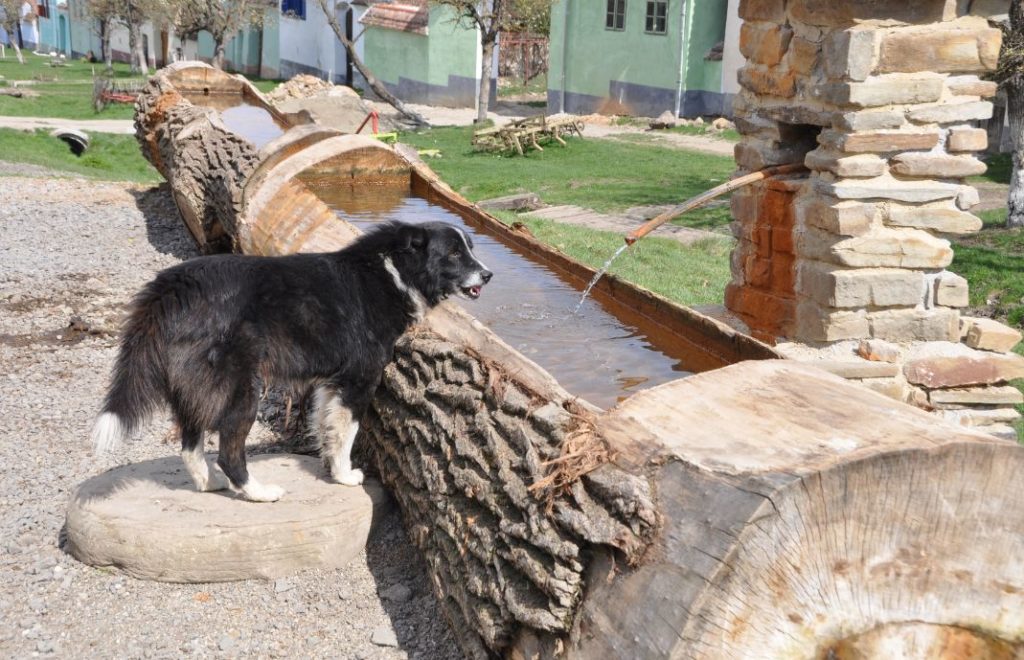
Nearby, the village water trough serves all residents, both two- and four-legged. A friendly dog greets us with a wagging tail and a soft bark before hopping onto a flat stone to sip water from the communal basin.
Then, a brightly painted door swings open, and a man waves enthusiastically: “Lunch is ready!”
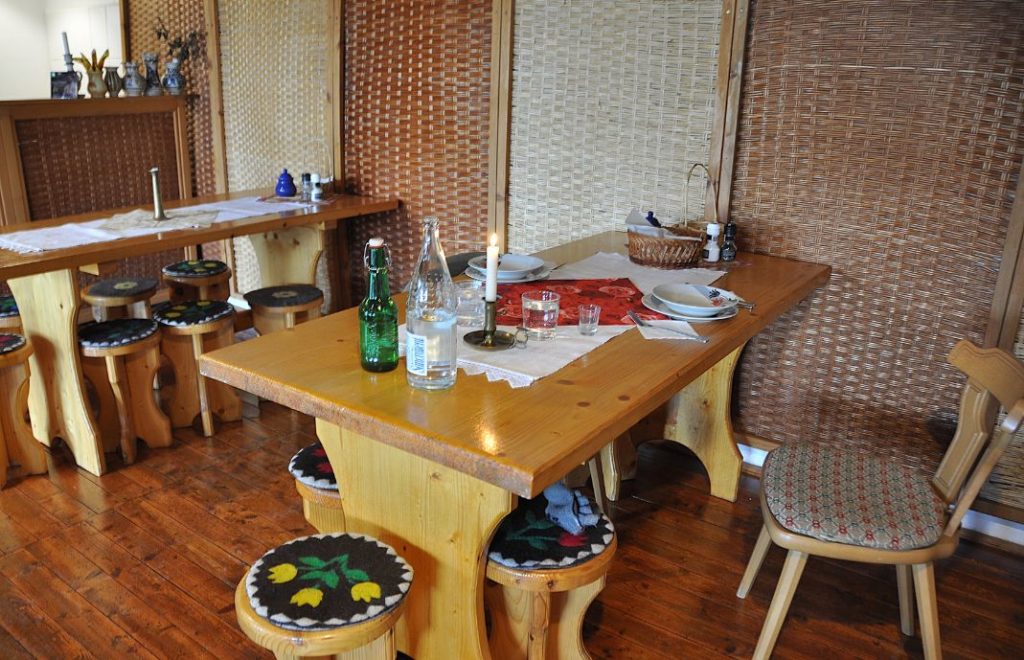
We step inside a cozy room where a beautifully set table awaits, adorned with fresh flowers. The tablecloth, the cushions on our seats, even the host’s apron – all handmade by his wife, a proud nod to local craftsmanship.
The meal?
A celebration of simplicity and flavor. Fresh vegetables, tender potatoes, and locally sourced meat, served with genuine warmth. Our praise brings an even bigger smile to our host’s face. That smile widens further when he appears with small glasses and a bottle of homemade schnapps – a pre-dessert ritual. We toast to good food, good company, and the magic of Viscri.
Dessert is the crowning glory: pancakes cooked to perfection, served with homemade jam. I’m already full, but who can resist the sweet aroma of something made with love? One pancake turns into two… and then three. “If I skip dinner tonight,” I joke, “I can manage just one more.”
This is Viscri – authentic, welcoming, and impossible to forget. A village where time slows, traditions thrive, and every meal feels like a celebration.
Good to know: Visiting Viscri
Where is it?
Viscri is located in Transylvania, Romania, making it the perfect stopover between the popular destinations of Sighișoara and Bran.
What to do
- Horse & cart ride – The most authentic way to explore the village.
- Visit Viscri Fortified Church – A UNESCO World Heritage Site that dominates the village skyline.
- Enjoy a local lunch – Experience true Saxon hospitality with a homemade meal in a villager’s home.
Plan ahead
Horse-cart rides and meals with locals must be arranged in advance, ideally through a local tour operator or travel agency.
Souvenir ideas
Local women craft beautiful wool products – from colorful socks to cozy slippers – perfect as keepsakes or gifts.