
Yes, it’s a cliché. Traveling to Romania on a vampire hunt feels almost too on-the-nose – but really, what else would you do in the land that inspired the world’s most infamous bloodsucker?
For centuries, vampires have gripped our collective imagination. We devour films where sharp-fanged creatures stalk the night, sinking their teeth into unsuspecting necks. Evenings are spent curled up with Bram Stoker’s gothic masterpiece or Anne Rice’s sensual, shadowy tales. We binge-watch True Blood, swoon through Twilight, and thrill at the promise of eternal darkness.
So, the theme for this trip? Vampire hunting.
That said, I didn’t exactly pack a suitcase full of wooden stakes, garlic cloves, and vials of holy water. Let’s just say I (mostly) don’t believe in vampires…
Vlad’s mountain stronghold
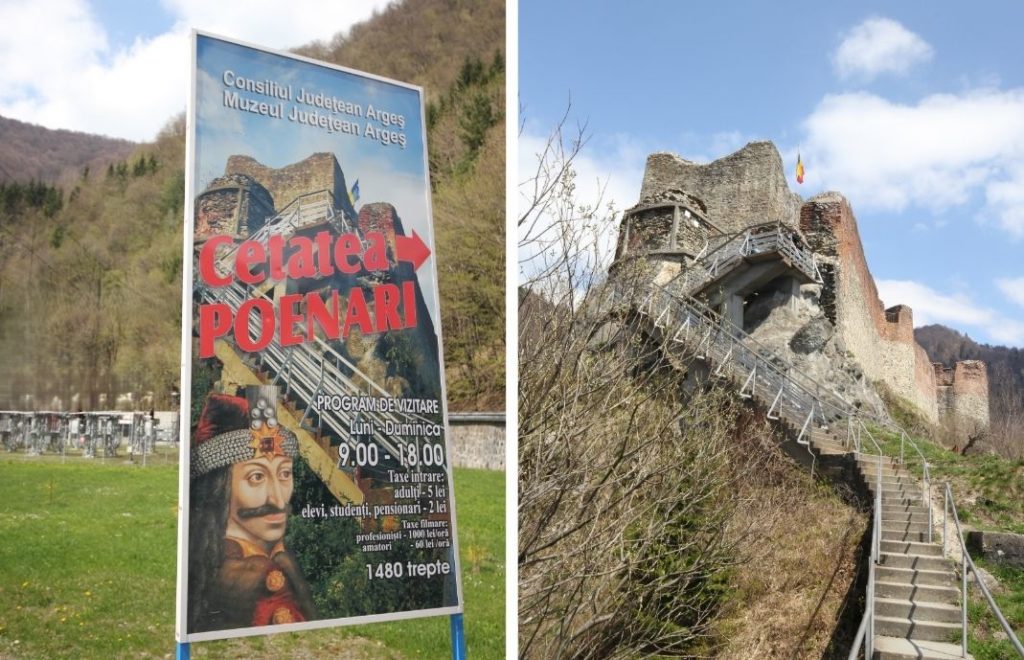
Our Romanian adventure begins in earnest as we trace the blood-stained legends of Dracula himself. Today’s mission: Poenari Fortress in the Argeș region, one of the few places historically linked to Vlad Țepeș – the fearsome Voivode of Wallachia, immortalized as Count Dracula.
We are hardly alone in this pursuit. Romania’s so-called “Dracula tourism” has become a global phenomenon, its authenticity widely debated. Some historians scorn the Hollywoodized narrative, while others embrace the gothic mystique that lures travelers deep into Transylvania. Local sentiment is mixed; not everyone relishes being associated with superstition, bloodlust, and the undead. And yet, whisper to a villager after dusk, and you might find old beliefs lingering in the shadows.
Curiously, the very word vampire – and its bloodthirsty connotation – didn’t enter common European lexicon until the 18th century. But today, it’s more alive (or undead) than ever.
The drive to Poenari is a journey back through centuries. The countryside is lush and green, the Carpathians looming like dark sentinels on the horizon. We wind through rustic villages where horse-drawn carts still clatter along dirt lanes, and for a moment, time folds in on itself. It’s easy to picture a world where Vlad ruled with an iron fist – and a taste for terror.
Then, high on a jagged mountaintop, we glimpse our destination: Poenari Fortress, a weathered sentinel overlooking the Argeș Valley. Built in the 13th century, it became one of Vlad’s principal strongholds – a place where loyalty was rewarded, and treachery paid in blood.
Getting there is no casual stroll. To reach the ruins, you must conquer 1,480 steep steps, each one a reminder that legends demand effort. Unlike Bran Castle – Romania’s overexposed “Dracula castle” – Poenari offers something far rarer: solitude. Come by day, and you may have its haunting stones all to yourself. At night? Well, who knows what company you might keep…
At the summit, a modest entrance fee grants access to the ruins and permission to photograph. Architecturally, Poenari may not match your gothic daydreams – it’s more skeletal ruin than fairytale fortress. Landslides in 1888 and centuries of neglect have left it scarred, yet its aura endures. Because this, indisputably, was Vlad’s domain.
Back at the base, a cozy roadside restaurant serves hearty local fare – a perfect way to replenish your strength after your climb. And as the shadows lengthen over the valley, you can’t help but wonder: does something still linger up there, pacing among the stones?
Bran Belvedere: Where the night whispers legends
Next on our Dracula trail is the storied town of Bran, famous as the setting for the vampire myth that refuses to die.
To make the most of Romania’s raw beauty, we choose the scenic route – crossing mountains rather than doubling back toward Bucharest. It’s a decision that pays off in views: mist-clad peaks, mirror-like lakes, and great birds carving arcs through an endless sky. The serpentine road winds higher, frost creeping along its edges until – suddenly – everything stops.
A glaring sign bars the way. Road closed. Just like that, our dreamy shortcut dissolves into a detour of epic proportions. Two hours back to Poenari. Then, hours more along lonely country roads toward Bran.
As daylight drains from the hills, darkness seals itself around the car. The weak glow of our headlights illuminates only a few meters ahead, while ancient trees lean inward, their twisted branches arching like talons. In the fevered theater of my imagination, they’re vampires poised for the strike.
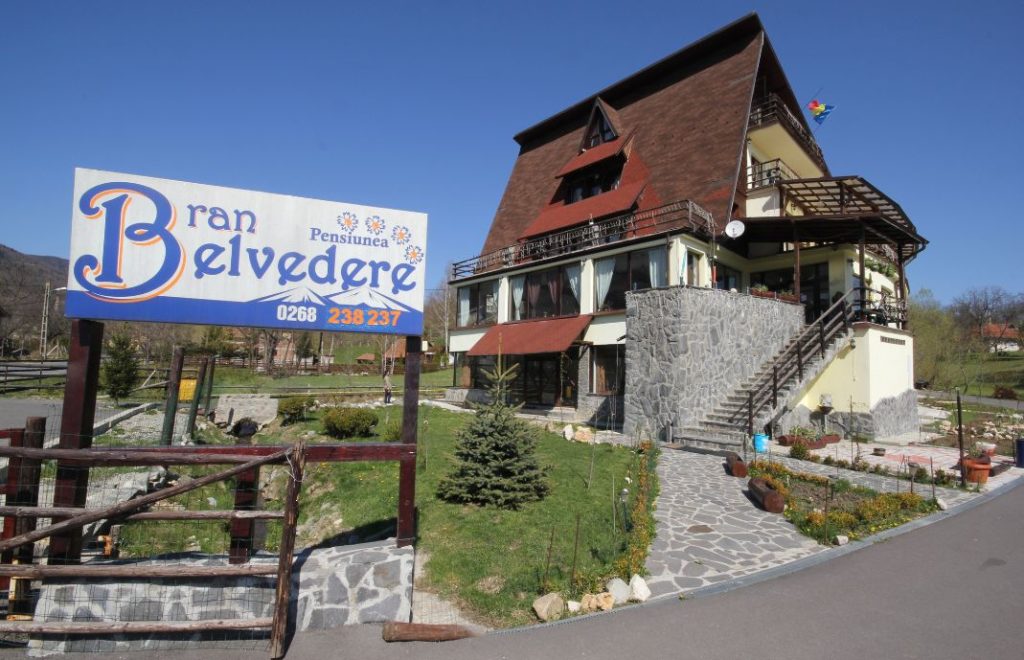
Finally – mercifully – the sign for Bran emerges from the black. After a few wrong turns, we roll up to Bran Belvedere, long past any civilized hour.
The door swings open, and warmth spills out like a benediction. The receptionist – owner of this rustic, inviting hotel – greets us with a smile that could melt the Carpathian ice.
“We were expecting you earlier,” she says, handing over the key.
I grin weakly. “The scenic route didn’t quite go as planned. A detour de luxe, thanks to a closed road.”
Her smile broadens. “Wait here,” she says, disappearing into the back. Moments later, she returns with glasses and a bottle.
“A welcome drink. We must toast to your safe arrival.”
The first sip sears a fiery trail down my throat, leaving me wondering what exactly we’ve agreed to drink. Before I can ask, her husband appears for greetings – another round. Then the chef comes to confirm a very late dinner – and yet another toast. At this point, my concern shifts from vampires to whether I’ll make it to the room upright.
Outside, the full moon reigns over Bran like a silver crown, and in the hush beyond the hotel walls, I swear I hear wolves howling. Or werewolves. Either way, the night feels deliciously alive with folklore.
Dracula’s Castle – Or is it?
Bran is a small town – one that would barely merit a dot on the map were it not for its most infamous resident, real or imagined: Dracula. Each year, throngs of black-clad devotees and curious travelers descend on this Transylvanian outpost to chase the shadow of a myth.
You can’t escape Vlad Țepeș here – the ruthless Wallachian prince whose penchant for impalement gave rise to the legend of the bloodthirsty count. His torture methods were no fiction, though the same can’t be said for the vampire lore. Even the name Transylvania drips with gothic promise, conjuring visions of mist, fangs, and moonlight.
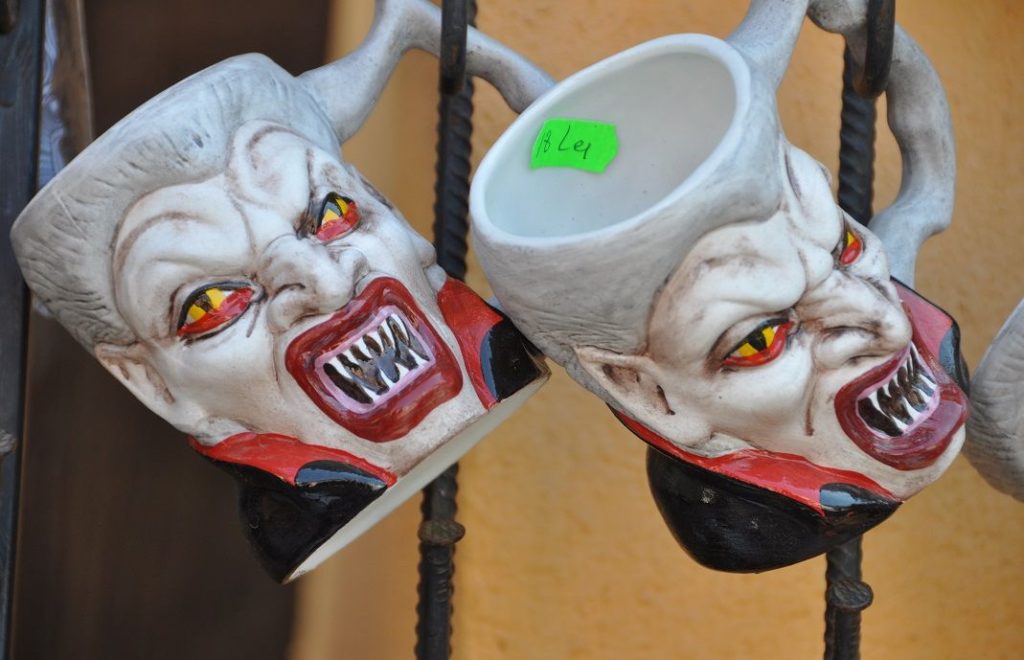
The town square confirms Bran’s transformation into a shrine of vampiric kitsch. Souvenir stalls brim with T-shirts, mugs, shot glasses, and every imaginable trinket emblazoned with that unmistakable, brooding face. Vampire tourism isn’t just a curiosity here – it’s an industry.
And then, there it is: Bran Castle.
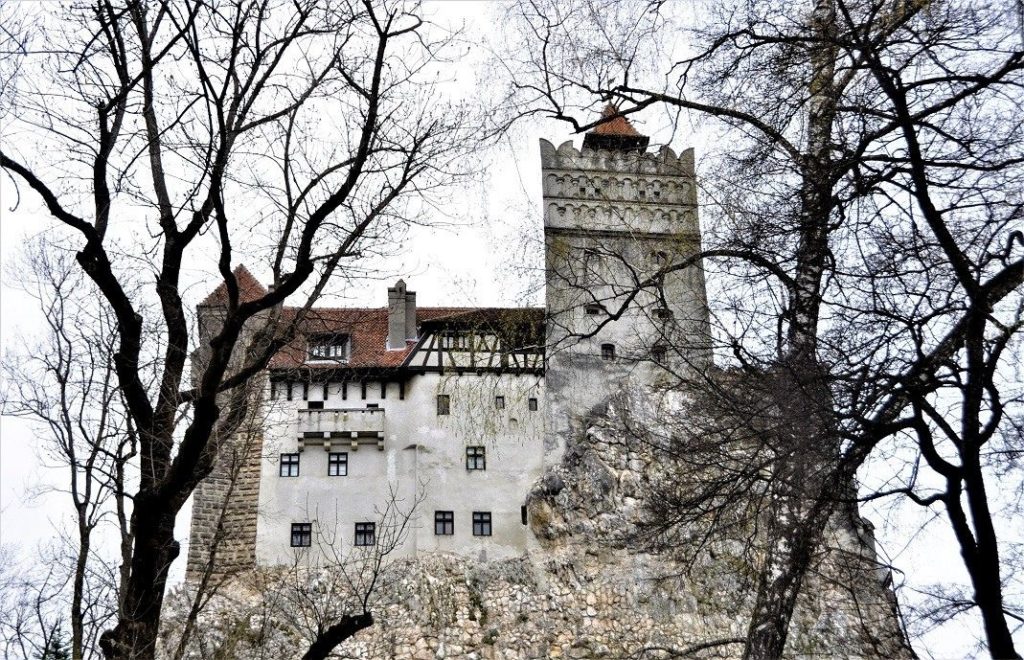
Rising from a rocky crag, its soaring turrets, whitewashed walls, and russet rooftops make for a vision straight from a fairy tale – or a fever dream. Built by Saxons in 1377 to fend off Ottoman invaders, the fortress radiates medieval grandeur.
But here’s the twist: step inside, and the macabre expectations melt away. There are no blood-stained dungeons or vampire relics lurking in the shadows. Instead, the rooms glow with light, adorned with art, antiques, and furniture curated by Romania’s beloved Queen Marie (1875-1938), who received the castle as a gift in 1920.
The truth? Bran Castle has no direct link to Vlad Țepeș. Bram Stoker, who birthed the Dracula myth, never even set foot in Romania. He based his vampire’s lair on a blend of imagination and second-hand descriptions. Bran Castle merely fit the bill for Gothic romance.
That said, vampire enthusiasts aren’t left empty-handed. A dedicated room chronicles the Dracula legend, Bram Stoker’s life, and the enduring myth that keeps Bran on every dark tourist’s bucket list. And let’s be honest – whether you come for history, architecture, or a brush with the supernatural, Bran Castle remains a must-see stop in the heart of Transylvania.
Sighișoara – The birthplace of Vlad the Impaler
Perched high on a hill, Sighișoara is one of Europe’s best-preserved medieval towns – a jewel box of cobblestone streets, pastel-hued façades, and centuries-old spires. Here, time hasn’t just slowed; it feels as though it’s folded in on itself.
The fortified citadel, with its ring of stout walls and storybook towers, delivers everything you imagine in a medieval city – and more. Its crowning glory is the Clock Tower, an imposing 14th-century landmark. Climb to the top for sweeping views of the ochre rooftops, meandering alleys, and the rolling Transylvanian countryside beyond. Bring your camera – the scene is pure romance tinged with shadowy legend.
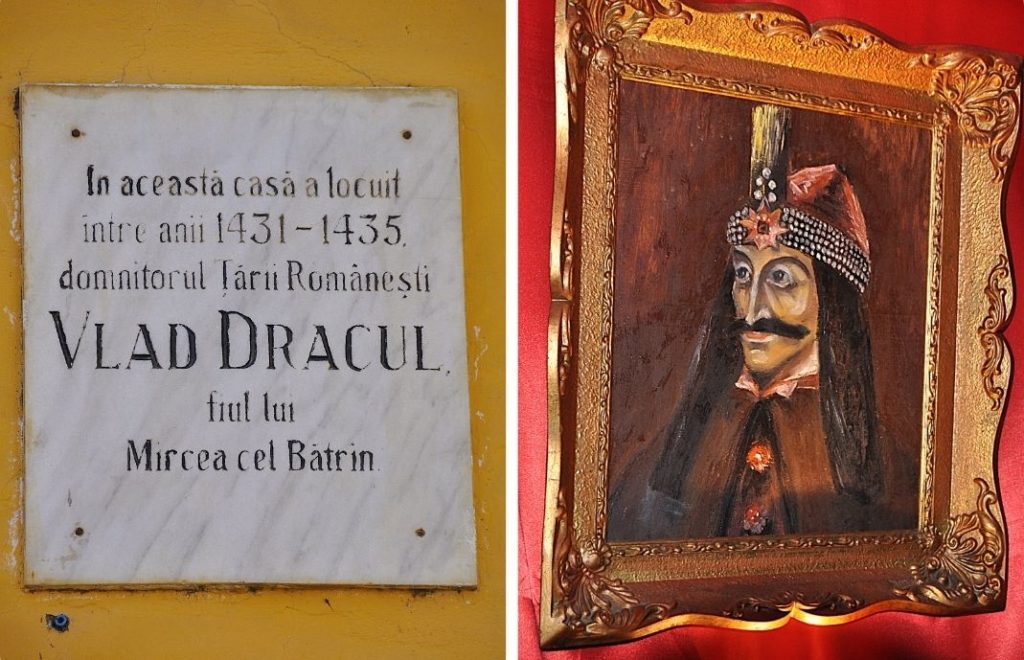
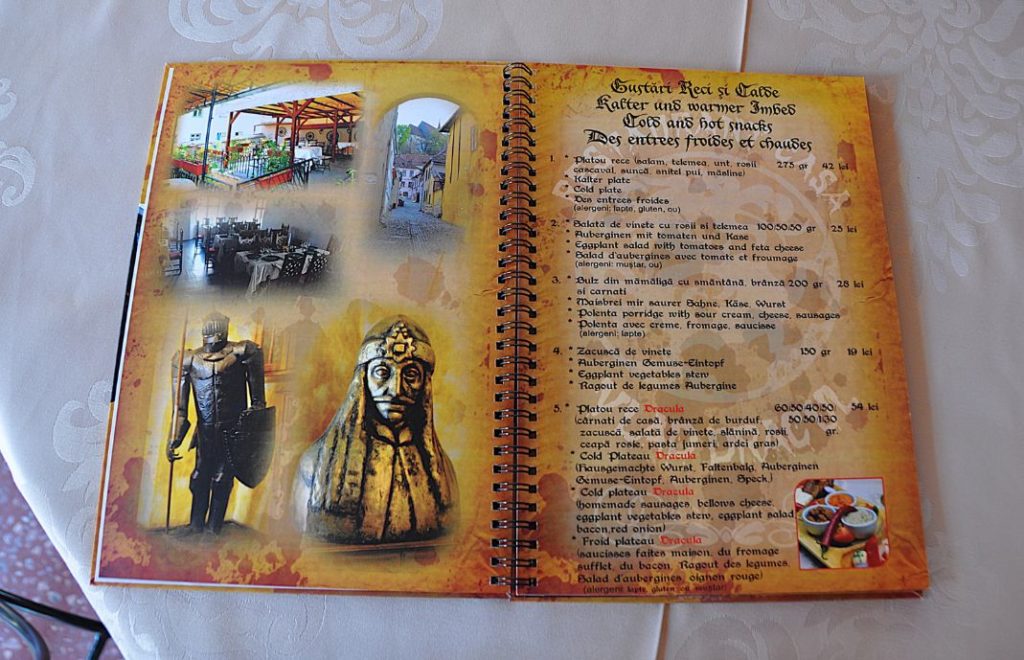
For vampire hunters and Dracula devotees, the ultimate pilgrimage is Casa Dracula, a restaurant housed in the very building where Vlad Țepeș – the historical inspiration for Bram Stoker’s infamous Count – was allegedly born.
Upstairs, a small exhibit pays homage to the man behind the myth. And for those craving a thrill, brace yourself: Dracula himself might rise from his coffin for a photo op. Because here, in the beating heart of Transylvania, folklore is not just remembered – it’s performed.
Count Dracula Club – Dining with a legend in Bucharest
If Bram Stoker’s fictional Dracula sends a shiver down your spine, rest assured – the real man behind the myth was far more terrifying.
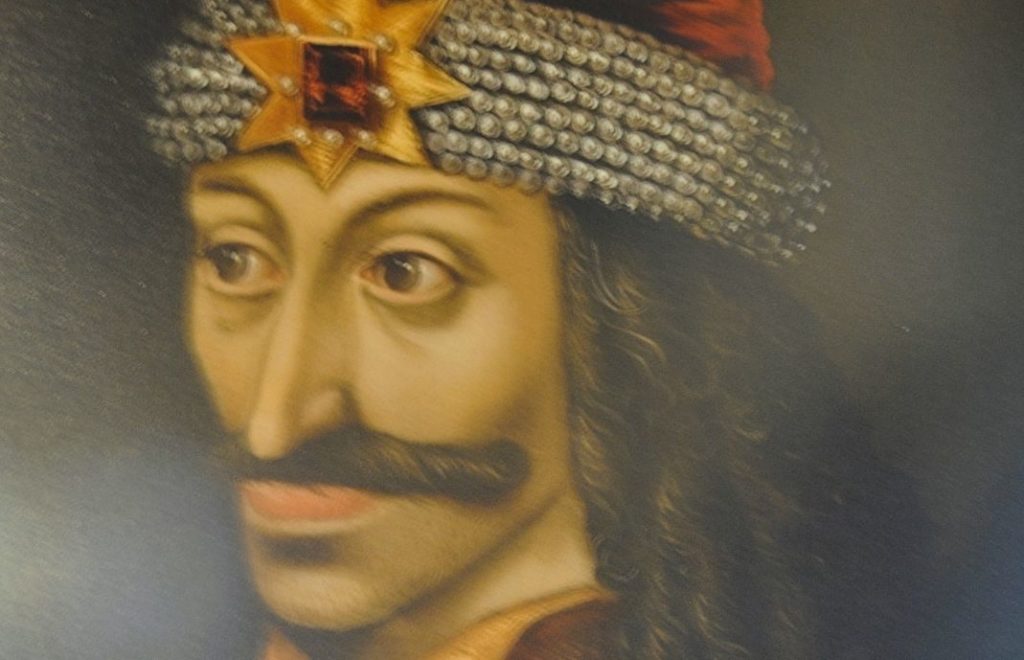
His name was Vlad Țepeș, and as I sit down to a sumptuous meal at the Count Dracula Club in Bucharest, his cold gaze seems to pierce me from a portrait on the wall.
There are countless stories about those who never finished their dinner in Vlad’s company. His favored method of punishment was as brutal as it was infamous: coating a wooden stake with oil, laying the victim on the ground, and impaling them from the rear – forcing the sharpened point up through the body until it emerged from the shoulder or chest. The stake, with its writhing victim, would then be raised high for all to see. It’s no wonder his name, Țepeș, translates to “The Impaler.”
Tonight, though, the only thing at stake is my appetite. The Count Dracula Club leans hard into its gothic theme, serving hearty Romanian classics amid flickering candles and crimson-draped interiors. It’s kitsch meets macabre history, and for vampire enthusiasts, it’s a feast in every sense.
Tips for the ultimate vampire hunt in Transylvania
So, I’ve completed my vampire-hunting adventure across the misty hills and Gothic towns of Transylvania. Did I meet a single bloodthirsty tyrant? A werewolf, perhaps? Not even close. The most menacing creature I encountered was a bat swooping a little too near one evening. Maybe he was already full… or maybe the faint aroma of garlic from dinner kept him at bay.
But just in case you’re luckier – or unluckier – than I was, here’s what you need to know:
How to kill a vampire
Should you stumble upon a real-life Nosferatu, arm yourself with one (or more) of these tried-and-true methods:
- Drive a wooden stake through its heart.
- Lure it into sunlight – it’s their kryptonite.
- Decapitate it.
- Burn the body.
- Sprinkle holy water or douse liberally.
- Secure it with silver chains.
How to spot a vampire
They can be sneaky, but watch for these tell-tale signs:
- Skin pale as moonlight.
- Never seen in daylight.
- A dark ring circling the iris.
- A bedroom that feels like a walk-in freezer.
- Superhuman strength and zero appetite – for food, anyway.
- Oh, and they don’t breathe.
Each vampire is said to have a unique gift – mind reading, glimpsing the future, or feeling your emotions like their own.
The Golden Rule
If someone bites your neck and drains your blood? Congratulations, you’ve met a vampire. And things are about to get… complicated.
5 essential Dracula destinations in Romania
If you’re ready to walk in the shadow of the world’s most famous vampire, Romania offers plenty of darkly atmospheric stops. Here are five must-visit sites for anyone chasing the legend of Count Dracula – or his bloodthirsty historical counterpart, Vlad Țepeș.
1. Sighișoara – The birthplace of Vlad Țepeș
A jewel of Transylvania, Sighișoara is one of Europe’s best-preserved fortified medieval towns. Cobbled streets, pastel façades, and a 14th-century clock tower set the stage for a journey back in time. Dracula devotees will want to dine at Casa Dracula, a restaurant housed in what is believed to be Vlad’s birthplace. Upstairs, a small exhibition – and a photo op with the Count himself – awaits.
2. Bran Castle – The “Dracula Castle”
Just outside Brașov lies Bran, home to the castle that has become synonymous with Dracula. Its whitewashed walls and crimson rooftops rise dramatically from a rocky crag – picture-perfect for gothic fantasies. Historically, though, Bran Castle had little to do with Vlad. Bram Stoker never even visited Romania; he simply imagined a fortress like this. Still, the vibe (and the views) make it a must-see.
3. Count Dracula Club – Dining with Darkness
In the heart of Bucharest, the Count Dracula Club delivers a theatrical, candlelit experience for those who like their dinner with a dash of dread. Navigate its atmospheric corridors, order traditional Romanian dishes, and if fortune – or misfortune – smiles upon you, Dracula himself may rise from his coffin for a personal welcome.
4. Poenari Fortress – Vlad’s true stronghold
Perched high above the Argeș Valley, Poenari Fortress was once one of Vlad Țepeș’s principal residences. Today, it’s a haunting ruin, accessible via 1,480 steep steps – a climb rewarded with sweeping views of the Carpathians. Unlike Bran Castle, Poenari has real ties to the Impaler’s bloody reign, making it a pilgrimage site for hardcore Dracula fans.
5. Snagov Monastery – Dracula’s resting place?
On a tiny island in Lake Snagov, north of Bucharest, stands a solitary monastery said to house Vlad Țepeș’s remains. A lone monk tends the grounds and, for a small fee, will let you photograph the supposed grave. Whether it’s fact or folklore, the journey across the misty lake is an experience steeped in mystery.
More inspiration to visit Romania:
Why you must visit the village of Viscri
