
Beautiful countryside, dramatic coastlines, historic towns and villages, spellbinding abbeys, and a huge variety of activities are just some of the delights in store at the Borders. You know you are in Scotland and once you see what this region has to offer, you know there is nowhere else in Scotland you want to be.
An exploration of the Borders is also a journey through Scotland’s history. The Borders have always been shaped by their position between Scotland and England. For centuries, this was a frontier land – a place of castles, abbeys, raids, battles, shifting loyalty, and powerful border families. It was also the home of one of the country’s most famous writers, Sir Walter Scott.
This is just the top layer of what the Borders has in store. As you make your way around the area, you will discover awe-inspiring stately homes and castles, textile mills, charming towns, wonderful gardens and plenty of trails for walking and biking.
Get ready to adventure into an unknown gem and discover the many different faces of this beautiful part of the country. It is Scotland as you picture it – but without crowds.
Where are the Scottish Borders?
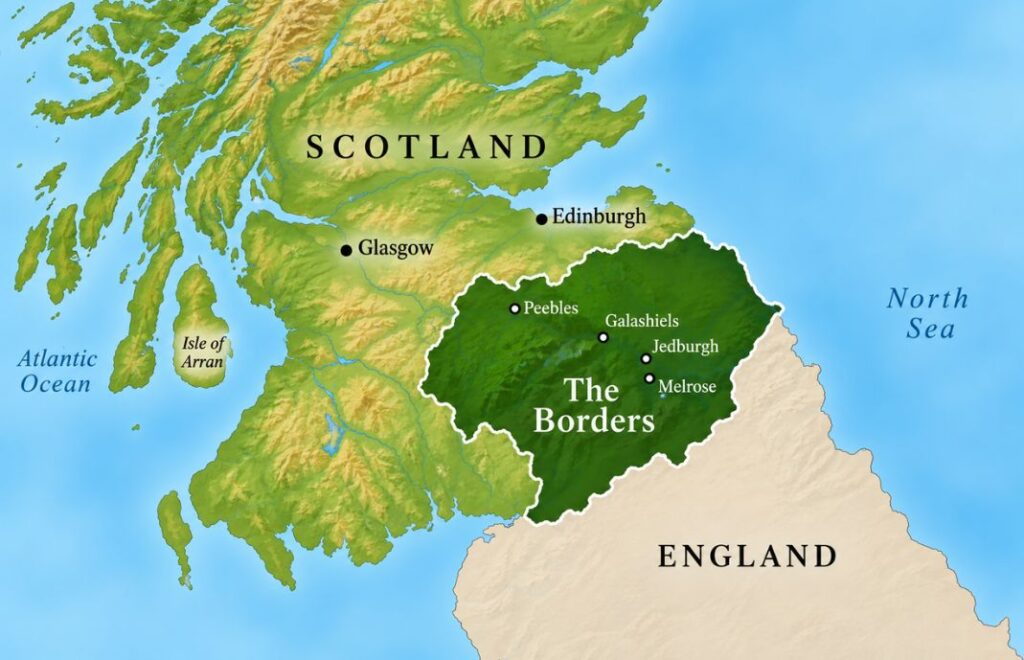
The Scottish Borders lie in the southeast of Scotland, between Edinburgh and the English border. This beautiful region stretches across rolling hills, river valleys, farmland, forests, abbey towns, and historic villages.
This modern-day region comprises the former counties of Berwickshire, Roxburghshire, Selkirkshire and Peeblesshire plus the southern part of Midlothian. These earlier entities have merged into a harmonious blend of scenery and settlement. That harmony is in part due to the dominance of the River Tweed and its tributaries such as the Teviot and Yarrow. The River Tweed also forms the actual and natural border between England and Scotland from Carham to Berwick.
It is a natural gateway between Scotland and England, shaped by centuries of border history, castles, battles, trade, and storytelling. Despite being within easy reach of Edinburgh, the Borders feel calm, spacious, and deeply connected to Scotland’s rural heart.
The history of the Scottish Borders
The borderlands of Scotland were fought over for hundreds of years with the boundaries pushed back and forth as farmsteads and towns were won and lost repeatedly. Invading forces dating back to Roman times have marched across these lands and been fought back time after time.
This region’s history is closely tied to conflict, especially during the medieval period when the borderlands were often caught between rival kingdoms. Fortified towers, ruined strongholds, and historic towns still tell the story of a landscape where defense and survival were part of everyday life.
But the Borders are not only defined by warfare. The region was also a center of religion, trade, farming, textiles, and storytelling. The four great Border Abbeys of Dryburgh, Jedburgh, Kelso and Melrose, founded by King David I, survived their share of the region’s troubles for centuries, only to be brought to final ruin by Henry VIII of England.
Today, the Scottish Borders feel peaceful and deeply atmospheric, but the past is never far away. In its castles, abbey ruins, old market towns, and rolling countryside, you can still sense the drama, resilience, and romance of this historic borderland.
Not to be missed in the Borders
The Scottish Borders are full of places that invite you to slow down, look closer, and follow the stories hidden in the landscape. From romantic abbey ruins and grand stately homes to river valleys, market towns, viewpoints, and literary landmarks, this is a region where history and beauty are never far apart.
Here are some of my favorites:
Robert Smail’s Printing Works
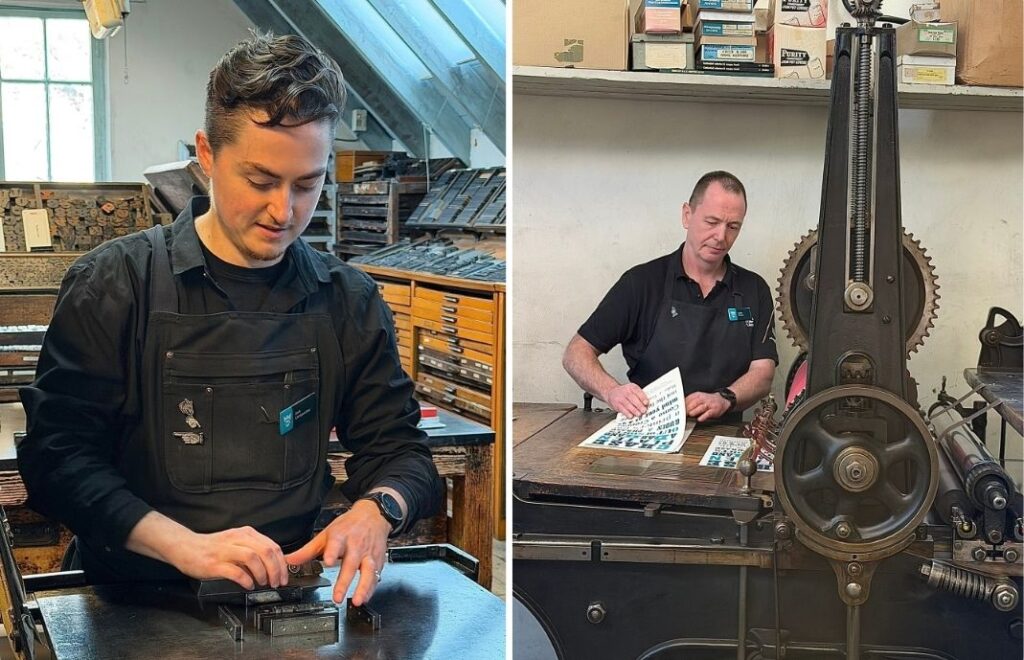
It may not look like much from the outside, but Robert Smail’s Printing Works is an important part of Scotland’s industrial heritage. This living museum of a thriving printing firm has remained virtually unchanged for over a century.
Between 1866 and 1986, newspapers, business cards, stationery for local traders and letterheads all passed through the inky presses og this thriving business. The presses are still operating, making it the oldest working commercial letterpress printers in the UK.
The guided tour includes:
- Try your hand at being an apprentice compositor in the Caseroom.
- See the three working printing presses in motion.
- Learn how newspapers, tickets, posters and letterheads were printed before the digital age.
- Explore Robert Smail’s office, scarcely altered since 1866.
Location: Innerleithen
Dawyck Botanic Garden
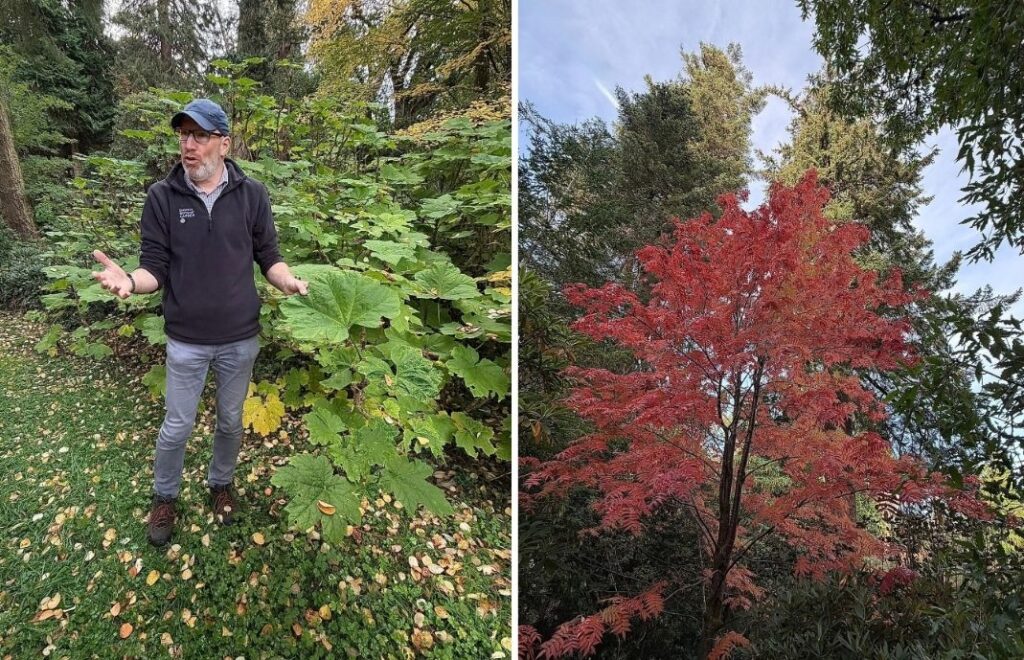
If you are into enchanting woodland and burnside walks, Dawyck Botanic Garden is the place for you. This 65-acre garden showcases a stunning collection of shrubs and trees which includes some of Britain’s oldest and tallest.
Many of the plants at Dawyck were among the first to be collected and introduced to Scotland. You can follow themed tree trails and paths that trace the adventures of pioneering plant hunters like David Douglas, namesake of the Douglas fir.
The garden serves as a sanctuary for endangered spices, and it’s a living collection carefully nurtured for conservation and research.
Visitors are invited to enjoy this extraordinary natural beauty, either at their own pace or on a guided tour. After exploring the botanical garden, take a rest in the café, which is part of Dawyck’s award-winning visitor center.
Location: Peebles
Traquair House
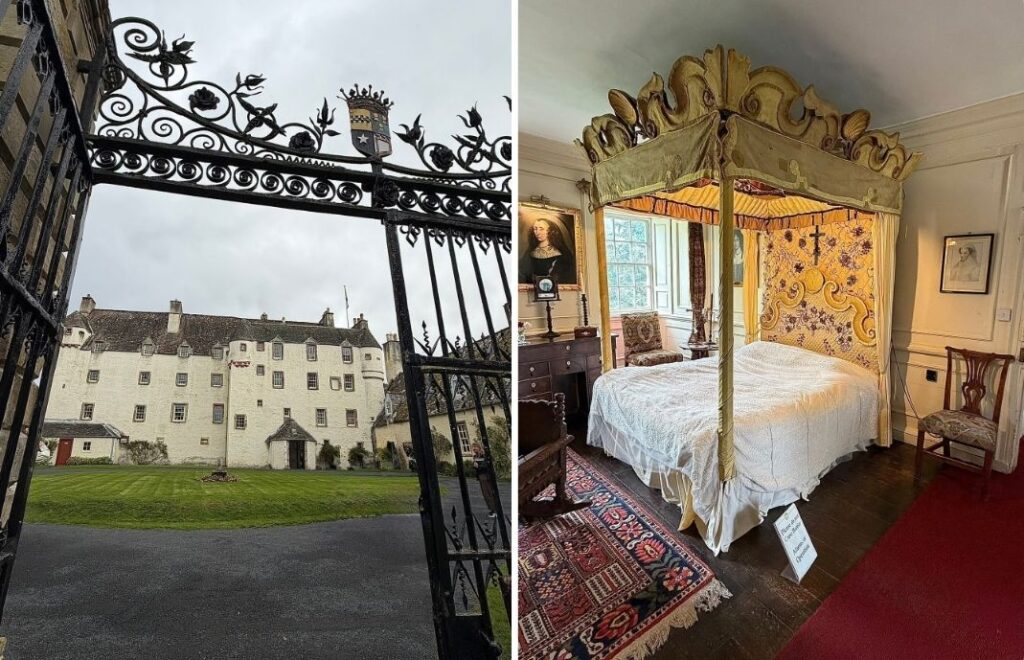
Do as 27 Kings and Queens have done before you and explore Traquair House, one of Scotland’s oldest inhabited houses. It has been lived in for over 900 years, and needless to say, it has an impress story to tell.
As you make your way around the house, you will see and sense that this is a family home. The main rooms are still being used as much as possible, and they host weddings, dinners and events throughout the year.
During your visit you can explore the house with all its original artifacts, furniture, photos and books, taking in the relaxed atmosphere while reliving the past. Afterwards, go for a stroll in the gardens and woodland, explore the maze and enjoy the café, shops and renowned Traquair Brewery.
Looking for a unique place to sleep like royalty? Book a stay in one of the spacious four double rooms, with antique furniture, canopied beds, central heating and private bathrooms. Rooms are available on bed and breakfast basis.
Location: Innerleithen
More inspiration: Explore Traquair – Scotland’s oldest inhabited house
The Borders Distillery
No visit to Scotland (no matter where in Scotland you go), is complete without a taste of whisky.
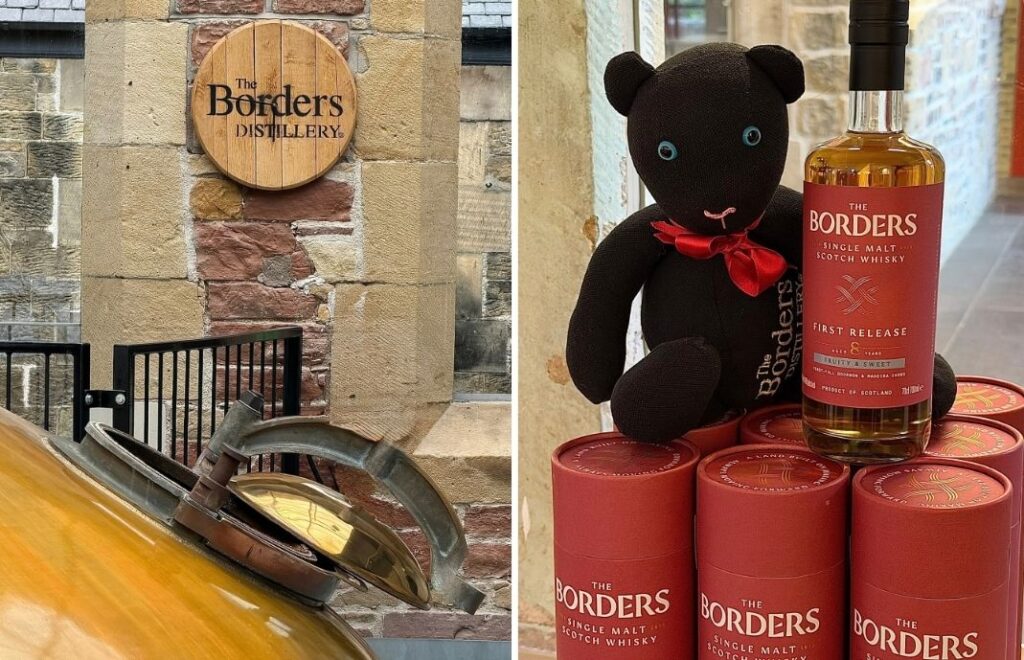
The Borders Distillery is the first Scotch whisky distillery in the Scottish borders since 1837 and opened in March 2018. It is dedicated to capturing the true spirit of the Borders and housed in fully restored Victorian industrial buildings.
Tours are led by the distillers themselves and run three times a day Monday – Sunday. Your guide will take you into the heart of the production, where you will learn more about the process of making Scotland’s national drink. The distillery is in full use, and you can see the spirit being produced right in front of you.
After the tour, you make your way to the bar where you can have a taste of their single malt whisky, which is smooth, elegant and fruit-forward.
There is also a shop where you can buy whisky as well as the distillery’s gin and vodka.
Location: Hawick
The Great Tapestry
Scotland has a long, fascinating and sometimes complicated story. If you have trouble piecing it all together, you are not the only one. To get a colorful and unique summery of Scotland’s history, the Great Tapestry is a wonderful option.
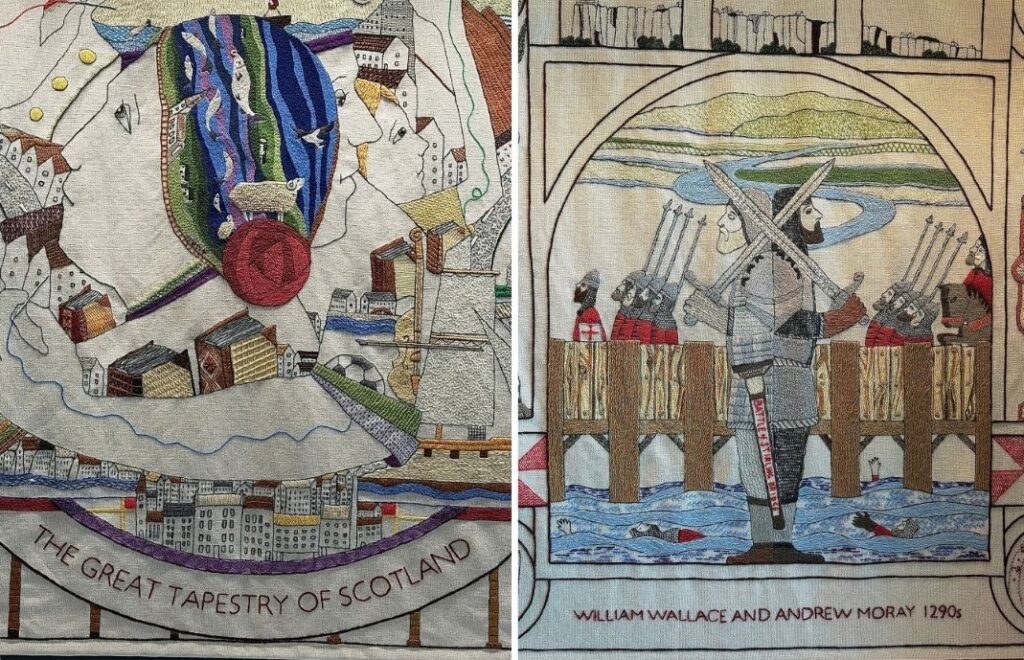
This museum is unlike any other museum, and the Great Tapestry of Scotland depicts 420 million years of history in 160 panels and is a wonderful, rich and diverse story.
Spanning 143 meters of hand-stitched embroidery, the tapestry was crafted by 1,000 volunteers across Scotland and explores the nation’s history. There is also a bit of mystery to the tapestry as many of the volunteers added something personal to the tapestry. Some of hidden while others are in plain sight.
The Great Tapestry is something you don’t want to miss. It is a remarkable artwork, made by the nation for the nation.
There is also a shop and a café.
Location: Galashiels
More inspiration: The Great Tapestry: A nation’s story stitched in time
Abbotsford House
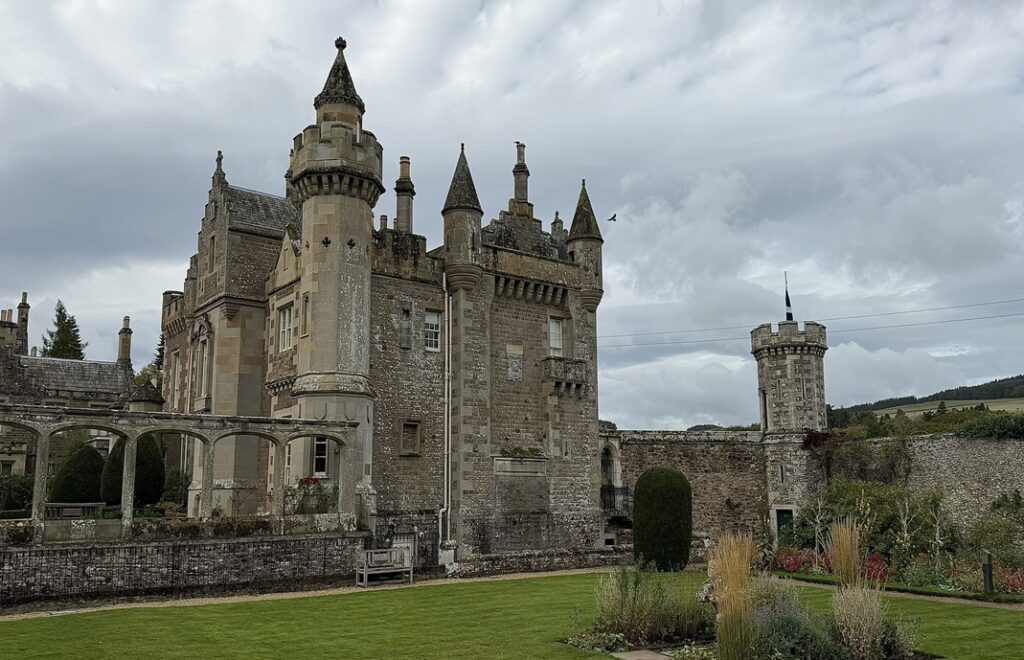
The extraordinary home of 19th century novelist Sir Walter Scott is set on the banks of the River Tweed. This iconic Scottish Baronial house sits in the landscape that inspired Scott’s poetry and novels, making him the biggest-selling author of his day.
The rooms in the house are left just as Scott kept them after his death and are packed full of the fascinating items he collected. It is interesting to walk through the house, knowing that this is where Scott created historical fiction such as Rob Roy, Ivanhoe and Waverly.
Are you looking for a relaxed stroll by the river and through the woods, the estate walks are always open. The Visitor Center, with café, gift shop and free exhibition, is open all year and free to access.
Abbotsford remains one of the most famous homes in the world. In Scott’s own words it was his “conundrum castle”, a place where fact and fiction collide, inspiring him as he became the biggest-selling author of his day.
Location: Melrose
More inspiration: Abbotsford: The extraordinary world of Sir Walter Scott
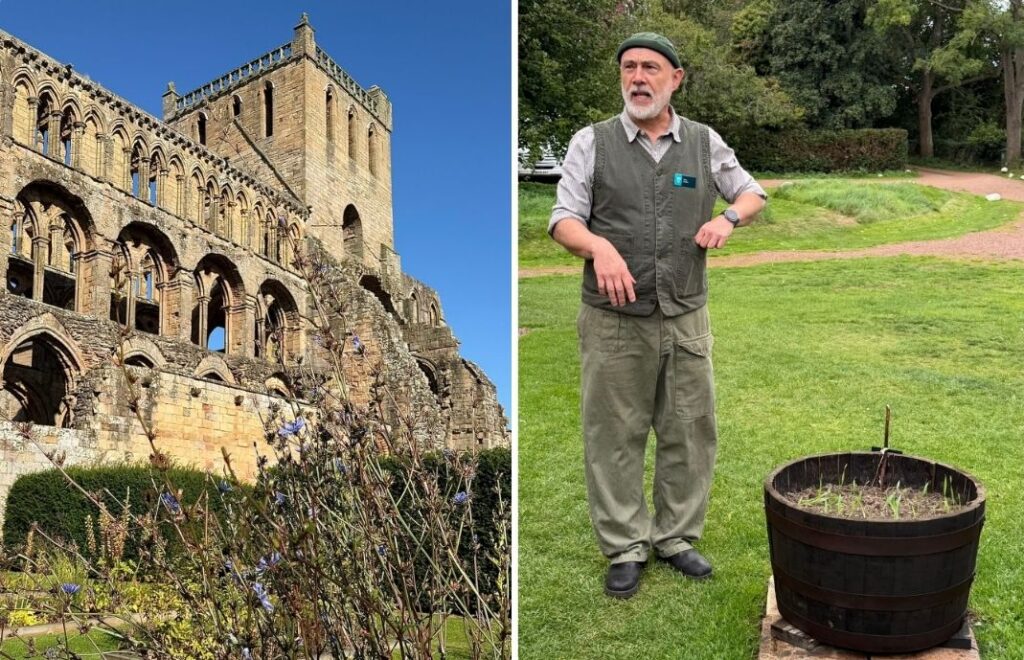
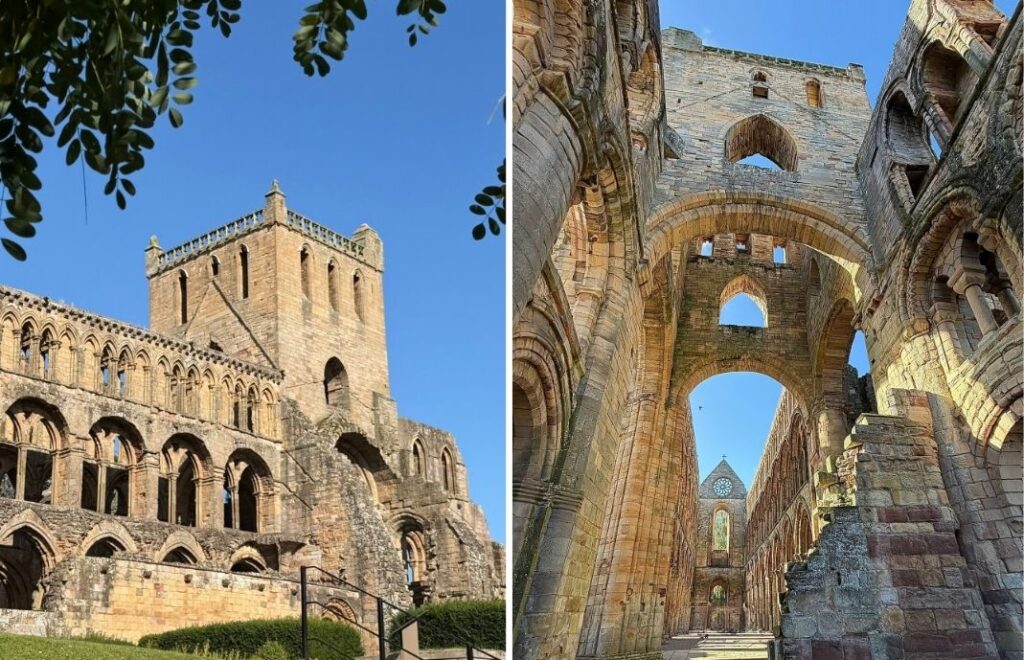
Jedburgh Abbey
Built over more than 70 years, Jedburgh gives visitors a sense of the monastic lifestyle that once thrived here. It had been an important religious site for 300 years when the Augustinians arrived in 1138.
Jedburgh Abbey is one of four great abbeys established in the Scottish Borders in the 1100s. David I founded a priory here in 1138 and raised it to abbey status in 1154. Its unusual mix of Romanesque and early Gothic architecture is a striking sight, and well worth a visit.
Augustinians were priests who for the most part lived a secluded and contemplative life. But the abbey’s border location meant it was caught up in the conflict between Scotland and England in the later Middle Ages. The canons had to evacuate the premises during the Wars of Independence in the 1300s.
The demise of Jedburgh’s monastic life was sealed by:
- Further attacks in the 1400s
- Major raids in the 1500s
- The Protestant Reformation of 1560
Visitors can see remains of ancillary buildings where the brethren ate and slept, and the vast kitchen and cellar ranges which provided their food. You can walk through the recreated cloister garden which contains the same plants once used in the medieval abbey.
The visitor center displays some exceptional early Christian artifacts, which predates the abbey by several centuries.
Location: Jedburgh
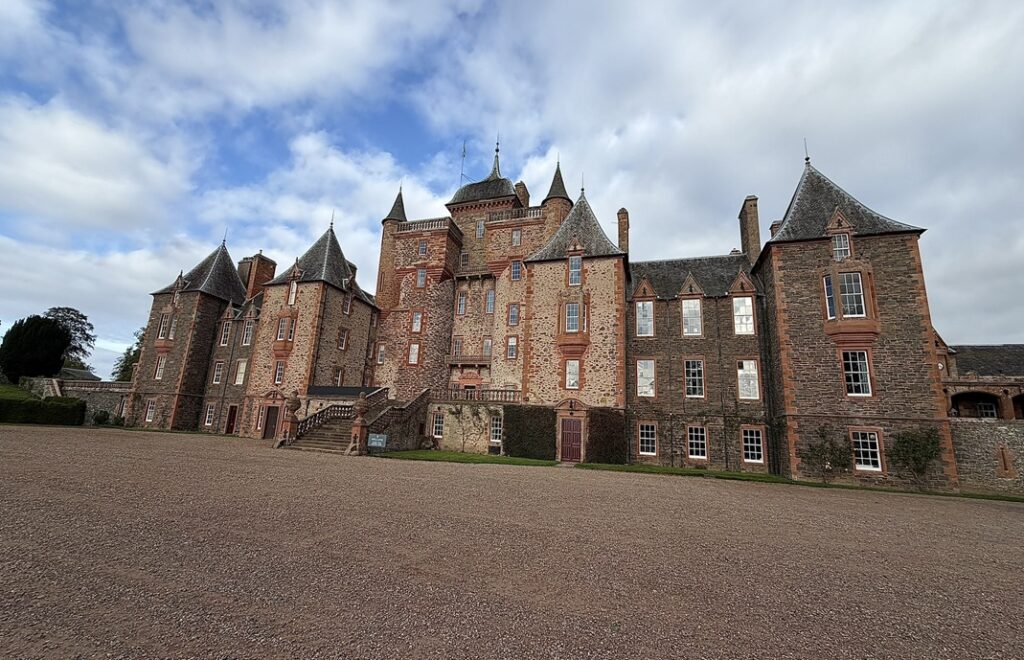
Thirlestane Castle
Close your eyes and picture a Scottish castle. When you arrive in front of Thirlestane, this is probably what you imagined. It is a magnificent 16th century castle located within the beautiful Lauderdale Estate.
The historic home of the Duke of Lauderdale, the castle is one of the oldest and finest in Scotland and remains home to the Maitland family today.
Embark on a journey through the castle where you will discover fascinating collections and stories with a knowledgeable guide. During your visit you will explore the castle’s connection to Bonnie Prince Charlie and Mary Queen of Scots. You will also see some of the fine plasterwork ceilings and one of the most extensive family portrait collections in Scotland.
If you want to feel like a king or queen for a night (or two), you can stay in one of the castle suites. Do you prefer to go back to nature, the Woodland lodges are your best option.
Thirlestane Castle also includes garden and parklands for outdoors activities.
Location: Lauder
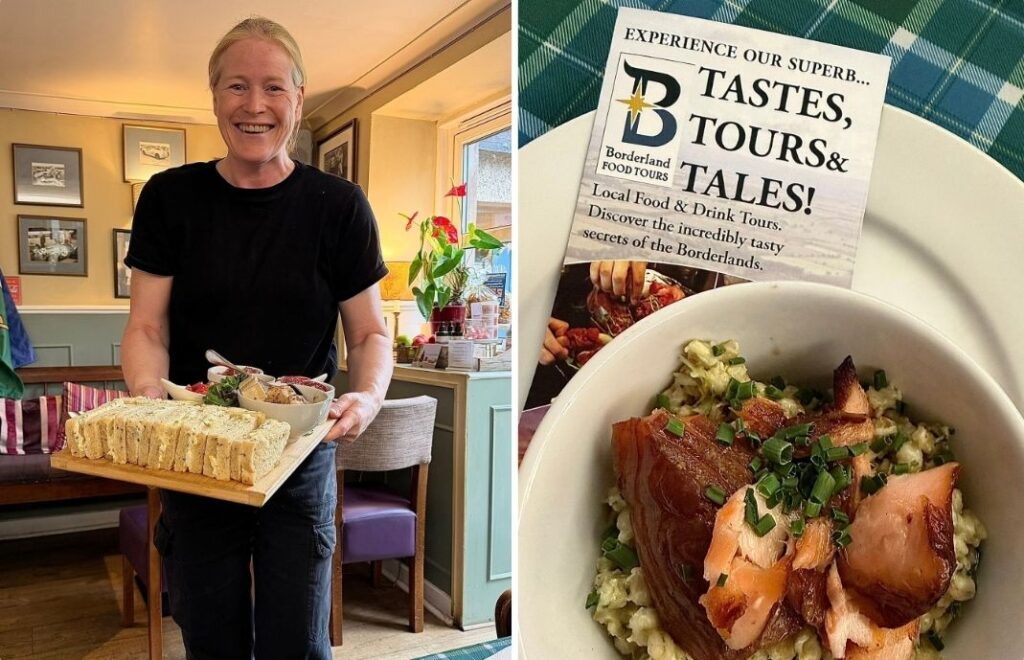
Borderland Food Tours
Let William and Katrina Reynolds take you on a feast through tastes and tales. The couple offers incredibly tasty secrets where you will eat your way through delicious local produce. It is a filling experience.
The Borderlands are some of the most historically distinctive and richly fertile regions in the UK, making it a large food producing area. With such a treasure trove nearby, you can look forward to sampling fabulous food and drinks along the way.
The tours are not only about eating and drinking. It is also about connecting food to the local lands, waters and people. William and Katrina provide stories, history, sightseeing and local information and facts, making it a unique and fun experience.
Don’t forget to show up hungry!
Location: Allanton
The Scottish Seabird Centre
Scotland’s seabirds are under threat, and it is down to us to protect these globally important populations.
The Scottish Seabird Centre is a 5-star visitor attraction and marine conservation and education charity. Their mission is to connect more people with the wonders of Scotland’s seas to instill a love of wildlife and inspire people of all ages to work together for nature.
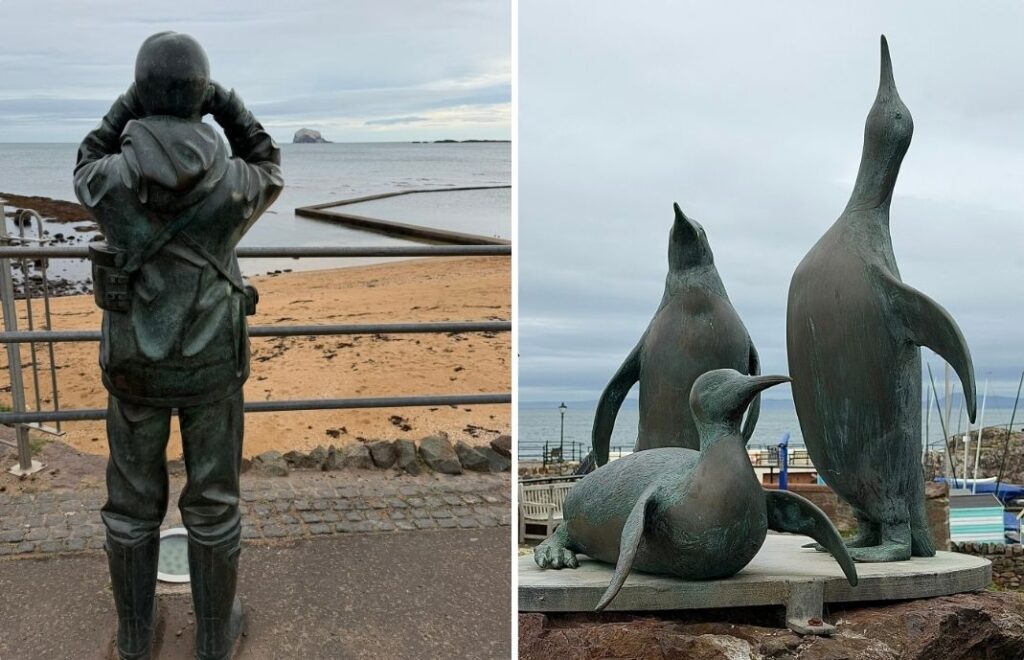
Set right by the harbor, it overlooks the Firth of Forth and offers views toward famous seabird islands such as Bass Rock. The latter is home to the largest Northern gannet colony.
Through interactive exhibits in the Discovery Experience, you can explore Scotland’s seas and even control remote cameras on local islands. By zooming in and out, you can see incredible wildlife, from puffins and seals to iconic Bass Rock.
You can also join one of their seasonal boat trips around the islands in the Firth of Forth. Prebooking is highly recommended as these trips fill up several months in advance.
Enjoy lunch in the café while enjoying views out to Bass Rock and explore the gift shop.
Location: North Berwick
Dirleton Castle
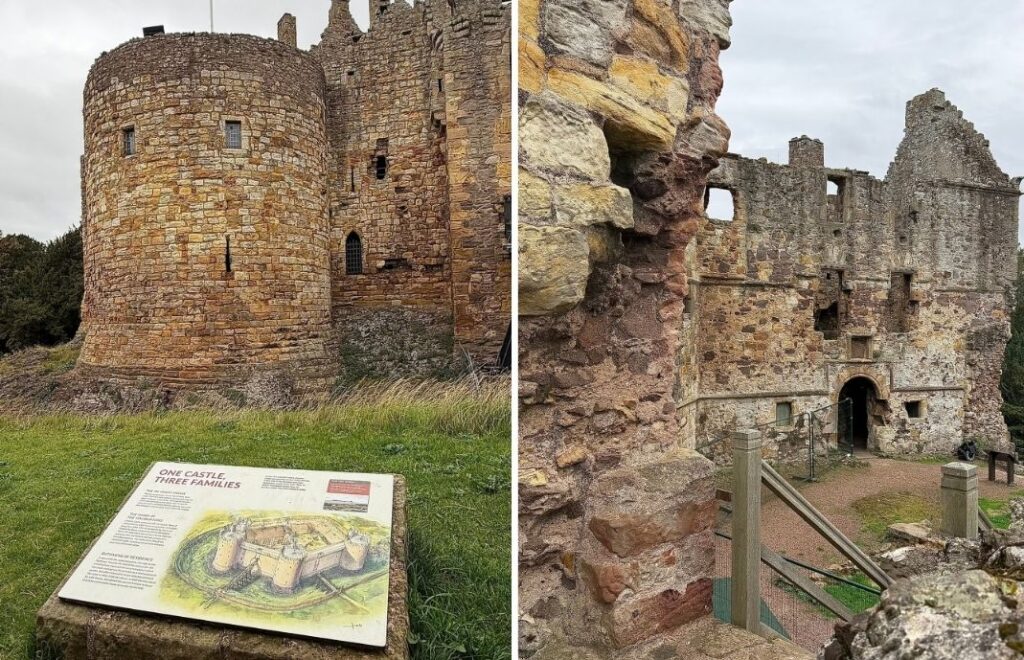
A magnificent fortress-residence is one of Scotland’s oldest surviving strongholds. The 13th-century fortress was, for 400 years, a fortified residence to three successive noble families: the de Vauxs, Haliburtons and Ruthvens.
After the Ruthvens’ downfall, Dirleton Castle was no longer used as a noble residence. Its final blow came in 1650, when Oliver Cromwell’s forces besieged the castle and left it unsuitable for military use. Yet Dirleton’s story did not end there.
In the 1660s, the Nisbet family bought the estate and gave the ruined castle a new role. Rather than rebuilding it as a home, they made the graceful ruins part of a designed landscape surrounding their new mansion, Archerfield. Today, Dirleton Castle and its gardens are attractions in their own right, admired as much for their atmosphere and beauty as for their long and turbulent history.
The gardens that grace the castle grounds today date from the late 1800s and early 1900s. In 1993, the formal Victorian west garden was faithfully reconstructed.
Location: East Lothian
Preston Mill
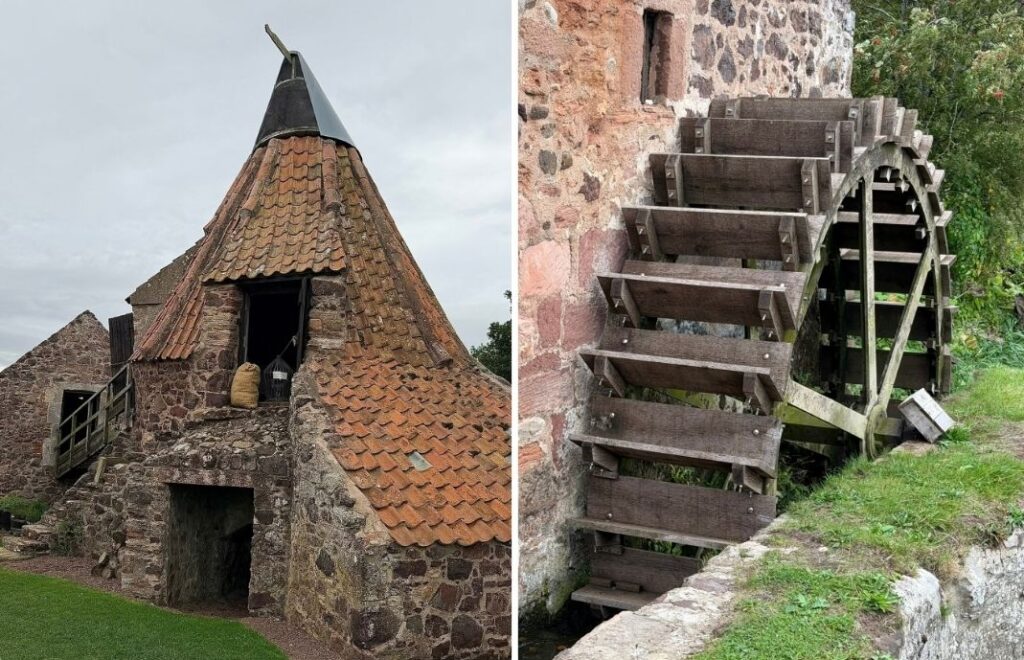
This picturesque 18th century water mill make you feel like part of a storybook. A visit is to step back in time and Preston Mill has provided inspiration for many artists through the years.
The property is an architectural oddity, with a curious Dutch-style conical roof. A guided tour brings everything to life. You will see and hear the mill mechanisms in action and learn more about the millers who worked here.
Preston Mill was used commercially until 1959 and was the region’s last working watermill. It has an idyllic location, and the grounds around offer access to several tranquil works.
If you are a fan of Outlander (season 1), you will take pleasure in seeing the waterwheel and river where Jamie took his kilt off and enjoyed a bath.
Location: East Linton
More inspiration: Preston Mill: Scotland’s quirkiest little time machine
Newhailes House & Garden
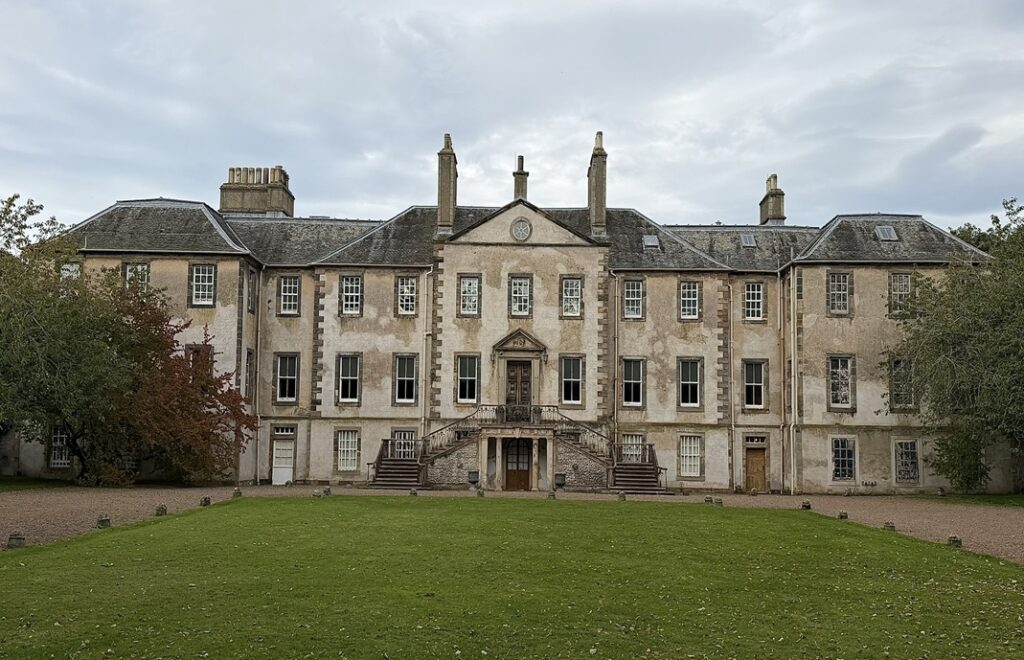
This Palladian house played a prominent role in the Scottish Enlightenment and is a stunning estate. Newhailes House is a treasure trove of curiosities that offers an insight into the lives of the generations of Dalrymple family who once lived here.
This 18th century villa is frozen in time, and the appearance of the house as it was when it was acquired by the National Trust for Scotland in 1997.
Newhailes House has a fascinating history, dating back 300 years. It has played host to royalty, politicians and major figures of the Scottish Enlightenment.
Step inside and explore this unique house, with rococo interiors, Italian marble fireplaces, Chinese sitting room and impressive fine art collection.
You can then enjoy the 18th century landscape before you refuel at the Stables Café or browse in the shop and second-hand bookshop.
Do note that you can only visit the house on a guided tour, which must be prebooked.
Location: Musselburgh
My warmest gratitude to Visit Britain and all the local suppliers for inviting me to the Borders, Scotland. My flights, accommodations, meals, transportation, and activities were covered. There were no requirements from the partners regarding posts on social media or promotion. Options and photos (unless otherwise stated) are entirely my own.
