
For many people, Uganda is synonymous with gorilla trekking. The gorillas are in the corner of the country where Uganda meets Rwanda and Democratic Republic of Congo, the only three countries in which it is possible to visit mountain gorillas.
Bwindi Impenetrable National Park, a UNESCO World Heritage Site, is a magnificent, green swathe of dense rainforest on the steep ridges of the Western Rift Valley in southwest Uganda.
In the local language Bwindi means “a place of darkness” and the name refers to its dense vegetation, also reflected in the name “impenetrable forest”.
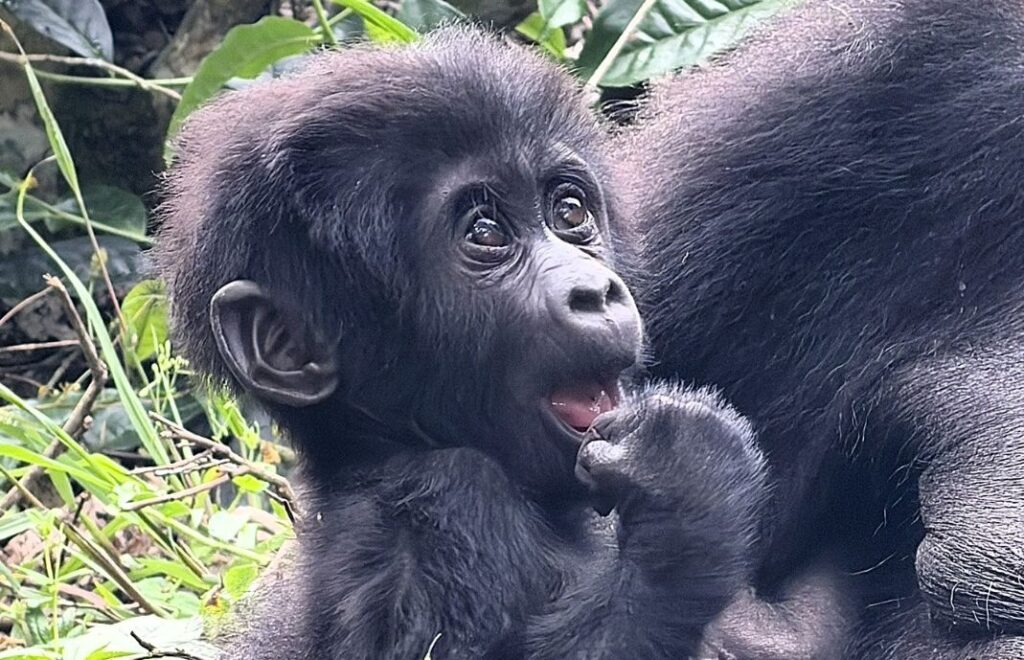
It is one of the most biologically diverse areas on earth and covers 331 square kilometers over a series of hills ranging in heights og 1160-2607 meters. Its unique and precious flora sustains roughly 459 mountain gorillas, nearly half of the world’s total remaining population (1,063).
A total of 22 gorilla families live in Bwindi, where 19 are recognized and fully habituated for tourism and tracking, making Bwindi the most popular destination for this once-in-a-lifetime experience.
Background
Bwindi’s forest is extremely old, which explains its extraordinary biological diversity. When most of Africa’s forest disappeared during the last ice age (12,000 – 18,000 years ago), Bwindi was one of the few that survived. Its vegetation has been weaving itself into tangles for the last 25,000 years, and in the process, it has accumulated a lengthy species list.
The park was first gazette to the status of a forest reserve in 1932. In 1964 as an animal sanctuary in order to give the mountain gorillas better protection. Then, in 1991, along with Mgahinga Gorilla Reserve and Rwenzori Mountains Reserve, it was designated as a national park and was renamed Bwindi Impenetrable National Park. In 1994 it was inscribed as a UNESCO World Heritage Site and came under the management of Uganda National Park, since renamed Uganda Wildlife Authority (UWA).
The gorilla trekking adventure begins
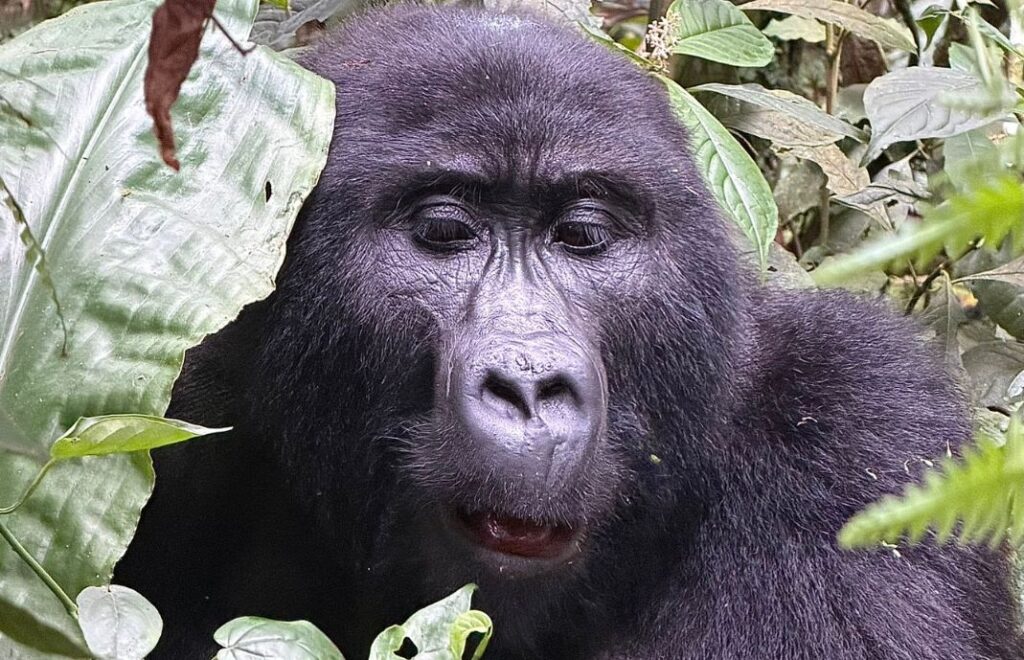
Gorilla trekking in Bwindi started in 1993 with one gorilla family called the Mubare group. The experience was nothing like today’s trekking. Tourists would camp in a basic clearing next to the Buhoma park gate, which had little more than a long-drop toilet and a stream to wash in, and wait. Sometimes they had to wait for days until it was their turn for their gorilla trekking. Back then there was no pre-booking.
News of the wonderful and unique experience of being able to sit with a mountain gorilla family quickly spread and more and more tourists started flocking to Bwindi. Today, 152 gorilla trekking permits are issued across the park’s four sectors (Buhoma, Ruhija, Rushaga, and Nkuringo). It is a strict number of 8 trekkers allowed per group.
Ruhondeza, the silverback of the Mubare group since gorilla trekking started in Bwindi in 1993, died a natural death at the age of 50 in 2012. His grave is near the park headquarters at Buhoma where there is a monument. He remains an icon for the UWA and the Bwindi communities, symbolizing what gorilla tourism has done for the region and Uganda as a whole.
Buhoma
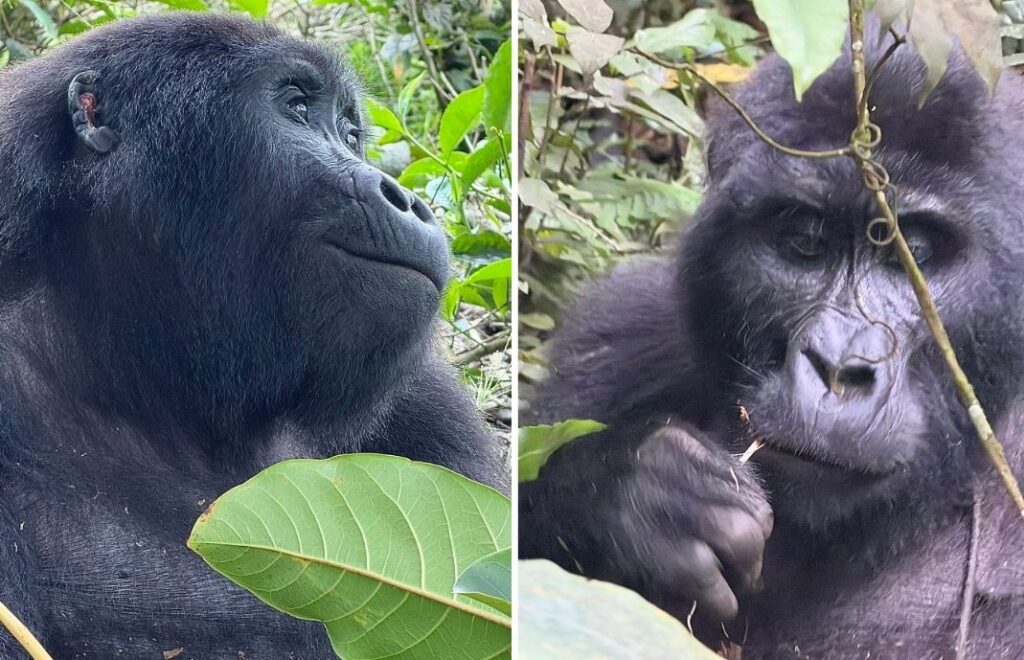
Buhoma is located to the northwest of Bwindi and faces the dark, hilly forest of the park. It is where the UWA headquarters is based.
This sector is the pioneer of gorilla trekking activity in Bwindi and Uganda. The sector was the first to host the first group of gorilla trekkers when the Mubare gorilla family encountered the first visitors in 1993. For 11 years it remained the only trailhead for gorilla trekking in Bwindi.
Despite the opening of three other trailheads in Bwindi, Buhoma remains the most popular location for gorilla trekking, and it remains the destination that is booked the fastest.
Habituated gorilla families in the Buhoma sector:
- Mubare aka Mubale gorilla family
- Habinyanja gorilla family
- Rushegura gorilla family
Ruhija
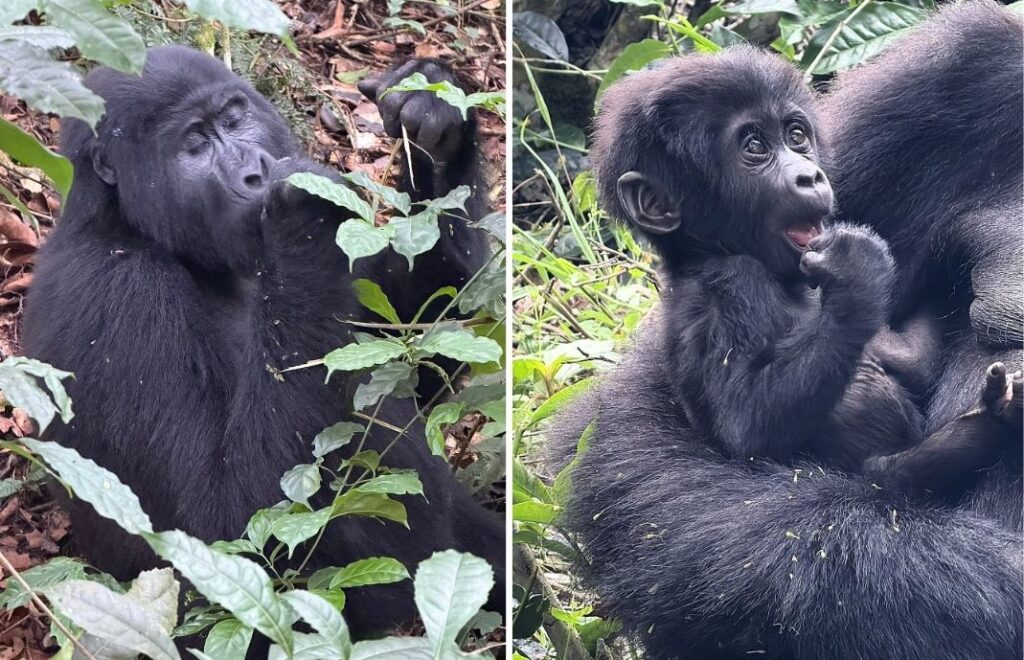
Ruhija is in the east of Bwindi and sits on top of a hill at 2345 meters. This high-altitude section is the highest part of Bwindi, 1000 meters higher than Buhoma, which means the climate is much cooler. It is especially favored by keen birdwatchers and is one of only two areas (the other being Rushaga) where forest elephants reside (although they are rarely seen).
This section is a habitat of a good number of mountain gorillas, and some also claim it is the most beautiful gorilla watching destination. The sector offers amazing views of the forested ridge as well as the distant Virunga Volcanoes.
Ruhija opened for gorilla tracking in 2008. One of the advantages of doing gorilla trekking here is that the terrain is not as hilly compared to Rushaga and Nkuringo. The aged traveler, this is the best place to go trekking.
Habituated gorilla families on the Ruhija sector:
- Bitukura gorilla family
- Oruzogo gorilla family
- Mukiza gorilla family
- Kyagurino gorilla group
Nkuringo
Located on the southern boundary of Bwindi, this became the second gorilla tracking point after Buhoma in 2004.
This sector is home to the famous Nkuringo gorilla family, which is believed to be the most interesting group to visit. It was habituated in 1997 and in 2004 the group welcomed a set of twins.
It is also considered the most strenuous gorilla trekking in Uganda. However, the walks along the top of the ridge are wonderful and provide superb views north towards Bwindi’s forested hills and south to the Virunga Volcanoes.
Habituated gorilla families in the Nkuringo sector:
- Nkuringo gorilla family
- Bushaho gorilla family
Rushaga
Rushaga, in the southeast of the park, opened in 2009, and there are magnificent views south from here across to the Virungas. The region is dominated by high hills and because of this, the habituated gorilla groups have kept on separating and subdividing to take up different hills in the area. Mountain gorillas are non-territorial but will try as much as possible not to interfere with each other.
Rushaga is also the only sector where visitors can do Gorilla Habituation Experience. This means you can spend up to four immersive hours (standard gorilla trekking allows you one hour) with semi-habituated gorillas alongside researchers and conservationists.
This sector boasts the highest number of gorilla families.
Habituated gorilla families in the Rushaga sector:
- Nshongi gorilla family
- Mishaya Gorilla family
- Kahungye gorilla family
- Busingye gorilla family
- Bweza Gorilla family
More inspiration:
Gorilla trekking in Bwindi Impenetrable National Park
A guide to gorilla trekking
Why are mountain gorillas endangered?
