
Some flags are instantly recognisable, even from thousands of miles away.
The American flag is certainly one of them.
Whether it’s waving above the White House, decorating a small-town porch, flying beside a dusty highway, or appearing in a Hollywood movie, the Stars and Stripes has become one of the most familiar national symbols on the planet.
But have you ever stopped to wonder how those fifty stars and thirteen stripes ended up together?
Or why the flag has changed so many times throughout its history?
And what about that famous story of a Philadelphia seamstress who supposedly created the first American flag?
Well, as it turns out, the history of the American flag is filled with fascinating characters, extraordinary events, and a few surprises that might make you look at those familiar stars and stripes in a completely different way.
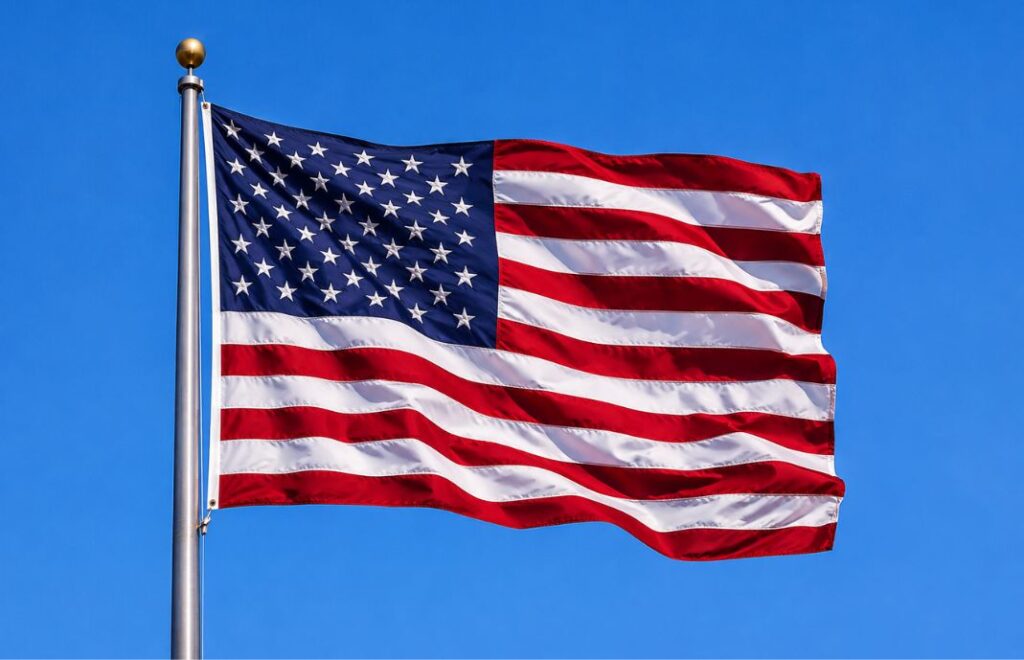
It all began with thirteen colonies
Let’s travel back to 14 June 1777.
The American Revolutionary War was underway, and thirteen former British colonies were fighting to establish an independent nation.
The young United States needed a flag that would represent its new identity.
So, the Continental Congress approved a design featuring thirteen alternating red and white stripes and thirteen white stars against a blue background.
The stripes represented the original thirteen colonies, while the stars symbolized the newly united states.
And there was something rather beautiful about the idea behind those stars.
Together, they represented a new constellation, reflecting the emergence of a nation determined to create its own future.
But here’s an interesting detail.
Congress never specified exactly how the stars should be arranged.
As a result, early American flags appeared with stars in circles, rows, and several other arrangements. Some stars even had six or eight points instead of the familiar five.
Apparently, the young republic had more pressing concerns than making sure every flag looked identical.
Today, 14 June is celebrated across the United States as Flag Day, commemorating that historic decision in 1777.
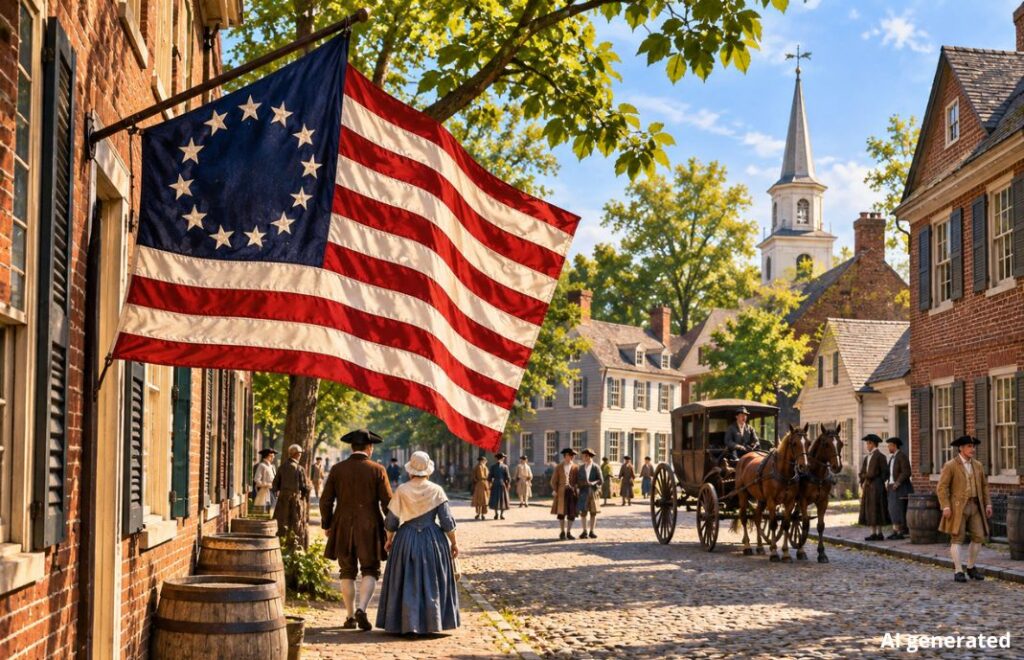
Betsy Ross and the mystery of the first American flag
Now, here’s a story that almost every American schoolchild has heard.
According to a famous legend, Betsy Ross, a talented seamstress from Philadelphia, was approached by George Washington and other revolutionary leaders in 1776.
They supposedly asked her to create a flag for the new nation.
Ross suggested using five-pointed stars instead of six-pointed ones, demonstrating how they could be cut from folded fabric with a single snip of her scissors.
A charming story, isn’t it?
And it has become one of the most beloved legends in American history.
There’s just one small problem.
Historians have never found convincing contemporary evidence that the meeting actually happened.
The story first became widely known decades after the Revolutionary War, when Ross’s grandson shared the family tradition.
That doesn’t mean Betsy Ross wasn’t involved in making flags. She was a skilled upholsterer and is known to have produced flags for Pennsylvania’s navy.
But whether she created the first Stars and Stripes remains uncertain.
Another historical figure, Francis Hopkinson, a signer of the Declaration of Independence, is also associated with the early design of the American flag.
So, while Betsy Ross remains an important part of American folklore, the true identity of the flag’s original designer is still something of a mystery.
More inspiration: Did Betsy Ross really make the first American flag?
When America had too many stripes
When the United States began welcoming new states into the Union, someone came up with what seemed like a perfectly sensible idea.
Why not add another star and another stripe for each new state?
And that’s exactly what happened.
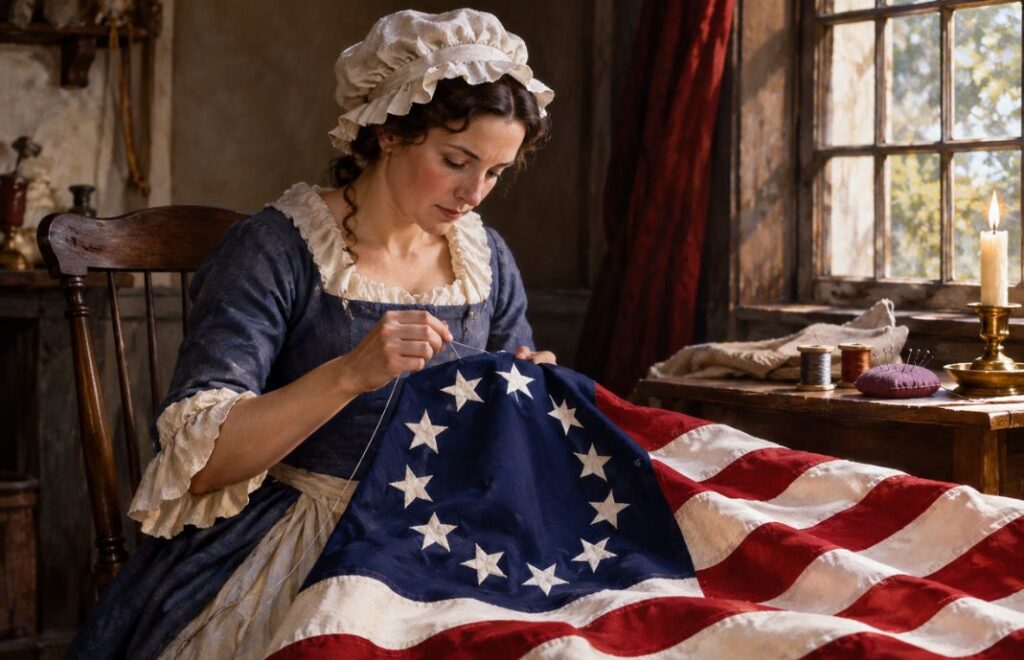
After Vermont and Kentucky joined the Union, the American flag expanded to fifteen stars and fifteen stripes in 1795.
But as the country continued to grow, a rather obvious problem emerged.
If every new state received its own stripe, the flag would eventually become an enormous collection of narrow red and white lines.
Not particularly practical.
So, in 1818, Congress decided to return permanently to thirteen stripes, honoring the original colonies.
The number of stars, however, would continue to grow as new states joined the Union.
It was a clever compromise that allowed the flag to celebrate both America’s beginnings and its expanding future.
That basic arrangement remains unchanged today.
The enormous flag that inspired America’s national anthem
One of the most dramatic moments in the history of the Stars and Stripes happened during the War of 1812.
In September 1814, British warships attacked Fort McHenry in Baltimore, Maryland.
The bombardment continued through the night, and the defenders faced a terrifying barrage of cannon fire and exploding shells.
Watching from a nearby British vessel was an American lawyer named Francis Scott Key.
As the battle continued, Key wondered whether the fort would survive.
But when morning finally arrived, he saw something extraordinary.
The enormous American flag was still flying above the fort.
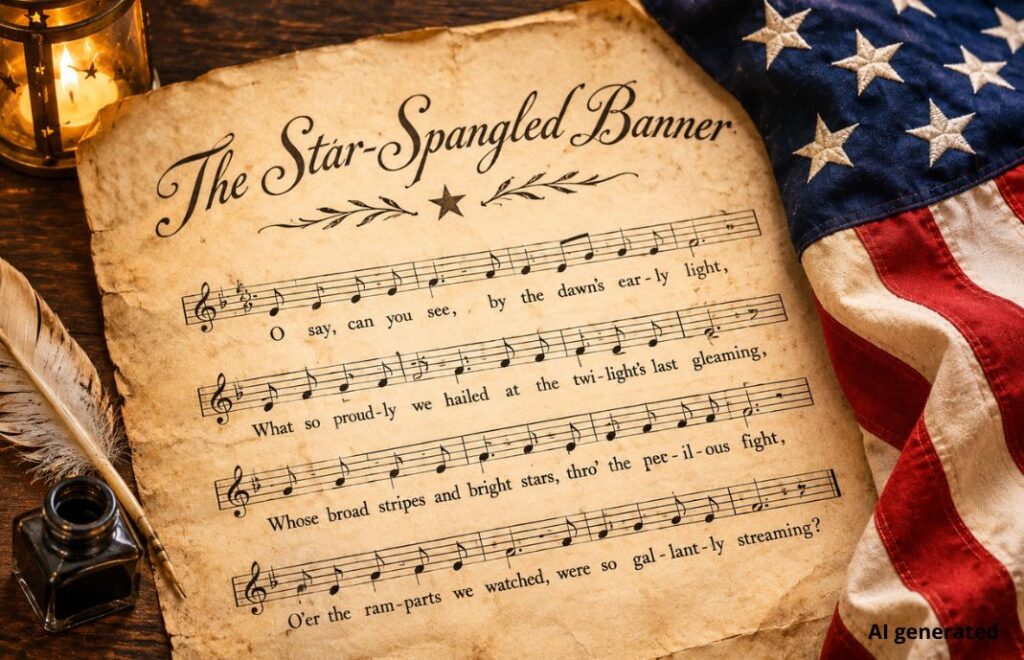
The sight inspired him to write a poem that eventually became the lyrics of “The Star-Spangled Banner,” America’s national anthem.
And here’s an astonishing detail.
The famous flag measured approximately 9.1 by 12.8 meters (30 feet by 42 feet).
Imagine trying to fold that neatly.
It had been sewn by Baltimore flagmaker Mary Pickersgill, with assistance from members of her household and other workers.
Today, that historic flag is preserved at the Smithsonian’s National Museum of American History in Washington, D.C.
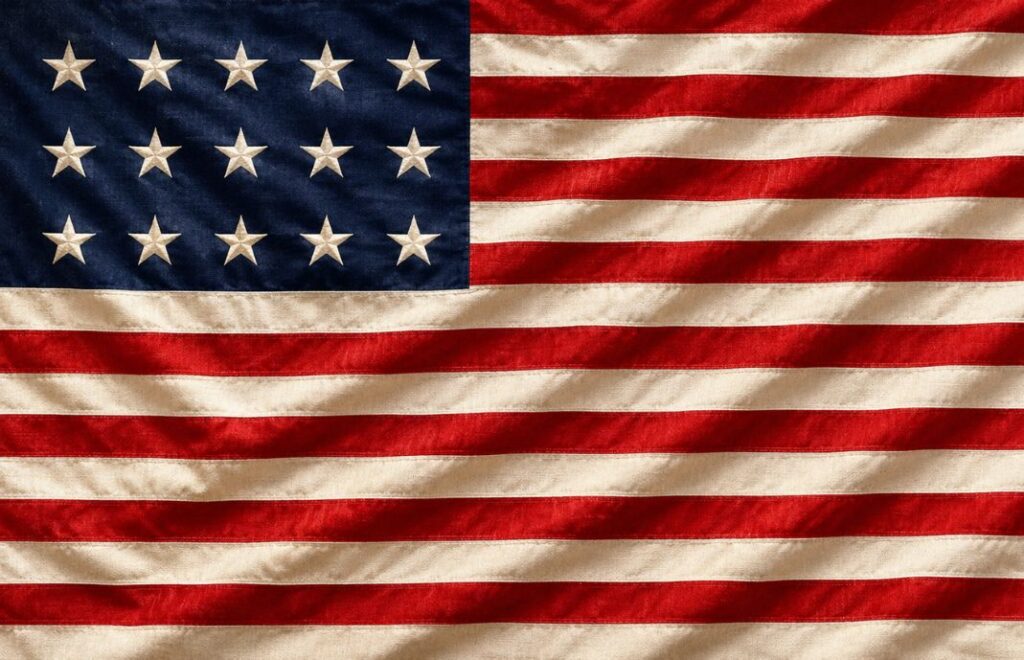
Because it dates from the period when the United States had fifteen states, it features fifteen stars and fifteen stripes, rather than the thirteen stripes we recognize today.
A remarkable reminder of how much the American flag has evolved.
Fifty stars, fifty states, and a school project
The American flag didn’t always have fifty stars, of course.
As the United States expanded, new stars were added to represent each state.
By the middle of the twentieth century, the flag featured 48 stars, arranged in six rows of eight.
Then Alaska and Hawaii came.
Alaska became the 49th state in January 1959, followed by Hawaii as the 50th state in August of the same year.
And suddenly, America needed another flag design.
But here’s where things become particularly interesting.
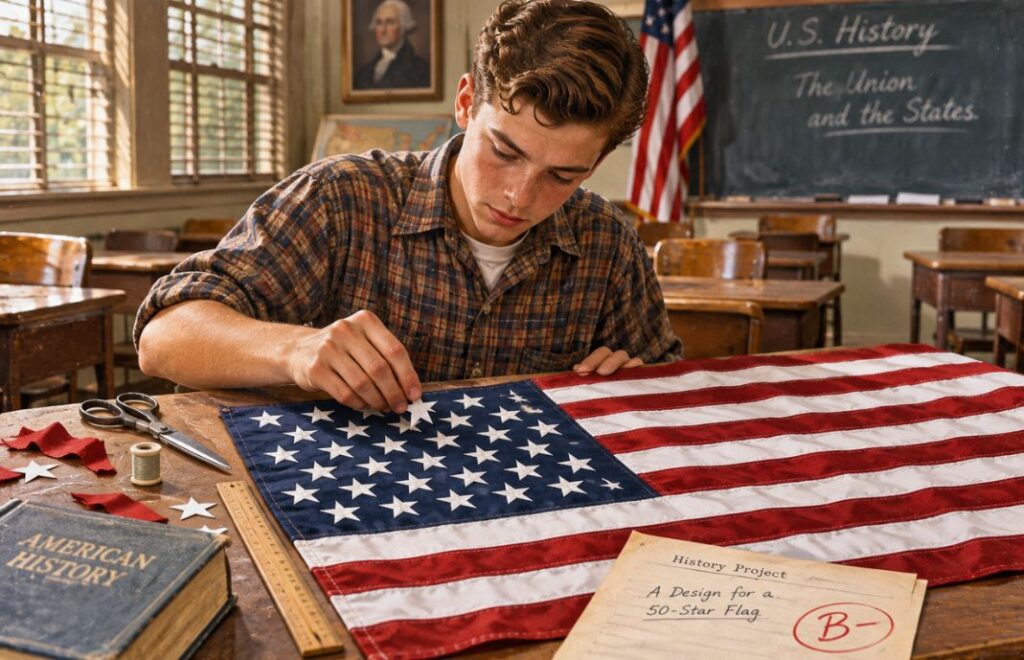
In 1958, a teenager named Robert G. Heft, from Ohio, created a fifty-star American flag as a high school history project.
He carefully arranged the stars into a pattern of alternating rows of six and five.
His teacher reportedly gave him a B-minus, apparently unimpressed by the ambitious design.
But Heft wasn’t ready to give up.
He submitted his creation for consideration as the country prepared to welcome new states.
His arrangement matched the design eventually selected for the new fifty-star flag.
When the design became official on 4 July 1960, his school project had become part of American history.
The teacher later raised his grade to an A.
Not a bad outcome for a homework assignment.
One important detail is worth remembering, though: Heft wasn’t the only person to propose a similar fifty-star arrangement. The final official design was selected through a federal process that considered numerous submissions.
Still, his story remains a wonderful example of how an enthusiastic teenager became associated with one of the world’s most famous national symbols.
What do the colors really mean?
We know that the fifty stars represent America’s fifty states and that the thirteen stripes honor the original colonies.
But what about the colors?
Red, white, and blue have become so closely associated with America that it’s difficult to imagine the national flag in any other combination.
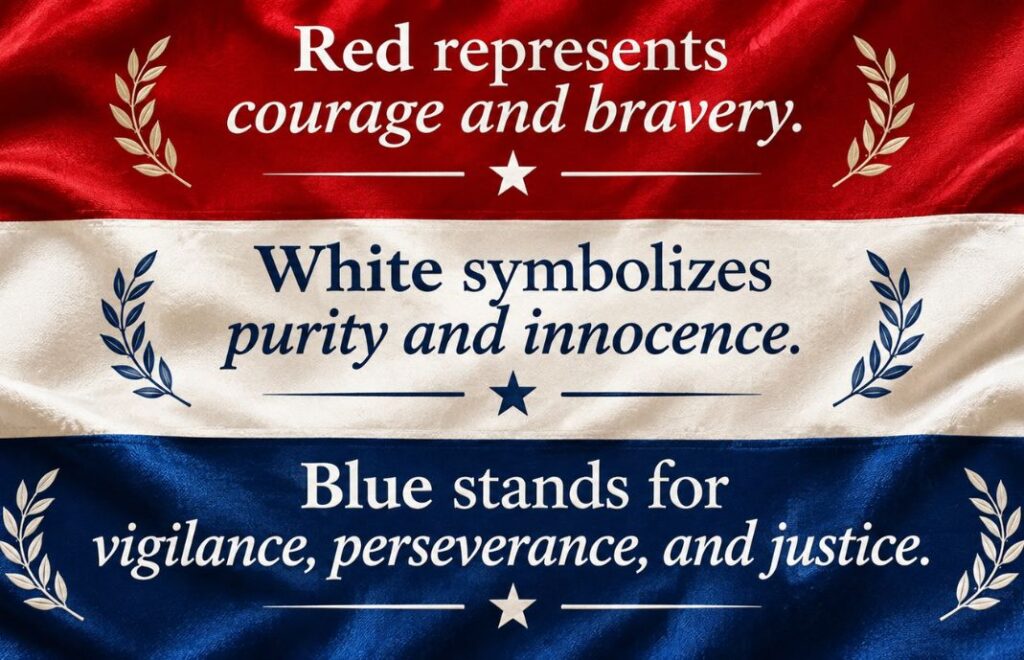
Today, the colors are commonly given the following symbolic meanings:
- Red represents courage and bravery.
- White symbolizes purity and innocence.
- Blue stands for vigilance, perseverance, and justice.
Interestingly, the original flag resolution of 1777 didn’t explain the colors’ meanings.
The familiar interpretations developed through American heraldic traditions and later official explanations.
There’s one more little detail.
The blue section containing the stars is known as the union, or canton.
And the stripes are sometimes called the field.
So, the next time you see an American flag, you’ll know a little more about its traditional terminology.
Old Glory: A flag with a nickname
The American flag has collected several affectionate names over the centuries.
There’s Stars and Stripes, of course.
Then there’s the Star-Spangled Banner, made famous by Francis Scott Key’s poem and the national anthem.
But perhaps the most charming nickname is Old Glory.
The story behind it begins in 1831, when a young Massachusetts sea captain named William Driver received a large American flag before setting sail.
He reportedly raised it aboard his ship and exclaimed: “Old Glory!”
The nickname stayed with him throughout his maritime adventures and later became widely associated with the American flag.
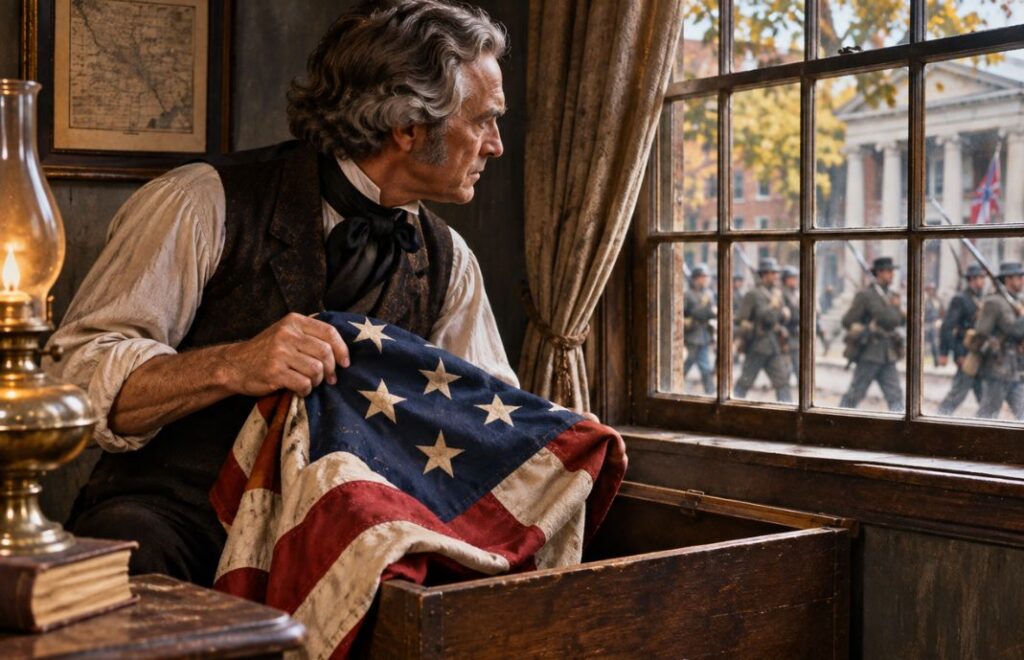
During the Civil War, Driver lived in Nashville, Tennessee, where he remained loyal to the Union.
According to the traditional account, he hid his treasured flag to prevent Confederate forces from taking it.
When Union troops captured Nashville in 1862, he brought the flag out again.
The story helped turn Old Glory into one of America’s most enduring patriotic nicknames.
A flag that has traveled beyond earth
Now for something truly extraordinary.
The American flag hasn’t just traveled across the United States.
It has traveled all the way to the Moon.
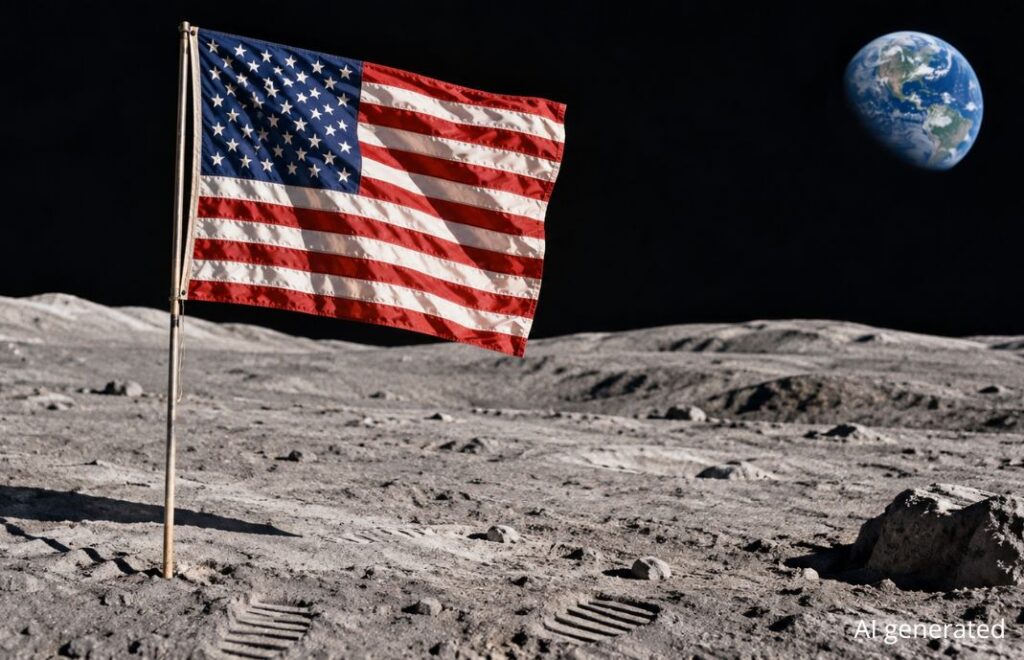
On 20 July 1969, astronauts Neil Armstrong and Buzz Aldrin became the first humans to land on the lunar surface during NASA’s Apollo 11 mission.
During their historic visit, they planted an American flag beside their lunar module.
But there’s something rather amusing about that famous photograph.
The flag appears to be waving.
How could that happen when the Moon has virtually no atmosphere?
The answer is simple.
NASA designed the flag with a horizontal support rod to keep the fabric extended in the airless environment.
The wrinkles made it look as though they were fluttering in a breeze.
Apollo 11 wasn’t the only mission to leave an American flag on the Moon. Later Apollo astronauts planted additional flags during their lunar explorations.
From a revolutionary battlefield in 1777 to the surface of another world less than two centuries later, the Stars and Stripes had certainly traveled a remarkable distance.
More than just a piece of fabric
Today, the American flag can be seen almost everywhere in the United States.
It flies above government buildings, schools, military installations, and private homes.
It appears during sporting events, national celebrations, memorial ceremonies, and historic anniversaries.
For many Americans, it represents freedom, opportunity, unity, and pride in their country.
For others, it can also inspire reflection on America’s complicated history and the continuing struggle to make its promises of liberty and equality a reality for everyone.
Perhaps that is what makes the Stars and Stripes such a powerful symbol.
Its design has evolved alongside the nation itself.
Thirteen stars became fifteen, then twenty, thirty, forty-eight, and eventually fifty.
But the thirteen original stripes have remained, connecting modern America with the small collection of colonies that declared independence nearly 250 years ago.
Fifty stars. Thirteen stripes. And almost two and a half centuries of history woven into one extraordinary flag.
From Betsy Ross and revolutionary legends to Baltimore’s enormous Star-Spangled Banner, an Ohio teenager’s school project, and astronauts planting a flag on the Moon, the American flag has certainly collected some remarkable stories.
