
Memphis is one of the oldest and most historically significant cities of ancient Egypt. During the Old Kingdom, it was a thriving capital – a center of politics, religion, and innovation that played a crucial role in shaping early Egyptian civilization.
Over time, however, this once-magnificent city faded into obscurity, its grand monuments lost to the shifting sands of history.
Today, only a few ruins remain, but the site is still well worth a visit. Scattered statues, temple foundations, and colossal relics offer a quiet but powerful glimpse into Egypt’s glorious past.
In 1979, Memphis and its surrounding necropolises were added to the UNESCO World Heritage List, securing their place as a cornerstone of world heritage.
Where is Memphis?
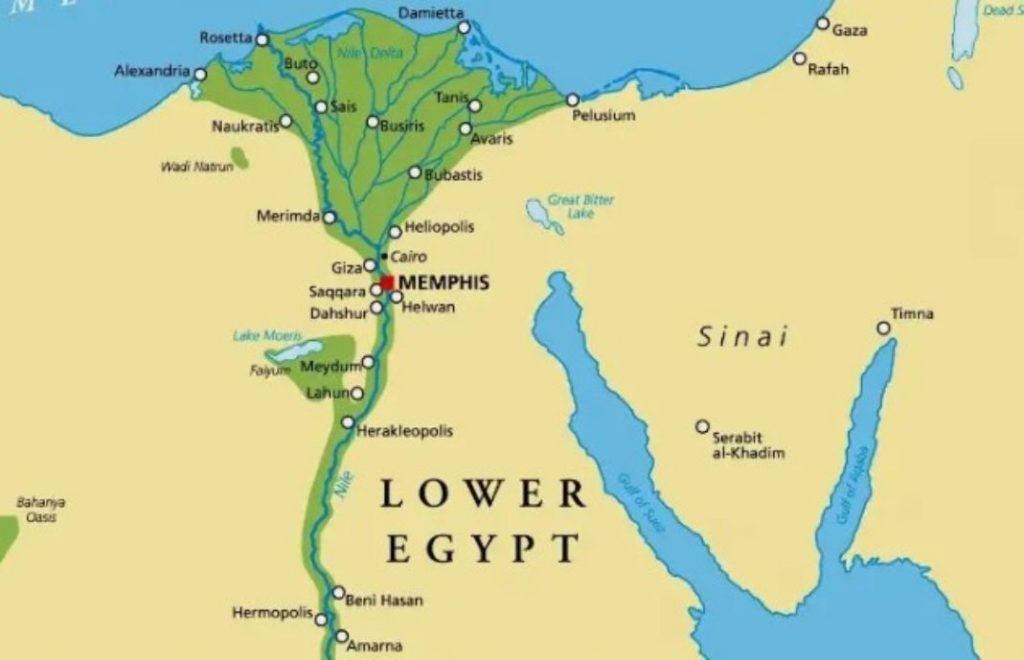
The ancient city of Memphis lies about 20 kilometers south of Cairo, just outside the modern village of Mit Rahina. The drive takes approximately 30 minutes.
Most visitors explore Memphis as part of a day trip from Cairo, often combined with nearby highlights such as Saqqara and the Step Pyramid of Djoser.
You can either hire a taxi – be sure to agree on a price in advance – or join a guided tour that includes transportation and historical context.
Public transportation is limited, so planning ahead is essential.
The history of Memphis
Memphis was founded around 3100 BC by Menes, traditionally considered the first pharaoh of a unified Egypt.
The city soon became a political and religious capital, laying the foundation for what would become one of the greatest civilizations in human history. It was here that the creator god Ptah was worshipped, and where the lavish coronation ceremonies of pharaohs took place.
During the Middle Kingdom (circa 2050-1650 BC), Memphis was known as the “Balance of the Two Lands” -not only because it remained Egypt’s political heart, but because of its strategic location between Upper and Lower Egypt.
Scholars believe the site was chosen for its strategic position at the head of the Nile Delta. The early kingdom needed a central hub for political control, economic coordination, and commercial exchange.
Eventually, Memphis was overshadowed by Thebes (modern-day Luxor) as the capital. Still, Memphis remained important for centuries – until it gradually declined, especially after the arrival of the Greeks and the founding of Alexandria in 331 BC.
By 641 CE, Memphis lay deserted. Many of its stones were repurposed for the construction of Cairo.
Archaeologists believe the city was once enclosed by a white defensive wall and featured a magnificent palace. These “white walls” gave Memphis its original Egyptian name: Ineb Hedj (The White Walls). Only much later did the name Men-nefer – meaning “enduring and beautiful” – emerge, eventually evolving into the name we use today: Memphis.
What to see in Memphis
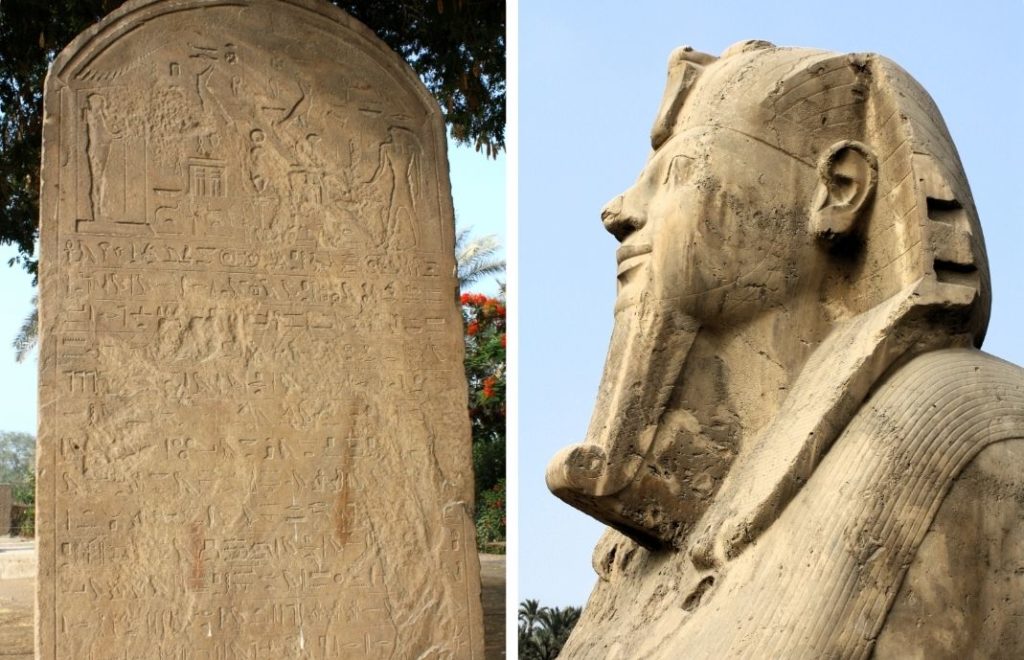
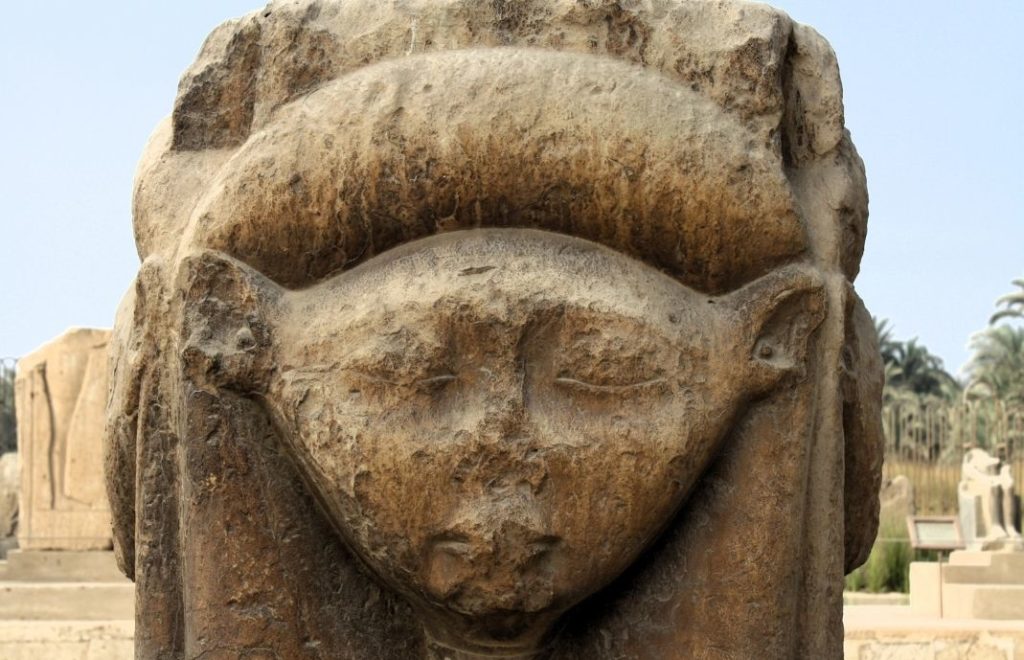
Today, Memphis is an open-air museum, showcasing the scattered remains of the once-great city. The site includes the ruins of the Temple of Ptah and the Sacred Apis Bull enclosure, the result of extensive excavations and ongoing preservation work. A small indoor museum also houses some of the more delicate and valuable finds from the area.
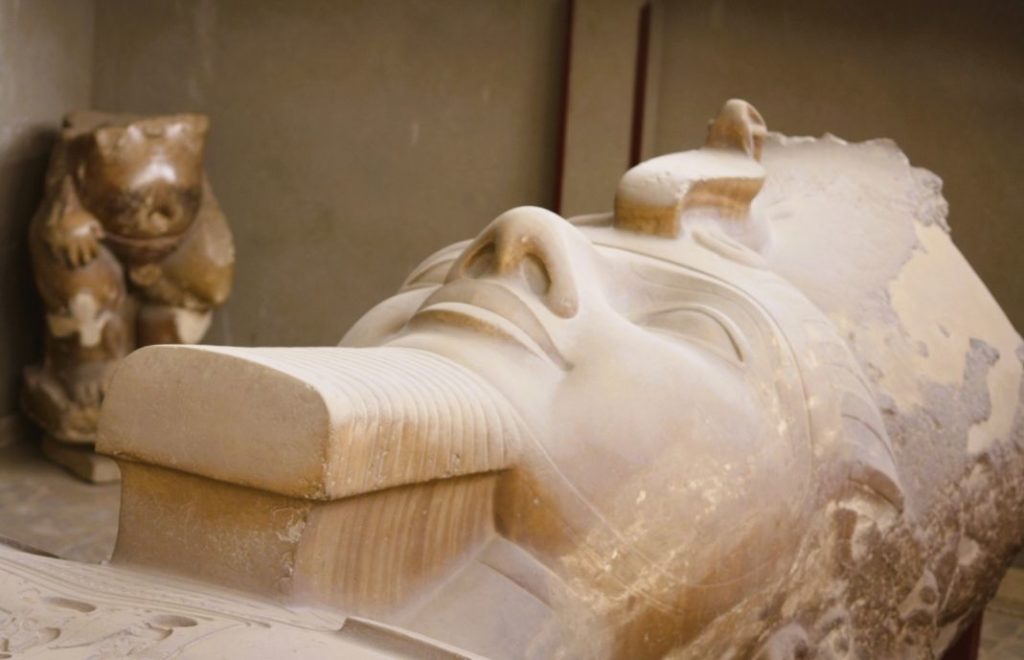
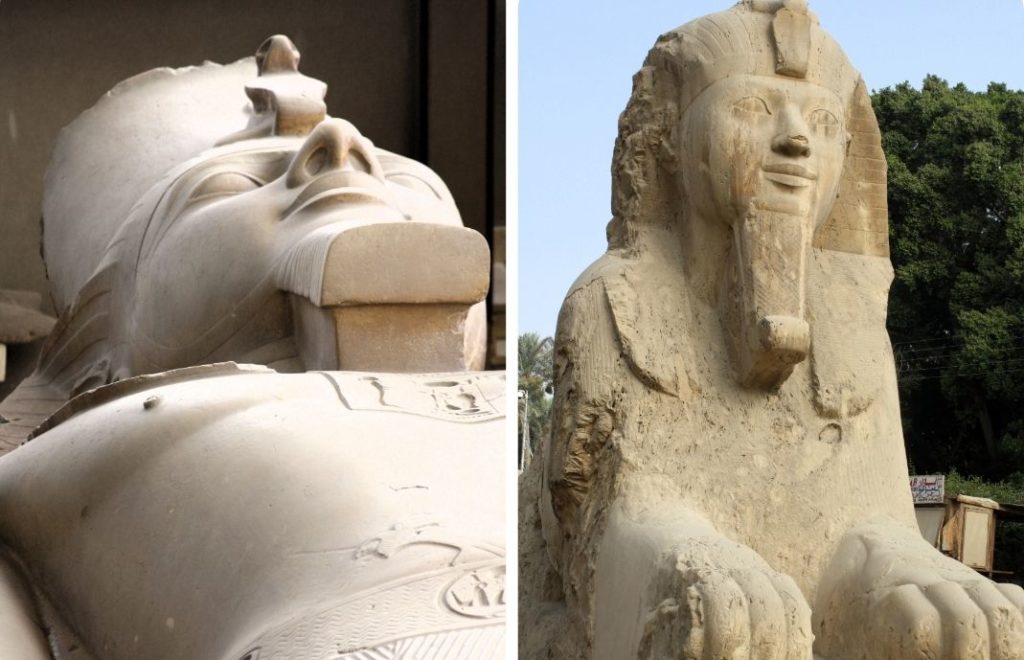
The main attraction is the colossal statue of Ramses II. Originally standing 13 meters tall, the statue -carved from limestone – now measures around 10 meters, as its legs are missing. Because of this, it is displayed lying down, with its intricately carved face turned upward.
Visitors can get up close to admire the belt inscriptions, decorative carvings, and the finely detailed royal features of one of Egypt’s most famous pharaohs.
Nearby stands a striking sphinx carved from a single block of alabaster. It measures four meters high, seven meters long, and weighs nearly 80 tons. Archaeologists believe it was likely dedicated to Pharaoh Hatshepsut.
Though only fragments of the Temple of Ptah remain, a walk through the grounds still offers a powerful sense of the city’s past grandeur. With a bit of imagination, you can almost picture Memphis in its heyday—a capital of gods, kings, and culture.
Best time to visit Memphis
While Memphis is open to visitors year-round, the best time to go is between October and April, when temperatures are milder and more comfortable for exploring the open-air site. The summer months can be extremely hot, especially in the middle of the day.
The complex is open daily from 8:00 AM to 4:00 PM.
Tickets are purchased at the entrance.
More inspiration for visiting Egypt:
Cairo – quite chaotic and very exotic
In the footsteps of the pharaoh
The curse of the Pyramids
The camel that ran away
Saqqara – where it all began
