
Just 25 kilometers from Cairo, hidden behind wide belts of palms and scattered villages, lies a place where time seems to dissolve. The city noise fades, and with each gust of wind, the desert reshapes itself – gently piling sand in soft drifts around ancient pyramids and tombs.
In Saqqara, you don’t just explore ruins – you walk through the entire timeline of ancient Egypt.
At the heart of it all stands the Step Pyramid of Djoser – the oldest and largest structure in the necropolis, and a revolutionary leap in architecture. Nearby, the Pyramid of Unas holds the distinction of being the first to contain pyramid texts, sacred inscriptions that would echo through millennia. Teti’s pyramid is open to visitors, and just next door lies the mastaba of Kagemni, a high-ranking official whose tomb walls still whisper stories of daily life and ceremony.
Welcome to Saqqara – a place where the artifacts of ancient Egypt seem to rise from the earth itself. So abundant are the finds here that an entire museum was built to house them: the Imhotep Museum, named after the brilliant architect of the Step Pyramid.
In ancient times, everyone buried in Saqqara – or in the nearby pyramid fields of Abu Sir and Dahshur – lived in Memphis, the once-glorious capital of Egypt. Today, only ruins remain of this fabled city, but they still hold quiet traces of its former greatness, and are well worth a visit.
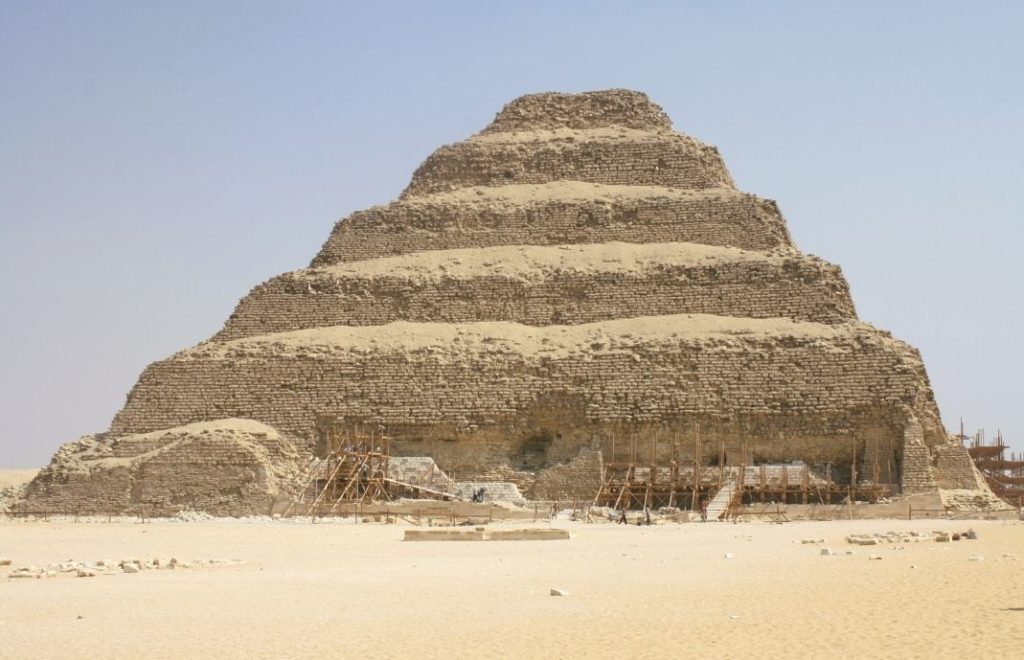
The Step Pyramid of Djoser
The moment you step onto the soft sands of the forecourt, facing the towering Step Pyramid of Djoser, you feel it – this is where it all began.
Standing at 62 meters tall, it is the oldest pyramid in the world. That alone is awe-inspiring.
Djoser, who reigned around 2592-2566 BC during Egypt’s Third Dynasty, was originally named Netjerkhet. The name Djoser was given to him in later Egyptian tradition – and it is under that name he is still remembered today.
In early Egyptian burial customs, the deceased were laid to rest in chambers beneath the earth, with a flat, slightly sloped stone structure built on top – a mastaba, resembling a massive bench.
When it came time for Djoser’s burial, that tradition remained. But his architect, the brilliant Imhotep, dared to think bigger. He stacked multiple mastabas, one atop the other – giving birth to the very first pyramid. What was once a single mastaba became the base tier of this revolutionary structure.
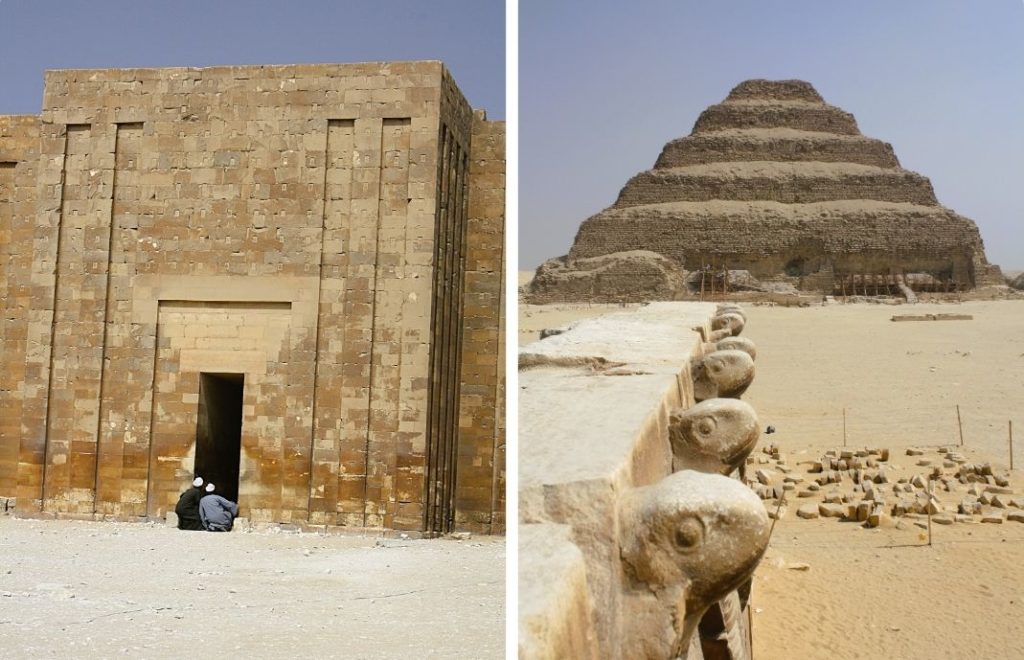
The Step Pyramid is enclosed within high limestone walls, and within the complex lie various ceremonial buildings used for royal jubilees and religious rituals.
Outside the enclosure, you’ll find the tombs of royal family members and high officials, scattered across the desert landscape.
Climb to the top of the surrounding wall and you’ll be rewarded with sweeping desert views. On a clear day, you can even spot the Red Pyramid shimmering in the distance to the south.
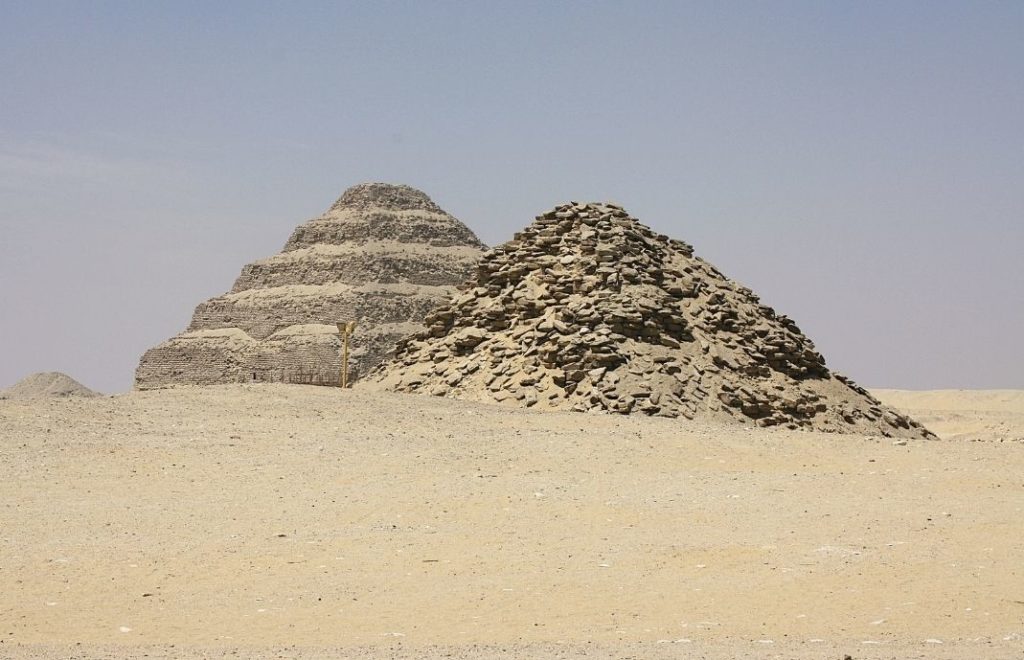
The Pyramids of Unas and Teti
At first glance, the Pyramid of Unas looks more like a pile of rubble than a royal tomb. Only fragments remain, and to the casual observer, there’s little to see. But from a historical and cultural standpoint, this modest-looking ruin is profoundly significant.
Unas reigned around 2378-2348 BCE, and it was during his rule that a groundbreaking tradition began: for the first time in Egyptian history, the inner walls of a pyramid’s burial chamber were inscribed with decorative texts.
These lengthy hieroglyphic inscriptions are now known as the Pyramid Texts – the oldest known collection of religious writings in the world. They are mysterious and often difficult to interpret; even when the words are readable, the meaning can remain elusive. What is clear, however, is the central theme: the rebirth of the deceased king in the afterlife.
Unas’ successor, Teti, followed in his footsteps. His pyramid, located nearby, is open to visitors and features similar finely carved Pyramid Texts in its burial chamber.
Though both pyramids may seem unassuming compared to their more famous cousins at Giza, they mark a turning point in ancient Egyptian funerary tradition – a shift from monumental scale to spiritual symbolism.
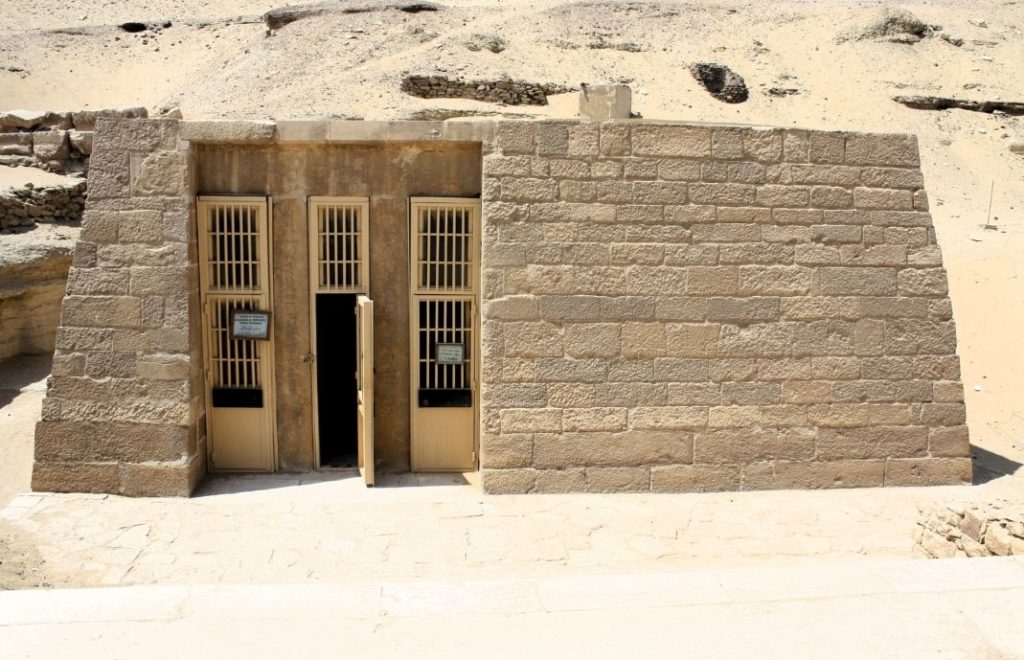
The Mastaba of Kagemni
Kagemni was a powerful official in ancient Egypt – vizier (the king’s right hand) and chief judge during the reign of Pharaoh Teti. Seeking proximity to divine blessings, he had his mastaba – a private tomb – built as close as possible to Teti’s pyramid. The hope was that by being near the king, Kagemni might share in the ritual offerings and sacred ceremonies intended for the pharaoh, and thus maintain a connection with the gods.
The walls of Kagemni’s tomb are richly decorated with reliefs depicting scenes from everyday life in ancient Egypt: cultivated fields, livestock, workshops, and moments along the Nile.
These are not just artistic representations – they were believed to become real in the afterlife, providing Kagemni with all he would need for eternity.
One of the most striking images is Kagemni himself, seated before a table overflowing with offerings – meat, bread, beer, fruits. This too had a sacred function. The ancient Egyptians believed that the soul, or ka, could emerge from a “false door” – in this case, located in chamber seven of the tomb – and receive the offerings placed there by living family members, ensuring Kagemni’s continued sustenance in the afterlife.
Photography is not allowed inside the tomb, preserving the sanctity and delicate artistry of this remarkable space.
The Imhotep Museum
This small but meaningful museum is dedicated to two key figures in the story of Saqqara: Imhotep, the brilliant architect of Pharaoh Djoser’s Step Pyramid, and Jean-Philippe Lauer, the French archaeologist who spent his life excavating and restoring the Saqqara complex.
The Imhotep Museum consists of six exhibition rooms, each displaying carefully selected artifacts unearthed in the Saqqara area – offering a glimpse into the grandeur of ancient Egyptian craftsmanship, ritual, and daily life.
The museum also includes a small café, perfect for a short break in the desert heat.
More inspiration for visiting Egypt:
A guide to Memphis
Cairo – quite chaotic and very exotic
The curse of the Pyramids
In the footsteps of the pharaoh
The camel that ran away
