
Being a tour guide is a rewarding job, but make no mistake – it demands passion, adaptability, and a dash of creativity. You’re the storyteller, the problem-solver, the energy source. And sometimes, the entertainer. Your mission? To give guests that extra sparkle, the moment that makes their trip unforgettable.
That’s exactly what I aimed for during my guiding days in Egypt.
Today’s adventure: A camel safari.
On the bus ride out, I delivered my best performance – painting vivid pictures of the desert caravan, spouting facts about camels like a walking encyclopedia:
- Their unique physiology, perfectly engineered for survival in the harshest climates.
- Their incredible stamina – able to trek for days without water.
- Their top speed? A surprising 65 km/h (but only in short bursts – thankfully).
Guests listened wide-eyed, some chuckled nervously at the idea of mounting these towering creatures. I assured them: “Camels may look awkward, but they’re gentle giants… most of the time.”
Little did I know, the desert was about to stage a comedy show with me as the star – and the camel as the director.
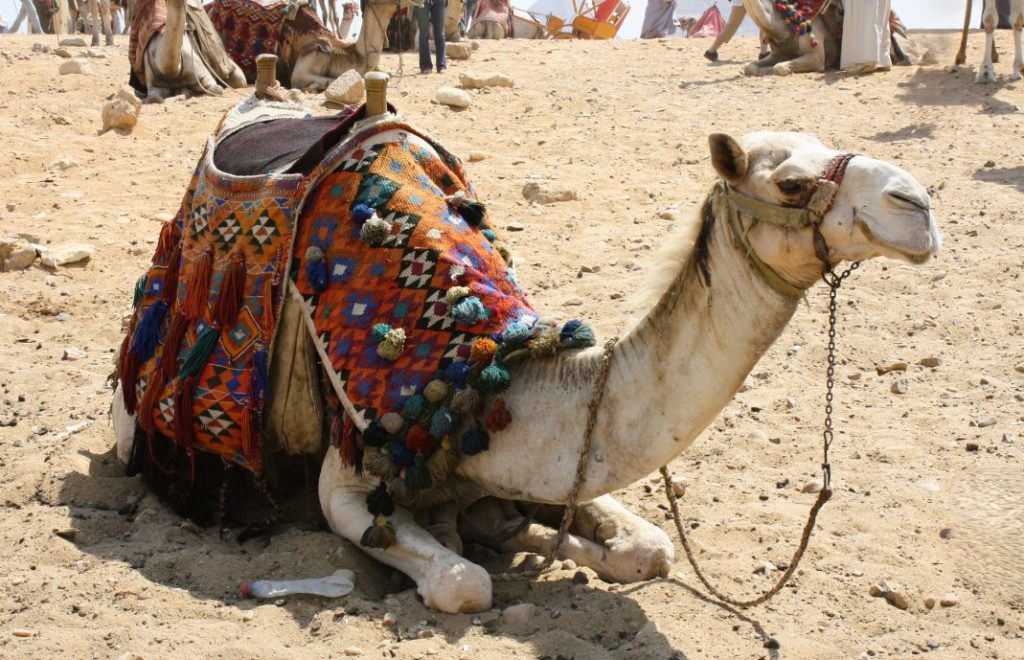
The camels are ready – Or are they?
We arrive at the edge of the desert, where a fleet of camels lounges in the sun, lazily chewing as if the day holds no surprises. I leap off the bus brimming with enthusiasm, corralling my group toward their desert chariots. The Bedouins, serene as the dunes themselves, welcome us with nods and begin pairing guests with their four-legged partners.
Here’s something most people don’t know: camels have personalities – and big ones. They are the divas of the desert. And today, they were clearly in the mood to prove it.
One by one, my guests mount their camels – some with an admirable display of grace, others looking like they’ve lost a wrestling match. The laughter is contagious.
But then comes her: the elegant lady from Hamar (Norway). Draped in linen, armed with a designer sunhat and an attitude to match, she sniffs the air with visible disdain.
“This… creature smells absolutely dreadful!” she huffs, waving a manicured hand in front of her nose.
I try diplomacy.
“Well, they haven’t exactly just strolled out of a camel spa,” I reply with a smile. “It’s all part of the authentic experience!”
Her sigh is loud enough to echo off the dunes. After a few more grumbles and an attempt to perch side-saddle (spoiler: it didn’t work), we call it quits. Back to the bus she goes, leaving the rest of us to carry on -though not for long. Because just as I’m thinking the hardest part of the day is over… one camel decides to stage a grand escape.
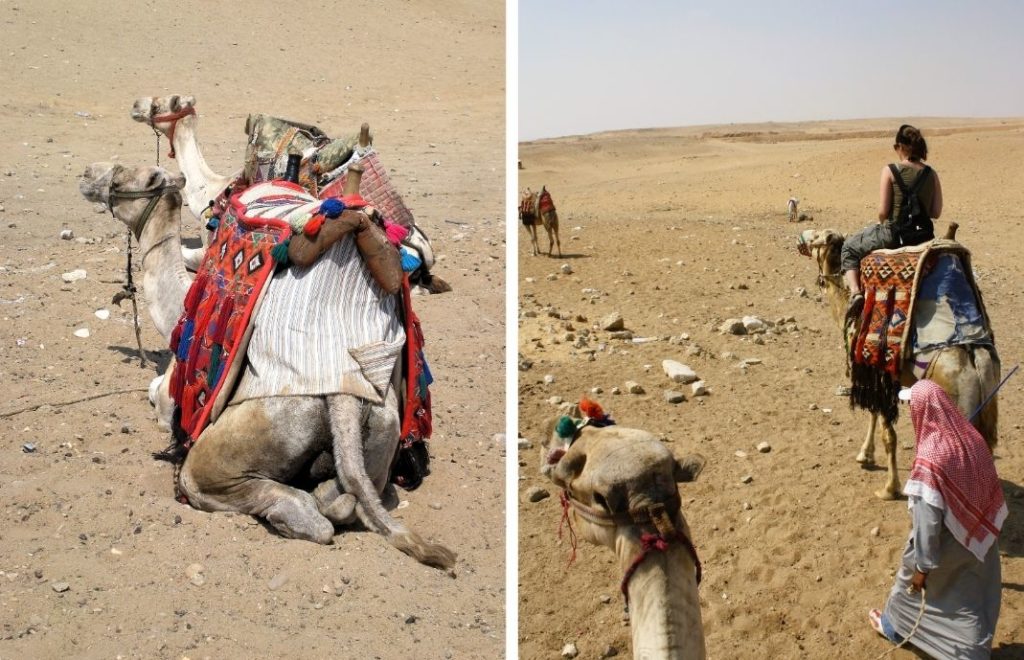
High on a camel – All hell breaks loose
Everything is perfect. The camels plod along with their signature swagger, the kind that makes first-timers squeal and cling on for dear life. The desert stretches endlessly in golden waves, and the sunset – oh, the sunset! – splashes crimson and orange across the mountains. I take it all in from my lofty perch, legs casually crossed in true Bedouin style. I feel like the queen of the caravan.
I glance back at my guests. Some look like they were born for this; others grip the saddle horn as if their very lives depend on it. I offer my best tour-leader smile:
“Relax, lean back, let the camel do the work!”
And me?
I’m sitting comfortably, perfectly balanced in the saddle. A queen on her throne, swaying gently to the rhythm of the desert’s most peculiar ship. The long-legged, ruminant creature beneath me chews lazily, as if life holds no urgency.
The scene is pure magic: the sun melts into the horizon, splashing fiery reds and molten gold across the mountains. Shadows stretch long and thin over the rippling dunes, and the silence of the Sinai Desert wraps around us like a velvet cloak.
For a moment, I forget everything – the heat, the smell, the sore muscles from earlier rides. I’m immersed in the stillness, the sense of timelessness. It’s the kind of view travel dreams are made of.
Little do I know, this postcard-perfect calm is the opening act. The camel beneath me is quietly plotting his grand rebellion.
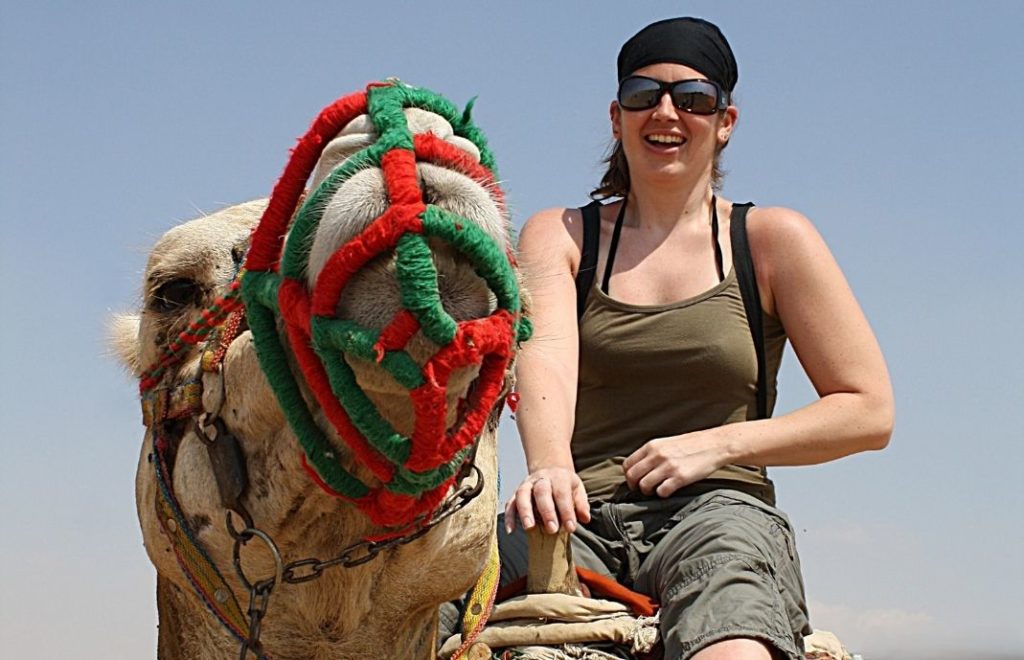
Me vs. the camel
Out of nowhere, the beast snaps. One second we’re swaying peacefully through the dunes, the next my two-meter-tall desert companion decides to audition for the Cairo Grand Prix.
“Aaahhh!” The sound escapes me involuntarily as the camel launches forward like a cruise missile with fur. I clutch the saddle peg in a white-knuckled grip – just in time to be catapulted backward, legs shooting sky-high like some grotesque yoga pose gone wrong.
The next leap slams me forward again, ribs colliding with the aforementioned wooden peg – a detail my sternum will not soon forget. My hair? Somewhere in another time zone. My dignity? A distant memory.
Behind me, chaos erupts. Gasps from the guests. Bedouins shouting. Three of them drop their ropes and take off like marathon runners on steroids, robes flapping, flip-flops slapping against the sand like frantic applause.
But my camel? He’s on fire. Hooves pound like war drums, sand sprays in golden arcs, and the froth flying from his enormous mouth paints abstract patterns across my face and shirt. His top speed? Close to 40 km/h, and trust me – when you’re perched two meters up on a runaway desert locomotive, it feels like light speed.
I dare a glance over my shoulder: my Bedouin rescue squad is giving it everything. The youngest even hikes up his robe for “extra speed,” flip-flops flying as he sprints. Spoiler alert: they have about as much chance as a donkey in a Formula 1 race.
Meanwhile, I’m clinging on like a rodeo reject, wondering:
Did I update my travel insurance?
How far can this psycho camel actually go?
At what point do I become a headline: “Norwegian guide last seen headed toward Libya?”
The Sinai Desert stretches endlessly ahead, shimmering in the heat haze, as if whispering, “Welcome to the wild ride, my friend.”
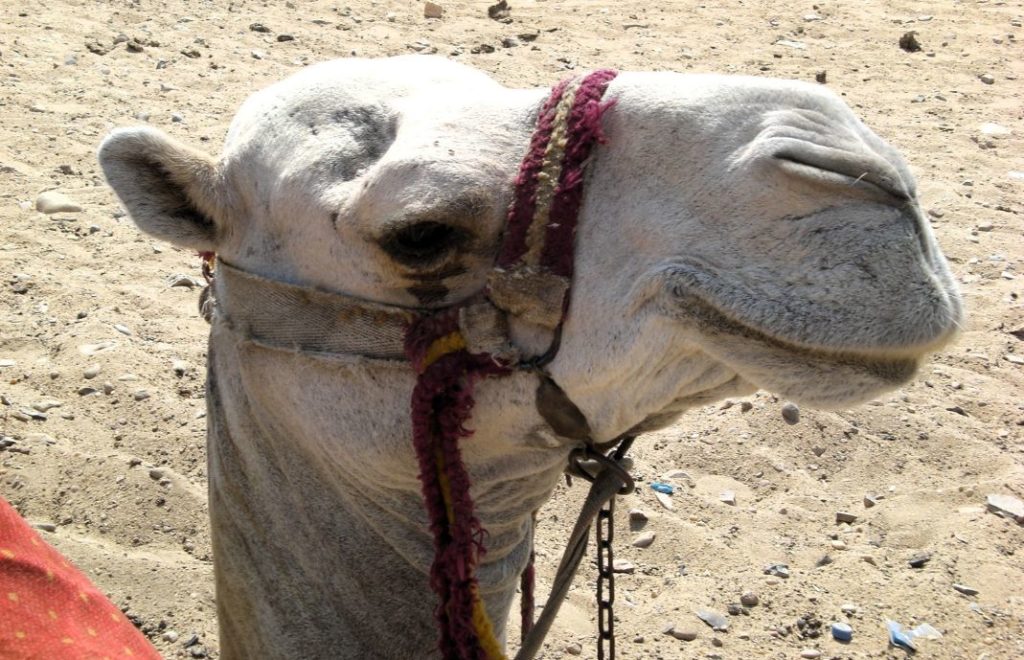
When the camel came to its senses (sort of)
Just as suddenly as the chaos began, it ends. My renegade camel – who required a full wrestling match to get on his feet – apparently decides he’s had enough of his Formula 1 fantasy. Maybe he misses his friends. Maybe he realizes being alone with a panicked Norwegian tour guide isn’t as romantic as it sounds.
Either way, he slams on the brakes. My body, however, doesn’t get the memo. Legs shoot backward like a ragdoll in zero gravity before gravity does its job. My legs land hard – right against his flanks, which I tell myself he (fully) deserved.
Then he does it. The insult to injury: a slow, deliberate head turn and a blank stare that says, “You done? Because I am.” Followed by a haughty shake that sends a fresh shower of camel spit across my already decorated face. Charming.
I grab the rope, yank left, and guide His Highness back toward the caravan. Now he plods along like nothing ever happened, tail swishing smugly, as if whispering: “You see that? I won. First to the finish line.”
Behind us, three Bedouins collapse in the sand, gasping for air. Let’s be real – they weren’t chasing him to save me. Nope. That camel is worth far too much as transport and livelihood. I was just the unfortunate accessory in their prize racehorse’s little rebellion.
Back at base, silence hangs for a beat before a booming laugh shatters it. A burly guy from Northern Norway, grinning ear to ear, waves his phone.
“Got the whole thing on video!”
I smile sweetly – on the outside. Inside? Oh, wonderful. Viral fame with camel spit as my signature look.
One thing’s for sure: I got a ride I’ll never forget – and a bruise the size of Egypt to prove it.
As for the camel? He strutted off with all the arrogance of a desert king, leaving no doubt about who runs this show. It’s not the tour guide.
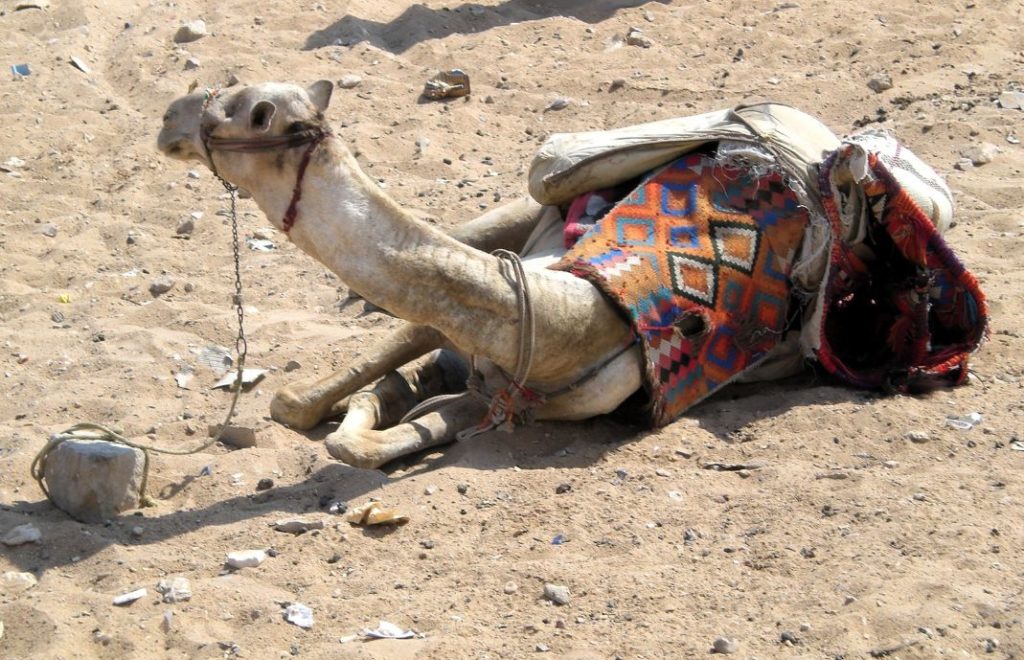
Camel facts – Desert royalty in numbers
Family & species:
Belongs to the genus Camelus, which includes:
- Camel (Bactrian) – Two humps
- Dromedary – One hump
Habitat:
- Camels: From the Middle East to China
- Dromedaries: Predominantly North Africa and the Arabian Peninsula
Size & lifespan:
- Height: Up to 2 meters at the shoulder
- Weight: Up to 650 kg
- Lifespan: Around 40 years
Status:
- Wild camels are critically endangered, with fewer than 1,000 individuals remaining, primarily in the Gobi Desert.
- There are no truly wild dromedaries, but a feral population exists in Australia.
Survival superpowers:
- Adapted for harsh desert conditions.
- Can survive up to 10 months without water.
- When water is available, they can drink over 100 liters in 5-10 minutes.
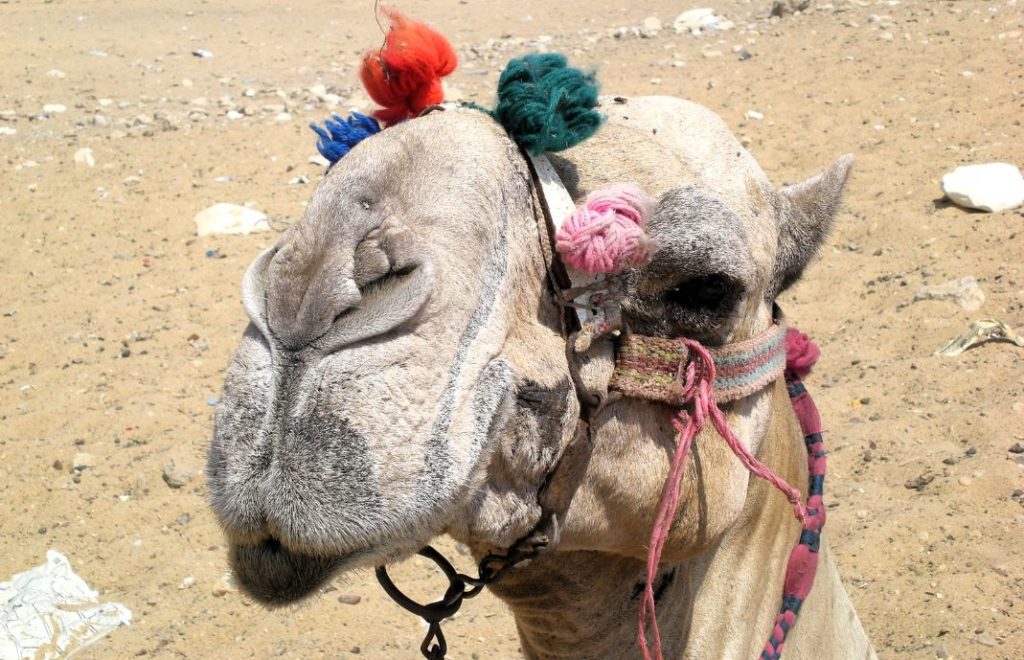
More inspiration to visit Egypt:
In the footsteps of the Pharaohs
The curse of the Pyramids
Cairo – Chaotic, exotic, and captivating
A guide to Memphis
Saqqara – where it all began
