
Barely 4,000 people visited the Napa Rui National Park in 1989. In 2025, the number had increased to around 100,000. Alarming figures, especially for such a small and fragile island. Tourism continues to be the sole driving force for Easter Island’s economy; there are few signs that these numbers will do anything but increase. No authority seems to take any action to limit it in any way either.
It is therefore essential that each visitor is aware of the rules and does their uttermost to ensure that the rules are respected and that your visit as has low an impact as possible.
Seriously, it is not hard. Just follow the rules. I promise it will not take anything away from your Easter Island experience. It is actually the opposite. Following the rules makes it possible for you to see and do everything safely. You can return home, knowing perfectly well that the marvels of this unique island are still there to be enjoyed by many generations to come.
Here are the main rules to live by when visiting Easter Island.
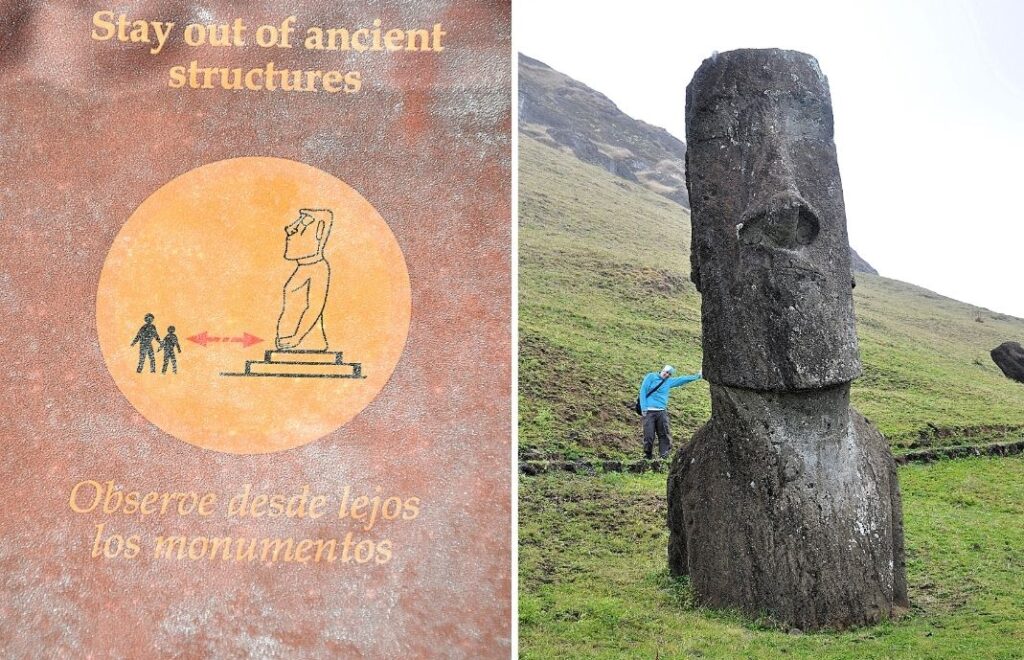
Don’t touch
It’s as simple as that. You cannot touch the moai, platforms, topknots, petroglyphs (rock carvings), or any other archaeological artifact. Ever.
It does not matter how tempting it is, or that you are chasing the “perfect” photo for Instagram (or other social media). Trust me, you can still get some cool photos even without touching!
You might think that one touch does not matter, but if everyone thought the same, the statues and artifacts will be ruined. Some of the stonework is incredibly fragile, and the cumulative impact of numerous visitors can have an extremely damaging and long-term impact.
Keep your hands (and feet) to yourself.
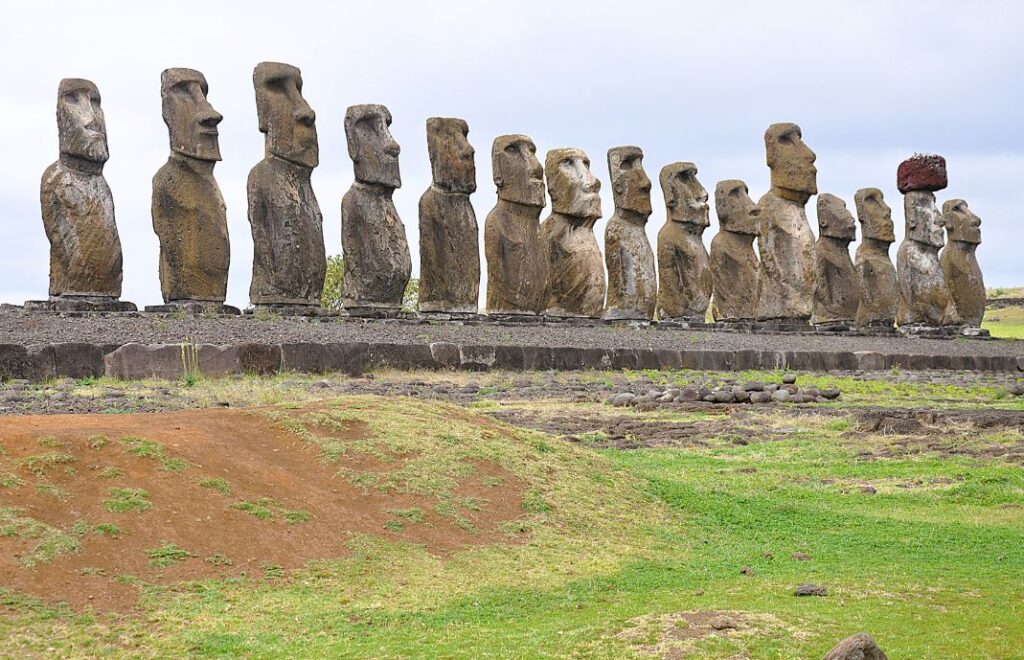
Don’t step on the platforms
The platform, called ahu, is considered as starting at the sloping ramp below the central platform.
Be careful to avoid stepping on crematoria or other objects associated with the platform. This also applies when you walk behind the platform.
Stay on the paths
Compared to other fragile sites such as Galapagos Islands and Machu Picchu, visitors to Easter Island are given enormous freedom when it comes to ways you can explore the island. This included ways in which to explore and where you can go.
There are systems of paths in places that receive the most visitors. These places include Rano Raraku, Puna Pau, and Orongo. Here you must stay on the paths. This is not only to protect the sites but also for your own safety.

Be careful
It’s a privilege to come to Easter Island, so act accordingly. The lack of infrastructure such as marked trails and signs makes the experience feel even more untouched and unspoiled. Loose stones, uneven surfaces, and sudden drops can all cause injuries, even severe ones.
The nearest proper hospital is in Santiago (Chile), a long flight away. It can also be costly (even with travel insurance).
Zero waste
The rule is: “What you bring, you take back”.
At the archeological sites there are few to none trash cans. Make sure you carry a small bag for your website.
It’s also important to be a conscious tourist by avoiding single-use plastic. Bring a recycling bottle to refill at authorized dispenser. Tap water is not drinkable.
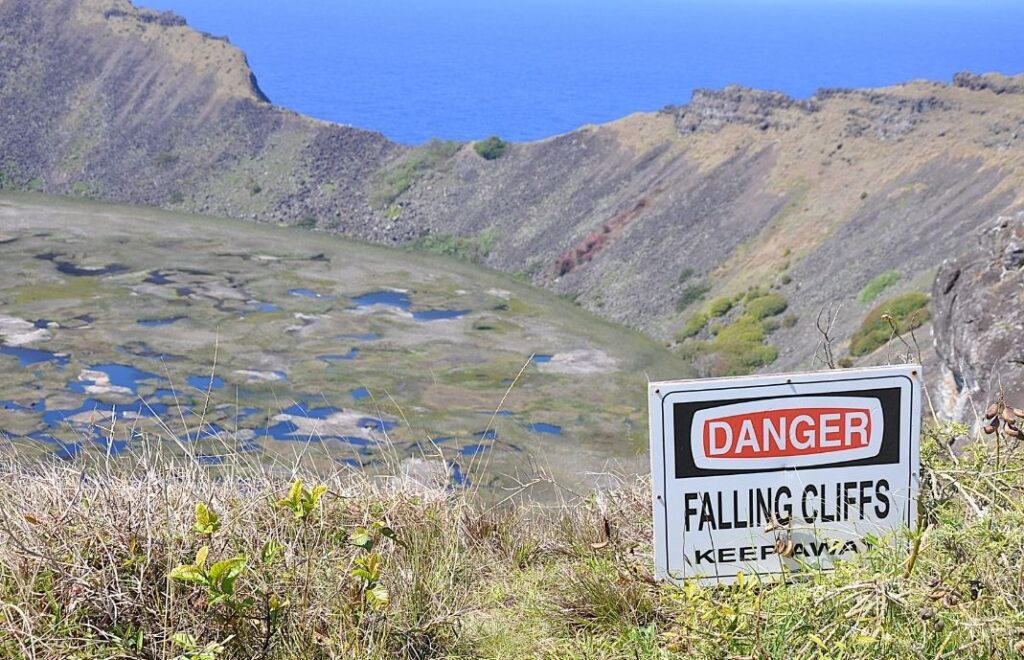
Warning
The National Park Authorities are severely punishing any instance of a visitor breaking any of the above rules. Park rangers are carrying cameras, and if they see any violation, you are likely to be prosecuted. Fines, even for the smallest offences, are several hundred dollars.
Most visitors understand and respect the cultural wealth and importance of Easter Island’s archaeology in a global context. It would never even cross their mind to deface or damage it in any way. Cases of vandalism of the archaeological sites on the island have fortunately been extremely rare, but it has happened.
Remember: Be aware of the rules and stick to them.
