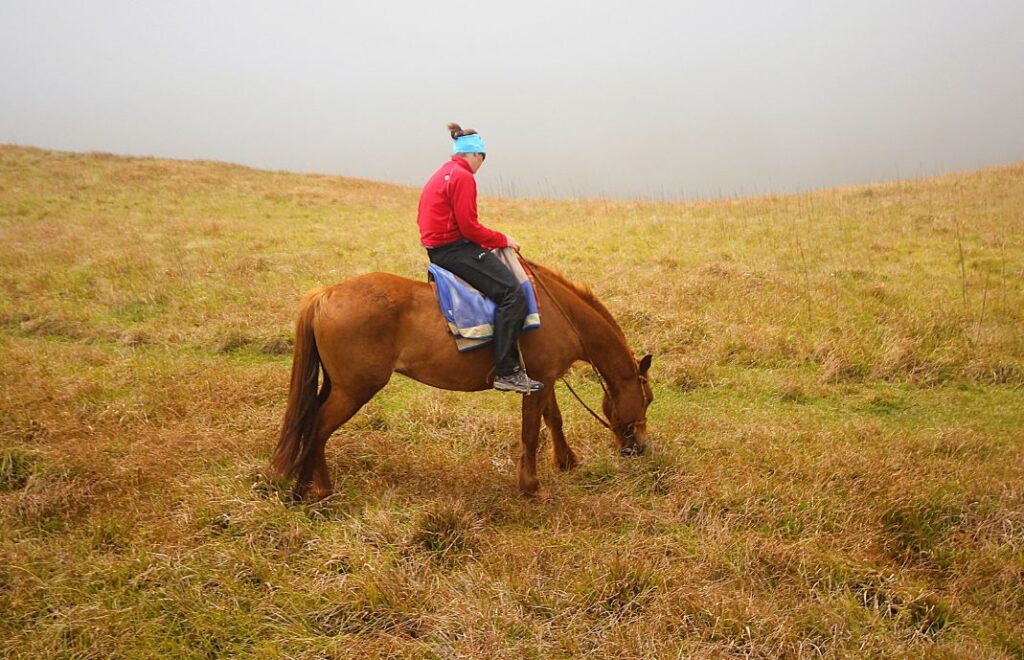
Easter Island is a place that almost demands to be explored slowly. Its beauty is not only found in the famous moai statues, but in the volcanic craters, the lonely coastal paths, and the feeling of standing in one of the most remote inhabited places on Earth.
Walking on Rapa Nui gives the island a different rhythm. Instead of rushing between archaeological sites, you notice the details. You will enjoy the wild horses grazing near stone ruins, waves crashing against black volcanic cliffs, and sea birds circling above the ocean.
This is an island where every trail seems to carry a story. Some walks lead to sacred sites and ceremonial villages, others to crater lakes, caves, viewpoints, beaches. You can also experience silent stretches of coastline where the Pacific feels endless. The distances may not always be huge, but the atmosphere is powerful.
If you want to feel the mystery and spirit of Easter Island beyond the main viewpoints, walking is one of the best ways to experience it. Another great option is horseback. Step by step, Rapa Nui becomes more than a destination. It becomes a landscape of history, isolation, and wonder.
Rano Kau
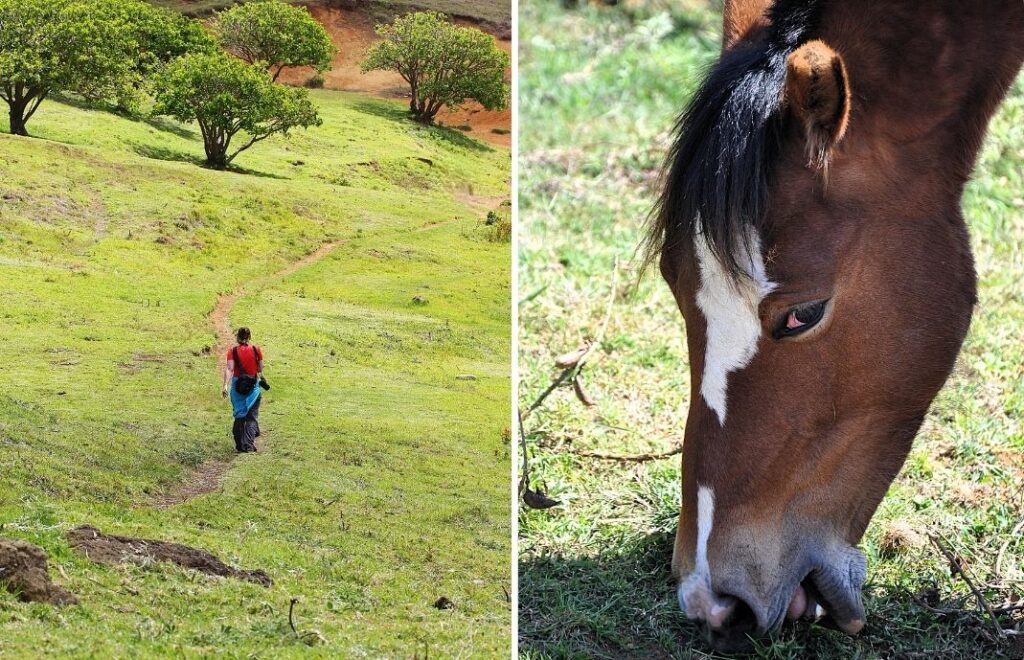
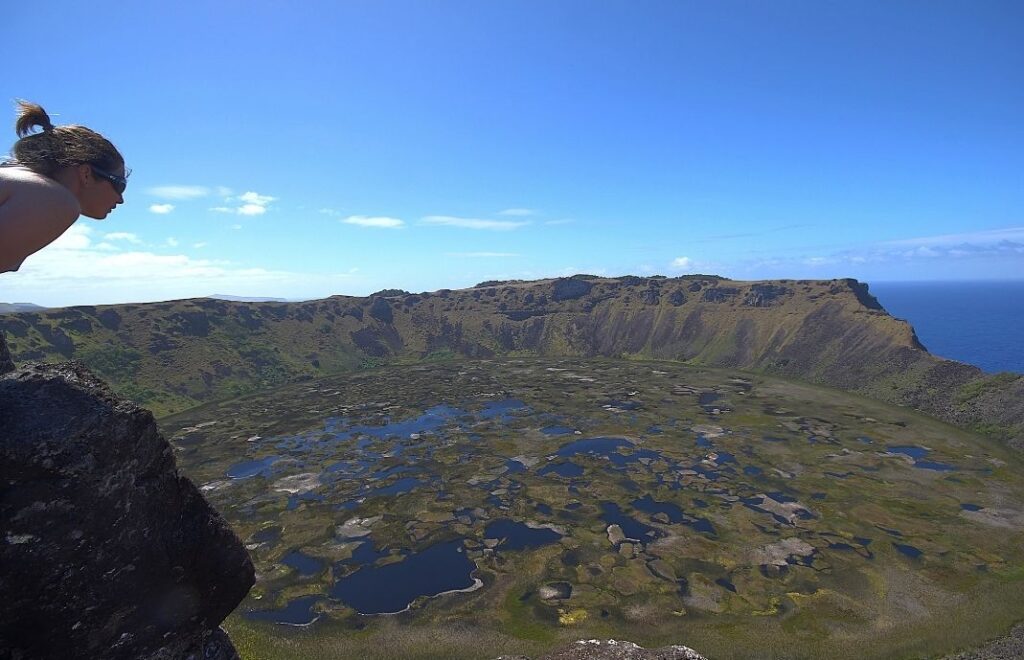
The walk to Rano Kau is one of the most rewarding on Easter Island, combining volcanic drama, ocean views, and a powerful sense of place. Rising near Hanga Roa, this ancient volcano is one of the island’s most impressive natural landmarks, with a vast crater that feels almost like a hidden world.
As the trail climbs, the views begin to open behind you. Hanga Roa becomes smaller in the distance, the coastline curves along the island, and the Pacific stretches endlessly in every direction. The walk is not only about reaching the top – it is about feeling how isolated and extraordinary Rapa Nui really is.
At the summit, the crater of Rano Kau is breathtaking. Inside, patches of freshwater, reeds, and green vegetation create a landscape that looks completely different from the windswept slopes outside. It feels calm, ancient, and strangely secretive, as if the volcano is holding part of the island’s memory.
Nearby is Orongo, the ceremonial village connected to the famous Birdman cult, which adds a fascinating cultural layer to the walk. Together, Rano Kau and Orongo make this route one of the best ways to experience Easter Island’s mix of nature, history, and mystery.
Time: 1 hour
Distance: 3 km
Level: Easy
More inspiration: Rano Kau and Orongo: Easter Island’s sacred edge
Vai Atare
The walk to Vai Atare offers a quieter and more intimate side of Easter Island. While places like Rano Kau and the moai platforms often steal the spotlight, this route gives you a chance to experience Rapa Nui at a slower pace, with volcanic landscapes, open views, and a strong sense of island silence.
Vai Atare is connected to the island’s volcanic scenery and archaeological heritage, making the walk feel like a journey through both nature and history. The landscape feels beautifully raw, with windswept grass, dark volcanic rock, wide skies, and the endless blue of the Pacific never far away.
If you want to go beyond the most famous stops, Vai Atare is a rewarding walk.
Time: 1 hour
Distance: 3,5 km
Level: Easy
Terevaka
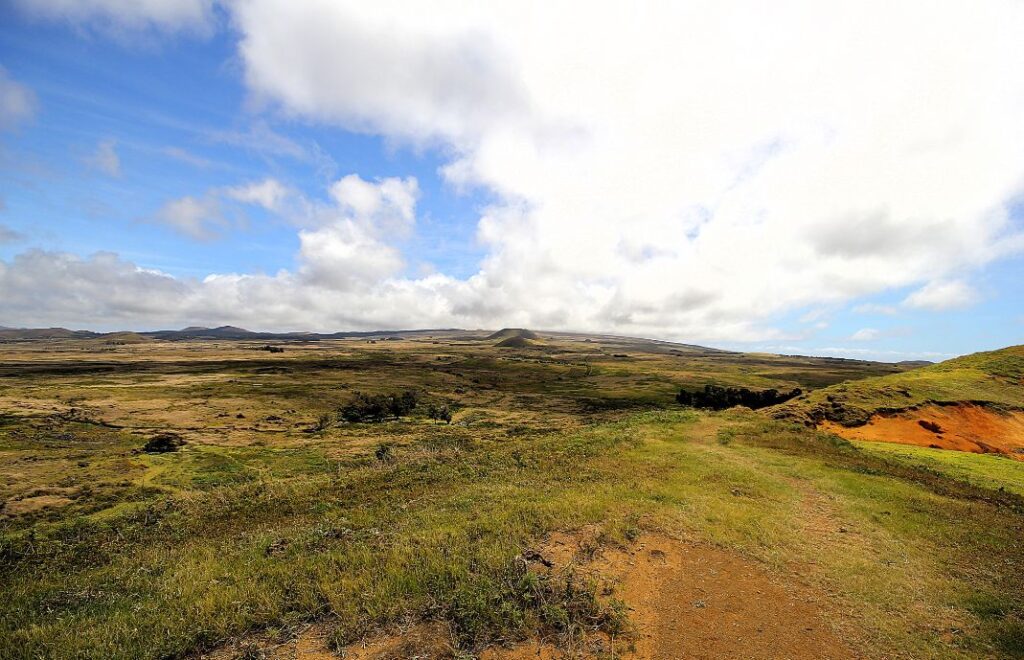
The walk to Terevaka takes you to the highest point on Easter Island, and it is one of the best routes for understanding just how remote Rapa Nui really is. From the summit, the island spreads out below in soft green slopes, volcanic ridges, scattered archaeological sites, and endless ocean on every side.
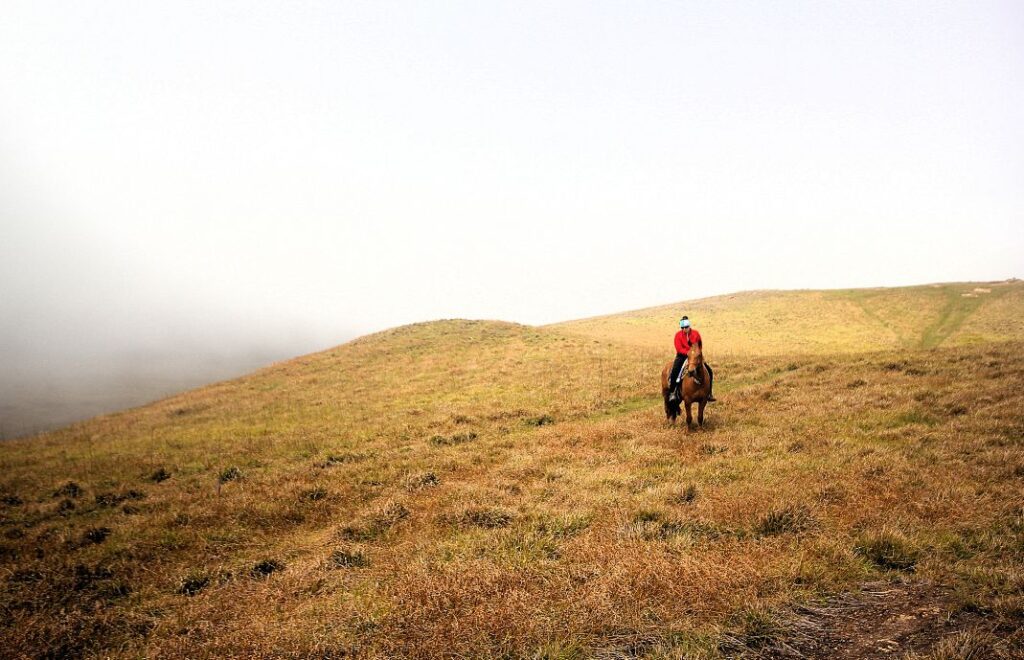
Unlike some of the more dramatic crater walks, Terevaka feels open and spacious. The trail leads through rolling countryside, where the wind moves across the hills and wild horses are often part of the scenery. It is a walk that feels peaceful rather than intense, with the landscape gradually widening as you climb.
Reaching the top is the real reward. At around 507 meters above sea level, Terevaka offers a rare full-island perspective. On a clear day, you can see across much of Rapa Nui, from the coastline to the volcanic landmarks that shape the island’s identity.
Standing on Terevaka, surrounded by the Pacific in every direction, Easter Island feels exactly as it should: distant, mysterious, and unforgettable.
Time: 4 hours
Distance: 8 km
Level: Medium
I decided to do a horseback ride to Terevaka – and at the top the weather changed dramatically. Grey clouds ruined the view, but it was an amazing experience.
Ara O Te Moai
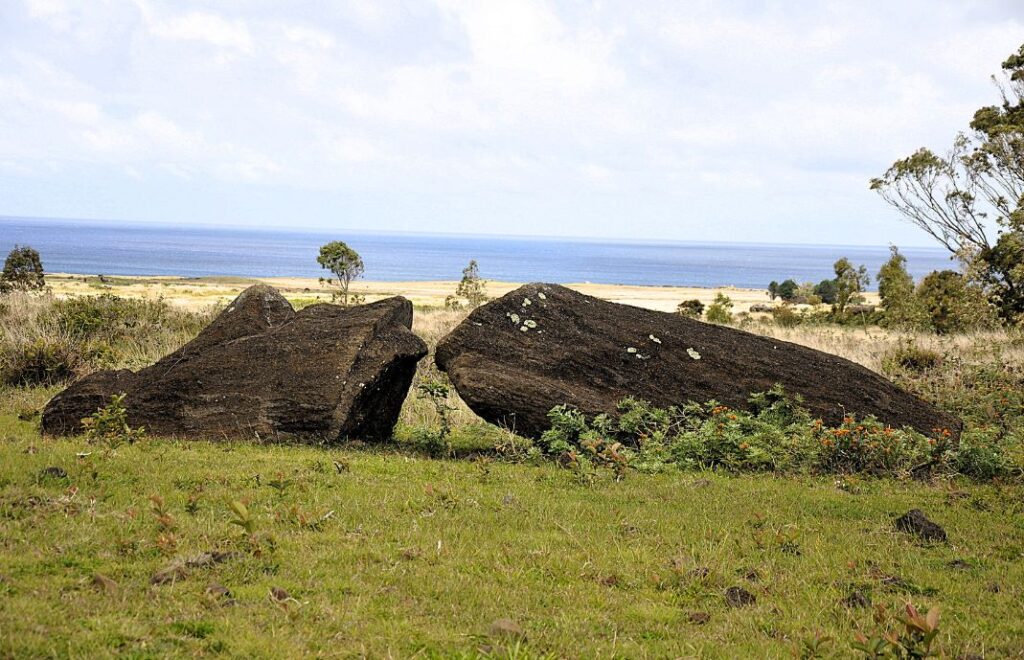
The walk along Ara O Te Moai is one of the most fascinating routes on Easter Island because it follows part of the ancient path once used to move the moai across the island. The name means “the Road of the Moai,” and walking here gives a powerful sense of the effort, skill, and mystery behind Rapa Nui’s most famous statues.
This route leads through open, windswept landscapes where unfinished or abandoned moai can still be seen lying along the old transport paths. These silent figures make the walk feel especially atmospheric. They are reminders of a time when the island’s people carved enormous statues at Rano Raraku and moved them toward ceremonial platforms around the coast.
What makes Ara O Te Moai so memorable is that it feels like walking through the process, not just seeing the final result. Instead of standing before restored moai on an ahu, you encounter them in the landscape, where history feels raw and unfinished.
Time: 2 hours
Distance: 5 km
Level: Easy
Poike
The walk across Poike takes you to one of the oldest and most atmospheric parts of Easter Island. This extinct volcano forms the island’s eastern peninsula, where the landscape feels open, lonely, and beautifully exposed to the wind and sea.
Poike is a wonderful route if you want a walk that feels more remote. The slopes are broad and quiet, with sweeping views across the coastline, the Pacific Ocean, and the softer green curves of Rapa Nui. Compared with some of the island’s more visited sites, Poike has a wilder and more solitary feeling.
The area is also connected to some of Easter Island’s most intriguing stories and archaeological traces. Highlights include the supposed Virgin’s Cave where young girls were consigned to whiten their skin, and Vai A Heva, a water collecting receptacle carved in the form of a face. You can also see several petroglyphs on the east coast as well as various ahu and moai. You will need a local guide to locate any of the above.
Time: 5 hours
Distance: 11 km
Level: Medium
North Coast
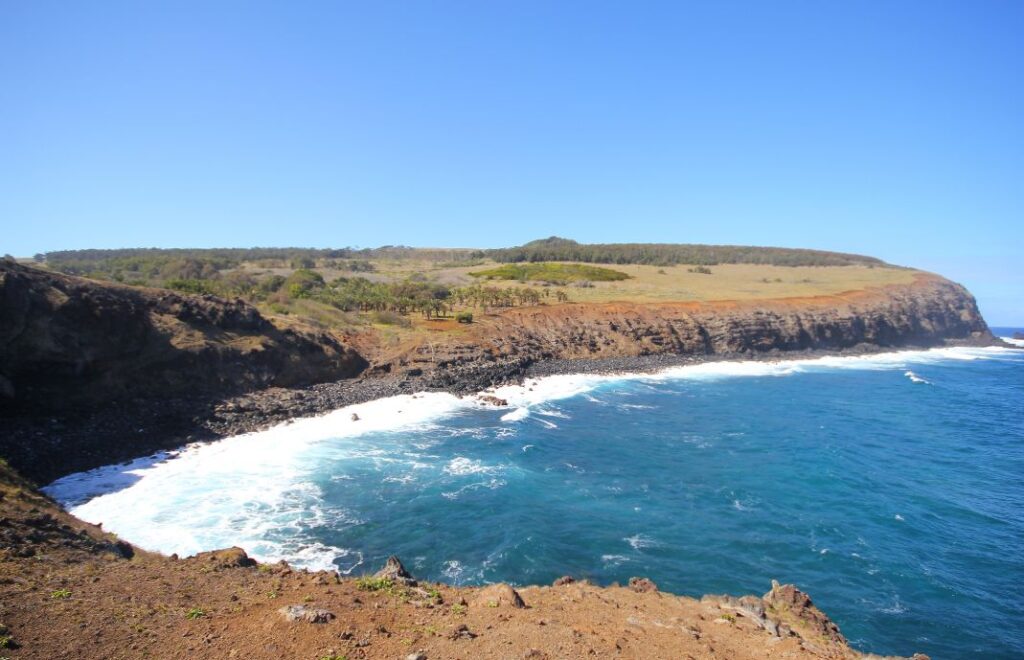
The North Coast walk is one of Easter Island’s great routes for those who want to experience Rapa Nui at its wildest. This part of the island feels remote, windswept, and beautifully untouched, with rugged cliffs, open grasslands, and archaeological remains.
This is the ultimate walk, and little has changed in this part of the island for several hundred years. The scenery is majestic, as is the array of destroyed platforms, caves, and petroglyphs.
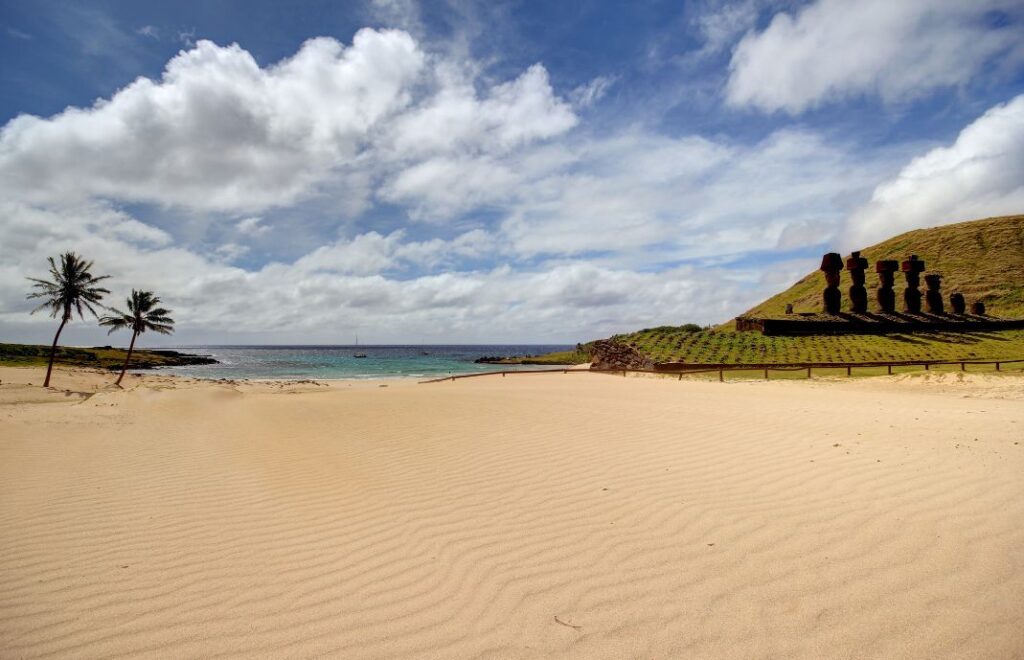
If you opt for this walk, you need a full day. It’s at least six hours to walk from Ahu Te Peu on the West coast right around to Anakena. There are no water and little shade, so you need to bring your own supplies.
If you are interested in seeing the caves and petroglyphs, you must bring a guide. Finding them on your own is impossible. Make sure you hire a guide who really knows this part of the island.
Time: 6 hours
Distance: 13 km
Level: Medium
Horseback riding
Horseback riding is another beautiful way to experience Easter Island, especially if you want to cover more ground while still feeling close to the landscape. It’s also great fun.
Riding across the island gives you a different perspective than walking. It is an especially atmospheric way to reach viewpoints, remote areas, or higher ground such as Terevaka, where the island stretches out beneath you.
Easter Island is also home to fairy wild horses, but the horses used for tourism are gentle and (usually) fairly obedient. But they do have a mind of their own and can be both lazy and stubborn (which is part of the experience). Once the stubbornness sets in, your local guide will encourage them.
Horse rides last from 2 hours to 2 days and are very much tailored to what you want to do. Tours usually include visits to the caves on the west coast, or up to Terevaka, the island’s highest point.
Important:
- Make sure you wear long pants and closed shoes
- Take plenty of water
- Bring sunscreen and sunglasses