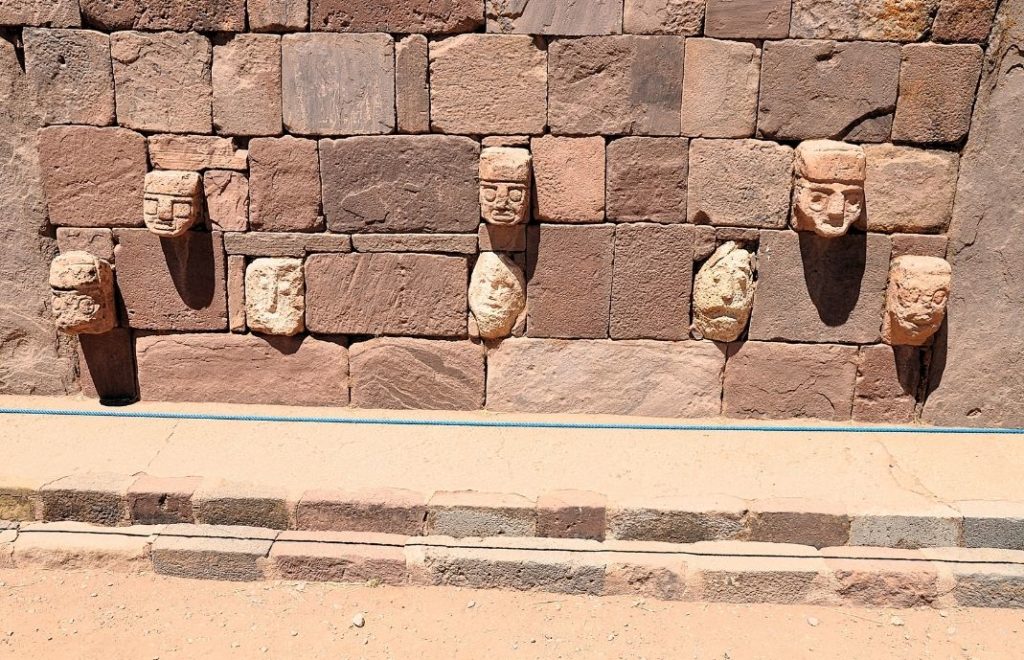
Hidden away in Bolivia’s highlands lies Pumapunku, one of the most astonishing and enigmatic archaeological sites on Earth. Part of the larger Tiwanaku complex, Pumapunku has fascinated historians, engineers, and conspiracy theorists alike for centuries.
There is something profoundly moving about standing among these ruins, perched nearly 4,000 meters above sea level. In the early morning, when few visitors are around, the silence is broken only by the whisper of the wind across the plateau. Towering in the background are the snowcapped Andes, and in that moment, history feels at once both distant and startlingly close.
Pumapunku is considered one of South America’s most significant archaeological treasures, challenging much of what we thought we knew about pre-Columbian civilizations.
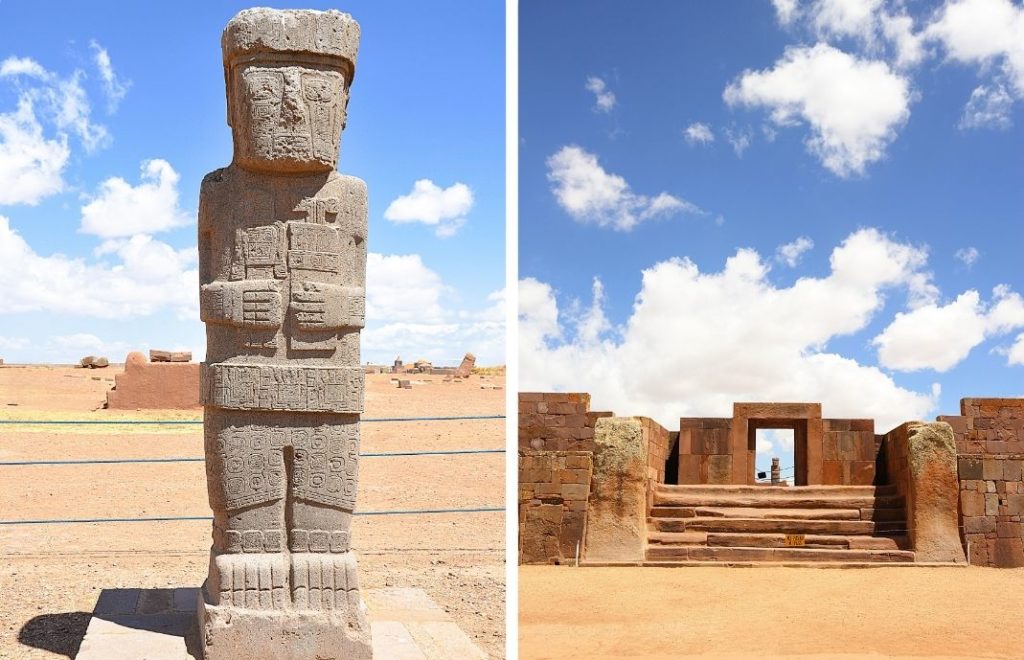
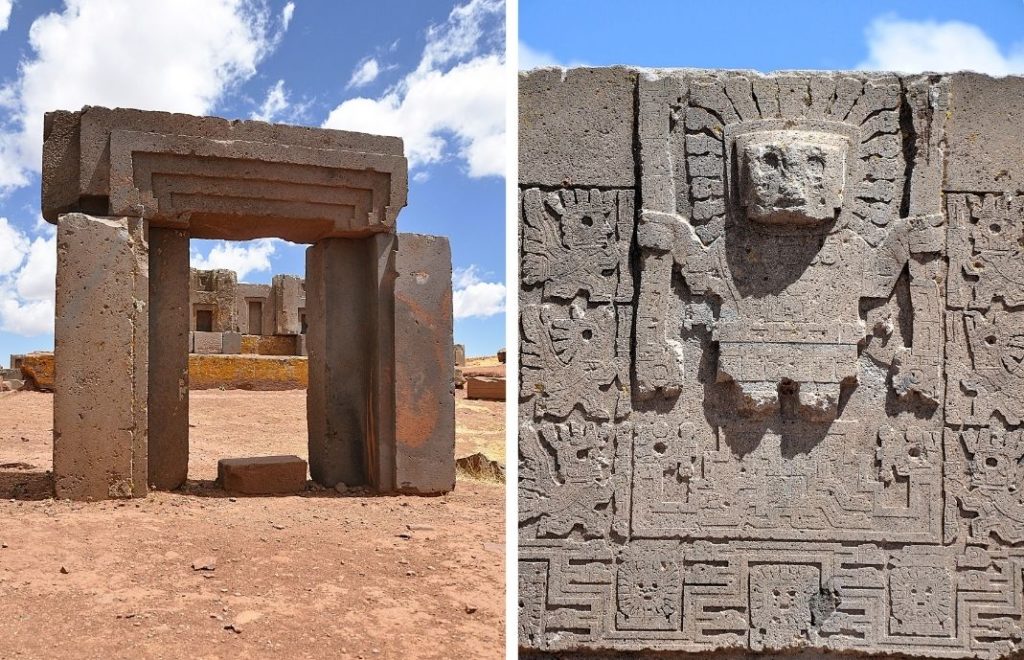
What makes it so extraordinary are the colossal stone blocks and their astonishing craftsmanship. Many weigh dozens of tons, yet they are cut with a precision that still leaves experts in awe. Among the most famous are the perfectly carved “H-blocks,” interlocking like pieces of a puzzle – an enduring testament to advanced construction techniques.
But visiting Pumapunku is not just about seeing ruins; it is about stepping into a landscape of unsolved mysteries. As you gaze across the site, questions inevitably arise: How were these stones transported and shaped? What role did this temple play in the Tiwanaku civilization, which flourished long before the Inca?
While archaeologists have uncovered many clues, much remains uncertain. Were these marvels built with simple stone tools or with advanced knowledge now lost to time? And of course, conspiracy theorists offer their own explanation: that Pumapunku was crafted not by human hands, but by Aliens!
Where is Pumapunku?
Pumapunku rests on the Bolivian Altiplano, about 70 kilometers west of La Paz and not far from the shimmering waters of Lake Titicaca. It forms part of the greater Tiwanaku archaeological complex, a UNESCO World Heritage Site and one of South America’s most significant cultural landmarks.
Perched nearly 4,000 meters above sea level and surrounded by the majestic Andes, its location gives Pumapunku an atmosphere unlike any other – crisp mountain air, endless horizons, and a silence that deepens the sense of stepping into another time.
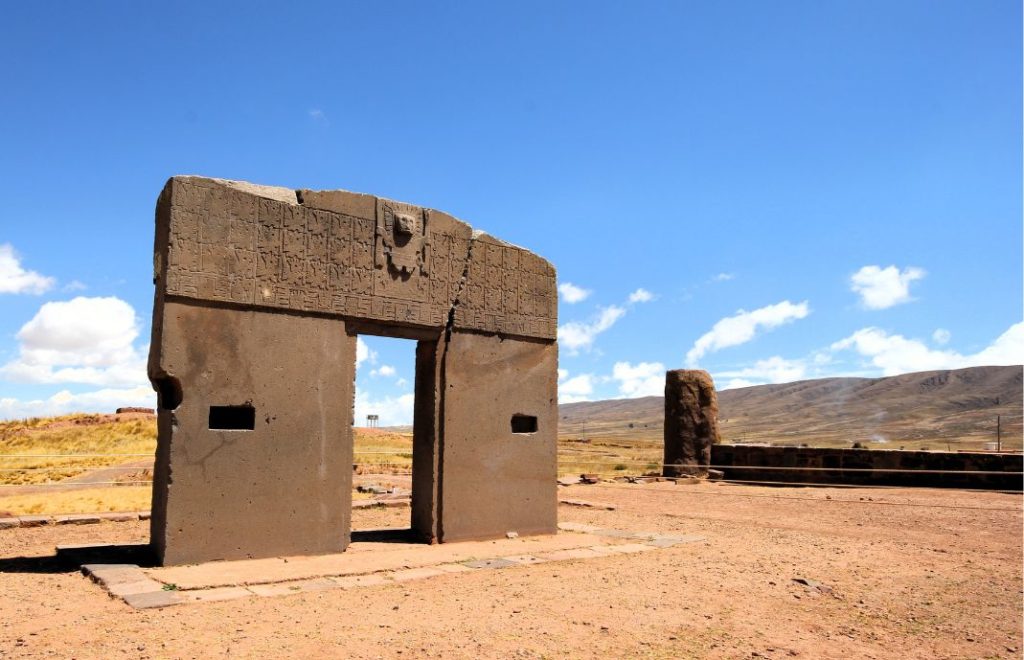
Reaching the site is straightforward: from La Paz, it’s a journey of about an hour and a half by car or bus. Many travelers choose to combine a visit to Pumapunku with a full-day tour of Tiwanaku, which also includes the iconic Gateway of the Sun and other impressive ruins.
Standing here on the high plain, you feel both far removed from the modern world and intimately connected to one of South America’s most enigmatic civilizations.
The history of Pumapunku
Pumapunku is part of the vast Tiwanaku complex, once the beating heart of the Tiwanaku civilization – one of the most influential pre-Columbian cultures in South America. Flourishing between 500 and 1000 AD, long before the rise of the Inca Empire, Tiwanaku is regarded as one of the most advanced civilizations of the Andean world.
The name Pumapunku means “The Puma Gate” in the Aymara language, and scholars believe the site served as a sacred platform or ceremonial center. Archaeological evidence suggests that Pumapunku played a central role in religious rituals, drawing people from across the region to gather and worship.
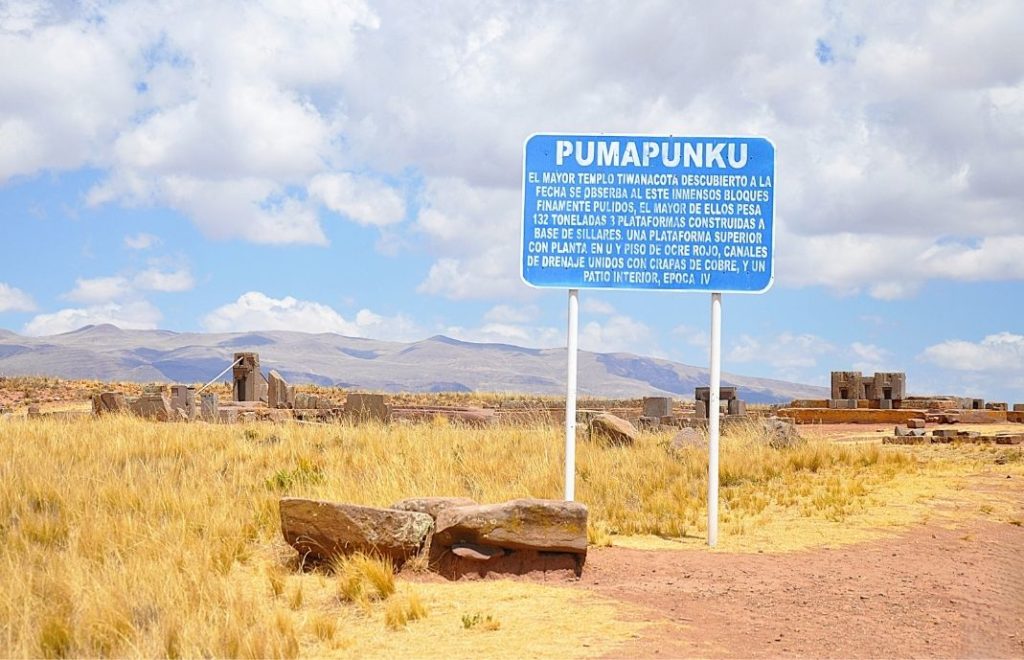
What sets Pumapunku apart are the enormous stone blocks used in its construction. Some weigh over one hundred tons, yet they were cut and fitted with astonishing precision. The site’s distinctive H-shaped blocks, interlocking like pieces of a puzzle, stand as silent proof of advanced engineering skills and remarkable craftsmanship.
Despite extensive research, much about Pumapunku remains a mystery. How were the stones transported across long distances? What techniques allowed the Tiwanaku people to achieve such perfection in their stonework? The absence of definitive answers has cloaked the site in an aura of intrigue, inspiring both rigorous scientific study and endless speculation.
Pumapunku is more than the remnant of a civilization’s golden age – it is a testament to human ingenuity and ambition, a monument that has endured through centuries. To walk among its ruins is to step into history itself, a place still not ready to reveal its secrets.
How was Pumapunku built?
This is the question that continues to puzzle and intrigue researchers. What is certain is that Pumapunku was constructed with enormous blocks of andesite and sandstone, some weighing more than one hundred tons, quarried from sites located several kilometers away. How the Tiwanaku people managed to transport and carve these megaliths without the benefit of modern technology remains a subject of heated debate.
Several theories have emerged. Some archaeologists believe the blocks were moved on sleds and wooden rollers, hauled across the plateau by sheer human effort. Others suggest they may have been transported on rafts along swollen rivers during the rainy season. As for the precise stonework, hypotheses include the use of copper tools combined with sand and abrasive techniques to achieve the extraordinary finish.
What makes Pumapunku truly unique is this very precision: many of the blocks feature perfectly straight edges, polished surfaces, and intricate cuts that allow them to interlock like pieces of Lego. This remarkable craftsmanship has sparked both serious scientific study and more speculative theories. Yet most scholars agree on one thing – Pumapunku is evidence of a highly advanced society, with an astonishing mastery of engineering and construction techniques.
The mysteries of Pumapunku
Pumapunku is more than an archaeological site – it is a landscape of enigmas that has inspired countless myths and speculations. The extreme precision of its stone blocks, the flawless angles, and the intricate carvings have left many wondering how a civilization without iron tools or the wheel could have created something so sophisticated over a thousand years ago.
Some believe the Tiwanaku people possessed knowledge and techniques that vanished with their civilization. Others argue they must have had access to more advanced tools than any evidence has revealed. And then there are the more fantastical theories – that the blocks were cast like a primitive form of concrete, or even that the construction was aided by extraterrestrial forces.
While scholars dismiss the more outlandish claims, these mysteries only add to Pumapunku’s allure. It is this blend of science, history, and legend that makes the site so captivating. Standing among the massive stone blocks, you feel as though you are in the space between fact and fable – at a place where the past still guards its secrets.
Practical travel guide
A visit to Pumapunku is usually part of a trip to the entire Tiwanaku complex, a UNESCO World Heritage Site that offers one of the richest windows into South America’s pre-Columbian past.
Here’s everything you need to know to plan your journey:
Location & transportion
Pumapunku lies about 70 kilometers west of La Paz. The easiest way to get there is by bus or car. The journey taking roughly 1.5 hours. Many travelers opt for organized day tours from La Paz, which typically include transport, entry fees, and a knowledgeable guide.
Tickets & opening hours
Your entrance ticket covers the entire Tiwanaku complex, including Pumapunku. Tickets are purchased on-site. Opening hours are generally from 9:00 AM to 5:00 PM daily, though it’s wise to confirm locally before you go.
Best time to visit
The Bolivian highlands experience dramatic shifts between day and night. The dry season (May to October) offers sunny skies and crisp air, though mornings and evenings can be cold. The rainy season (November to March) brings lusher landscapes and fewer tourists, but also a higher chance of showers.
Tips for your visit:
- Altitude (around 3,850 m / 12,630 ft) can be challenging – pace yourself, drink plenty of water, and give your body time to adjust.
- Hire a local guide. Their insights bring the site’s history and mysteries vividly to life.
- Pack a hat, sunscreen, and a warm layer – the weather can change quickly.
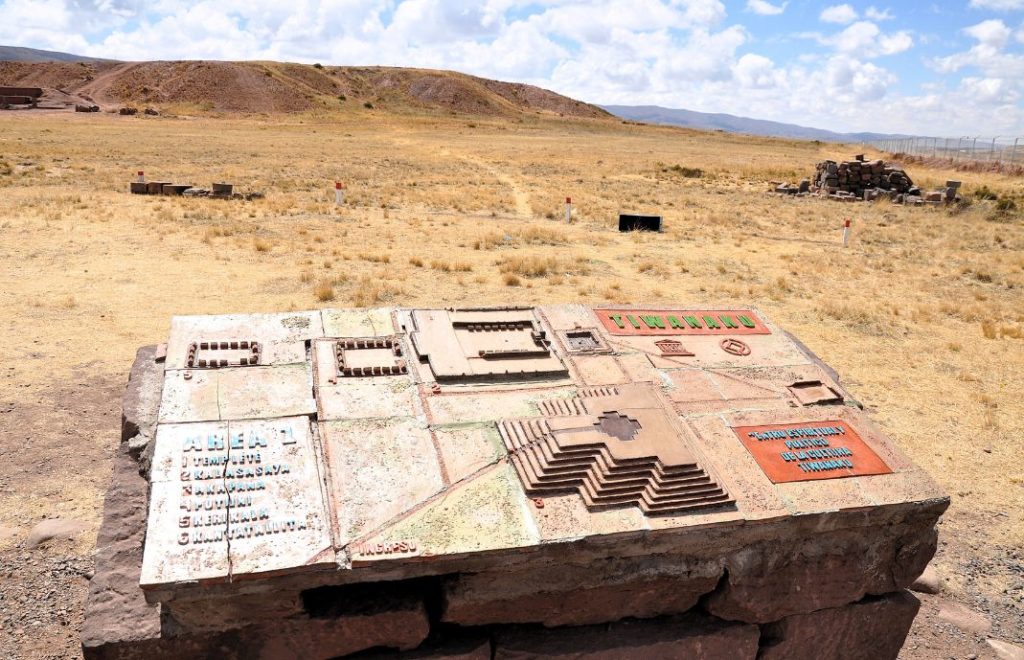
- Combine your visit with other Tiwanaku highlights, such as the Gateway of the Sun, the Akapana pyramid, and the Kalasasaya temple.
A journey to the Pumapunku plateau is more than sightseeing. It’s an encounter with history, mystery, and a touch of adventure. Here, on the windswept highlands, you step back into a time when the great civilizations of the Andes still flourished.