
Masai Mara is a symphony of the wild. It’s the thunder of hundreds of thousands of hooves pounding the earth as wildebeest and zebra sweep across golden plains in endless waves. It’s the shadowy elegance of a leopard draped over an acacia branch, lazily surveying its kingdom.
Here, elephants march in gentle procession across the open savanna, their silhouettes etched against a horizon that seems to go on forever. Warthogs trot comically down dusty tracks, tails held aloft like jaunty flags, while vultures crowd over an unrecognizable carcass in a macabre breakfast feast.
And then, there’s the river: a muddy stage where hippos grunt, snort, and bellow, their massive backs breaking the surface like living boulders.
This is Masai Mara National Reserve. This is Africa, exactly as you imagined it – or perhaps even better. A raw, unscripted drama where every day is a new act, and every heartbeat reminds you that you are a guest in nature’s grandest theater.
Masai Mara – Where the wild heart beats
The storm hammered the savanna all night, pounding like a relentless drummer on the roof of the world. By morning, the air is scrubbed clean – crisp, cool, and charged with life. Sunlight glitters in the puddles scattered across what was yesterday a dusty road, turning them into fleeting mirrors. Along the track, a troupe of monkeys frolics shamelessly, splashing and slurping from their newfound watering holes.
The best part of a night drenched in rain? The animals return to the roads. For a safari-goer, that means front-row seats to nature’s spectacle.
Masai Mara – Kenya’s crown jewel, its most celebrated safari destination – is all drama and grace rolled into one breathtaking expanse. Here, the savanna stretches beyond the imagination, a rolling golden sea punctuated by flat-topped acacias, its silence broken by the rumble of hooves or the distant call of a lion.
Threading through this wilderness is the Mara River, a serpentine ribbon of green flanked by lush forest. Its waters conceal danger and life in equal measure – crocodiles lurking with patient jaws, while hippos bob like oversized corks, grunting in comic defiance of their deadly strength.
Masai Mara isn’t just a destination – it’s a living, breathing canvas of survival and beauty, a place that sears itself into your memory with the power of the African sun.
On the trail of the animals
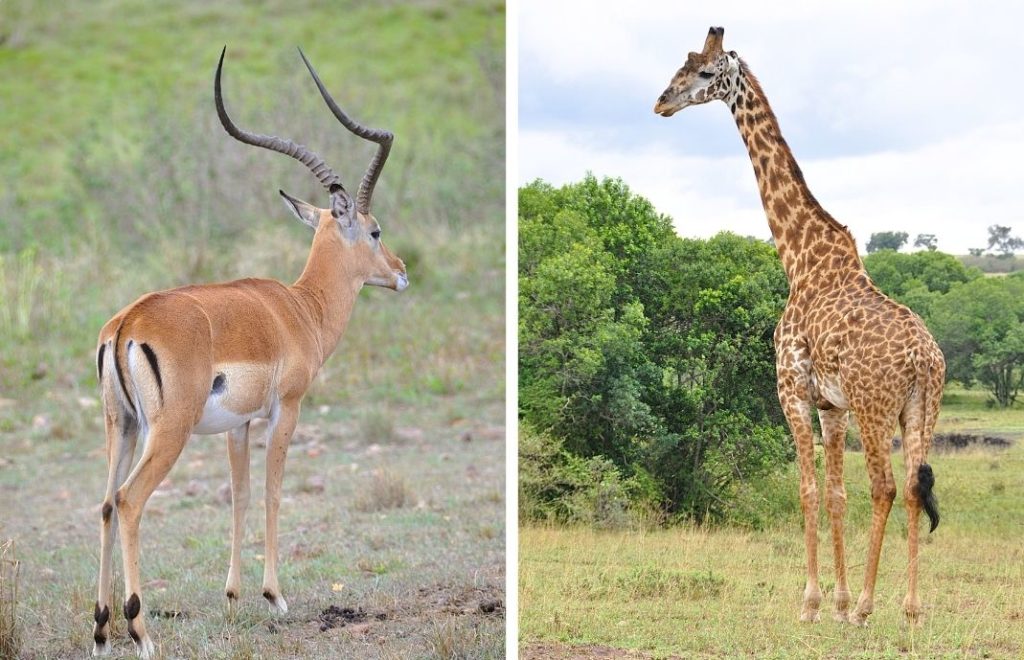
We’ve barely left the lodge when the first encounter stops us in our tracks: a giraffe, poised like a sculpture against the endless blue, lazily stripping an acacia tree of its tender leaves. He’s a vision of grace and geometry, his long legs splayed, his elegant neck arching like a question mark toward the morning sun. Slowly, almost thoughtfully, he chews, blinks, and swivels his magnificent head to study us with those soulful, almost melancholic eyes. We’re no threat – just humble spectators to his quiet breakfast ritual.
This is the Masai Mara, where the wild unfurls in every direction, where the Big Five roam free – lion, elephant, leopard, buffalo, and rhino – sharing this vast amphitheater with hundreds of other species in a drama that never ends. Few places on the continent can match its density of life, its pulse of raw abundance.
Giraffes sway like dancers above the thorny scrub. Elephants lumber in dusty columns, their wrinkled hides glowing in the sun. Zebras graze in monochrome harmony, while hippos grunt in muddy pools and crocodiles lie in sinister stillness along the riverbanks. Predators patrol the plains: lions sprawled in regal disinterest, leopards draped in the dappled shade of fever trees, cheetahs coiled springs of muscle and speed.
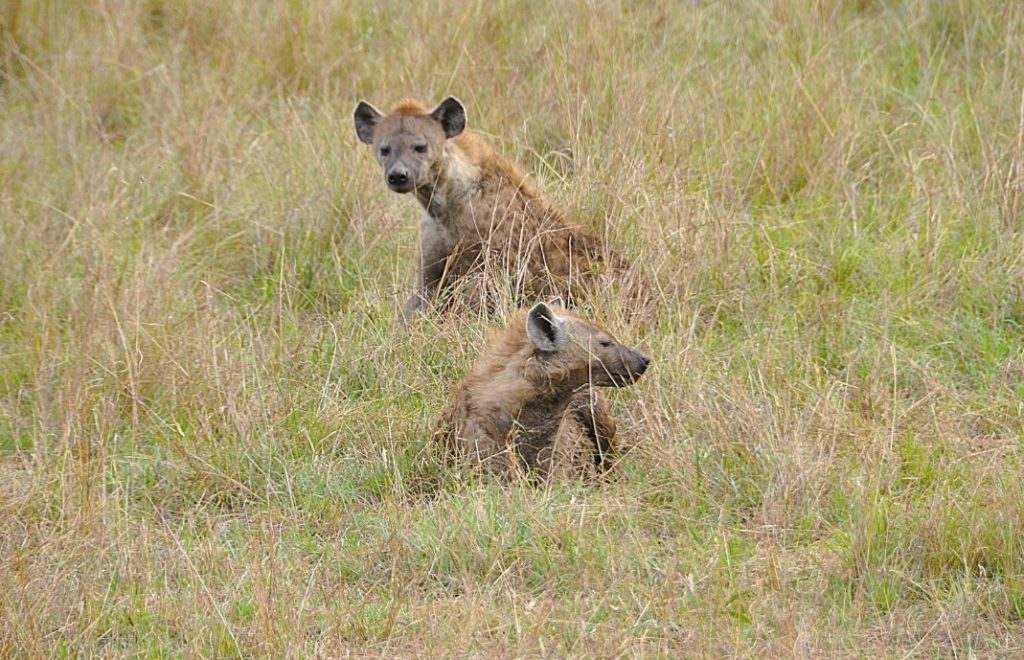
And then, there’s the supporting cast: warthogs tail-high on comic parades, baboons gossiping in roadside troops, antelopes in every size and shade – from the lithe impala to the noble waterbuck. Above it all, the sky shimmers with wings: 452 bird species, including 53 raptors, riding the thermals in search of prey.
Masai Mara is not just a park – it’s a perennial pageant, a stage where every season scripts its own performance. Whether it’s the drama of the Great Migration, the intimacy of a predator’s stalk, or the simple poetry of a giraffe’s breakfast, one truth endures: here, life beats louder.
Hundreds of stripes in motion
The vehicle lurches across the soaked savanna, bouncing over ruts while water explodes from deep puddles in shimmering arcs. Dew-kissed grass glitters like silver in the sunlight, and raindrops still cling to every leaf and thorn.
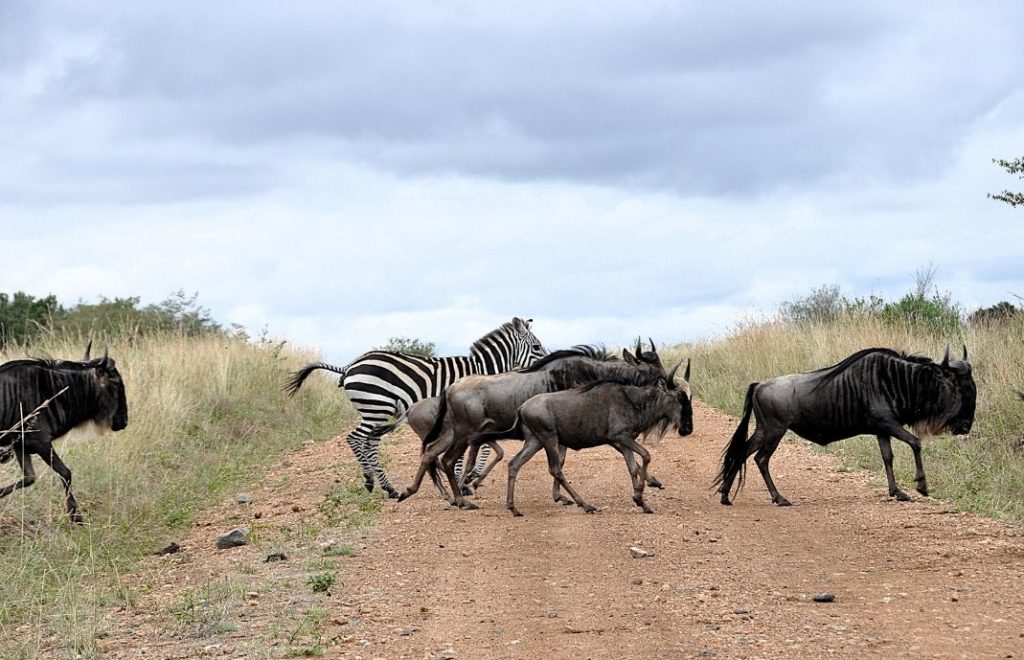
Then – a flash of monochrome. Black and white stripes flicker through the brush, like a secret code hiding in the green. And then, suddenly, they’re everywhere: a congregation of zebras, hundreds strong, bunched tightly together in perfect, chaotic harmony.
Our driver eases the Land Cruiser to a halt and kills the engine. Silence settles on the savanna – thick, humming, alive. Minutes tick by. Then, like a slow-motion ripple, the herd stirs.
The leader emerges first – a commanding stallion who steps boldly toward us, his ears pricked, his amber eyes hard with calculation. He locks his gaze on ours, weighing us with the quiet authority of a monarch deciding our fate. Are we predator or harmless voyeur? We hold his stare, hearts drumming. Then, with a flick of his head, the verdict is in: Not today.
What follows is pure poetry. The herd begins to flow – a living river of stripes spilling forward, adults flanking the foals, tails swishing, hooves whispering against the wet earth. They surge toward the road, and in an instant, we’re engulfed. Zebras before us, zebras behind us, zebras brushing the car doors with the warmth of their bodies.
A young stallion, curious and cocky, halts by my window. His velvet muzzle hovers inches from my arm. Our eyes meet and hold – dark pools meeting human wonder – a strange, silent pact in the stillness of the wild.
Then, like a twist in a dance, the gnus arrive. Shaggy, bearded misfits trotting in like uninvited party crashers, folding into the striped tide. One zebra, clearly in the wrong crowd, bounds among them in comic desperation, zigzagging to find his kin – a lone pianist lost in a brass band.
For a breathless minute, the savanna becomes a stage: stripes and shadows, grace and chaos. And then – just as suddenly – the cast melts away into the horizon, leaving only ripples in the wet grass and a silence that feels like magic.
Meet Officer Buffalo
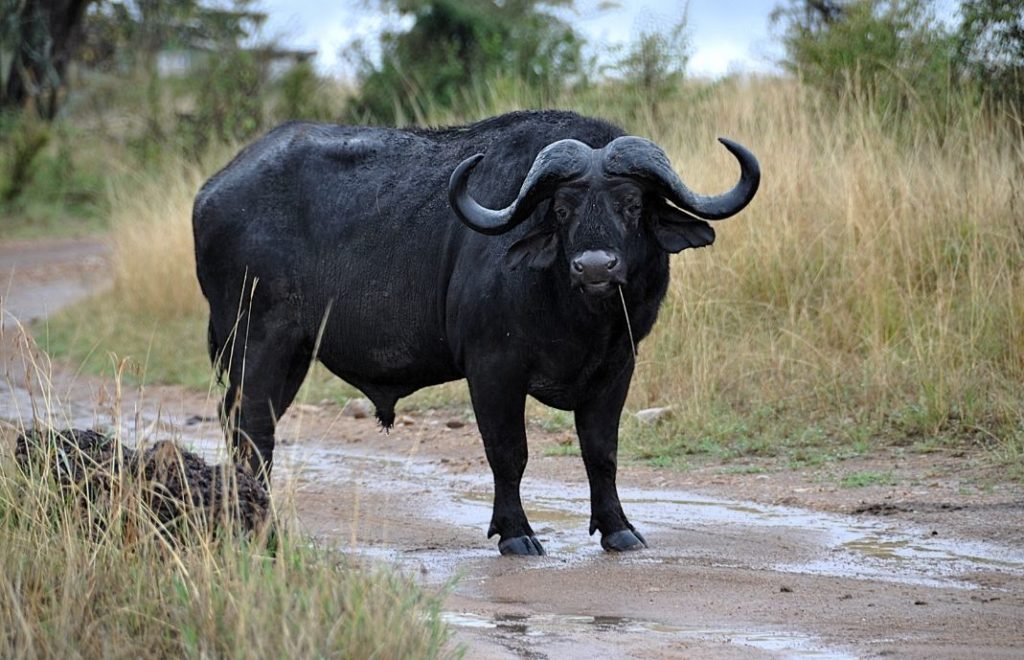
The safari rolls on, wheels crunching softly over the damp track, when suddenly – gridlock. Around the bend, a lone buffalo has assumed the role of traffic cop, and let’s just say, he’s not one you argue with.
Here in the Masai Mara, the rules of the road are clear: wildlife always has the right of way. Especially when the “obstacle” weighs 650 kilos, stands 1.5 meters tall at the shoulder, and carries a set of horns that could turn a Land Cruiser into modern art in seconds.
Yet for all that power, he hardly looks menacing. In fact, he seems almost bored, lazily chewing on a blade of grass as if to say, “You’re not going anywhere until I’m good and ready.”
So we wait. Patient. Respectful. A bead of sweat slides down my back, not from fear, but from the sheer thrill of this standoff.
Finally, with regal disdain, our self-appointed officer steps aside, slow and deliberate, granting us passage without so much as a glance. No wave. No nod. Just the heavy indifference of a creature who knows the savanna is his kingdom – and we’re merely visitors.
As we roll past, I can’t help but smile. On this road, there are no stop signs, no lights – just the untamed law of nature. And Officer Buffalo enforces it better than anyone.
Walking with a ranger along the Mara River
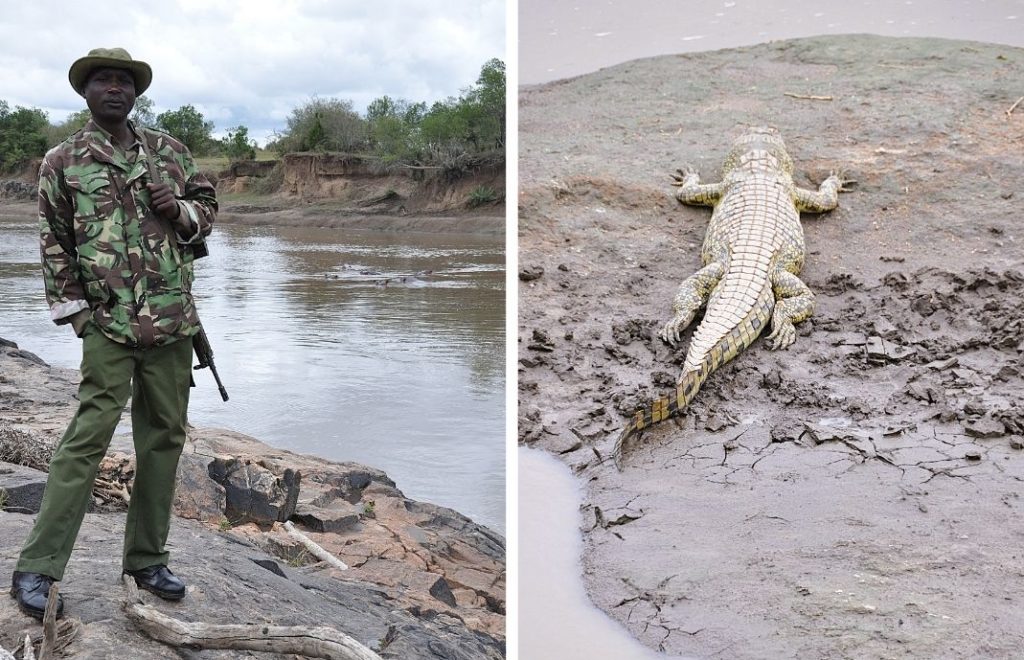
The Mara River gleams in the early sun, its surface broken by the wide, grinning backs of hippos and the armored stillness of crocodiles basking on the banks. At Hippo Pool, visitors are allowed out of the safari vehicle – but only with strict rules: keep your distance from the water, and always respect the wild.
Here, the Kenya Wildlife Service maintains a small outpost, where rangers double as guides for those curious enough to explore on foot. For a small fee, you can trade four wheels for two legs and walk the muddy path along the river, escorted by someone who knows this land better than anyone.
My guide is Sam – broad smile, calm eyes, and a rifle slung casually over his shoulder like it weighs nothing. It’s a quiet, sobering reminder that in the Mara, safety is never an afterthought.
As we squelch along the slippery trail, Sam peppers the silence with fascinating tidbits about the park and its creatures. Then, with a chuckle, he shares a story that makes my stomach clench:
“I’ve never had to fire my gun while walking with guests,” he says matter-of-factly. “But my colleague… well, he wasn’t so lucky. One tourist thought the warning about keeping your distance from the hippos didn’t apply to him.”
I glance at the river, at those massive, half-submerged shapes – and gulp. “What happened?”
Sam grins wryly. “The hippo charged. My friend fired a warning shot just in time. The beast backed off, and the tourist learned a lesson he won’t forget.”
Both lived to tell the tale – but it was close. And it drives home a truth many don’t realize: hippos kill more people in Africa than any other animal. They may look like rotund, bumbling grazers, but their jaws can crush a canoe in seconds, and their tempers are as quick as the Mara River current.
As we turn back toward the ranger station, the air hums with insects and the smell of wet earth. My boots are caked in mud, my mind buzzing with stories – and one firm conviction: on foot in the Mara, respect isn’t optional. It’s survival.
Four of the Big Five
Lunch is served at Hippo Pool, and what a view: hulking hippos wallowing in the murky water like oversized river stones. We’re mid-bite when the scene changes – a few of them heave their massive bodies onto the bank, glistening in the sun. One mother brings her calf ashore, and my heart just melts. It’s not often you see a baby hippo this close.
Back on the track, the Masai Mara unfurls like a living tapestry of movement and color. Impalas bound through tall grass, their russet flanks flashing like copper coins. Baboons lope across the road in noisy troops, while warthogs scamper off, tails stiff as antennae. Zebras and wildebeest graze in monochrome harmony, their stripes and beards blending into the gold of the plains.
Then – the predators. Two lionesses crouch in the thicket, golden ghosts in a green world, eyes locked on an unseen target. Not far away, cheetahs lounge under an acacia, bellies swollen with fresh kill, their sleek bodies draped like ribbons over the earth.
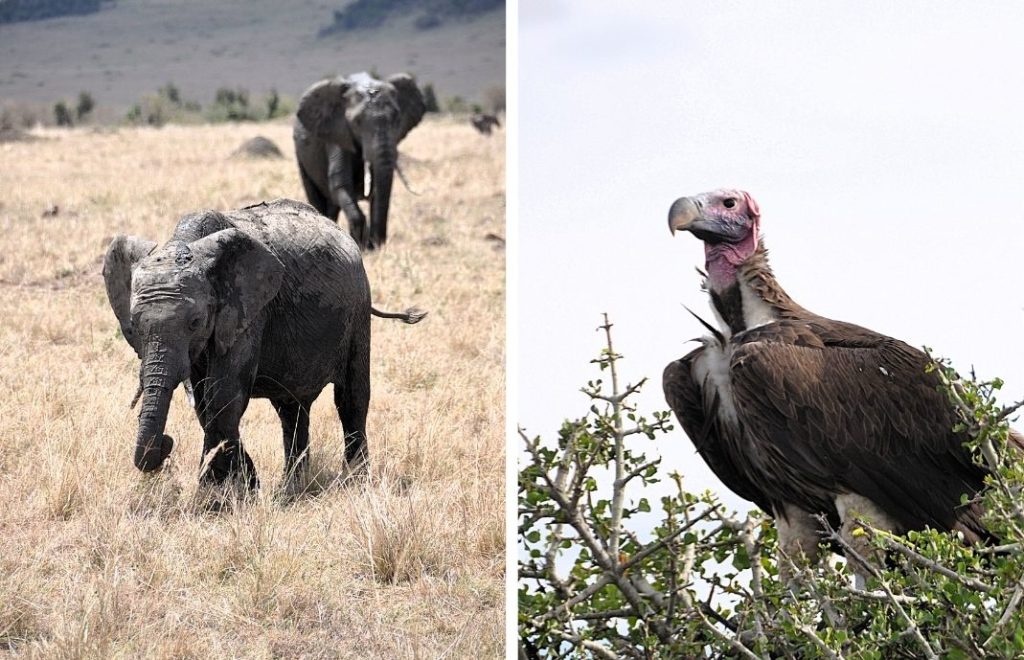
And then, a moment of pure awe: fifteen elephants – a full family unit – amble toward us in stately procession. Giants in shades of gray, calves trotting between towering legs. They pause just meters from our vehicle, trunks curling, ears fanning gently in the breeze. For half an hour, time stands still. We sit, transfixed, in the quiet communion of species.
The day’s final triumph comes in dappled leaves: a leopard draped over a high branch, a shadow among branches, its rosette coat barely visible against the play of light. Silent. Perfect. Predatory grace distilled into a single form.
By sundown, we’ve checked off four of the Big Five. The rhino remains elusive – but in this kingdom of teeth, tusks, and tails, you never stop looking.
King and Queen of the savannah
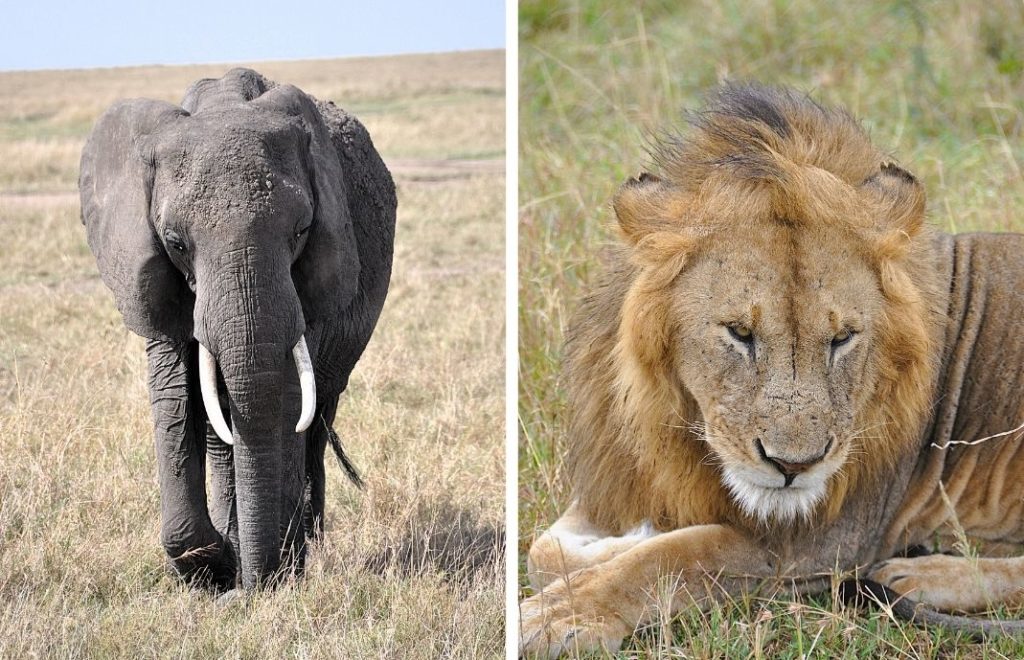
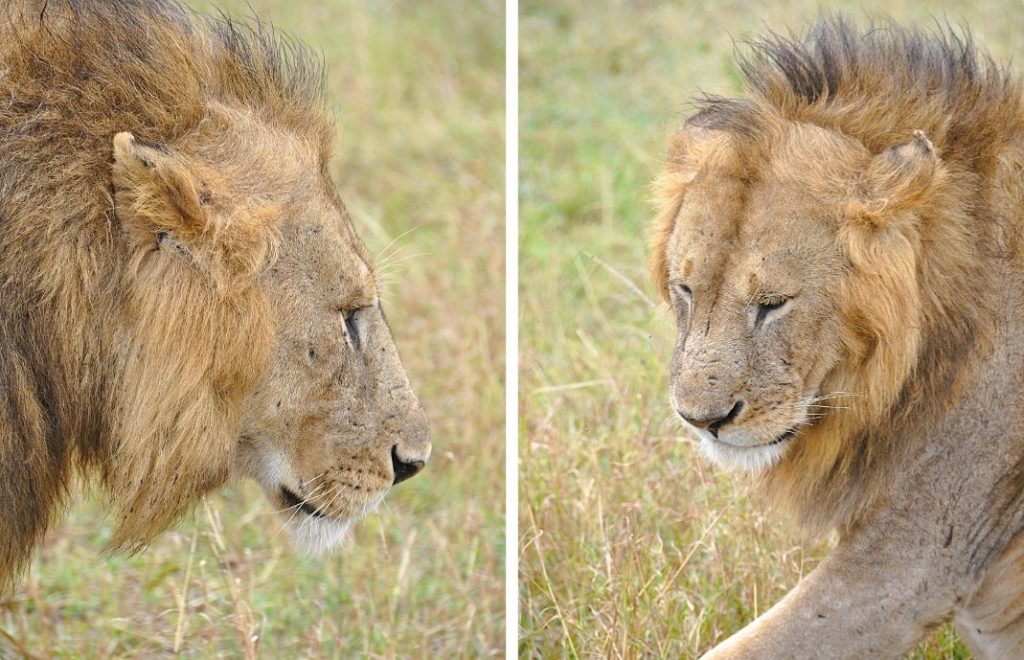
The rain has softened to a fine mist, casting a silvery veil across the savanna. And there they are – the lion and his queen, sprawled regally in the open. A picture of power and poise, though, judging by their flicking tails and heavy sighs, the drizzle doesn’t exactly thrill them.
Then, movement: the male rises, a rippling wall of muscle and mane. He saunters toward us with the slow arrogance of royalty, his amber eyes unreadable. When he reaches the vehicle, he brushes his massive body along the door, leaving a streak of damp fur against metal. He yawns – a cavernous roar without sound – and slips silently into the thicket, vanishing like a dream.
Just when I think the day has given all its gifts, a gray giant materializes from the bush. At first, only the ears – a pair of colossal fans twitching above the foliage. Then the whole form emerges: an elephant bull, vast and primeval, every wrinkle telling the story of centuries past.
Our driver keeps the engine idling; one wrong mood swing and this titan could flip us like a toy. He lumbers closer, each step a deep, resonant drumbeat in the earth. My breath catches as he sways his majestic head, tusks glinting in the soft light.
I can’t shake the bitter truth: these creatures, sublime in their grandeur, are slaughtered for ivory – symbols of greed carved from innocence. The thought curdles my awe into something sharp, almost angry.
But the elephant spares us his wrath. He dips his trunk into the shrubs, tearing branches with casual strength, utterly indifferent to our trembling reverence. After a while, he turns away, his massive silhouette dissolving into the mist like a slow-moving storm.
And as the savanna exhales and the day exhales with it, I know this: safari is an addiction – a heady intoxication brewed from raw beauty and the primal thrum of life. One taste, and you’re hooked forever.
More inspiration to Masai Mara:
A guide to Masai Mara National Reserve
The Great Migration
Check-In: Ashnil Mara Camp
