
The Norwegian flag flutters proudly outside the red wooden building – a quiet yet powerful tribute to the long years when Norwegians had to hide their national flag in cellars and attics. It has been 80 years since the end of World War II.
The Rakkestad Resistance Museum ensures that the dark days of occupation are not forgotten – and that the stories are passed down to future generations.
The guided tour begins beneath a flag that sends a chill down your spine. Hanging from the ceiling is a large banner emblazoned with a stark, right-facing swastika – the defining symbol of the Nazi Party and Hitler’s Germany before and during the Second World War.
It is here that a journey back in time begins…
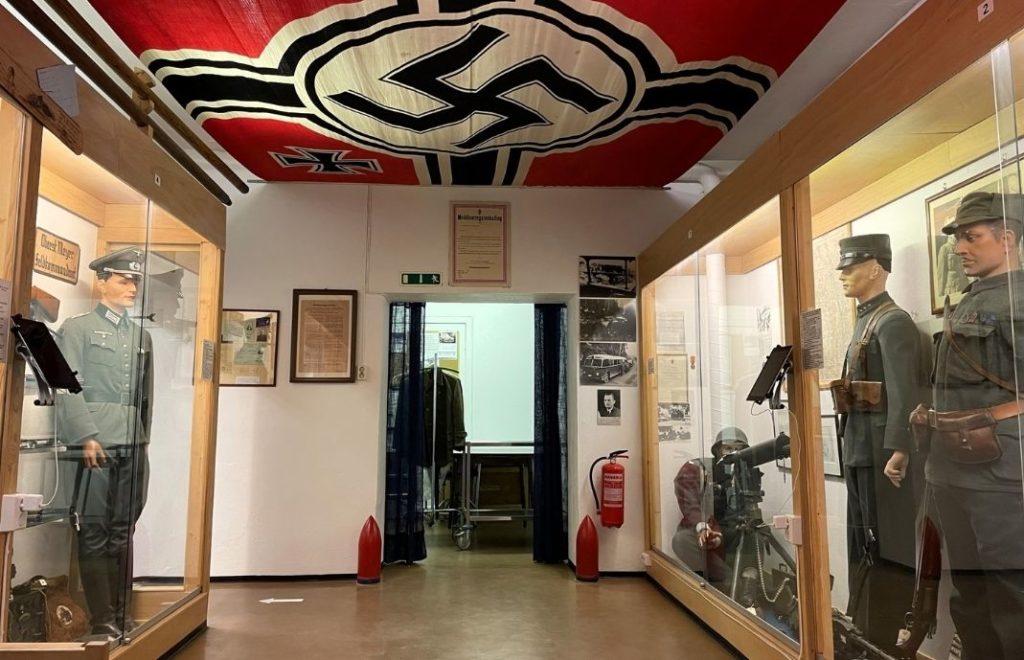
The Rakkestad Resistance Museum
The Friends of the Resistance Museum was founded in 1978, made up primarily of men who had served in the Norwegian resistance during World War II, along with a number of younger individuals with a deep interest in wartime history.
Once the decision was made to create a museum, a remarkable volunteer effort was set in motion.
The museum was initially established in the old Pump House, but it soon became clear that the building was too small. An extension was added, and today the Rakkestad Resistance Museum spans three floors and showcases more than 4,000 artifacts.
The museum officially opened its doors in 1983 and is without a doubt a product of unwavering idealism – and a passionate desire to preserve history and ensure that it never repeats itself.
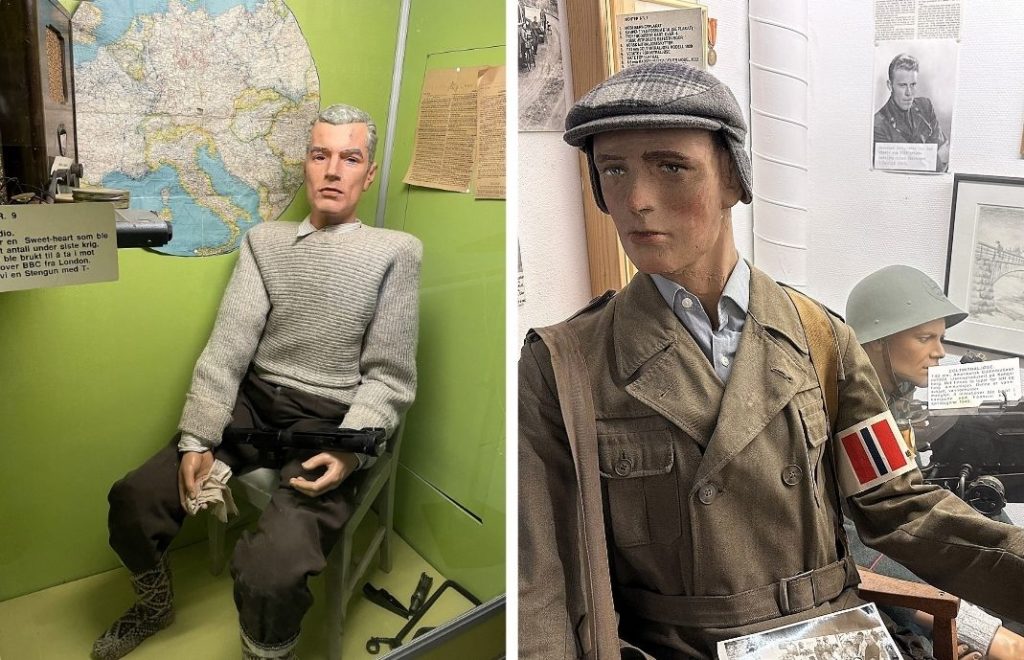
Exhibitions at the Rakkestad Resistance Museum
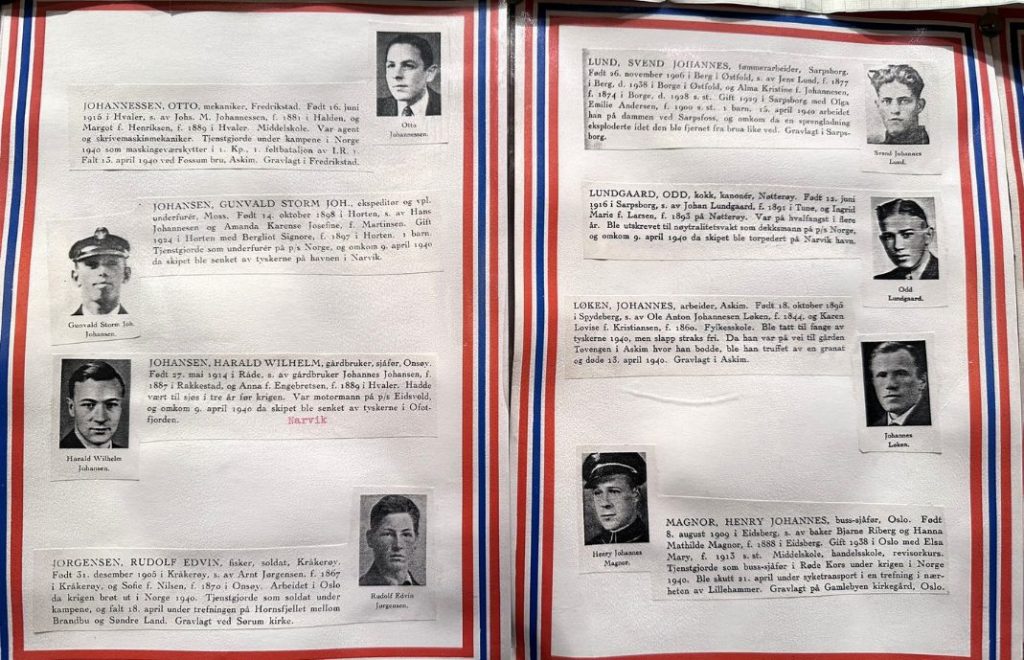
The exhibitions are extensive and deeply immersive, covering the occupation years, military operations, the Milorg resistance movement, secret agents, the fascist party Nasjonal Samling, civilian life, concentration camps, and the liberation.
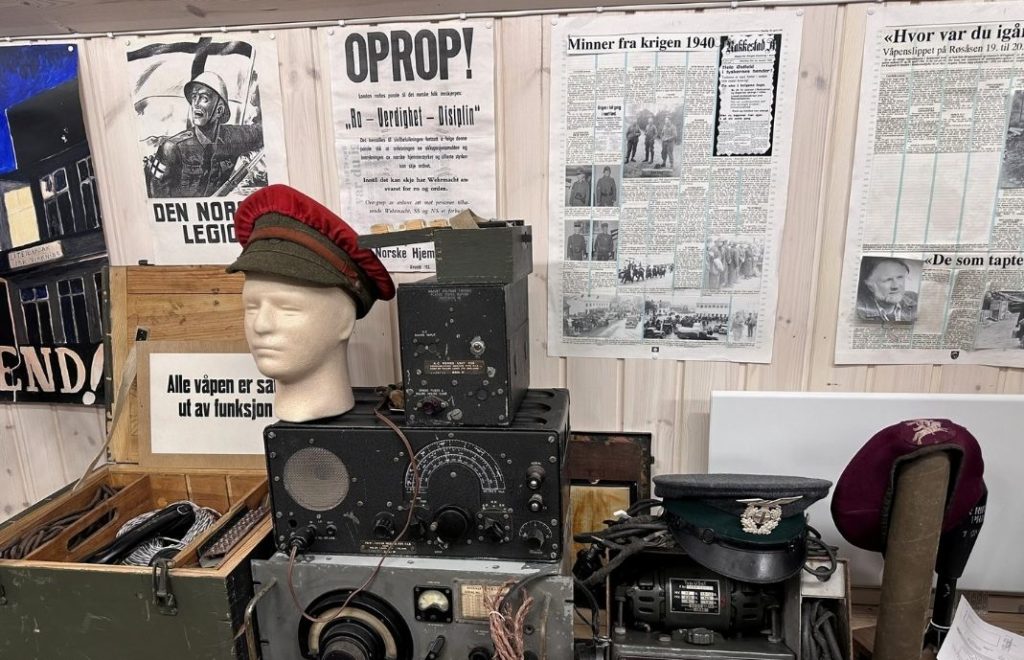
The years of occupation are brought vividly to life through uniforms, photographs, maps, weapons, letters, and a wide array of other military artifacts from World War II.
Each item has a story to tell – of war and everyday life, of people, fear, courage, grief, pain, resilience, unity, love, and hope.
The visit begins beneath the ominous German war flag that once hung outside the Reich Commissariat in Oslo, near the office of Josef Terboven – Hitler’s appointed representative in Norway from 1940 to 1945. Terboven ruled with absolute authority and often resorted to brutal measures against the Norwegian resistance. When Germany surrendered in 1945, Terboven took his own life.
Among the personal relics is a striking red jacket worn by Sigrid Heide from Halden, prisoner number 35615 in the Ravensbrück concentration camp. Her number is stitched onto the sleeve, and a white cross is painted on the back – a grim mark intended to make escapees easier to spot by the guards.
Around a hundred of the museum’s artifacts are on loan from the Norwegian Armed Forces Museum in Oslo. The rest belong to the museum’s own growing collection.
Over the years, the collection has expanded considerably. Many items once belonged to resistance fighters who received supplies through British air drops during the war.
When the war ended, no one quite knew what to do with all the objects – until someone had an idea: build a museum. To this day, the Rakkestad Resistance Museum continues to receive meaningful donations and packages from people across the region and beyond, helping to preserve the legacy of those tumultuous years.
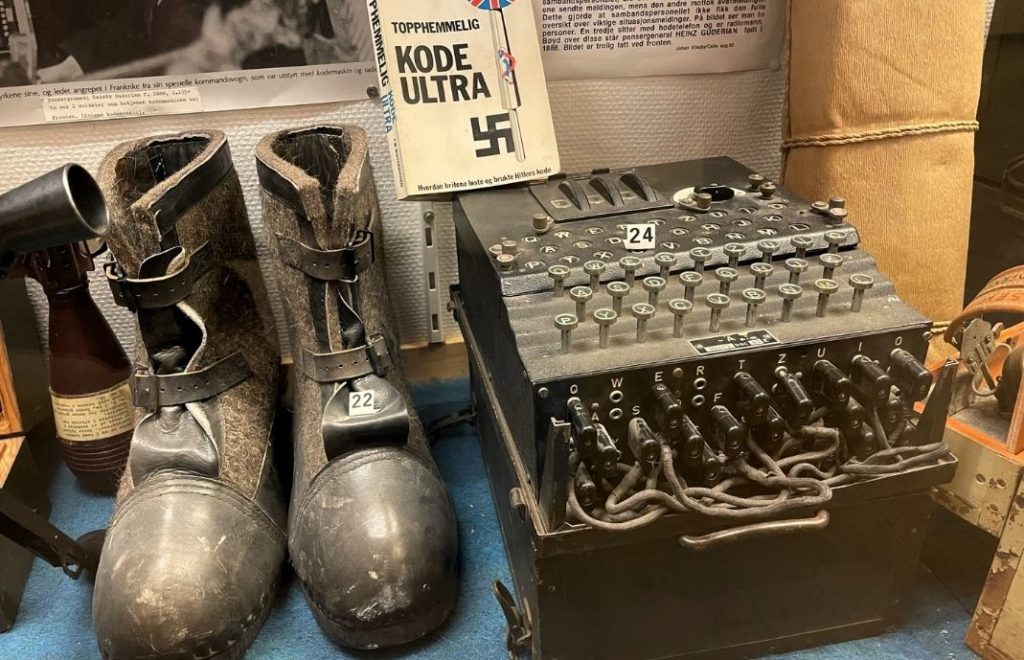
The unique Enigma Machine
At the base of a glass display case sits what appears to be an old typewriter – an object easy to overlook, quietly unassuming amid the many wartime relics. Yet this machine is, in fact, one of the most important technological breakthroughs of World War II.
This is the Enigma machine – the device that helped crack Nazi Germany’s “unbreakable” codes and played a pivotal role in securing Allied victory.
During the war, German officers used Enigma machines to communicate with U-boats in the Atlantic, which were wreaking havoc on British shipping routes. The British intercepted the transmissions, but the letters were pure gibberish. Only those with access to an Enigma machine – both sender and receiver – could decipher the messages.
That’s when a brilliant mathematician named Alan Turing, along with a 56-person team, was brought to Bletchley Park, just outside London. Their top-secret mission: break the code.
Their breakthrough came in the form of a machine known as The Bombe, designed to unravel the Enigma’s complex encryption. Thanks to this innovation, the Allies were suddenly able to read Germany’s hidden messages – a turning point in the war, and a quiet triumph of intellect over intimidation.
Why you must visit the Rakkestad Resistance Museum
“You are not allowed to walk there and forget!”
These powerful words were written by Norwegian poet Arnulf Øverland in You Must Not Sleep (1937) – a rallying cry that still resonates. And it’s this very message that the Rakkestad Resistance Museum strives to share with every visitor.
More than 40 years after it first opened its doors, the museum is just as vital today as ever.
Here, you’ll uncover stories you’ve likely read in history books – but also those rarely told, stories tucked away in the shadows of war.
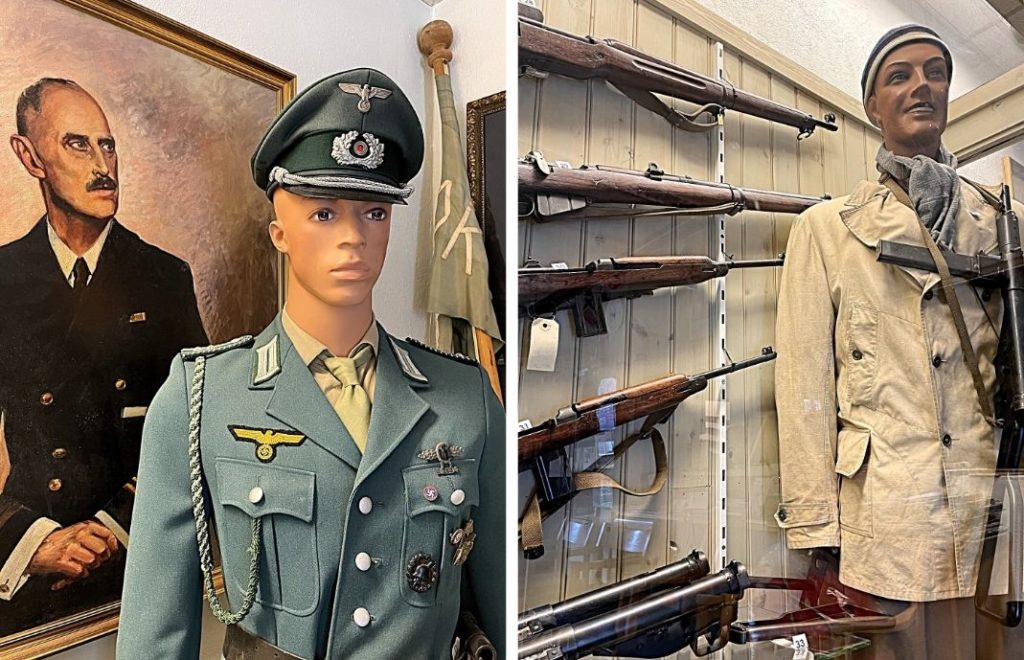
Every object in the museum carries a unique story. Every uniform has a face behind it. Whether it’s gear from the Hirden militia or the Germanic SS Norway, the personal effects of pilot Oluf Reed Olsen, American flags, ration cards, a humble bicycle, a key ring from the Grini prison camp, or even a simple child carrier — each artifact speaks volumes.
The Rakkestad Resistance Museum is a cornerstone in the preservation of Norwegian wartime history – and a poignant reminder that freedom is never to be taken for granted.
Because the most dangerous thing of all is to forget where we came from.
Good to know:
- The Rakkestad Resistance Museum is open every Sunday from March 1st to November 30th.
During December, January, and February, visits are available by appointment only. - In July, the museum welcomes visitors daily.
- Payment is made upon arrival.
- Free parking.
More inspiration to visit Østfold:
A guide to Indre Østfold
Cruising the Halden Canal
Unionsleden: Cycling from Norway to Sweden
The Ancient Road – Step back to the Iron Age
Skjeberg Golf Club – Where everyone feels at home
Alpaca Trekking – Simply magical
