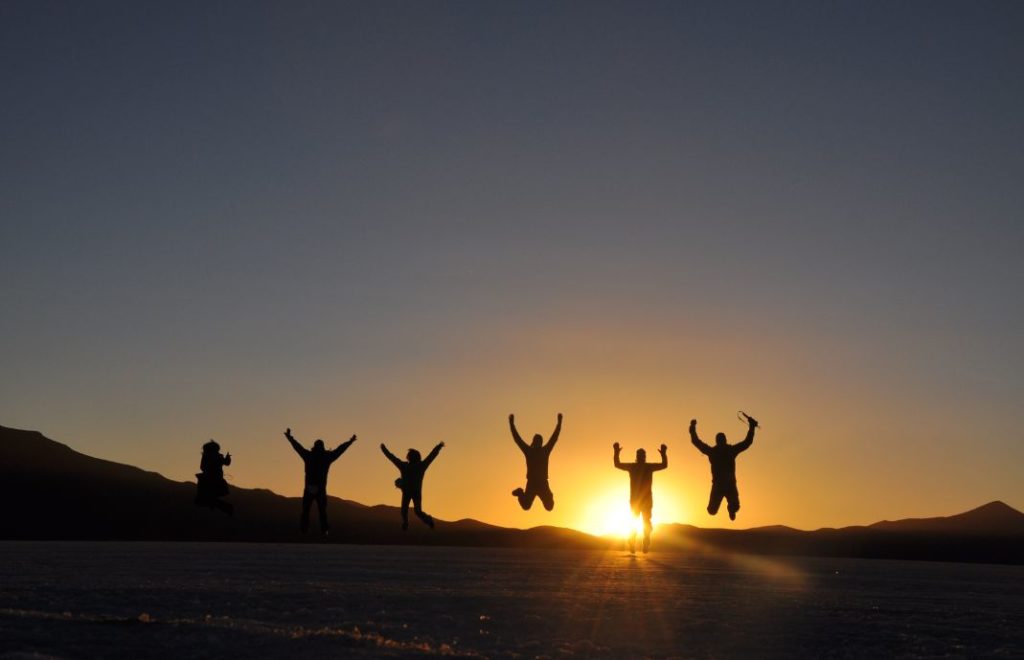
The night bus from La Paz finally lurches to a halt in Uyuni. After nine long hours rattling through Bolivia’s rugged heartland, I tumble off the bus in a half-dream, the cold air snapping me awake like a slap of ice. My breath curls in white ribbons as I dig out my backpack, tug my jacket high over my nose, and pull the beanie tight against my ears. The chill isn’t just cold – it gnaws at the bones.
Uyuni at dawn feels like a ghost town, its streets cloaked in silence and dust, the horizon a faint watercolor of pink and gray. A few stray dogs skitter across the empty plaza, and every shuttered doorway whispers of a town still asleep. I have hours to kill before meeting the guide who’ll lead me into Bolivia’s otherworldly altiplano – a three-day odyssey across salt and sky.
My stomach grumbles like distant thunder, so I wander through the brittle morning air, hunting for a sign of life. Then, salvation: a modest café with a warm glow spilling from its doorway. Inside, the scent of frying batter wraps around me like a hug. Minutes later, I’m devouring golden pancakes, their edges crisp and butter-soft at the center, and chasing each bite with a steaming cup of cocoa so rich it feels like liquid velvet sliding down my throat. In this frozen corner of the world, warmth tastes like chocolate and hope.
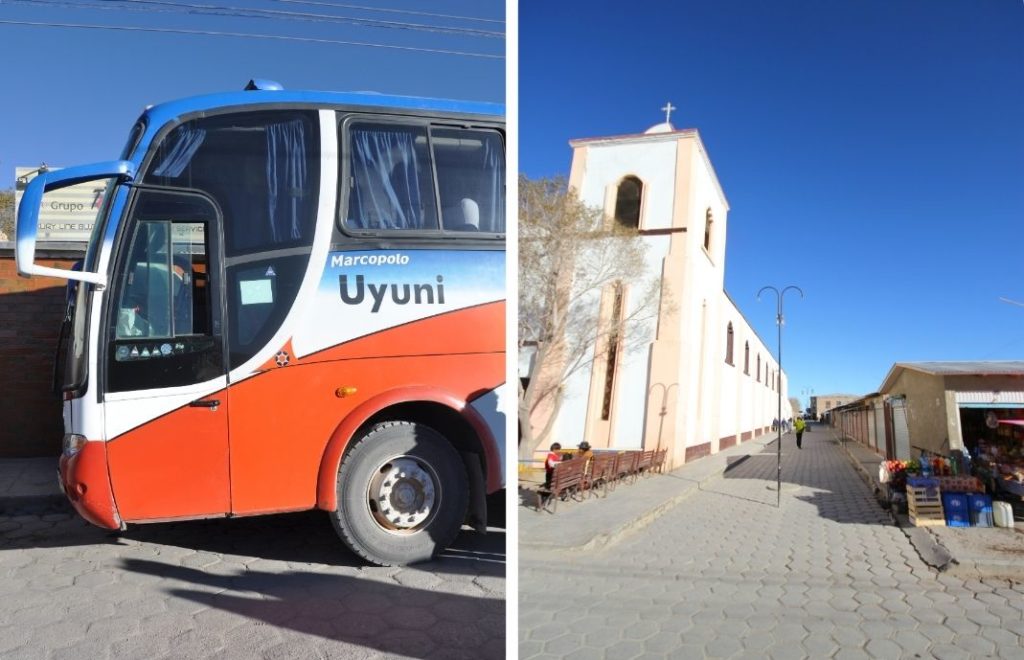
Ready for a salty adventure
Full and a little warmer than when I first stumbled into town, I make my way to the meeting point and find my guide, Oscar. He’s already busy, loading the vehicle with crates of food, gallons of water, sleeping bags, and extra fuel – a lifeline for the days ahead. When he spots me, wrapped in so many layers that only my eyes peek out, he bursts into laughter. “Don’t worry,” he chuckles, “it gets better as soon as the sun really shows itself.”
Oscar radiates good humor, a bundle of energy with a grin that could melt the morning frost. He’s half Aymara and half Quechua, the two proud Indigenous groups that form the cultural backbone of Bolivia. Their languages – Aymara and Quechua – are not just living traditions; they’re official tongues, spoken alongside Spanish. Those working in tourism, like Oscar, often speak English too – after all, each year about 60,000 travelers make their way to this tiny outpost called Uyuni.
Perched at an altitude of 3,670 meters, the town is the gateway to the legendary Salar de Uyuni – the largest salt flats on Earth and one of Bolivia’s most spellbinding treasures. Out there, beyond the edge of the horizon, lies a dreamscape where sky and salt blur into infinity. And we’re about to chase it.
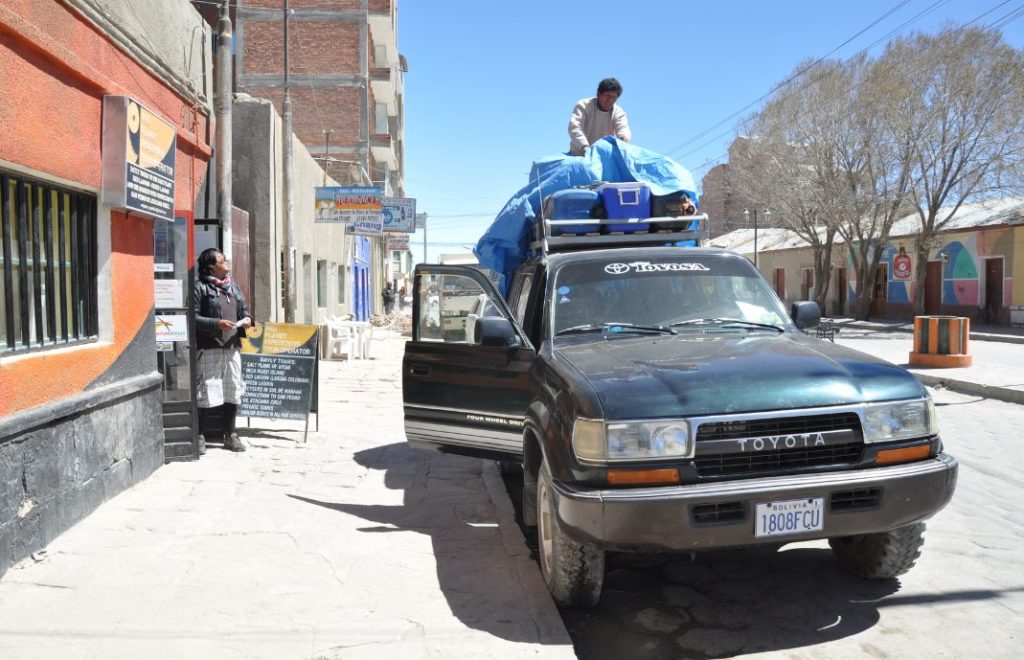
More than a pinch of salt
Oscar fires up the four-wheel drive, and just like that, the adventure begins. The engine growls to life as we lurch forward, bouncing and jostling over roads that feel more like suggestions than actual paths. Road maintenance clearly isn’t high on the government’s to-do list, and as for speed limits – well, those seem to exist only in theory. I grip the seat as our overloaded vehicle somehow surges past 100 kilometers an hour. I can’t decide whether to laugh or pray.
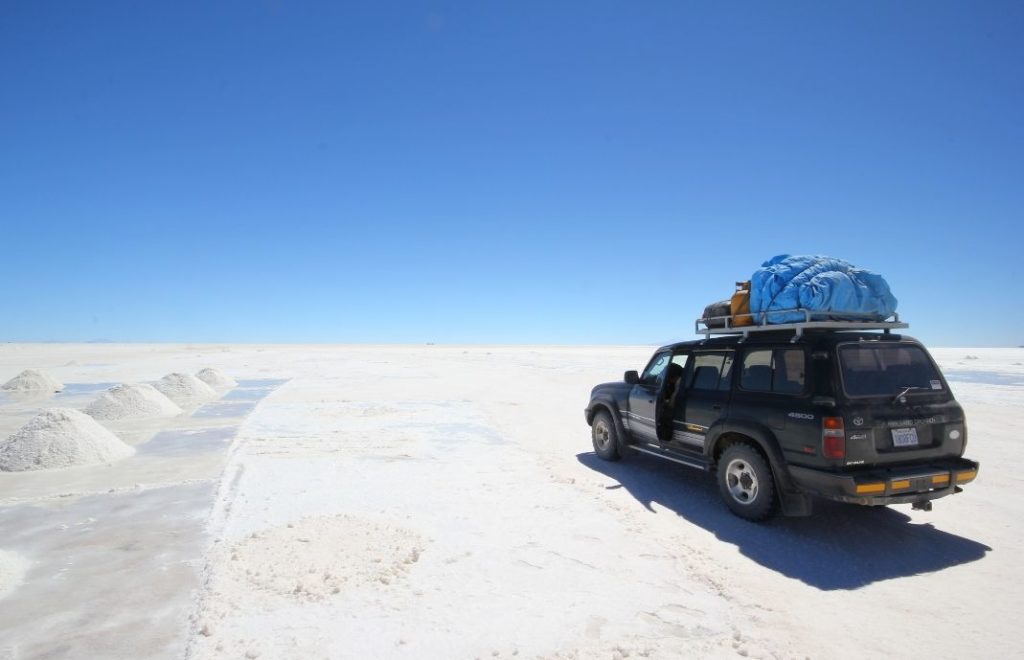
Ahead lies a white infinity. Salar de Uyuni – the largest salt flat in the world – unfurls across an astonishing 10,582 square kilometers, a gleaming expanse that swallows the horizon. Beneath its blinding surface, an estimated 10 billion tons of salt slumber in silence, though surprisingly little of it is harvested.
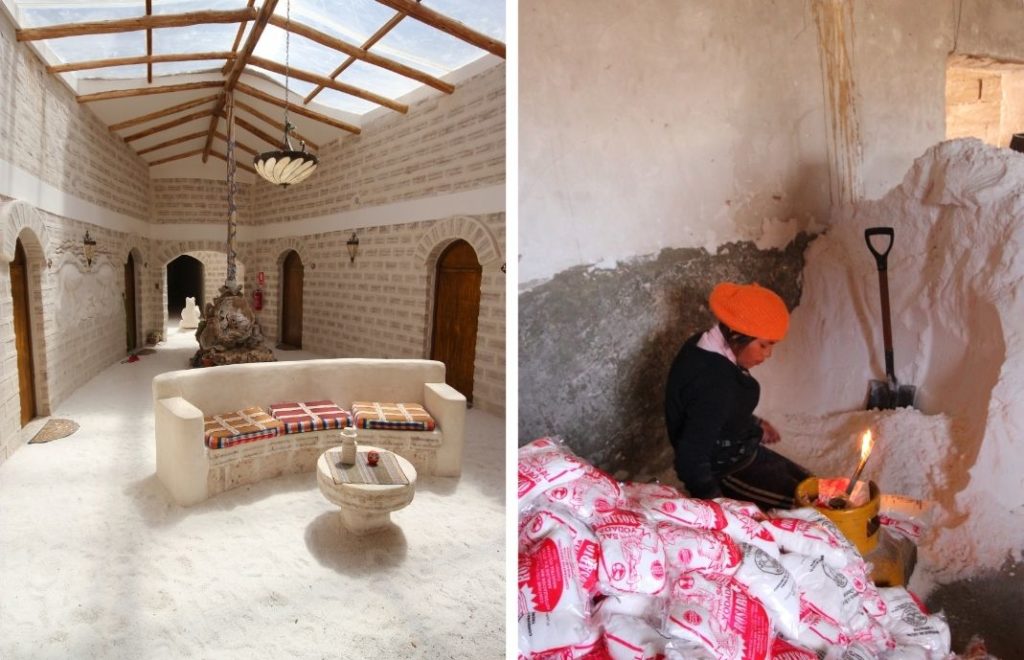
We make our first stop in Colchani, a tiny settlement clinging to the edge of the salt flats. Here, the art of salt production is stripped to its simplest form. Out on the flats, glistening mounds of salt rise like miniature pyramids, drying under the relentless Andean sun. From there, they’re hauled to Colchani, where ovens bake away the last traces of moisture. A dash of iodine is added, and then – by hand, always by hand – the salt is funneled into humble plastic bags destined for dinner tables across Bolivia and Brazil. From this frozen, dazzling desert comes a taste that seasons life itself.
The trains have arrived their final destination
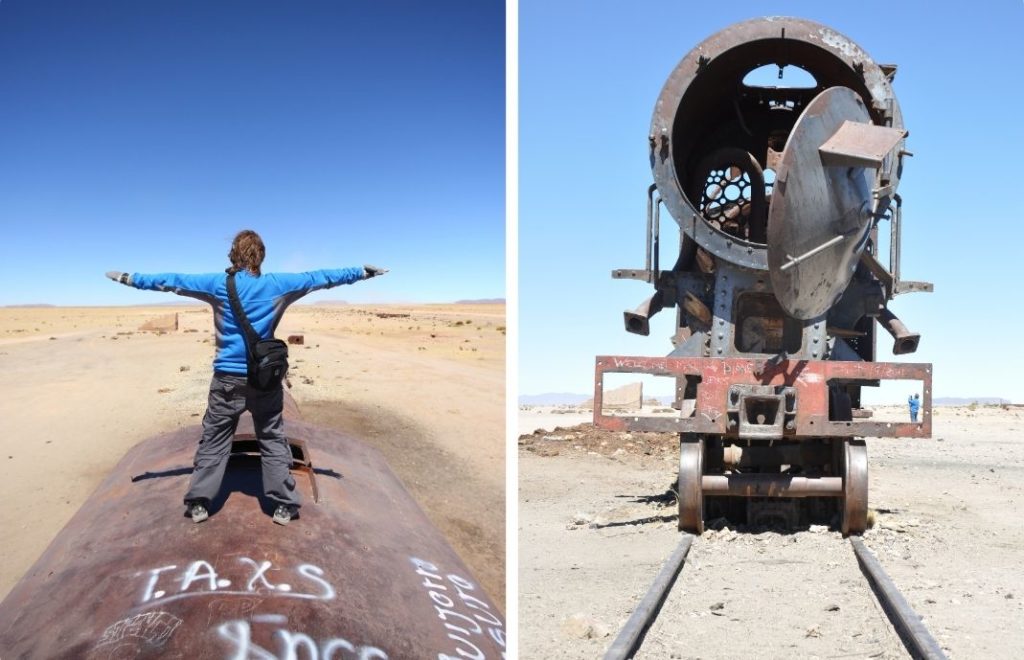
Back in the 1890s, British engineers carved steel veins across Bolivia’s rugged plains, dreaming of a railway that would carry precious minerals to the Pacific coast. But the Aymara people saw the iron serpent as a threat slithering through their land and fought back with sabotage. Add to that a host of technical challenges, and by the 1940s the mining industry collapsed. The locomotives fell silent, abandoned to the wind and time – a stroke of luck for today’s travelers, because what remains has become a photographer’s paradise.
The Train Cemetery is a graveyard of giants, a surreal open-air museum where locomotives exhale their last breath into eternity. More than a hundred rusting train cars sit frozen in place, their skeletal frames etched with history and streaked with graffiti. In another part of the world, these iron beasts might have endured. But here, on the edge of Salar de Uyuni, the wind carries salt like invisible daggers, eating away at every bolt and beam.
Now they stand as silent sentinels, relics of a bygone age and irresistible backdrops for anyone with a camera and an eye for beauty. Climb aboard, let your imagination whistle, and for a moment, you might hear the faint echo of a steam engine rolling into the horizon.
Where local legends live on
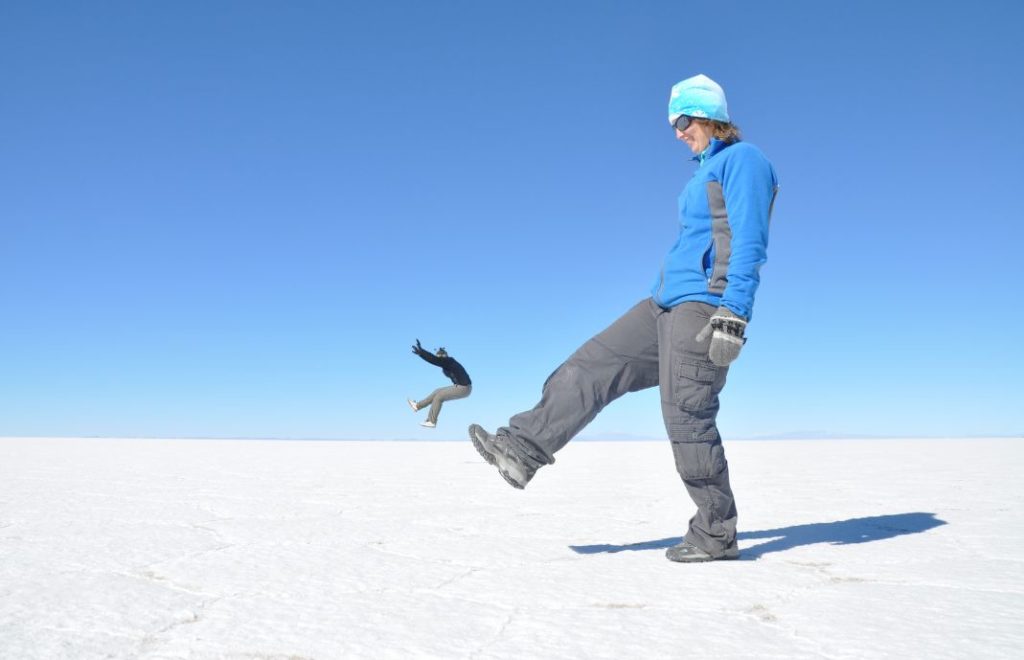
Ahead of us, there is only white – white that stretches so far, it feels like infinity itself. The horizon melts into the sky, and even behind dark sunglasses, the brilliance stings my eyes. The world has shed all color, leaving behind something so stark, so surreal, it feels like standing on another planet. Here, imagination reigns. The salt flats are a playground for the bold: a stage for whimsical illusions where size, scale, and reality bend to your lens.
We stop for lunch at the Salt Palace Hotel, a name that is almost modest compared to the marvel it hides. The entire building is sculpted from salt – walls, floors, even the furniture. Chairs and tables gleam under the filtered light like frozen alabaster, each grain a silent testament to nature’s artistry.
As we eat, Oscar leans back and begins to share the story of how these endless flats were born. I already know the scientific explanation – I’m a curious soul, and I’d devoured the facts before coming – but I want his version. The one steeped in myth.
“In our legend,” he begins, eyes glinting like embers, “the volcanoes that ring this land were once men and women.”
He speaks their names as if invoking spirits: Tunupa, Kusku, Kusina.
“Tunupa was married to Kusku. But when she bore their child, she discovered his betrayal with Kusina. Her heart shattered, and she wept endlessly. Her tears mingled with her milk and flowed across the earth, creating this vast, beautiful expanse – a land born from grief.”
His voice trails off into the salt-bright silence, and for a moment, the flats feel heavy with sorrow, shimmering under a sky of secrets. I can’t help but smile. His story eclipses the cold logic of science, which says a prehistoric lake dried up 40,000 years ago, leaving behind these puzzle-piece crusts of salt. That explanation may be true – but it lacks the poetry of tears and broken hearts etched across a frozen sea.
Time to spike things up
The salt flats seem endless as we speed across them, a ribbon of white stretching into eternity while our wake is nothing but a faint plume of exhaust. Oscar shows the same disregard for speed limits out here as he did on the road – and why wouldn’t he? There are no police, no signs, not even a hint of a landmark to guide us. Just this glaring white void and a sky that swallows everything else. I’m silently awed at his sense of direction; clearly, this isn’t his first crossing.
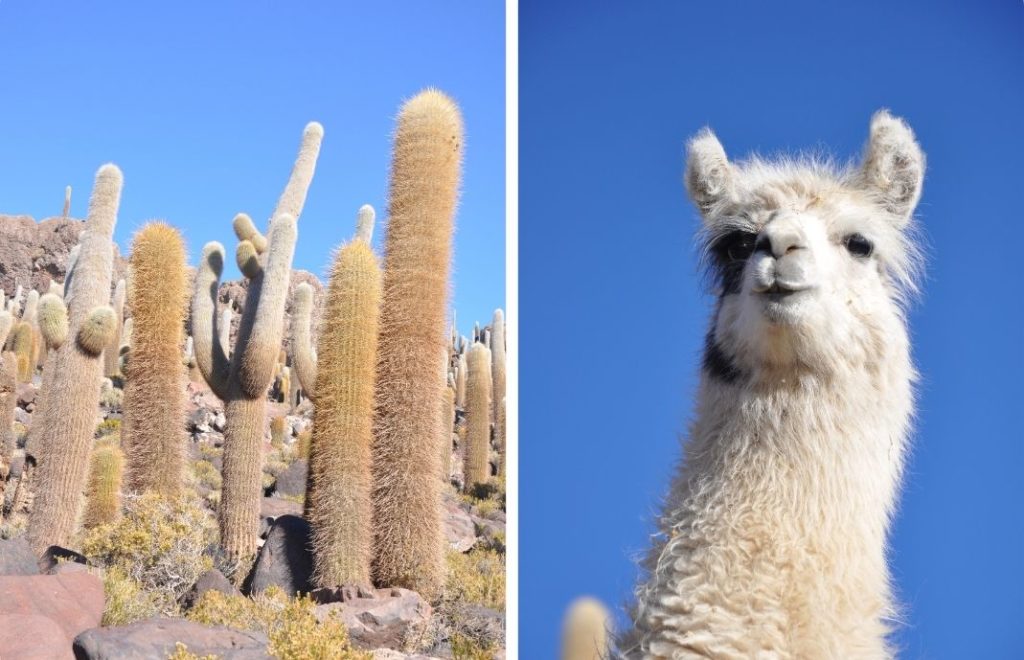
Then, suddenly, the impossible happens: an island rises on the horizon. For a moment, I blink hard, wondering if the midday sun or that hearty lunch is playing tricks on me. But no – it’s real. Isla Incahuasi, a surreal speck of land thrusting up from the salt sea, crowned with towering trichocereus cacti, each bristling with sharp spines that gleam like needles in the harsh light.
The cacti are more than just desert giants; they hold a sacred role for the Indigenous people, who have long used them for medicine and spiritual rites. Hidden within their fibrous flesh is a substance said to heighten the senses, unlocking visions and hallucinatory dreams. No wonder legends linger here.
As I wander among these sentinels, a parade of llamas drifts lazily through the cactus forest, their wool shimmering in shades of ivory, caramel, and ink-black. Their presence feels like something out of a painting – soft, curious eyes against a backdrop of harsh beauty.
I climb to the island’s crest and gaze out over the salt flats. The world below looks like a frozen ocean cracked into a thousand shards of light. In the distance, a lone figure trudges away from the island, shrinking into the glare. For a fleeting moment, I wonder if he’s wandered too deep into the cacti’s secrets, chasing visions of a city that doesn’t exist.
Surrounded by salt and beauty
The sun melts into the horizon in a blaze of molten gold as Oscar presses harder on the accelerator, determined to reach our next stop before darkness swallows the landscape. We roll into the tiny village of Agua Quisa, where our lodging awaits – a humble hostel built entirely of salt. Even the walls seem to sigh with the cold, and by nightfall the air bites with a ferocity that makes me silently bless my alpaca poncho and thick sleeping bag.
Sleep comes in fits, interrupted by the clatter of my own teeth. At one point, I’m convinced frostbite is creeping in. But when dawn whispers at the window, I muster what courage I have left and step outside. My breath crystallizes in the thin, frigid air as I watch the sky ignite – first a tender yellow, then blazing orange, bruised purple, and finally, a deep, burning red. The sunrise here is not gentle; it’s a spectacle, a fiery overture to the day.
Where flamingos dance
Our journey winds onward, threading through the Chiguana Desert, where the scenery outside the window shape-shifts like a restless dream: dormant volcanoes standing like sentries, jagged peaks clawing at the clouds, and brittle shrubs clinging stubbornly to life. A caravan of llamas ambles across the plains, their shadows long and delicate against the dust.
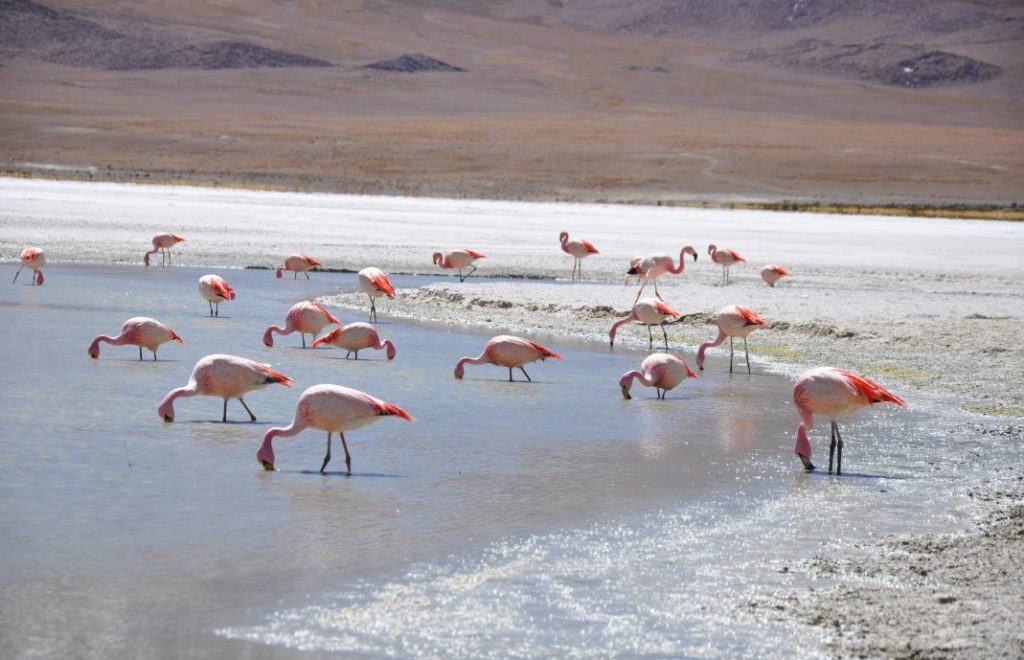
By midday, we reach the Eduardo Avaroa National Reserve and the surreal Laguna Colorada, a crimson lake cradled by mountains. Its vivid hue comes from an alga that thrives in the mineral-rich water, staining the surface a shimmering, improbable red.
And then I see them: flamingos – thousands of them – wading through the shallows like living strokes of pink across a painter’s canvas. They look impossibly delicate, like spun sugar with legs, yet they flourish here at 5,000 meters above sea level, where the air is thin and the wind slices like glass.
We settle in for lunch with the lake spread out before us, the flamingos dipping and swirling in a ballet of feathers and light. I can’t imagine a better dining room than this: a table set by nature, beneath an Andean sky, with the music of wings and the hush of wind as our soundtrack.
Jumping into the volcano
Salt gives way to sand as we roll into the Siloli Desert, a barren expanse where the horizon shimmers like a mirage. I’d been secretly hoping Pachamama – the revered Mother Earth – would grant me a little warmth, but no such luck. By the time we pull into our hostel for the night, the cold has sunk its teeth deep into my bones. That’s when Oscar earns his halo: he dashes to my rescue with three hot water bottles, grinning like a hero. I suppose it wouldn’t look great if one of his guests froze to death mid-adventure…
The final day begins in utter darkness. We’re heading to Sol de Mañana, a geothermal wonderland perched high in the mountains. Oscar insists we beat the sun, promising a sunrise worth chasing. As we climb, the air thins and the cold deepens, but excitement keeps me warm. This is also geyser country, and they’re at their most dramatic in the blue hour before dawn.
When we arrive, the earth feels alive. Steam hisses from fissures in the ground, geysers roar like beasts, and mud pots bubble with an ominous gurgle. The sulfur stings my nose and seeps into my clothes, clinging like an uninvited souvenir. It’s raw, unfiltered nature – wild, volatile, and magnificent. For a moment, it feels like standing on another planet, under a sky painted in soft pastels, as the first light spills over the mountains.
Oscar, amused by my wide-eyed awe, suddenly asks if I’m up for a once-in-a-lifetime experience.
“Of course,” I reply, curiosity piqued.
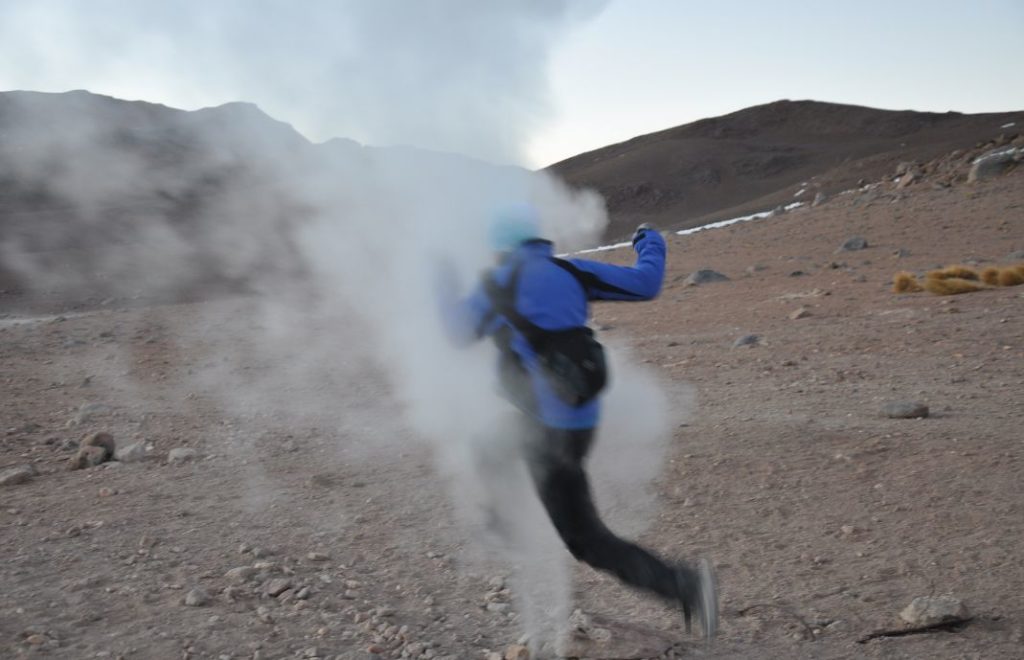
He gestures toward a steaming crater, its plume of smoke twisting skyward, and with a mischievous grin, says, “Jump through it.”
I gape at him. “Jump through? Are you out of your mind?”
Naturally, I do it. Not once, but several times, laughing like a child as I leap through the geyser’s breath. It’s not every day you get to say you danced with the earth’s fury.
The descent toward the Chilean border feels heavy. Not because the journey disappointed, but because the adventure is ending. At the frontier, I bid farewell to Oscar, that tireless bundle of energy who shepherded me across this surreal kingdom of salt and fire.
And then I’m alone, standing still, saturated with impressions: the smell of sulfur woven into my clothes, the taste of salt lingering on my lips, and a heart that will echo this landscape forever.
Practical information
I traveled with Red Planet Expedition, a reputable company offering a range of tours across the Salar de Uyuni.
These journeys take you into some of Bolivia’s most remote corners, so don’t expect luxury – facilities are basic, meals are simple but satisfying, and accommodations are rustic.
The terrain is harsh and unpredictable, so the occasional car trouble isn’t unusual.
You’ll also be venturing into serious altitude: starting at around 3,600 meters and climbing to well over 5,000. Altitude sickness is a real possibility, so come prepared and pace yourself.
Patience and a positive mindset are your greatest allies out here – embrace both, and your adventure will be unforgettable.
And remember: out on the salt flats, don’t take everything with just a pinch of salt!