
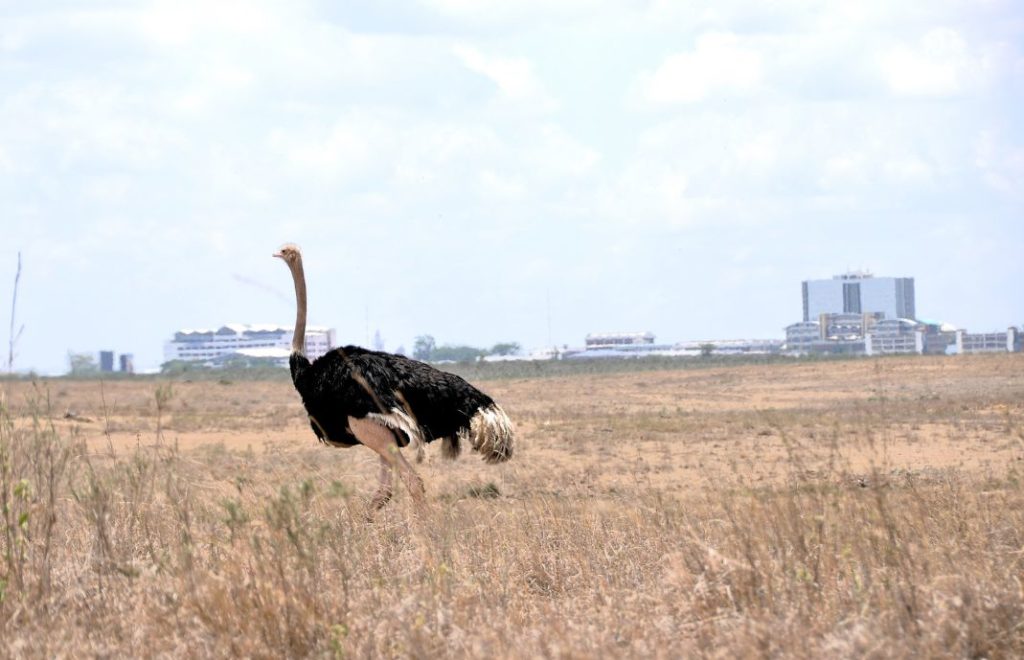
Just beyond the bustling streets of Nairobi lies an unexpected wilderness – a compact gem spanning only 117 square kilometers. Its global fame comes not from its size, but from the striking contrast it offers: untamed African savanna set against the backdrop of a modern city skyline.
For travelers, this creates a surreal and unforgettable photo opportunity: zebras grazing while skyscrapers gleam on the horizon, giraffes silhouetted against high-rise buildings, and the golden plains blending seamlessly into urban sprawl.
A visit here is not just recommended – it’s essential for anyone passing through Nairobi. Few places on Earth deliver such a fascinating juxtaposition of wildlife and city life in a single frame.
Little Nairobi National Park packs a big surprise
You might assume that a park as small as this has little to offer. Wrong.
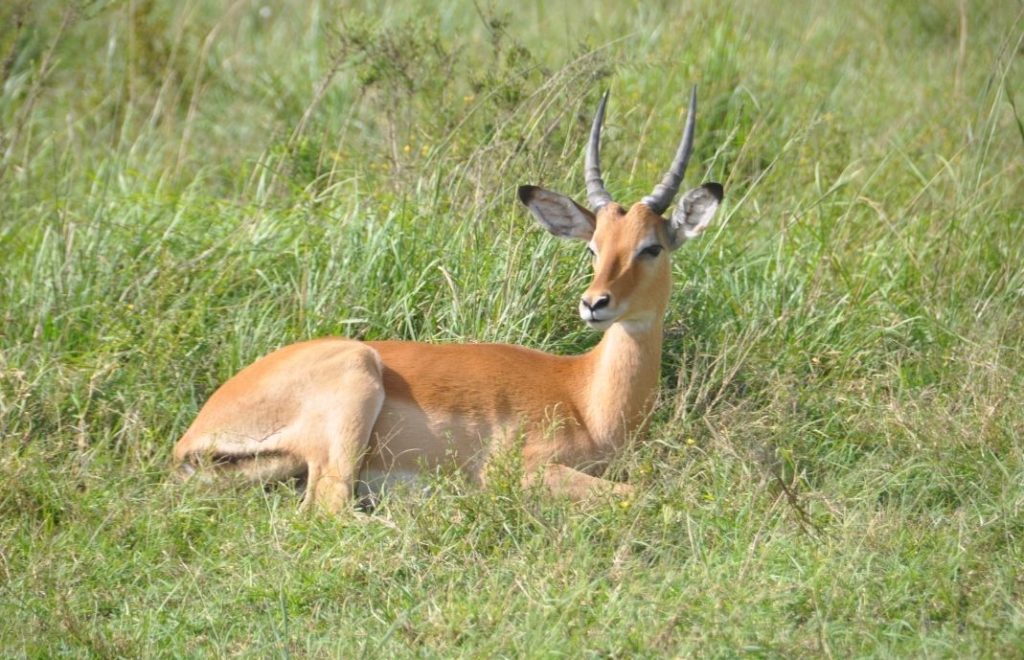
Nairobi National Park is home to over 100 mammal species and more than 400 species of birds. Apart from elephants, the park shelters nearly every iconic savanna animal you can imagine: lions, rhinos, buffalo, giraffes, zebras, antelopes, cheetahs, ostriches, and baboons.
It’s the perfect introduction to Kenya’s wild wonders – and it all begins just eight kilometers from the city center.
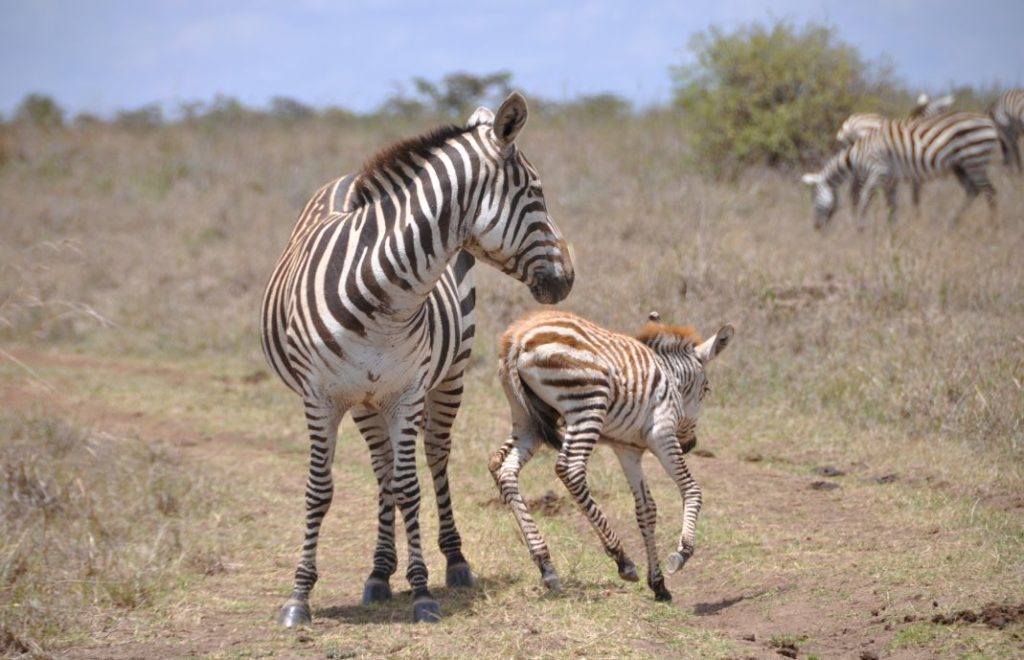
We’ve barely entered before the action begins. Zebras and antelopes graze peacefully, oblivious to the urban chaos unfolding a few miles away. A giraffe strides gracefully across the road, its long legs moving with effortless elegance. Nearby, a flock of birds splashes in a shimmering pool, turning the morning light into a kaleidoscope of wings and water.
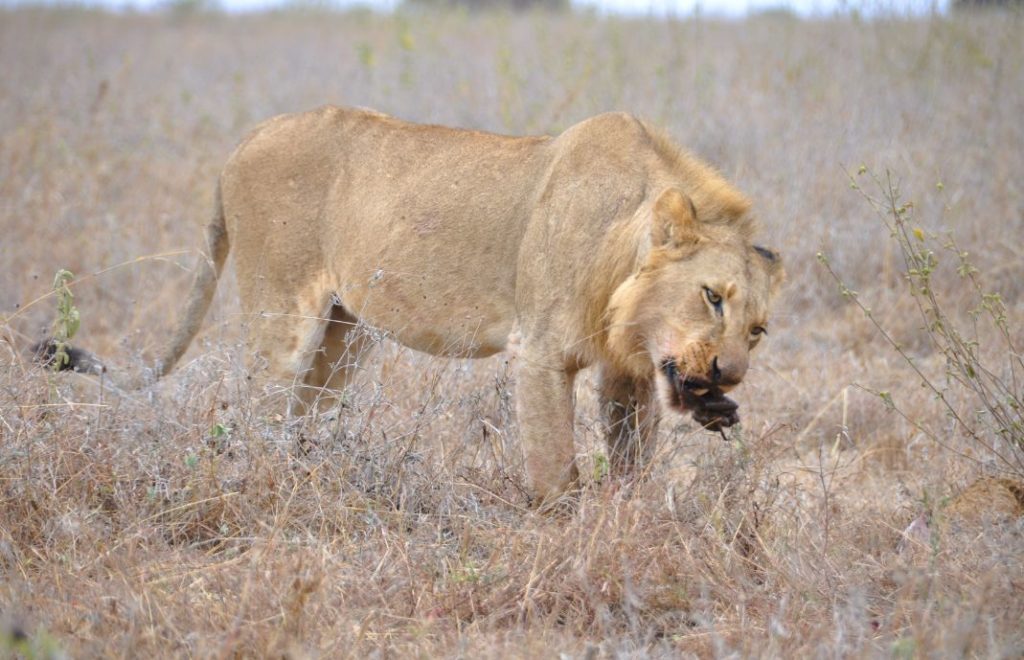
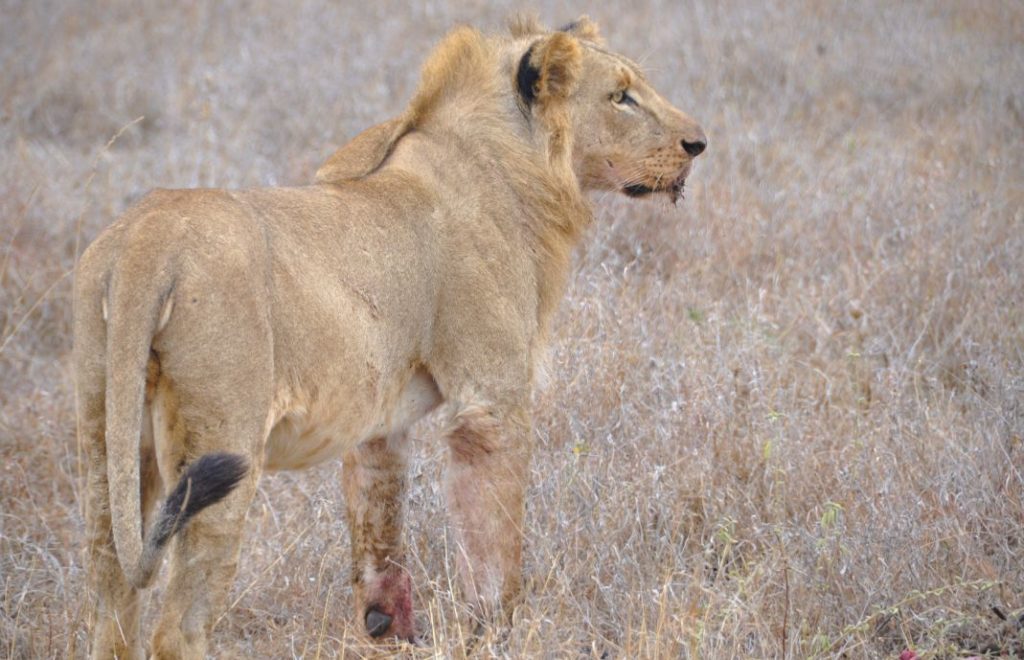
Dust trails behind our vehicle as we bump along the winding track. Suddenly, the driver slows. There, on the roadside, a young male lion, jaws deep in his breakfast. At our arrival, he raises his massive head, revealing a blood-streaked snout – a visceral reminder of life’s raw cycle.
I can’t help but feel a pang of sorrow for the fallen antelope, its life exchanged for the lion’s strength. For five full minutes, we sit in awed silence, watching the king of the savanna feast. He hardly notices us, intent on his meal, occasionally lifting his gaze to scan for unwelcome dinner guests.
In this surreal place – wild Africa in the shadow of Nairobi’s skyline – every moment feels like a privilege, every encounter unforgettable.
A creature in armor appears
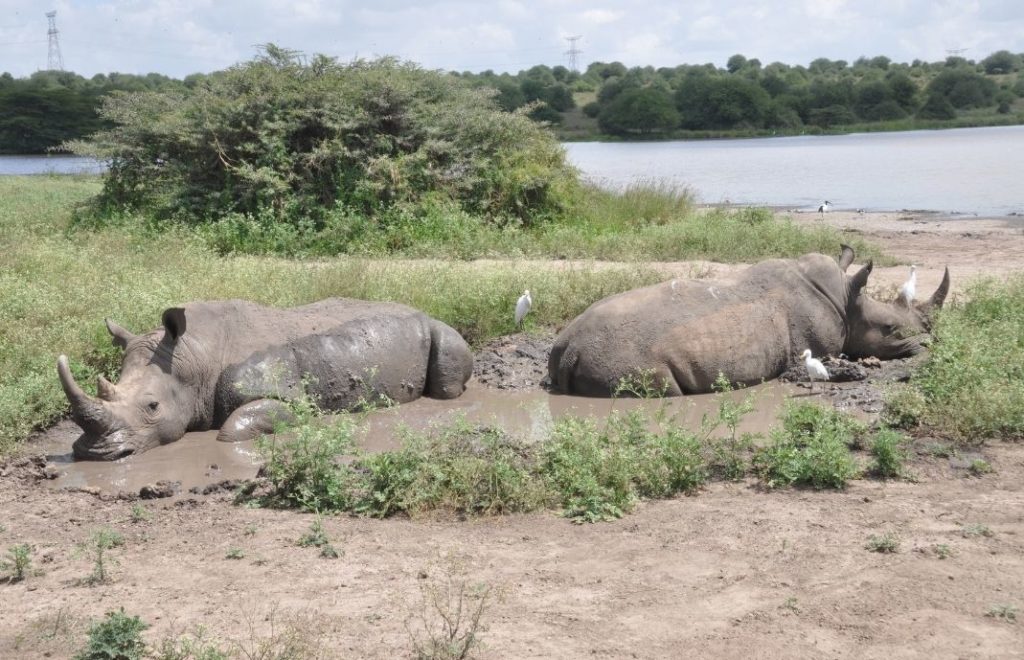
Excitement ripples through the vehicle as a rhinoceros – critically endangered – emerges from the thickets. Then another. And another. For safari enthusiasts, rhinos rank high on the wish list, and Nairobi National Park boasts a healthy population of these formidable, armor-plated giants.
For hours, we roam the park, wildlife unfolding in every direction: baboons frolicking at the roadside, antelopes bounding gracefully across the plains, zebras lowering their heads to sip from shimmering pools.
We scan the horizon for cheetahs, the elusive speed demons of the savanna. They favor daylight hunts, but today, luck isn’t on our side. The world’s fastest land animal remains a phantom.
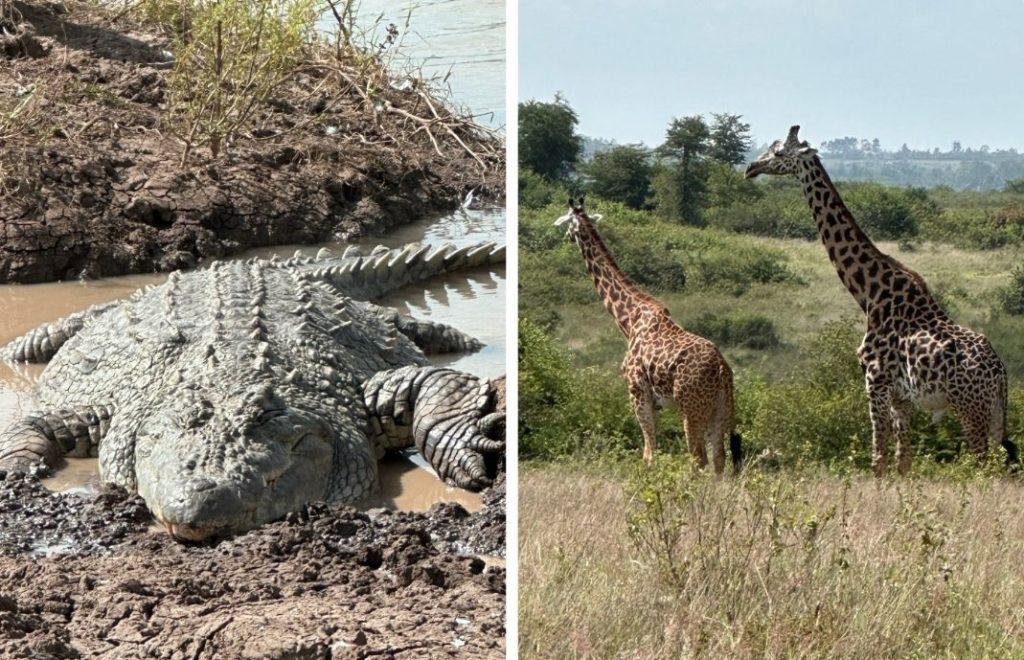
By the lake, a massive crocodile basks lazily at the water’s edge, its prehistoric frame only a few meters from our vehicle – a silent reminder that power often lurks in stillness.
Not far away, we stumble upon a small herd of rhinos indulging in a cooling mud bath. They grunt, snort, and let out comic little blasts of gas as they wallow contentedly. It’s a scene as raw as it is oddly endearing.
And through it all, the thought lingers: we are just kilometers from Nairobi’s city center, yet here we sit in a world ruled by nature. The hush of the wild envelops us, the city’s chaos feels a lifetime away, and for a moment, we are entirely at one with the rhythm of the earth.
When reason finally prevailed
The creation of Nairobi National Park was anything but simple. At the turn of the 20th century, wildlife roamed freely across vast swathes of East Africa. Local communities had long coexisted with these animals, grazing their cattle and goats alongside them without conflict.
Then came the trophy hunters. Drawn to Kenya in pursuit of glory, they slaughtered indiscriminately, their sights set on collecting as many “prizes” as possible. The construction of the famed railway between Mombasa and Lake Victoria worsened matters, attracting settlers whose farms and homes steadily squeezed wildlife out of their ancestral ranges. The animals’ complete expulsion seemed inevitable.
But in the 1930s, voices of protest rose above the gunfire. Among them was game warden Archie Ritchie, who championed the cause for the voiceless. Conservationists demanded a refuge to halt the senseless slaughter. Against all odds, the government listened.
And so, in 1946, Nairobi National Park was established – a milestone that earned it the distinction of being East Africa’s first national park.
Today, this 117-square-kilometer sanctuary stands as a living testament to those who fought for reason, ensuring that wild creatures could still thrive – even in the shadow of a modern city.
The unsung heroes of the park
We stop for lunch at a riverside picnic site, where the quietness is broken only by birdsong and the hum of insects. Here, we strike up a conversation with a group of wildlife rangers employed by the Kenya Wildlife Service (KWS). Their stories are raw, real, and deeply humbling – a glimpse into the frontline of conservation.
They speak candidly about their toughest battle: human greed.
Poachers remain the greatest threat to Kenya’s wildlife, and these men and women risk everything to keep the park’s residents safe.
One ranger offers us a taste of ugali, the staple maize meal of Kenya. We gratefully accept, sharing a simple lunch in good humor. They are warm, open, and quick to laugh – but there’s steel behind their smiles. Resting beside them, within easy reach, are their rifles. These are not props; they are lifelines in a war they fight daily.
“We consider every animal, big or small, as family,” one ranger says, his voice unwavering. “And we are willing to die to protect them.”
I don’t doubt him for a second.
Each year, hundreds of rangers lose their lives in the fight against poaching. Their courage is the unseen cost of every photograph we take, every wild moment we cherish. They are, without question, the true guardians of Nairobi National Park – and of Kenya’s soul.
Ivory Burning Site – A symbol of defiance
Just beyond the main gate of Nairobi National Park lies one of the most powerful monuments in the global fight against poaching: the Ivory Burning Site.
It was here, in 1989, that Kenyan President Daniel arap Moi set fire to 11 tons of confiscated ivory – a dramatic act that sent a clear message to the world: Kenya will not tolerate the slaughter of its elephants. The flames roared as a symbol of hope and resistance, declaring an unyielding war on poachers.
Decades later, in 2016, President Uhuru Kenyatta reaffirmed that commitment by igniting 100 tons of ivory, the equivalent of 6,000 elephants lost to greed. The sight of those towering pyres is haunting, a visceral reminder of what’s at stake.
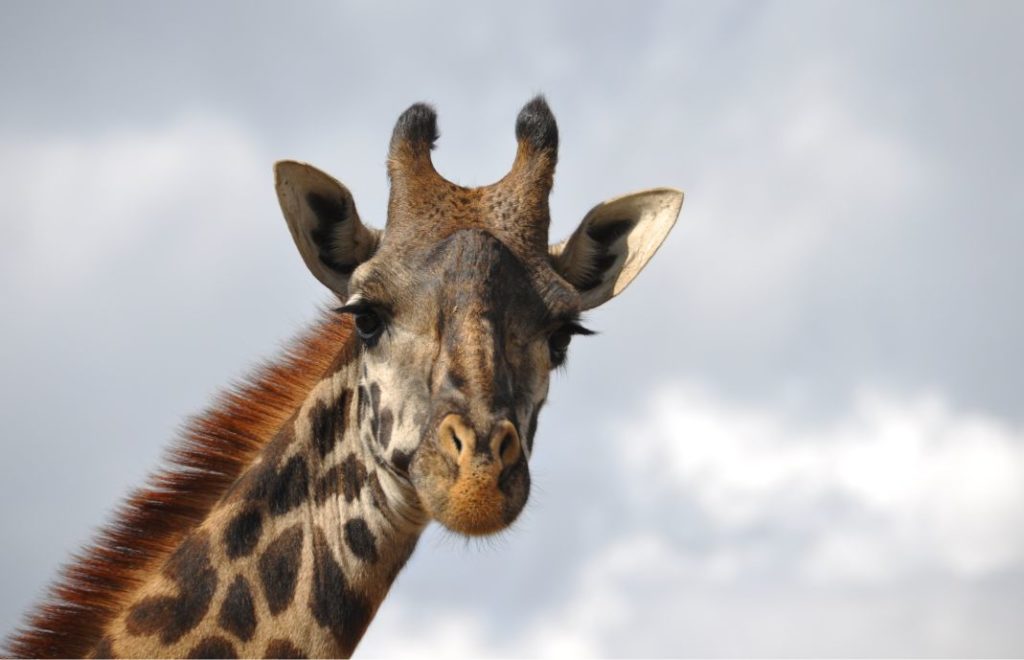
Leaving this solemn landmark, we bid farewell to the rangers and continue our journey. Giraffes appear on the horizon, their silhouettes elegant against the golden savanna. One particularly bold giraffe ambles up close – so near it seems ready to poke its head right into our vehicle. In a park where wild Africa meets the city skyline, even these small encounters feel extraordinary.
More inspiration: Why you must visit the Ivory Burning Site

A perfect introduction to safari life
Scattered across Nairobi National Park are tranquil waterholes – aptly named hippo pools – where pods of these barrel-shaped giants wallow for hours, emerging under the cover of night to graze.
We leave the vehicle and follow a marked trail down to one of these pools. Our guide urges caution: stay on the path and keep a respectful distance. After all, some of these waters are also home to crocodiles, lurking silently beneath the surface.
Around the next bend, we halt abruptly – a baboon troop has claimed the road as their personal lounge. Near the exit, an ostrich peers at us curiously from behind the brush, as if to bid farewell.
It’s hard to believe that just a few hours ago, we were navigating Nairobi’s modern skyline, passing sleek hotels and office towers. A short drive later, we’re immersed in a landscape that feels timeless – open plains, acacia-dotted horizons, and a cast of wild characters straight out of an African dream. Lions dining on fresh kills. Zebras grazing under a blue vault of sky. Ostriches striding gracefully through the dust.
Small, yet utterly captivating, Nairobi National Park is a rare gem. It’s a perfect prelude to the great safari adventures awaiting in Kenya’s more famous reserves. For anyone beginning their African journey, it offers a taste of the wild that lingers long after you’ve left.
Practical information
Size
Nairobi National Park covers 117 square kilometers – small by African standards but packed with wildlife.
Wildlife
Home to 100 species of mammals, including lion, rhino, cheetah, buffalo, giraffe, ostrich, leopard, zebra, hyena, baboon, and wildebeest, plus over 400 bird species.
Unique factor
The only place in the world where you can photograph wild animals against a city skyline.
Location
Just 8 km from downtown Nairobi, making it an easy half-day or full-day safari.
History
Established in 1946, it was the first national park in East Africa.
Landmarks
Don’t miss the Ivory Burning Site – a powerful symbol in the fight against poaching – and the rangers’ memorial honoring those who died protecting wildlife.
When to go
- January-March: Hot and dry – ideal for wildlife spotting.
- April-June & July-October: Warm and wet, with lush green landscapes.
Accessibility
Perfect as an introduction to safari before visiting Kenya’s larger reserves like Maasai Mara or Amboseli.
More inspiration: A guide to Nairobi National Park
You don’t want to miss
Sheldrick Wildlife Trust (Elephant Orphanage)
Just a short drive from Nairobi National Park, this renowned sanctuary offers a heartwarming experience: meeting baby elephants orphaned by poaching or other human-related tragedies.
Visiting hours: Open to the public one hour daily, from 11:00 AM to 12:00 PM.
Booking: Tickets must be pre-booked online, and demand is high – reserve early.
Watching the calves splash, play, and interact with their caretakers is an unforgettable glimpse into conservation at its most compassionate.
More inspiration: Meet Dumbo!
More inspiration to Kenya’s national parks:
Explore Kenya’s National Parks
A guide to Masai Mara National Reserve
A guide to Samburu National Reserve
A guide to Lake Nakuru National Park
A guide to Amboseli National Park
Photo Series: Kenya’s wild side
Safari in Masai Mara National Reserve
