
Kraków is a city that has somehow managed to preserve its intimate charm while embracing the vibrancy of a modern metropolis. A wealth of museums, cultural events, and contemporary galleries has rightfully earned it the title of Poland’s cultural capital.
In the Old Town, you step directly into history, where the city’s golden age as Poland’s former capital still lingers in every cobblestoned street. The narrow, winding alleys and hidden passageways of the Jewish Quarter, Kazimierz, conceal a labyrinth of secret treasures – cozy cafés and atmospheric bars where smoky rooms, flickering candlelight, and a timeless air transport you decades into the past. In recent years, the district has reawakened, blossoming into one of Kraków’s absolute highlights for travelers.
Even Nowa Huta, the once-ideal communist city, has found new allure. Here, you can hop into a retro Trabant for a nostalgic city tour that leads to the old steelworks and the vast square where his statue once stood – today renamed after Ronald Reagan.
Kraków is a place you could explore for an entire week and still stumble upon something new each day. Most visitors, however, arrive with only two or three days to spare. I can’t promise you’ll see all of Kraków – a city proudly listed as a UNESCO World Heritage Site – in a single visit. But this guide will take you to its most essential landmarks while immersing you in both the city’s rich history and its relaxed, lived-in atmosphere.
And if you don’t manage to see it all – well, there’s only one thing to do: come back!
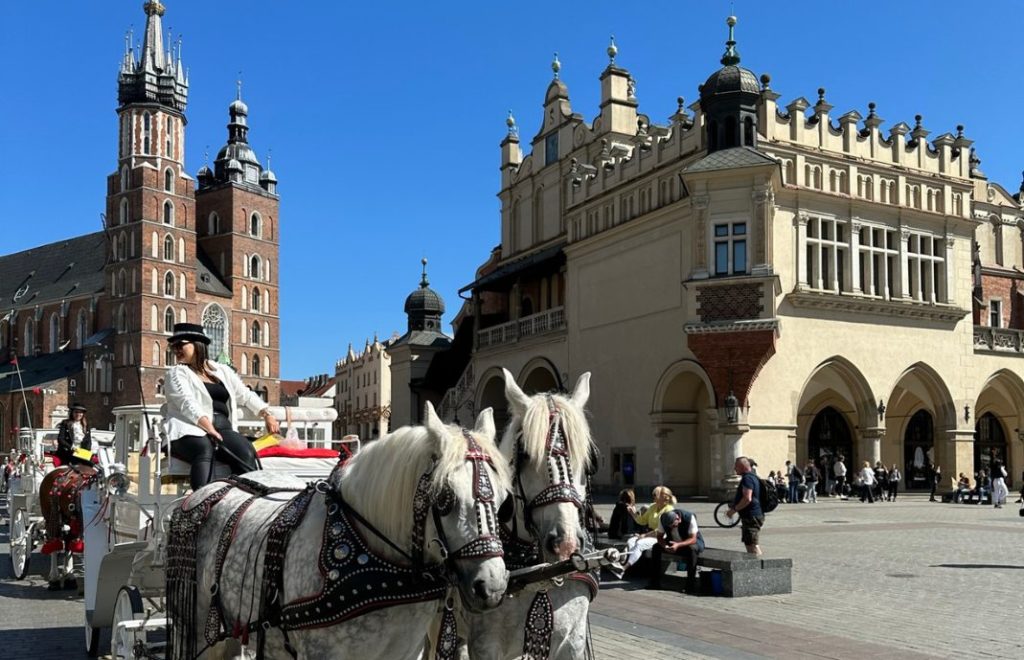
Walk 1: Rynek Główny Square
This magnificent square, laid out in the 13th century as one of Europe’s largest marketplaces, now overflows with cafés, shops, and historic treasures. Beneath the medieval arcades of its grand townhouses, you’ll find cozy, atmospheric bars and restaurants tucked away in vaulted cellars.
With its sheer scale, authentic architecture, and harmonious design, Rynek Główny is a medieval square unlike any other.
The Cloth Hall (Sukiennica) is a lively hive of activity, filled with the hum of voices from every corner of the globe. Five centuries ago, this light-filled hall was Kraków’s most important trading center, bustling with merchants dealing in spices, silks, and exotic goods. Today, rows of stalls compete for the attention of curious travelers.
The Town Hall Tower and its underground chambers are all that remain of the grand 16th-century town hall, once a place where criminals and suspects were imprisoned and tortured. In summer, you can climb the tower and take in sweeping views of the city’s rooftops and spires.
Standing nearby is St. Mary’s Basilica, with its distinctive twin towers. Inside, a sea of votive candles, walls adorned in deep, burnished hues, and a vaulted ceiling painted like a starry night sky create a sense of warmth and awe. At its heart lies Poland’s largest Gothic masterpiece: a monumental altar carved by Veit Stoss, a labor of devotion that took 12 years to complete back in 1489.
Rynek Główny is inseparable from Kraków’s myths and traditions, having witnessed countless historic events. Every hour, the famous trumpet call echoes from St. Mary’s tower – a haunting melody that stops abruptly, honoring a legend centuries old. Other traditions include the procession of the Lajkonik Hobby Horse in June, Enthronement of the Fowler King of the Marksmen’s Association, and the display and contest of nativity scenes (December).
Almost every building around the square is several centuries old, their façades, gates, windows, and rooftops remarkably well preserved – or painstakingly reconstructed with extraordinary care.
Also on the square is the Rynek Underground Museum, home to exhibitions on Kraków’s rich past. The first floor reveals insights into daily life between the 13th and 17th centuries, while the second floor is dedicated to the city’s spiritual and religious heritage.
Good to know: Rynek Główny is the largest medieval square in all of Europe.
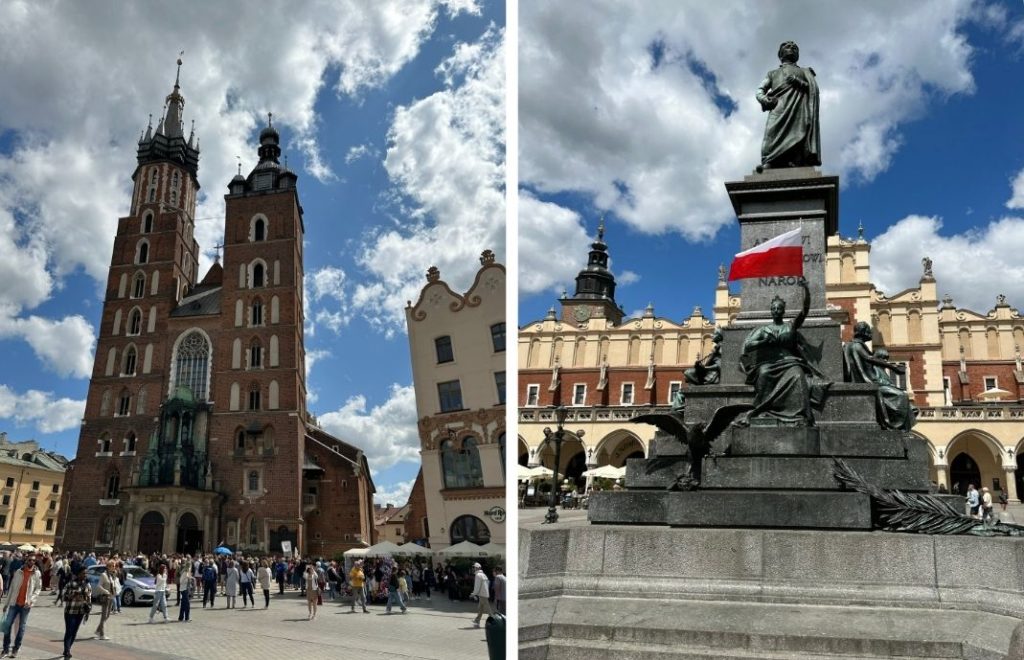
Walk 2: The Old Town
In Kraków’s Old Town, you step straight into history, surrounded by the echoes of its golden age as Poland’s proud capital.
Encircling the medieval core lies Planty, a lush green park that serves as both a serene oasis and a graceful boundary, separating the old city from the rumbling trams and hectic traffic of the modern districts beyond.
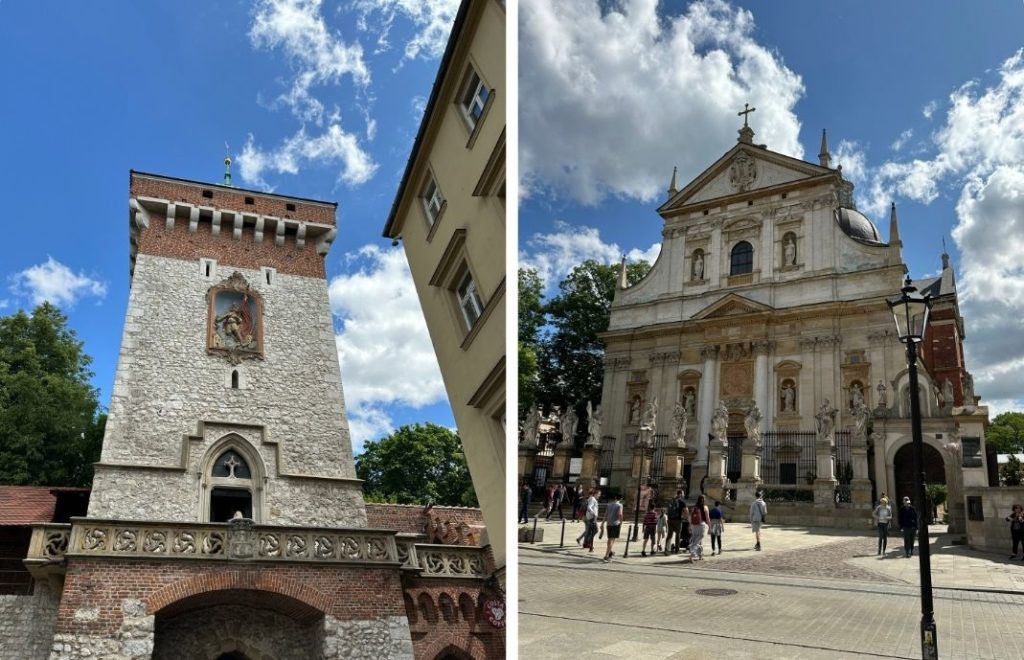
On the northern edge stands the Barbakan, a 15th-century fortress built as a bulwark against the Ottomans, its sturdy walls still guarding the entrance to the past. Just beyond it rises the Florian Gate (Brama Floriańska), the main entry into the Old Town, where hopeful street musicians and souvenir vendors add a lively energy to the historic backdrop.
This is the very heart of Kraków, where nearly every building is a monument in itself. Within Planty and the streets beyond, you’ll find museums, galleries, a wealth of churches, theaters, and cinemas. Entire streets are lined with shops, alongside hundreds of cafés, restaurants, and pubs buzzing with life.
The compact layout makes exploring the center effortless. The longest straight stretch traces the path of the so-called Royal Route – Kraków’s most iconic and historic promenade. Beginning at St. Florian’s Church near Matejko Square, the route passes through the Florian Gate, the last well-preserved remnant of the city’s once-mighty defensive walls.
From there, it leads down Floriańska Street to the grand Rynek Główny, then continues along Grodzka and Kanonicza Streets until it reaches the majestic Wawel Castle.
Good to know: This is Kraków’s legendary Royal Route, forever tied to the city’s golden era as the capital of Poland.
Walk 3: Wawel Castle
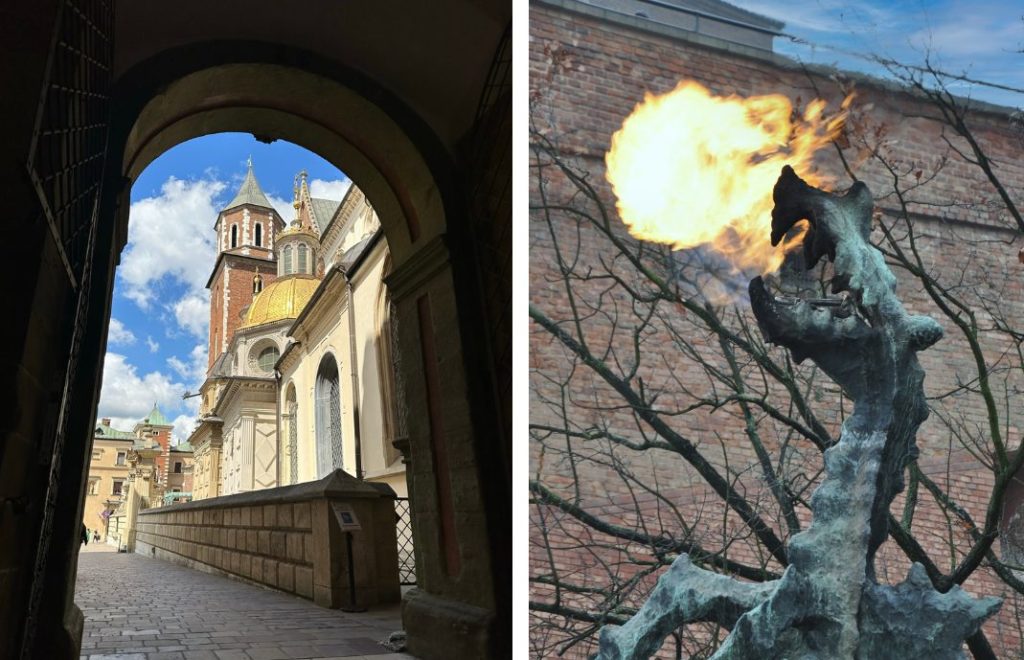
Perched on a hill at the edge of the Old Town, Wawel rises like something out of a vibrant medieval tale. Cloaked in mist, with the distant rhythm of tambourines and the legend of a fire-breathing dragon echoing in memory, the castle feels like a dream spun from history and myth.
You approach it along the short, narrow Kanonicza Street – one of Kraków’s oldest, most beautiful, and most historically significant thoroughfares. Its authentic, timeworn atmosphere has remained unchanged for centuries.
For 500 years, Wawel served as the residence of Poland’s kings. Today, it stands as a symbol of the Polish state and nation, and one of Kraków’s unmissable highlights. The Renaissance palace features an airy arcaded courtyard that still carries the elegance of royal life.
Inside the cathedral, the sarcophagi of kings, queens, and national heroes – among them Tadeusz Kościuszko – rest in solemn grandeur. In the tower hangs the mighty Sigismund Bell, so enormous it takes 8 to 12 men to set it ringing. It tolls only on the most momentous occasions.
The royal reception halls unfold as a series of magnificent chambers, where one can still imagine grand court ceremonies, glittering balls with rustling brocade gowns, and solemn senate gatherings under powdered wigs. The private royal apartments, by contrast, offer a more intimate glimpse into the daily life of the monarchy.
No visit is complete without the Crown Treasury and Armory, where priceless relics such as the coronation sword Szczerbiec – dating back to 1250 – are on display. Every Polish monarch was crowned with this legendary blade. The Oriental Collection adds another layer of intrigue, showcasing spoils of war including Turkish banners, weapons, and tents captured during King Jan Sobieski’s victorious relief of Vienna in 1683.
The exhibition The Lost Wawel illustrates the site’s evolving history with models of former royal and ecclesiastical buildings.
For a lighter detour, descend into the Dragon’s Den. Neither royal nor ecclesiastical, this cave is pure folklore fun – complete with a fire-breathing dragon statue beloved by children. The legend tells of a beast that once terrorized Kraków, devouring sheep, cattle, and even maidens, until it was tricked into eating a salt-stuffed sheep. Overcome with thirst, the dragon drank from the river until it exploded – delighting the townspeople with its fiery demise.
Each June, the slopes beneath the castle come alive with the Midsummer Fair Night, a joyful open-air celebration inspired by old Slavic traditions along the banks of the Vistula River.
Bonus: Together with Kraków’s Old Town, Wawel Castle was among the very first sites to be inscribed on UNESCO’s World Heritage List in 1978.
Walk 4: Kazimierz
For more than 450 years, the district of Kazimierz was home to Kraków’s Jewish community. By the 17th century, it had grown into the largest and most vibrant Jewish center in Europe – a flourishing hub of trade, culture, and intellectual life. But prosperity ended abruptly in the 1650s, when plague and the Swedish wars devastated the population. Many perished, while the rest were left impoverished.
During Poland’s partitions (1794-1918), Kraków fell under Austro-Hungarian rule. In 1800, the authorities ordered the walls surrounding Kazimierz to be torn down, formally merging the district with Kraków. The wealthier and more assimilated Jewish families moved into the city proper, while the poorest and most orthodox remained in Kazimierz. Then came the Second World War: the Jewish population was forced into a ghetto across the Vistula River, before being deported to extermination camps.
After the war, Kazimierz languished in neglect and gained a somewhat rough reputation. Only after the fall of communism did it begin to revive – fueled by international investment, the founding of the Jewish Culture Festival, and renewed global attention following Steven Spielberg’s Schindler’s List (1993).
Today, Kazimierz is alive again, yet echoes of Kraków’s – and the Jewish people’s – past still whisper from every corner. You sense it in the narrow lanes and small squares, in the old synagogues and weathered cemeteries.
Kazimierz’s lasting appeal lies in its heritage of tolerance: for centuries, two nations and two major religions lived side by side in harmony. Churches like St. Catherine’s and Corpus Christi rise alongside synagogues, forming a sacred tapestry of faith.
The area now hums with nightlife, Jewish cultural centers, and memorials, particularly around ulica Szeroka. Beyond its Jewish legacy, Kazimierz is famed for its cafés and its untamed nightlife. Around Plac Nowy’s crooked streets – rather than in the polished cafés on the main square – students, bohemian artists, and adventurous travelers gather, downing beer while debating the great questions of life.
Be sure to visit the Krakow New Jewish Cemetery, where Kraków’s prominent Jews were once laid to rest. Full of beautiful gravestones, this 19th-century cemetery is still in use today, though at first glance its weathered monuments and creeping ivy make it seem abandoned to time.
Good to know: In 2010, a pedestrian bridge was opened to connect Kazimierz with Podgórze, symbolizing the strengthening ties between the two districts across the River Vistula.
Walk 5: Podgórze
On the far side of the Vistula River lies Podgórze, a district scarred deeply by the Second World War. For decades it bore the weight of its tragic past, and only in recent years has it begun to experience a slow renaissance, a quiet reawakening.
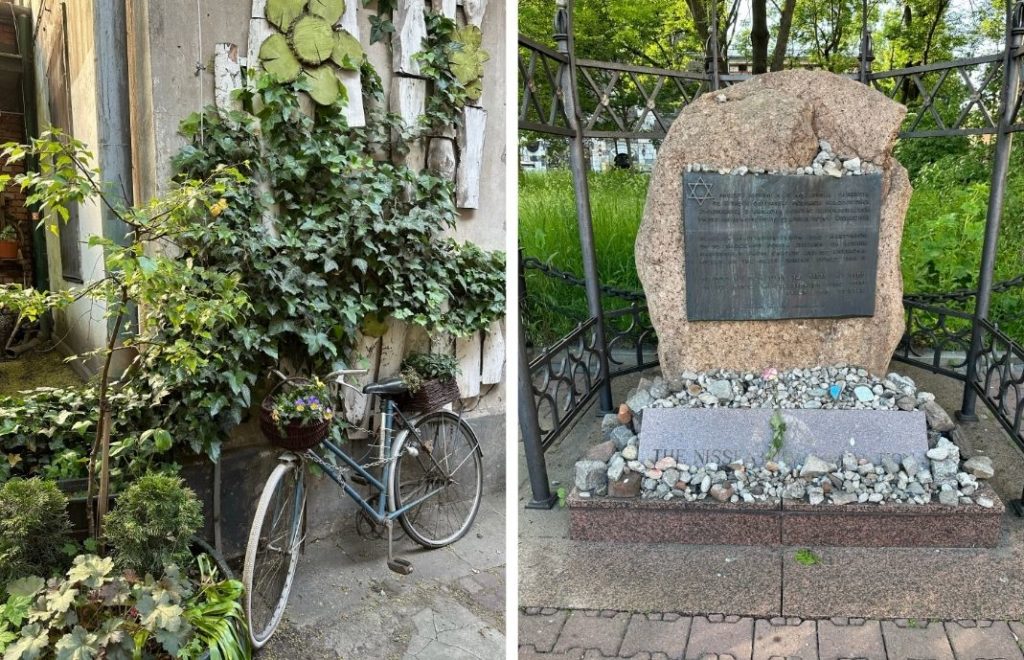
At first glance, Podgórze might seem like an ordinary residential neighborhood – marked by traffic, bus stops, and everyday life. But then you arrive at the square with its striking installation of empty chairs, a former guardhouse, and a discreet line tracing the boundary of the wartime ghetto.
Bohaterów Getta Square (Heroes of the Ghetto Square), was the site from which thousands of Jews were systematically deported to extermination camps in 1942. When the ghetto was liquidated, all that remained were empty chairs, abandoned suitcases, and other possessions left behind in the deserted district. Today, this haunting emptiness is symbolized by the poignant chair monument.
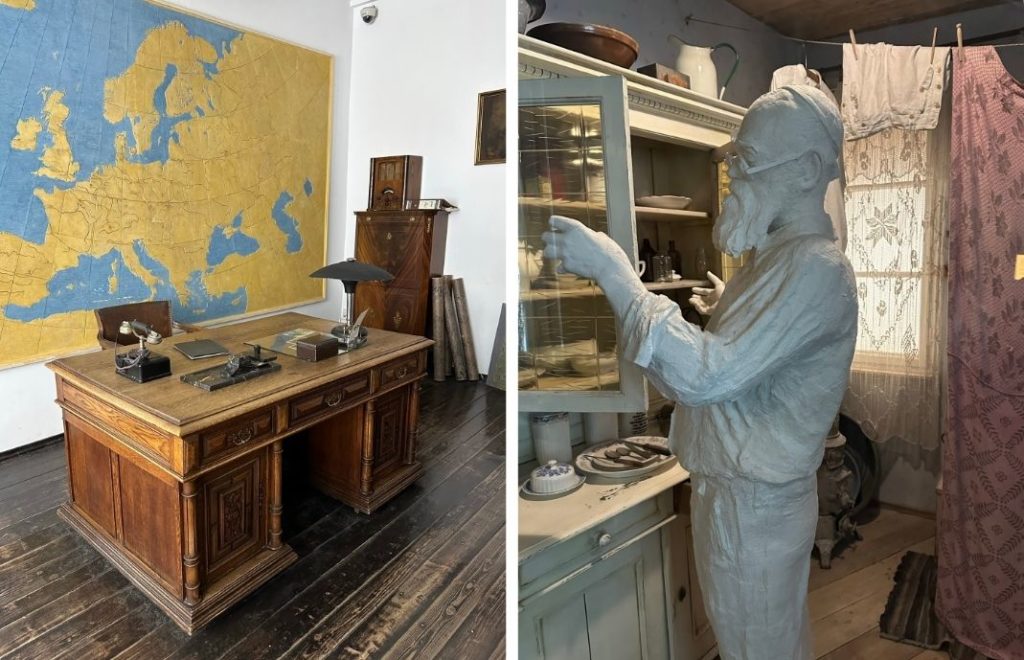
On one corner of the square stands the Eagle Pharmacy (Apteka Pod Orłem), now a museum dedicated to the memory of the ghetto. Its wartime owner, Tadeusz Pankiewicz, was the only Pole permitted to remain inside the ghetto. He bravely aided its Jewish residents, earning him the title of Righteous Among the Nations. His memoirs were later published in the book The Pharmacy in Kraków’s Ghetto, and the installation of the empty chairs was recreated based on his recollections.
A short walk away, at Lipowa Street No. 4, an unassuming industrial complex hides one of Kraków’s most important addresses. This is the site of Oskar Schindler’s Factory, now home to the powerful and immersive exhibition Kraków Under Nazi Occupation, 1939-1945.
When Schindler first took over the former Jewish enamel factory in 1939, he hardly seemed destined for heroism – his initial motive was profit, bolstered by cheap Jewish labor. But as the horrors of Nazi policy became clear, he began securing work permits for his Jewish employees. As long as they were employed in his factory, they were spared from deportation. Through this, Schindler saved 1,200 lives – an act of humanity that earned him a lasting place in history.
Expert tip: Tickets to Schindler’s Factory sell out quickly. Booking in advance is highly recommended.
More inspiration: Oskar Schindler’s Factory
Walk 6: Nowa Huta
In the aftermath of the war, Poland’s economy – especially in this region – was in desperate need of revitalization. The new regime required a shining success story, a counterweight to conservative, Catholic Kraków.
The answer was to build an entirely new city. Founded in 1949, Nowa Huta (New Steelworks) was envisioned as the ideal socialist workers’ town. At its heart stood the great steel plant, while broad avenues, parks, and freshly built apartments promised workers a decent home life after their daily shifts.
Constructed largely by young, unemployed men from the countryside, the city offered them not only jobs at the steelworks but also their very own apartments – a socialist dream made real. For the regime, Nowa Huta would become Poland’s proud showcase to the world.
The Lenin Steelworks opened in 1954 and, within twenty years, grew into the largest in Poland. Apartment blocks multiplied, new factories opened, and the district thrived. Yet behind the façade of success lurked difficulties: steel production was costly, with coal hauled in from Silesia and iron ore imported from the Soviet Union.
By the 1980s, with Poland gripped by economic crisis and martial law, Nowa Huta’s fortunes crumbled. After the fall of communism, it was left with high unemployment, decay, and a reputation as a troubled neighborhood.
Today, however, Nowa Huta is experiencing a revival. A walk through the district offers a fascinating blend of past and present, from tragic episodes to almost comical quirks of history.
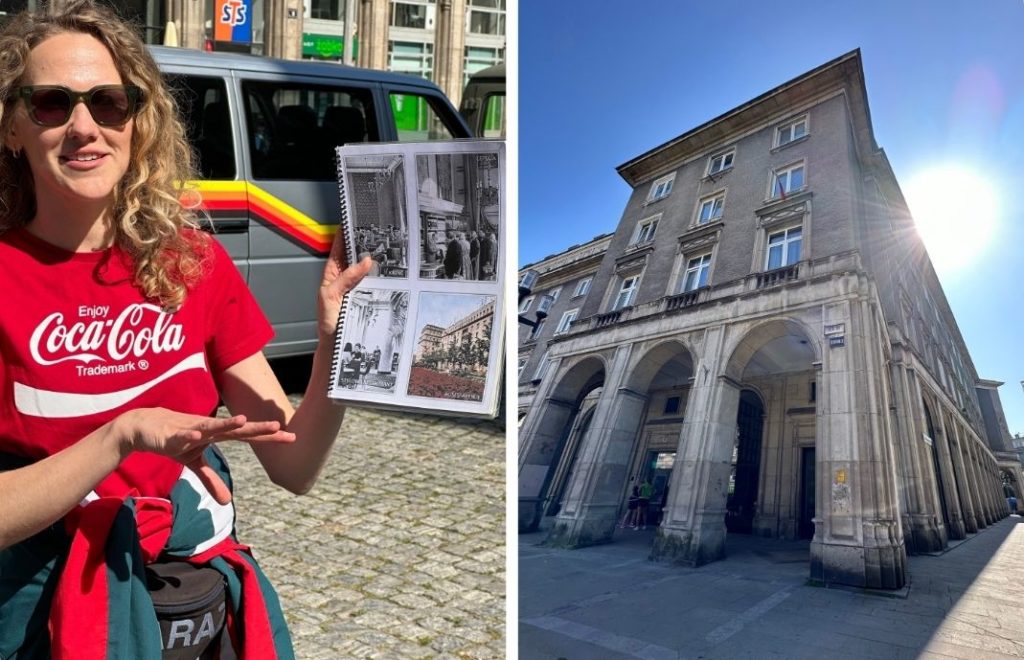
Radiating from the Central Square – ironically renamed Ronald Reagan Square, in honor of communism’s fiercest Cold War adversary – stretch broad, tree-lined avenues. Once dominated by a towering Lenin statue, the square now symbolizes a city that has turned the page. The statue was attacked multiple times by locals before finally being toppled in 1989.
As you wander through Nowa Huta, you can still see how the city was designed in classic Stalinist fashion: monumental boulevards, imposing symmetry, and vast concrete blocks.
Surprisingly, the former Lenin Steelworks itself defies expectations. Built in neo-Renaissance style, it features wings, towers, and ornate details reminiscent of Kraków’s historic Cloth Hall. Beyond its industrial role, it also served as a fortress during the Cold War – complete with watchtowers ready to spot spies and provisions to defend against a potential nuclear attack.
Insider tip: Join a guided “communist tour” of Nowa Huta for an unforgettable experience. Traveling in vintage communist-era vehicles, you’ll dive deep into the district’s history, often with a stop for lunch or vodka at a classic workers’ bar for that extra authentic touch.
More inspiration to visit Krakow:
8 great reasons to visit Kraków
A guide to the Wieliczka Salt Mine
