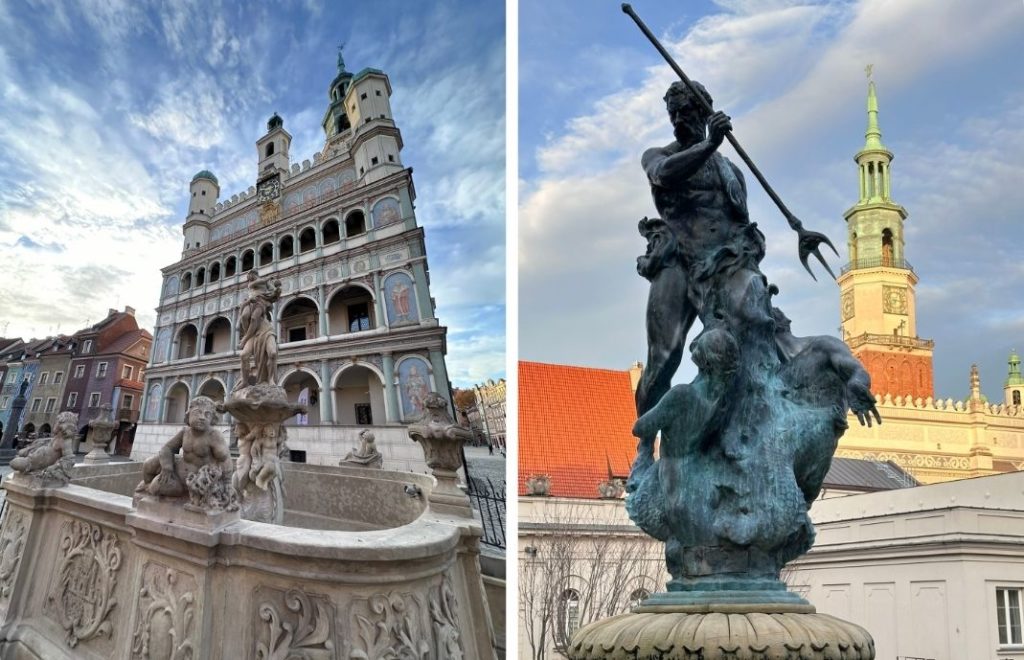
For many travelers, Poland remains something of a hidden gem – which is a shame, because this country has an astonishing amount to offer.
It’s been years since my first visit to Poland, but it was love at first sight. Since then, I’ve returned again and again – and I’m not done yet.
One thing’s for sure: Poland will surprise you.
Give yourself ample time to truly delve into the city you’re visiting. Better yet, combine at least two cities in one trip to experience the rich contrasts and vibrant culture this country has in store.
Here are a few Polish cities you definitely won’t want to miss.

Krakow
Poland’s former royal capital exudes a kind of faded grandeur laced with undeniable charm. Its timeworn streets have remained much the same for centuries, steeped in legends and history. The old Jewish quarter has reconnected with its roots, while a haunting past still lingers in the nearby concentration camps – a stark reminder of darker days.
Krakow moves at a deliberate, almost meditative pace, and a deep-rooted Catholic faith hangs gently in the air. Without question, it stands as Poland’s cultural and intellectual heart – and is easily one of the most fascinating destinations in all of Europe.
This is a city where royal history, folklore, and modern life intertwine effortlessly. Krakow brims with art, culture, theater, jazz clubs, cellar pubs, charming cafés, and some of the country’s best restaurants.
Begin your visit in Rynek Główny, the grand main square laid out in the 13th century and still among the largest medieval squares in Europe. Lively and picturesque, it remains a vibrant hub filled with cafés, street performers, and boutiques.
Just south of the city center, perched on a hill, you’ll find Wawel Castle – a fairytale fortress that seems lifted from medieval legend, complete with tales of a fire-breathing dragon said to have once lived beneath it.
The Kazimierz district, home to Krakow’s Jewish community for over 450 years, was devastated during World War II, when residents were deported to ghettos and later concentration camps. Today, the neighborhood has undergone a renaissance, with inviting cafés, intimate galleries, and a quiet yet resilient energy that draws visitors in.
Add to all of this a wealth of architectural styles, verdant green spaces, striking monuments, and an exceptional food scene, and you begin to understand Krakow’s magnetic appeal.
A short drive from the city lies Auschwitz-Birkenau, the most infamous symbol of the Holocaust. Visiting this site is a sobering, deeply moving experience – a powerful confrontation with humanity’s darkest chapter. Prepare yourself emotionally; it’s a visit that stays with you.
More inspiration to visit Krakow:
8 great reasons to visit Kraków
3 days in Kraków
A guide to the Wieliczka Salt Mine
Oskar Schindler’s Factory

Warsaw
Dull and grey? That’s what some say about Poland’s capital – but those two words couldn’t be further from the truth.
Warsaw is modern, dynamic, vibrant, fascinating, and deeply layered with history. There simply aren’t enough adjectives to capture it fully. This pulsating metropolis demands to be experienced firsthand.
If there’s one word that encapsulates Warsaw, it’s diversity. This is a city of contrasts: gleaming skyscrapers rise beside centuries-old buildings, broad avenues lead to peaceful green parks, and free-spirited creatives share the sidewalks with sharp-suited businesspeople.
Nowhere is Warsaw’s soul more tangible than in its Old Town. Lovingly rebuilt after near-total destruction in World War II, it retains the charm and atmosphere of historic Warsaw, a living testament to the city’s resilience. Few European capitals tell their story as powerfully as this one – where centuries of invasions, war, and communism have shaped a city that never gave up.
Here, you’ll find royal castles, world-class museums, majestic cathedrals, lush parks, poignant memorials, bustling shopping centers, colorful markets, and a dining scene that surprises and delights.
You could easily fill an entire week exploring everything Warsaw has to offer – but you don’t have to. Sometimes, the greatest pleasure is simply wandering the streets, letting the city’s rhythm and contradictions lead the way.
More inspiration to visit Warsaw:
12 great reasons to visit Warsaw
7 must-visit museums in Warsaw
Warsaw Rising Museum
The Jewish Ghetto in Warsaw
World War II in Warsaw

Gdańsk
It’s hard to imagine that this small, picturesque city once stood at the epicenter of two of the 20th century’s most seismic events: the outbreak of World War II and the fall of communism. While Gdańsk bears no blame for the former, it takes great pride in the latter. Gdansk was the birthplace of the Solidarity movement, born in the shipyards and fueled by a desire for freedom that would ripple across Europe.
Gdańsk is wonderfully walkable. Its landmarks are strung together like pearls, each one just a short stroll from the next.
Near the end of World War II, the Red Army unleashed a brutal assault on the city’s historic core, leaving much of it in ruins. But the Old Town was lovingly reconstructed in 17th-century style, and today it stands as a beautiful tribute to the past – complete with a wide main street and tall, slender façades painted in soft, inviting hues.
With its vibrant mix of restaurants, cafés, boutiques, museums, historic churches, and a lively waterfront promenade, it’s no wonder Gdańsk has become a magnet for travelers seeking both history and charm.
Perhaps the most photographed landmark is the Neptune Fountain, where the sea god brandishes his trident – a proud symbol of Gdańsk’s maritime legacy.
If you’re drawn by history, don’t miss a visit to the European Solidarity Centre, the Museum of the Second World War, and Westerplatte, where the first shots of WWII were fired.
Gdańsk is also part of the Tri-City area, along with the seaside resort of Sopot and the modern port city of Gdynia – making it the perfect base for exploring northern Poland’s rich cultural coast.
More inspiration to visit Gdansk:
14 things you don’t want to miss in Gdańsk
Lion hunt in Gdańsk
A guide to the Museum of the Second World War

Wrocław
Often overshadowed by Kraków, Gdańsk, and Warsaw, the city of Wrocław remains one of Poland’s best-kept secrets. A place of captivating history and breathtaking architecture just waiting to be discovered.
Many consider Wrocław to be one of the most beautiful cities in Poland. The Oder River splits into several tributaries as it winds through the city, earning Wrocław the nickname “The Venice of Poland.”
Like much of Poland, Wrocław was devastated by bombing during World War II. But, like the phoenix it is, the city rose again. In rebuilding the Old Town, architects drew heavily on traditional Polish styles and infused them with rich Baroque influences, creating a city center that is nothing short of stunning.
The beating heart of the city is Rynek, Wrocław’s magnificent market square – truly a feast for the eyes. Nearby, don’t miss the Market Hall, where you can sample delicious local specialties in a buzzing, atmospheric setting.
But Wrocław’s charm doesn’t end there. With over a hundred bridges, scenic islands, inviting green spaces, lively squares, and excellent restaurants, it’s a city best explored slowly, on foot, as you soak in its whimsical spirit.
And speaking of whimsy – you’ll find yourself in a fairytale world, thanks to the city’s beloved metal dwarfs. Scattered across the city, these over 1,200 tiny bronze gnomes, each with a unique look and backstory, add a delightful touch of magic. Part history, part scavenger hunt, they bring Wrocław’s streets to life in the most playful way.
Wrocław is truly enchanting – magical in every sense of the word.
More inspiration to visit Wroclaw:
7 very good reasons to visit Wroclaw
11 reasons Wrocław is Poland’s best-kept secret
Meet the Dwarfs of Wrocław
Dwarf hunting in Wroclaw – Catch them all!

Poznań
Tucked away in western Poland, Poznań is one of the country’s oldest cities – steeped in history, known for its charming Old Town and its irresistible, buttery croissants.
At first glance, Poznań may strike you as a typical business city – surrounded by stark communist-era concrete, sprawling shopping centers, and yes, even an IKEA. But don’t be fooled by the modern façade. Once you step into the heart of the city, you’ll discover a vibrant center full of soul, warmth, and surprise.
Poznań’s roots run deep, and its rich past is proudly preserved through a host of historical landmarks that speak to a time long before the city’s metropolitan makeover.
At its core lies Stary Rynek, the main square and beating heart of the city. Here you’ll find a stunning 16th-century town hall, flanked by colorful townhouses and age-old churches. In summer, the square’s cafés overflow with life – but if you can’t find a table, just wander into the nearby side streets where you’ll stumble upon modern coffee bars, cozy cake shops, and nostalgic tea salons serving homemade treats.
The city tells many stories, one of which is captured at the 1956 Museum, which documents the workers’ uprising against communist rule – an important chapter in Poland’s fight for freedom.
On a lighter note, the Croissant Museum is a delicious tribute to the city’s iconic St. Martin croissants. Here, you’ll learn the history behind this beloved pastry, explore its ingredients, watch the baking process – and yes, taste the goods.
And don’t miss the daily spectacle at the Town Hall, where two mechanical goats emerge at noon to butt heads – an odd but endearing local tradition.
Looking for a dining experience like no other? Head to Dark Restaurant, where you’ll eat your entire meal in complete darkness. With your sense of sight gone, taste takes center stage – and every bite becomes an unexpected adventure.
Poznań is a city that blends the historic and the modern with flavor, flair, and a touch of the unexpected.
More inspiration to visit Poznan:
18 must-do experiences in Poznań
Christmas Market in Poznań