South America is a continent that lures travelers with world-class adventures. Here, you’ll find everything from lush rainforests and endless salt flats to majestic mountains and vibrant cities. A journey here is not just a holiday – it’s an experience that leaves a lasting mark.
Whether you dream of cycling Bolivia’s legendary Death Road, trekking the Inca Trail to Machu Picchu, meeting curious llamas on the high plains, or feeling the thunderous power of Iguazú Falls, South America offers moments you will never forget. Add the emerald depths of the Amazon, the unique wildlife of the Galápagos, the mysterious stone statues of Easter Island, and the iconic Christ the Redeemer gazing out over Rio de Janeiro – and you have a journey that surpasses imagination.
This guide reveals 9 experiences that showcase South America at its most spectacular – adventures guaranteed to awaken your wanderlust.
Bike (and survive) Death Road
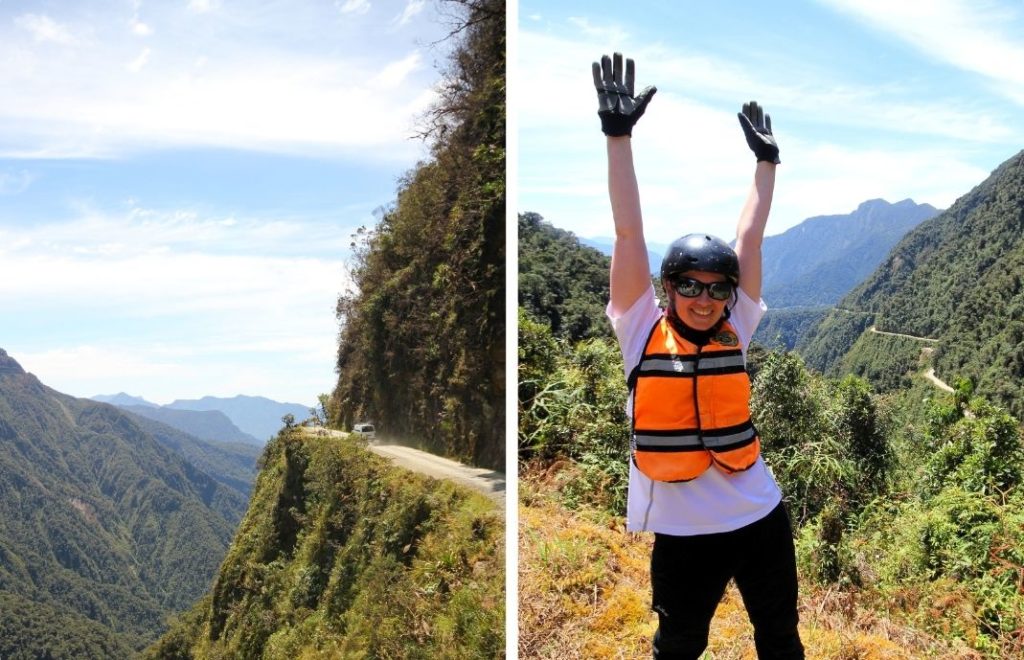
With its dramatic nickname, Death Road, this route in Bolivia has become one of the continent’s most legendary and myth-enshrouded adventures. Winding its way down from the heights of La Paz at over 3,500 meters, the road carves through sheer mountain cliffs, past cascading waterfalls, and into lush tropical rainforest before reaching the lowlands near Coroico.
Today, Death Road has transformed into a thrilling rite of passage for adventurous cyclists from across the globe.
The journey often begins in crisp mountain air, surrounded by views of snow-capped peaks. From there, you descend along a narrow gravel track, watching the landscape change gradually into verdant jungle. Along the way, you’ll encounter breathtaking viewpoints, roaring waterfalls spilling directly onto the road, and dizzying drops that plunge hundreds of meters into the valley below.
Despite its ominous name, the ride is safe today when tackled with experienced guides and reliable gear. It’s an experience that blends adrenaline with awe-inspiring nature – and a powerful sense of accomplishment.
Cycling the Death Road is not just about the thrill. It’s also a passage through some of Bolivia’s most striking contrasts, from the rugged heights of the Andes to the vibrant greenery of the Yungas region.
Practical guide
Starting point: Most tours depart from La Paz, with transport included up to La Cumbre (4,700 m).
Duration: One full day (around 4–6 hours of cycling, with breaks and return transport).
Safety:
- Choose a reputable tour operator with quality bikes, helmets, and safety gear.
- Follow your guide’s instructions carefully – remember, it’s not a race.
- Always stay close to the mountainside and well away from the edge.
Best time to ride: The dry season (May–October) offers the best conditions and clearest views. During the rainy season (November–March), the track can be muddy and more challenging.
More inspiration: Cycling (and surviving) Death Road
Galapagos – Nature’s masterpiece
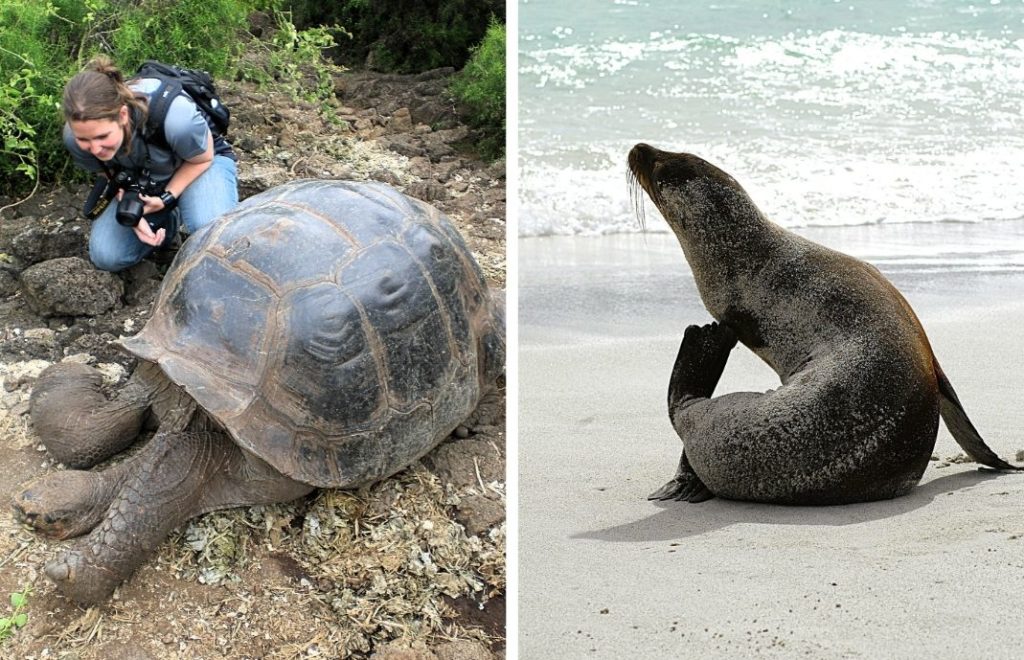
Rising from the Pacific Ocean some 1,000 kilometers off the coast of Ecuador, the Galapagos Islands are among the world’s most extraordinary destinations. This volcanic archipelago is famed for its otherworldly landscapes and rare wildlife – creatures so unique they once inspired Charles Darwin to develop his theory of evolution. A journey here feels like stepping into another realm, where nature itself takes center stage.
Here you can encounter the iconic giant tortoises, watch blue-footed boobies perform their quirky courtship dance, or snorkel alongside playful sea lions and penguins. The waters surrounding the islands are a diver’s paradise, alive with rays, sharks, and dazzling schools of tropical fish gliding through crystalline seas.
Highlights include:
- Santa Cruz Island – home to the Charles Darwin Research Station and the famous giant tortoises.
- Isabela Island – the largest island, shaped by lava flows, volcanoes, and teeming birdlife.
- Bartolomé Island – renowned for its sweeping views and the dramatic Pinnacle Rock.
- Española Island – a haven for birdwatchers, where albatrosses and blue-footed boobies thrive.
The Galápagos is a destination that blends adventure with discovery. Each island has its own distinct character, offering travelers the rare chance to witness wildlife and landscapes as they were meant to be – untamed, untouched, and unforgettable.
More inspiration:
10 reasons to visit the Galápagos Islands
Everything you need to know before visiting the Galápagos Islands
The Galápagos Islands: Month by month
The enchanted Isles
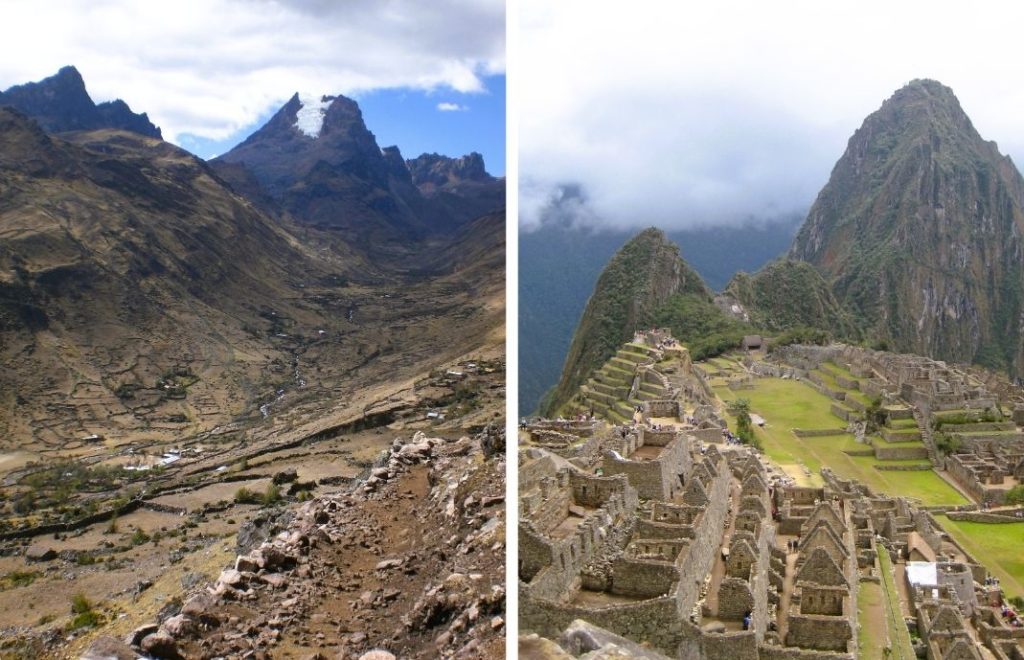
Trekking the Inca Trail to Machu Picchu
The Inca Trail is far more than a hike – it’s a pilgrimage through history, culture, and breathtaking natural beauty. The classic route unfolds over four days, leading you across the dramatic landscapes of the Andes, past ancient ruins, age-worn stone stairways, and cloud forests alive with birdsong.
For many, the ultimate challenge and reward comes at Warmiwañusqa, or “Dead Woman’s Pass,” a formidable 4,200 meters above sea level. The sweeping views from the summit – and the sense of accomplishment – are unforgettable. Along the way, you’ll discover lesser-known Inca sites such as Phuyupatamarca and Wiñay Wayna, archaeological gems that could easily be destinations in their own right.
After days of trekking, you reach the Sun Gate, Inti Punku, where Machu Picchu emerges in all its glory. Watching the first rays of dawn strike the ancient citadel is a moment most travelers describe as nothing short of magical – a perfect union of nature’s grandeur and humanity’s legacy.
The Inca Trail is demanding, but the rewards are extraordinary. This is not just a path to Machu Picchu – it’s a journey back in time, walking in the very footsteps of the Inca who traversed these mountains centuries ago.
Practical guide
- Duration: The classic trek takes 4 days / 3 nights, though shorter 2-day options exist.
- Permits: Strictly limited to 500 people per day (including guides and porters). Book several months in advance.
- Best season: May to September (dry season) offers the best conditions. During the rainy season (November–March), trails can be muddy and more challenging. The Inca Trail is closed in February for maintenance.
- Altitude: Highest point is Warmiwañusqa (“Dead Woman’s Pass”) at 4,200 m – be prepared for the effects of altitude.
- Fitness level: Moderate to challenging. Good physical condition is essential, particularly for coping with elevation and steep stairways.
More inspiration:
Machu Picchu: Magical and peerless
Easter Island – The enigmatic island of the Pacific
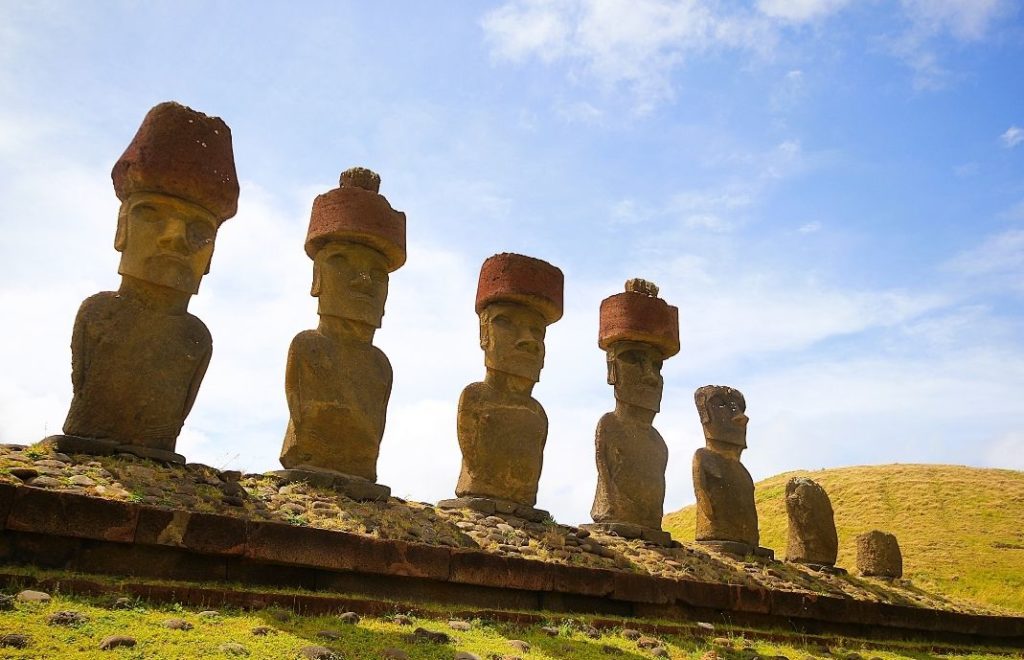
In the heart of the vast Pacific Ocean, more than 3,500 kilometers from the Chilean mainland, lies Easter Island – or Rapa Nui, as it is called in the local language. Remote and mysterious, this island is one of the world’s most captivating destinations, famed for its monumental stone statues, the iconic moai, which stand watch over the land with an eternal, enigmatic gaze.
A visit to Easter Island is a journey into a culture steeped in myth, ritual, and extraordinary craftsmanship. No one knows exactly how or why the islanders carved and moved these massive statues, but today they endure as symbols of human ingenuity, resilience, and belief.
Highlights include:
- Ahu Tongariki – the largest ceremonial platform, with 15 moai lined up majestically.
- Rano Raraku – the quarry where the moai were carved, with many still lying unfinished on the slopes.
- Anakena Beach – a dazzling stretch of white sand fringed with palms and guarded by moai gazing out to sea.
- Orongo – the ancient ceremonial village at the crater of Rano Kau, tied to the fascinating Birdman cult.
But Easter Island is more than an open-air archaeological mystery. Here you’ll find pristine beaches, volcanic craters, caves, and a vibrant Polynesian culture that continues to shape daily life on the island.
Standing before the moai at sunrise or sunset is an unforgettable experience – a profound encounter with the grandeur of nature and the enduring riddles of human history.
More inspiration:
Why you should visit Easter Island at least once
Easter Island – strange and surreal
Who built the statues on Easter Island?
Salar de Uyuni – Bolivia’s mirror to the sky
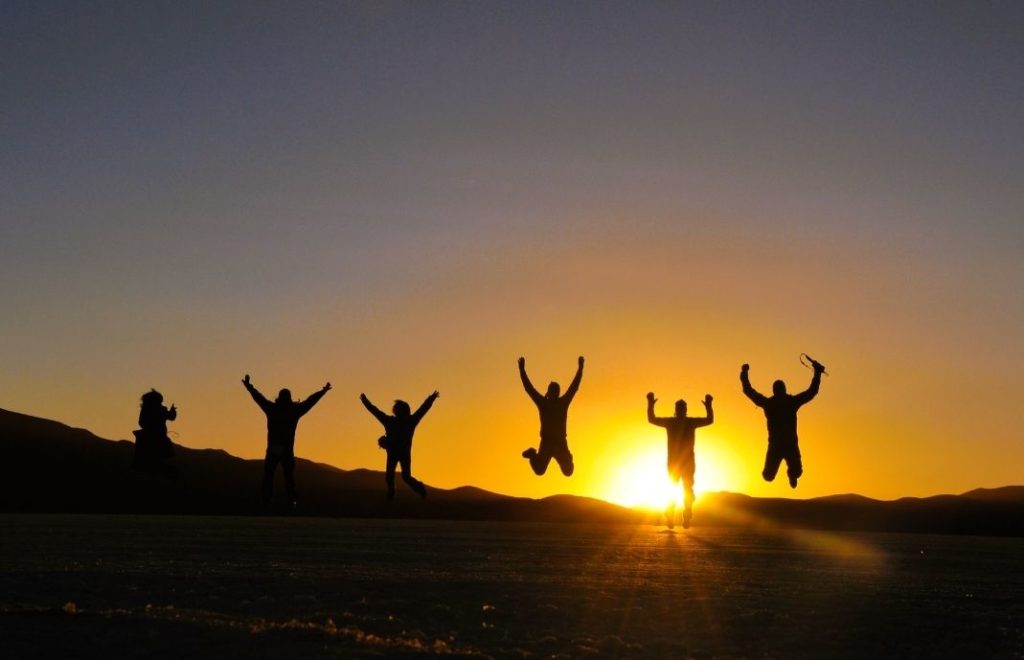
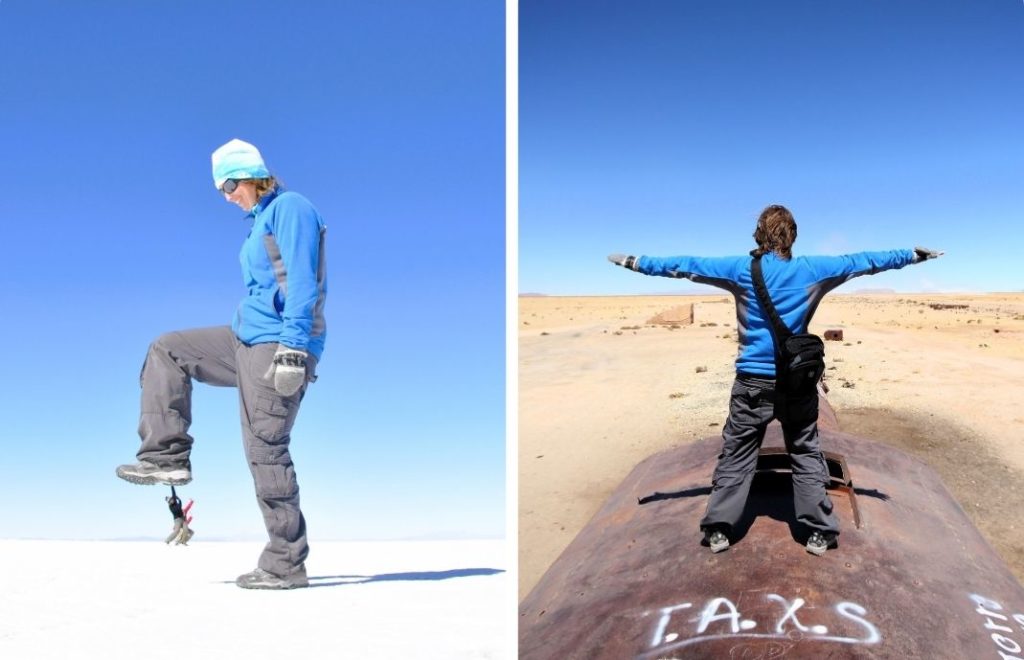
High on the Bolivian Altiplano, at over 3,600 meters above sea level, lies the world’s largest salt flat – Salar de Uyuni. Stretching endlessly toward the horizon, this dazzling white expanse creates a surreal experience for anyone who sets foot here.
During the rainy season (December–March), the flats transform into a giant mirror where sky and earth merge into one. Walking across feels like stepping on the clouds – one of nature’s most extraordinary spectacles. In the dry season (April–November), the landscape reveals its infinite, crystalline patterns, where the salt fractures into perfect hexagons across the ground.
Salar de Uyuni also offers a wealth of unforgettable highlights:
- Isla Incahuasi – an island in the middle of the salt flat, dotted with centuries-old cacti and offering panoramic views of the white expanse.
- Uyuni Train Cemetery – a haunting collection of rusting steam locomotives, remnants of a bygone era.
- Colorful lagoons in the surrounding national parks, where flamingos wade gracefully against a backdrop of snow-capped volcanoes.
Salar de Uyuni is a place where horizons dissolve and perspectives shift – a natural masterpiece that reminds you just how boundless and astonishing the world can be.
More inspiration:
Bolivia’s salty side
Meet the Llamas – Iconic companions of the Andes
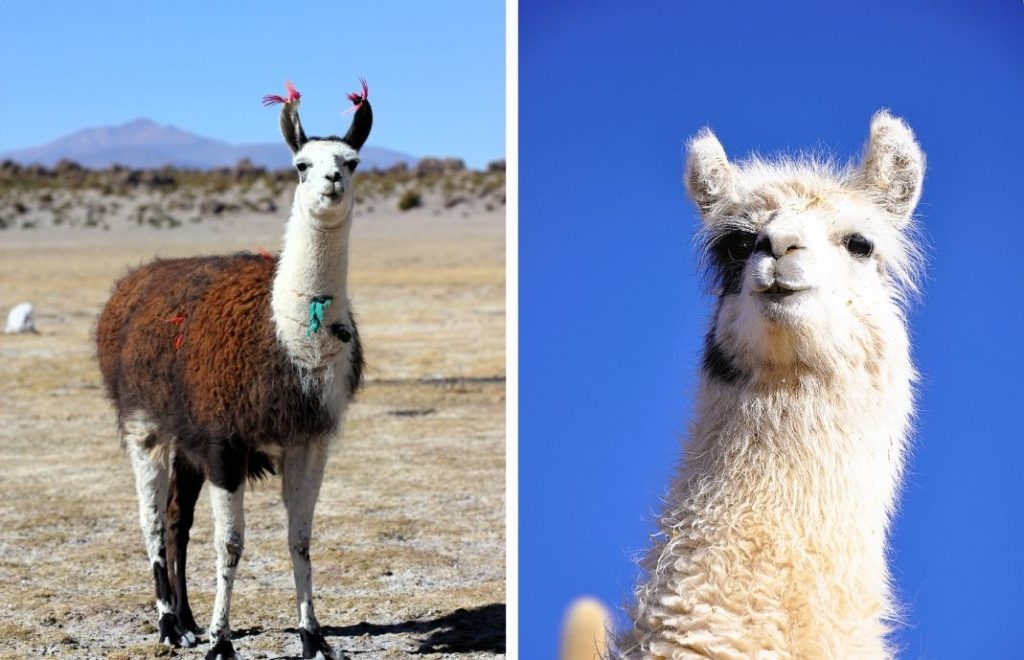
No journey through the Andes is complete without meeting its most charming residents – the llamas. With their gentle eyes, long graceful necks, and often playful personalities, llamas have become an unofficial symbol of the entire region. Whether you’re strolling through the cobbled streets of Cusco, trekking the Inca Trail, or visiting remote villages in Peru and Bolivia, these fascinating animals are never far away.
Closely related to alpacas, guanacos, and vicuñas, llamas have been essential to Andean life for thousands of years. They’ve served as pack animals capable of carrying loads across high-altitude terrain where few others could survive. Beyond their strength, they’ve provided wool, meat, and hides – making them invaluable to Andean cultures since Inca times.
Did you know that llamas can weigh up to 200 kilograms and carry about a quarter of their body weight? Resilient and enduring, they’re also famously stubborn – and yes, they’ll spit when annoyed or threatened.
Encountering llamas up close offers more than just delightful photo opportunities. It provides a deeper appreciation of the Andes’ cultural heritage. These animals are more than picturesque companions along the trail – they are living links between people, history, and the majestic landscapes of South America’s highlands.
Explore the Amazon – The world’s greatest rainforest
A journey into the Amazon is like stepping into a living adventure. Here, in the planet’s largest rainforest, awaits an experience like no other – a raw, unfiltered encounter with nature at its most powerful and untamed. Spending days and nights in the jungle offers a rare glimpse into an ecosystem that harbors more animal and plant species than anywhere else on Earth.
You’ll wake to the roar of howler monkeys echoing through the canopy, while exotic birds streak overhead in brilliant flashes of color. By day, guided jungle treks with local experts reveal the forest’s hidden secrets – plants used for medicine, towering ancient trees, and tiny, camouflaged insects that might otherwise go unnoticed.
Boat rides along the mighty Amazon River open up a new world entirely. As the sun sets, you may spot caimans gliding silently at the water’s edge, or listen to the symphony of crickets, frogs, and owls that fills the night air. Many journeys also include visits to local villages, where you’ll gain insight into the traditions and daily lives of Indigenous communities who have lived in harmony with the rainforest for generations.
Spending the night in the Amazon isn’t just about having a place to sleep – it’s about immersing yourself in the jungle with all your senses. You feel the heavy humidity, hear the endless chorus of life, and understand why the Amazon is called the “lungs of the Earth.” It’s an experience that leaves a lasting impression, with memories you’ll carry forever.
Iguazú Falls – Nature’s raw power
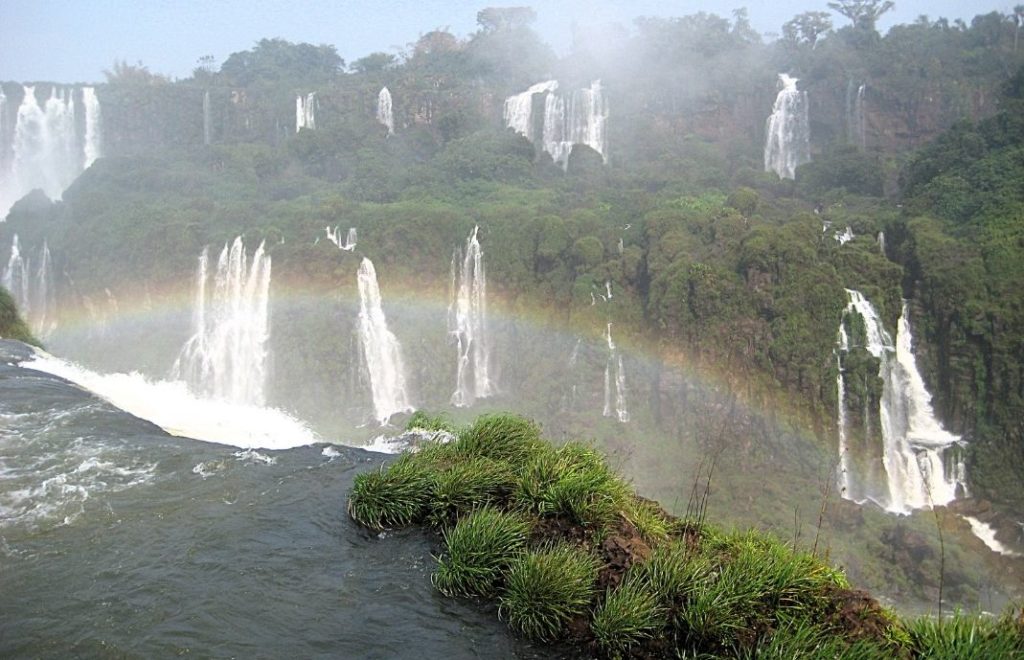
Straddling the border between Argentina and Brazil lies one of the world’s most spectacular wonders: Iguazú Falls. With 275 cascades stretching across nearly three kilometers, this is one of nature’s most breathtaking spectacles. The roar, the spray, and the sheer force of water plunging into the depths below is so powerful it leaves even the most seasoned traveler awestruck.
The most famous viewpoint is Garganta del Diablo – the “Devil’s Throat” – where torrents of water crash into a horseshoe-shaped gorge, surrounded by mist and rainbows. Yet Iguazú is far more than a single waterfall. A network of trails and walkways allows you to experience the falls from every angle – some so close you’ll feel the spray on your face.
Both the Argentine and Brazilian sides offer unique perspectives. From Argentina, you can wander an extensive trail system that brings you right to the edge of the cascades, while Brazil delivers sweeping panoramas perfect for photography.
Surrounding the falls is lush rainforest teeming with life – brilliant butterflies, playful monkeys, and vibrant bird species. For thrill-seekers, a boat ride under the thunderous cascades delivers a rush you’ll never forget, while a helicopter ride reveals the full majesty of the falls from above.
A visit to Iguazú Falls is more than a natural spectacle – it is an encounter with the raw energy of the Earth itself, a reminder of both nature’s grandeur and our own smallness in its presence.
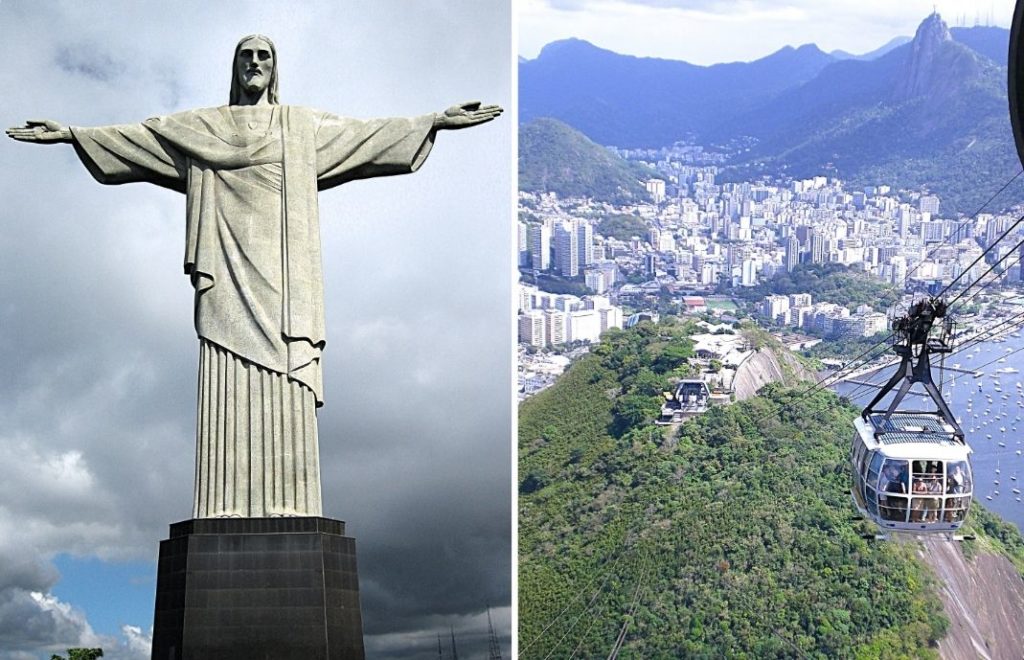
Christ the Redeemer – An icon above the city and the world
High atop Corcovado Mountain, gazing out over beaches, peaks, and rainforest, stands Cristo Redentor – Christ the Redeemer – one of the most recognizable landmarks on Earth. With its 30-meter-high arms outstretched in a gesture that embraces all of Rio de Janeiro, the statue is both a religious symbol and a cultural icon.
Unveiled in 1931, this monumental figure quickly became a beacon of peace and faith. Later named one of the New Seven Wonders of the World, today it is an essential pilgrimage for anyone visiting Brazil.
The journey to the summit is an experience in itself. You can ride the historic cog train that winds through lush Atlantic Forest, or opt for buses and shuttles that take you near the peak. Standing at the statue’s base, Rio unfolds in all its splendor: Copacabana and Ipanema, Sugarloaf Mountain, Guanabara Bay, and the emerald hills framing the city.
But a visit here offers more than sweeping views. It’s also a glimpse into the very soul of Rio de Janeiro – a city that moves effortlessly between nature and urban rhythm, between celebration and faith.
Standing before Christ the Redeemer is to stand before an icon that represents not just Brazil, but humanity itself.